How to Remove Oil Stains from a Concrete Driveway
The best way to remove oil stains from a concrete driveway is to soak up fresh oil immediately, then break down the stain with a poultice made from baking soda or cat litter and a concrete-safe degreaser, followed by a stiff-bristle scrub and hot water rinse. Older, set-in stains usually need a stronger degreaser and more than one treatment.
If you’ve ever backed out of the garage and noticed that dark, greasy blotch spreading across your driveway, you know how permanent it can feel. The good news is that concrete oil stains are almost always fixable with patience and the right approach, not necessarily a pressure washer and elbow grease alone.
⚡ The TidyFormula™ Quick Decision
Best approach: Absorb fresh oil right away, then apply a baking soda or cat litter poultice with a concrete degreaser and scrub with a stiff brush before rinsing with hot water.
Use caution with: Harsh acids, undiluted bleach, or high-heat pressure washing, which can pit, discolor, or weaken older or sealed concrete surfaces.
Replace instead of cleaning if: The stain has soaked into cracked, unsealed, or badly deteriorated concrete for years and scrubbing only spreads it deeper into the pores.
What I Use For This Job
Using the right tools saves time and protects your belongings. Here are my exact recommendations:
*As an Amazon Associate, TidyFormula earns from qualifying purchases.
Why Oil Stains Soak So Deep Into Concrete
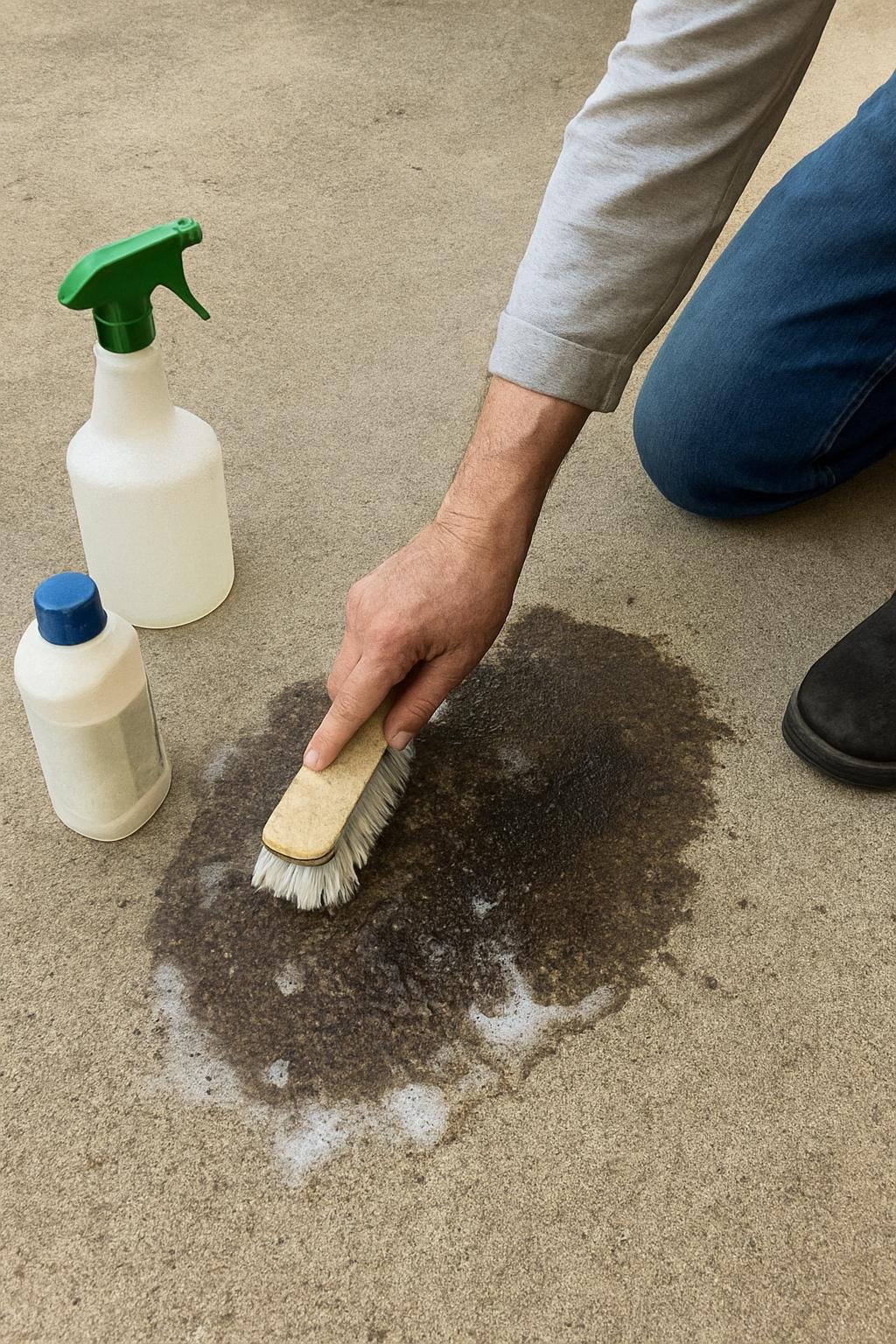
Concrete looks solid, but it’s actually porous. Oil is thin, so it wicks into those tiny pores almost instantly, especially on unsealed driveways. That’s why a stain that looks fresh on top can still be dark and greasy underneath weeks later. The longer oil sits, the deeper it travels, which is why speed matters more than strength when you’re deciding how to remove oil stains from a concrete driveway.
What You’ll Need Before You Start
Gather your supplies before you touch the stain. You’ll want paper towels or rags, unscented clay-based cat litter or baking soda, a concrete-safe degreaser (dish soap works for light stains, while trisodium phosphate (TSP) or a commercial oil-stain remover handles heavier ones), a stiff-bristle scrub brush, and a garden hose. Skip wire brushes on decorative or stamped concrete since they can scratch the surface.
Step-by-Step: Removing a Fresh Oil Stain
Fresh oil is the easiest to handle, and how you treat it in the first hour matters.
- Blot, don’t rub, using paper towels or old rags to lift as much surface oil as possible.
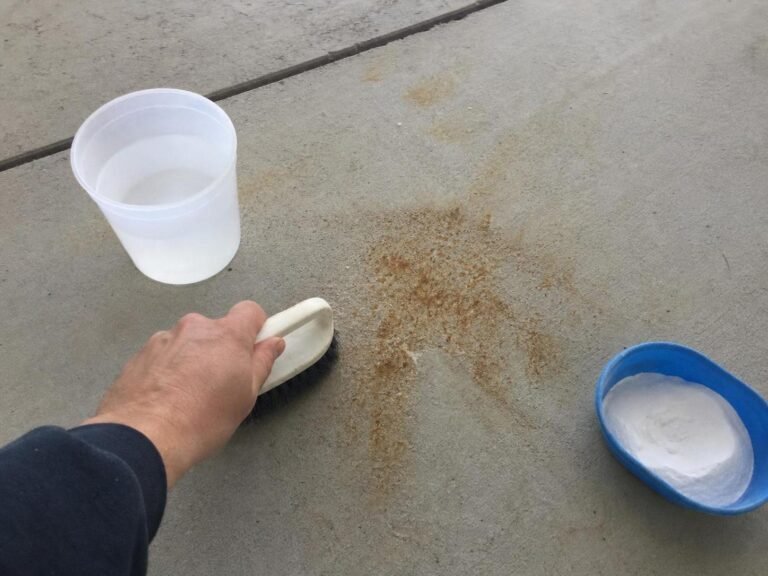
- Cover the entire stain with a thick layer of cat litter or baking soda and let it sit for 12 to 24 hours to draw the oil out.
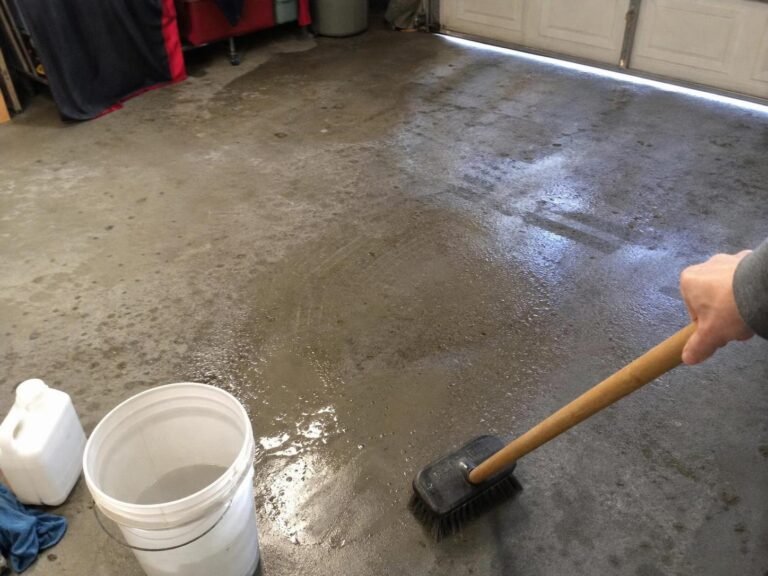
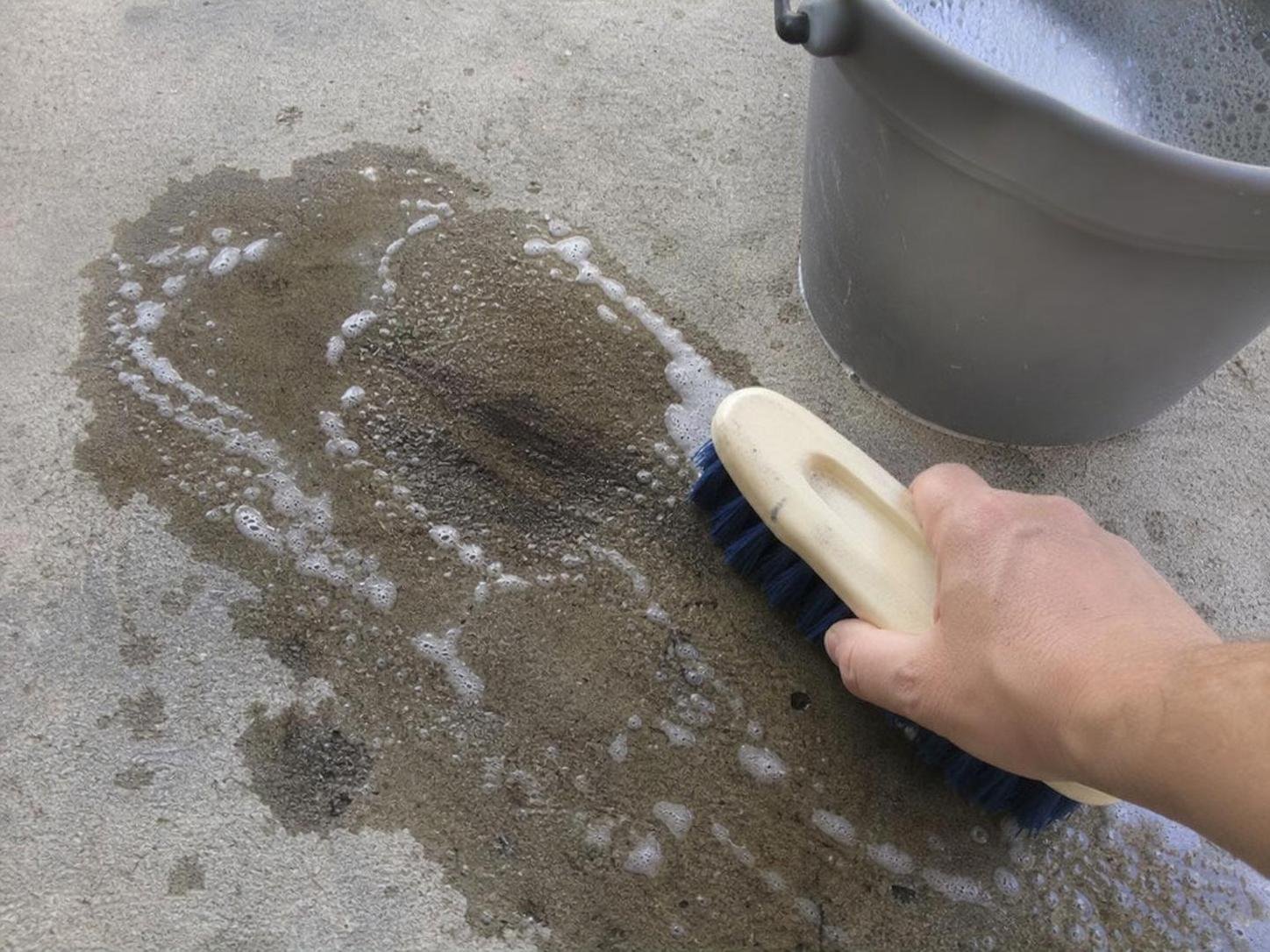
- Sweep away the litter, then scrub the area with dish soap and hot water using your stiff brush.
- Rinse thoroughly and let the concrete air dry.
Step-by-Step: Removing Old, Set-In Oil Stains
Old stains take more effort because the oil has already settled into the pores. This is the safe cleaner for oil stains from a concrete driveway when litter and dish soap aren’t cutting it anymore.
- Apply a concrete degreaser or TSP solution directly to the stain, following the product’s label instructions.
- Let it sit for the time recommended on the label, usually 10 to 15 minutes, without letting it fully dry on the surface.
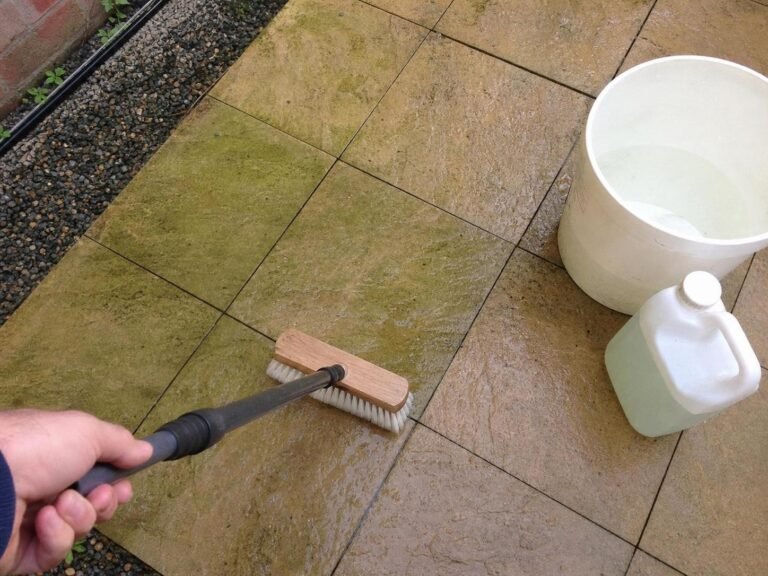
- Scrub in small circular motions with a stiff-bristle brush, working the degreaser into the pores.
- Rinse with hot water and repeat the process if the stain is still visible.
- For stubborn spots, a poultice made of baking soda and degreaser, covered with plastic overnight, gives the chemicals more time to lift the oil.
Cleaning heavy grease and oil isn’t limited to driveways. If you’ve ever dealt with greasy fingerprints and smudges elsewhere in the house, this stainless steel fridge oil-cleaning trick uses a similar oil-cutting logic that works surprisingly well on kitchen appliances.
Best Way to Remove Oil Stains From a Concrete Driveway: Method Comparison
Not every method works for every stain. Here’s how the common approaches stack up.
- Dish soap and water: Best for very fresh, light stains. Gentle on concrete but weak on set-in oil.
- Baking soda or cat litter poultice: Best for medium stains and safe for sealed or decorative concrete. Slower, but low risk of damage.
- Commercial degreaser or TSP: Best for old, dark stains. More effective but requires gloves, ventilation, and careful rinsing.
- Pressure washer: Best for large driveways with light, spread-out staining. Risky on cracked, old, or unsealed concrete because high pressure can chip or erode the surface.
Cleaning Mistakes That Make Oil Stains Worse
A few common mistakes turn a manageable stain into a permanent one:
- Pouring hot water on fresh oil first, which can spread it instead of lifting it.
- Scrubbing dry oil with no liquid or absorbent, which just smears it deeper into the pores.
- Using undiluted bleach, which does not break down oil and can discolor concrete.
- Skipping a test patch with a new degreaser on colored or stamped concrete.
- Holding a pressure washer too close, which can etch or gouge the surface, especially on older driveways.
Stubborn stains aren’t unique to driveways. If you’re also dealing with tough set-in marks indoors, the enzyme-based approach used in this old stain removal method shows how a similar patience-first strategy applies to fabric as well as concrete.
How to Prevent Oil Stains From a Concrete Driveway
Prevention is far easier than cleanup. A few habits go a long way:
- Park on cardboard, a drip pan, or an absorbent mat if your vehicle has a known leak.
- Seal your concrete driveway every few years with a penetrating concrete sealer, which reduces how deep oil can soak in.
- Wipe up any drips within a few hours instead of letting them sit overnight.
- Have leaks repaired promptly, since a small drip today becomes a permanent stain within weeks.
For guidance on safely handling and disposing of used motor oil and oily rags, the EPA’s used oil management guidelines are a reliable reference, especially if you’re cleaning up a larger spill.
When to Call a Professional or Consider Resurfacing
Most oil stains respond to a poultice and degreaser combination within one or two attempts. If a stain has been sitting for years, has soaked through cracked or unsealed concrete, or keeps reappearing after repeated cleaning, it may be time to consider professional concrete cleaning or resurfacing rather than continuing to scrub. Deep, decades-old staining on porous concrete sometimes sits below what any surface cleaner can reach.
Everything Mentioned Above
Before you leave, grab the tools you need to get the job done right the first time:
*As an Amazon Associate, TidyFormula earns from qualifying purchases.