How to Clean Butcher Block Countertops Safely
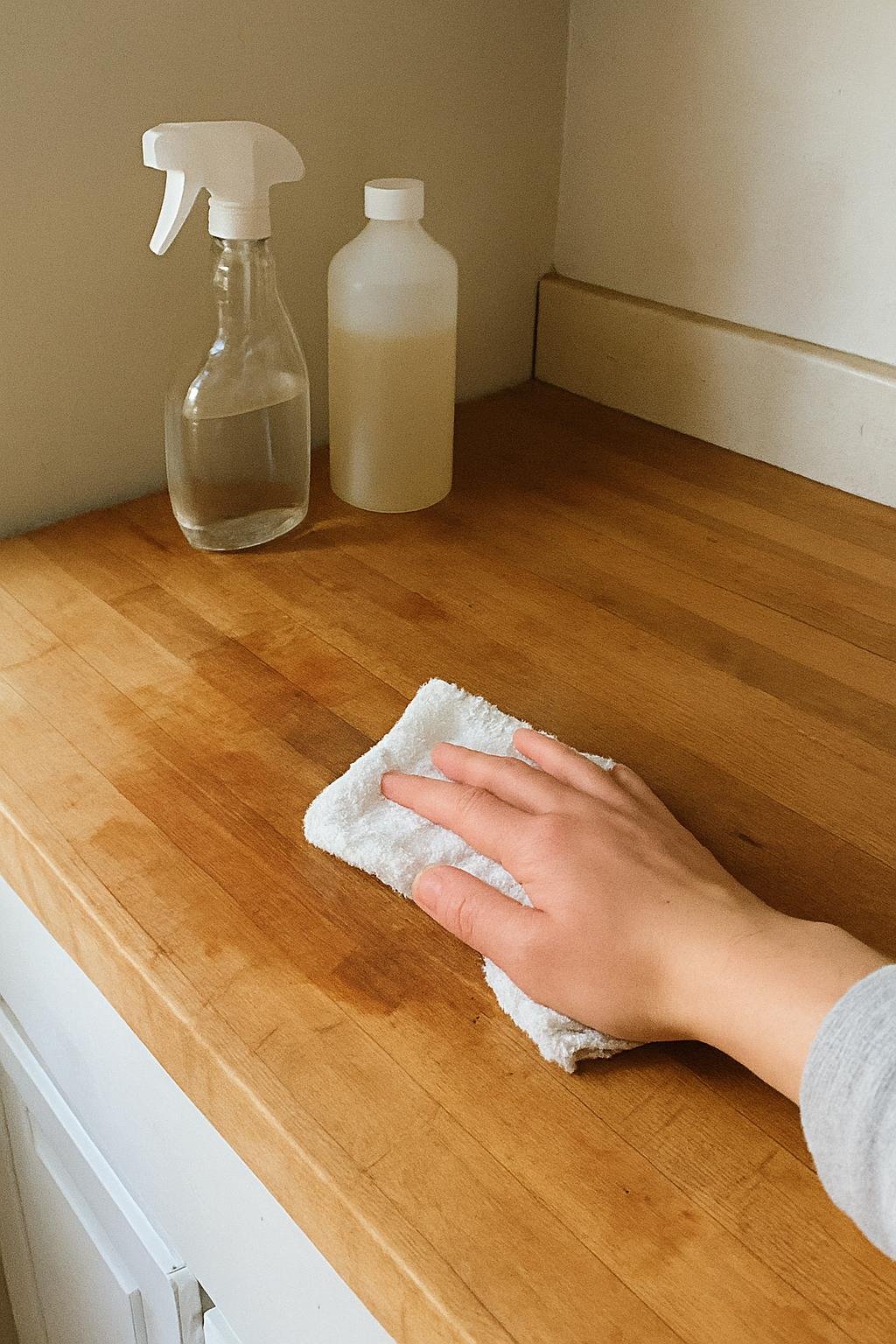
Clean butcher block countertops with warm water, a few drops of mild dish soap, and a soft cloth or sponge, always wiping in the direction of the wood grain. Rinse quickly and dry the surface right away with a clean towel. Avoid soaking the wood, skip the dishwasher, and never leave standing water on the surface, since butcher block is porous and can swell, crack, or warp with excess moisture.
Butcher block often ends up next to sinks or stoves, so it deals with more splashes and grease than a typical counter. That extra exposure is exactly why quick drying and the right cleaning frequency matter more here than on sealed stone or laminate.
⚡ The TidyFormula™ Quick Decision
Best approach: Wipe with warm water and a small amount of mild dish soap on a soft cloth, following the wood grain, then dry immediately with a towel.
Use caution with: Standing water, soaking, dishwashers, harsh abrasives, and any cleaner not intended for wood, since these can dry out, discolor, or crack the surface over time.
Stop and reassess if: You notice deep cracking, graying or fuzzy wood grain, persistent odor, dark staining that doesn’t lift, or a finish that feels sticky or flaking, since these signs point to a bigger problem than routine cleaning can fix.
What I Use For This Job
Using the right tools saves time and protects your belongings. Here are my exact recommendations:
*As an Amazon Associate, TidyFormula earns from qualifying purchases.
What Makes Butcher Block Different From Other Countertops
Butcher block is solid wood, which means it behaves nothing like laminate, quartz, or sealed stone. Wood absorbs moisture and reacts to temperature and humidity changes by expanding and contracting slightly. That’s normal, but it also means water is the biggest long-term threat to the surface, not dirt or grease.
Some butcher block countertops come with a factory finish, such as a food-safe mineral oil, wax, or a polyurethane-style sealant. Others are sold unfinished and require the homeowner to apply oil themselves before use. If you’re not sure which type you have, check any documentation that came with the counter or contact the manufacturer, since the correct maintenance oil and reconditioning schedule depend on that finish.
Everyday Cleaning: The Safe Method
- Clear the surface. Remove crumbs, food scraps, and any appliances or cutting boards sitting on the counter.
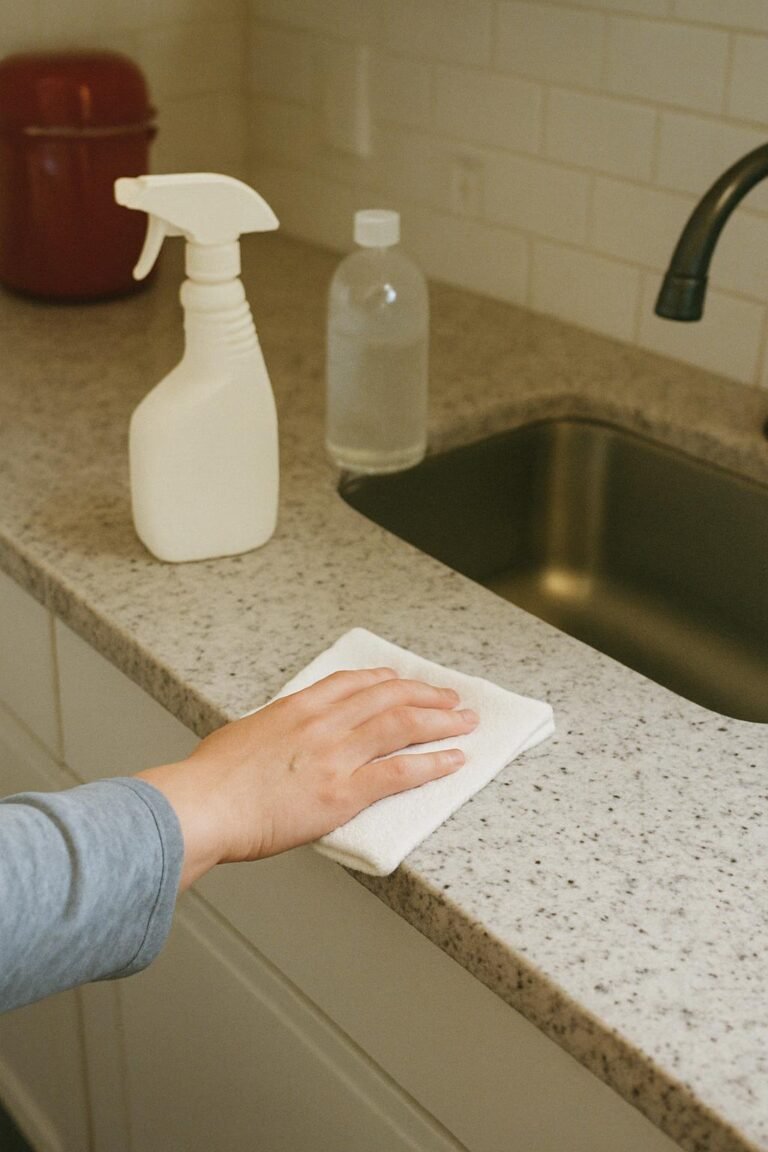
- Wipe with warm, soapy water. Use a soft cloth or sponge with a small amount of mild dish soap. Work in the direction of the wood grain rather than scrubbing in circles.
- Rinse with a barely damp cloth. Go over the surface again with clean water on a cloth that’s been wrung out well, not one that’s dripping.
- Dry immediately. Use a dry towel to remove all visible moisture. Don’t let the counter air-dry on its own, since that gives water more time to soak into the wood.
This basic wash is usually enough for daily spills, crumbs, and light residue. It’s not intended to disinfect the surface, so treat it as routine cleaning rather than sanitizing, especially after handling raw meat or poultry, where you should follow safe food-handling guidance in addition to washing the counter.
How Often to Clean Butcher Block Countertops
Wipe down butcher block after every use that involves food prep, spills, or moisture, which for most kitchens means at least once a day. Areas that see raw meat, fish, or poultry need a wipe-down immediately after that task is finished, not later.
Beyond daily wiping, plan on a deeper clean every week or two depending on how heavily the counter is used, and reapply food-safe mineral oil on oil-finished butcher block roughly once a month, or sooner if the wood starts looking dry, pale, or rough to the touch. Sealed or coated butcher block generally needs oil far less often, if at all, so check what finish you have before applying anything.
Handling Stains, Odors, and Stuck-On Residue
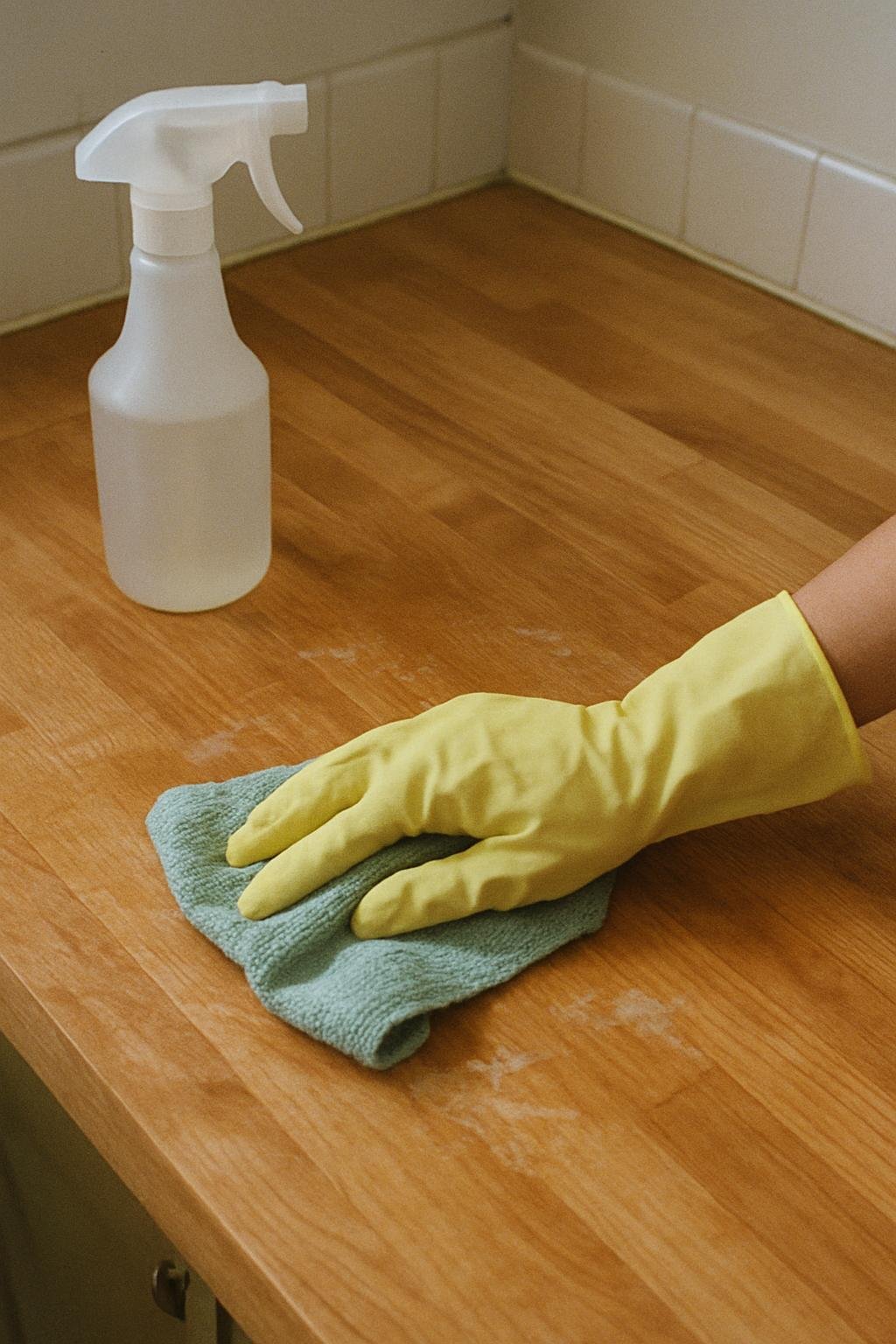
For light stains or dried food residue, a paste of baking soda and a small amount of water applied with a soft cloth can help lift the residue without heavy scrubbing. Rub gently along the grain, then wipe away with a barely damp cloth and dry the area right away.
For cutting-board odor or general freshening, some homeowners rub half a lemon or sprinkle coarse salt on the surface before wiping it away with a damp cloth. This is a light surface refresh rather than a disinfecting step, and it won’t address deep staining or bacteria concerns on its own. If odor persists after cleaning and drying, that’s usually a sign the wood has absorbed moisture or residue below the surface, which routine cleaning can’t fully resolve.
Cleaning Mistakes That Damage Butcher Block
| Mistake | Why It’s a Problem |
|---|---|
| Soaking the counter or letting water pool | Wood absorbs moisture, which can cause swelling, warping, or cracking over time |
| Putting butcher block accessories in the dishwasher | Heat and prolonged water exposure break down the wood and any finish much faster than hand cleaning |
| Using bleach, vinegar, or strong disinfectant sprays as a routine cleaner | These can strip finish, dry out the wood, and aren’t necessary for normal daily cleaning |
| Scrubbing with abrasive pads or powders | Abrasives scratch the surface and can wear through a protective finish |
| Skipping oil maintenance on an oil-finished counter | Without periodic oiling, unfinished or oil-finished wood dries out, cracks, and loses its protective barrier |
Avoid this method if your butcher block has a heavily damaged or peeling finish, since cleaning alone won’t restore protection to bare wood underneath. In that case, reconditioning or refinishing the surface according to the manufacturer’s guidance is the more useful next step.
When Cleaning Isn’t Enough
Routine cleaning keeps butcher block looking good day to day, but it can’t fix structural problems. Deep cracks, warping, persistent dark staining that won’t lift, or a musty smell that returns after drying are signs the wood has taken on damage that cleaning and oiling can’t reverse. At that point, sanding and refinishing the surface, or replacing the section, is usually the more realistic option. If you’re unsure whether a stain or crack is cosmetic or structural, a countertop or woodworking professional can give you a more specific assessment than general cleaning advice can.
If your kitchen routine also includes cleaning other surfaces without harsh chemicals, you may find it useful to look at how to clean an oven without chemicals or how to clean a sink drain without chemicals for similar low-intervention approaches elsewhere in the kitchen.
Everything Mentioned Above
Before you leave, grab the tools you need to get the job done right the first time:
*As an Amazon Associate, TidyFormula earns from qualifying purchases.