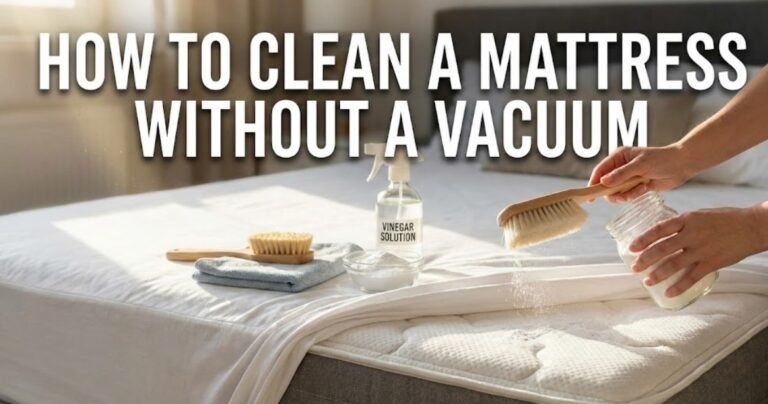
How to Remove Sweat Smell from Pillows
The best way to remove sweat smell from pillows is to treat both the odor trapped in the fill and the residue built up in the fabric, not just the surface. For pillows with a machine-washable care label, a pretreatment with baking soda followed by a full wash-and-rinse cycle usually clears the smell. For foam or non-washable pillows, you’ll need a different approach that avoids soaking the fill.
Sweat smell tends to come back even after a normal wash cycle when the pillow isn’t rinsed thoroughly or dried all the way through, since leftover detergent and trapped moisture both encourage odor to return.
⚡ The TidyFormula™ Quick Decision
Best approach: If the care label allows machine washing, sprinkle the pillow with baking soda, vacuum it off, then wash on a gentle cycle with a small amount of mild detergent and an extra rinse.
Use caution with: Down and feather pillows, which need extra rinsing and thorough drying, and memory foam or solid latex pillows, which should never be submerged or run through a washing machine.
Stop and reassess if: The care label says dry clean only, the foam is crumbling or discolored, or the odor is accompanied by a musty or mildew smell rather than a sweat smell, since that points to a different problem than surface odor.
What I Use For This Job
Using the right tools saves time and protects your belongings. Here are my exact recommendations:
*As an Amazon Associate, TidyFormula earns from qualifying purchases.
What’s Actually Holding the Odor
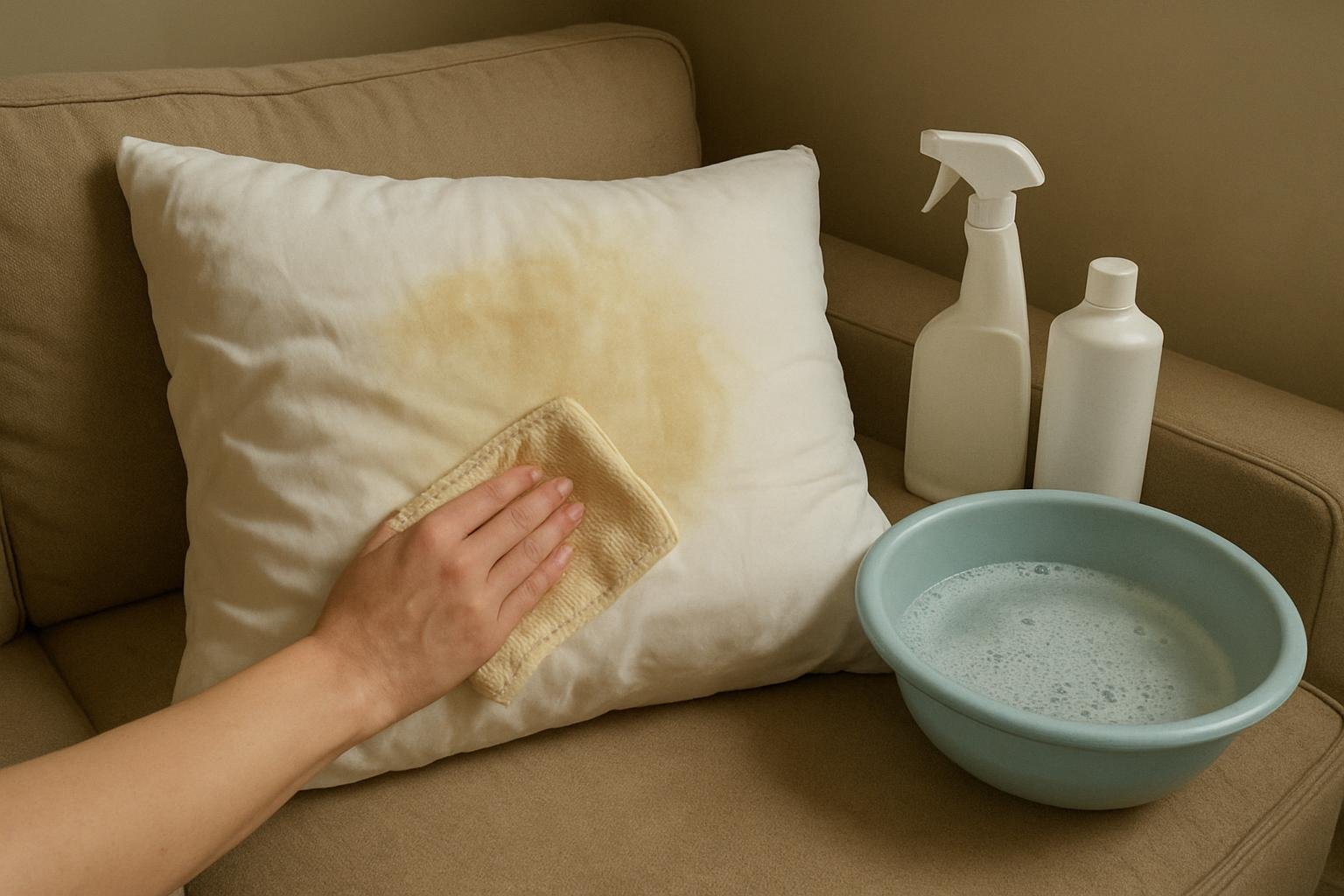
Sweat itself doesn’t have much smell on its own, but the oils, salts, and skin cells in sweat soak into pillow fabric and fill over time. In a fabric cover, this residue sits close to the surface and washes out fairly easily. In down, feather, or dense synthetic fiberfill, the residue works its way deeper into the fill, which is why a light surface wipe or spray rarely solves the problem for long.
Foam pillows behave differently. Sweat and body oils tend to sit in the outer inch or so of the foam rather than migrating all the way through, which is useful to know because it affects how you clean them.
Check the Care Label Before You Start
Before treating any pillow for odor, check the care label sewn into the seam. This tells you whether the pillow is machine washable, hand-wash only, or not washable at all, and whether it can tolerate warm water or only cold. Skipping this step is one of the most common ways pillows end up damaged or misshapen during odor removal.
If there’s no legible care label, treat the pillow as if it’s more delicate than you’d guess. Foam, latex, and buckwheat-filled pillows generally cannot go in a washing machine, while most polyester fiberfill and many down or feather pillows can, as long as the outer shell and stitching are intact.
Removing Sweat Smell From Washable Pillows
This method works for pillows with a machine-washable label, including most polyester fiberfill, down, and feather pillows with a sewn or double-stitched shell.
- Sprinkle baking soda generously over both sides of the pillow and let it sit for at least 30 minutes. This helps absorb surface odor before the pillow goes into water.
- Vacuum off the baking soda using an upholstery attachment, working in overlapping passes so you don’t leave residue behind.
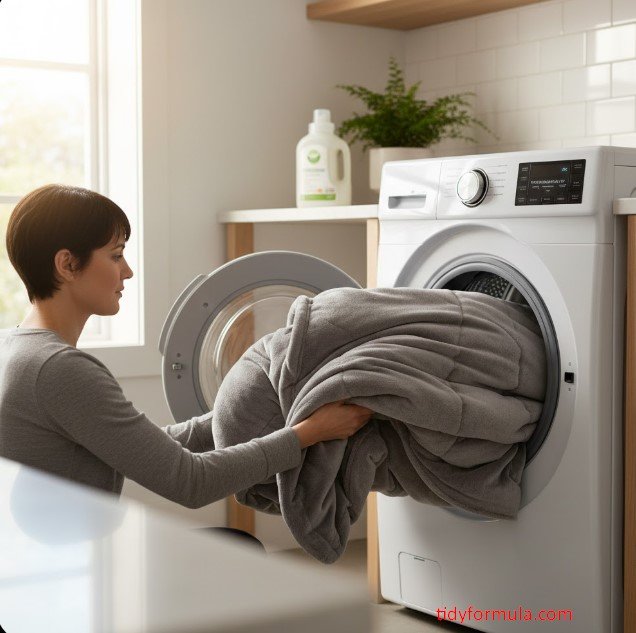
- Load the washing machine with two pillows at a time if possible, so the drum stays balanced during the spin cycle.
- Use a small amount of mild liquid detergent and the warmest water setting your care label allows. Cold water often isn’t enough to break down oil-based sweat residue.
- Run an extra rinse cycle. This step matters more for sweat odor than a typical wash, since leftover detergent and body oils that aren’t fully rinsed out are a common reason smell returns.
- Reshape the pillow by hand before drying, gently redistributing the fill so it doesn’t clump in one corner.
Drying Thoroughly Matters as Much as Washing
Dry the pillow on a low heat setting, adding a couple of clean tennis balls or dryer balls to help break up clumps as the fill dries. Down and feather pillows can take several dryer cycles to dry completely, so check the inside by squeezing the pillow in a few spots. If you feel any damp or heavy clumps, keep drying rather than storing it while still damp, since trapped moisture is one of the most reliable ways for odor to come back within a few days.
If you’d rather avoid the washing machine entirely, or your pillow’s care label doesn’t support it, a no-machine approach can still work for odor and light staining. The dry-revive method for cleaning pillows without a washing machine covers a spot-treatment and drying process that’s gentler on delicate fills.
Memory Foam and Solid Latex Pillows Need a Different Method
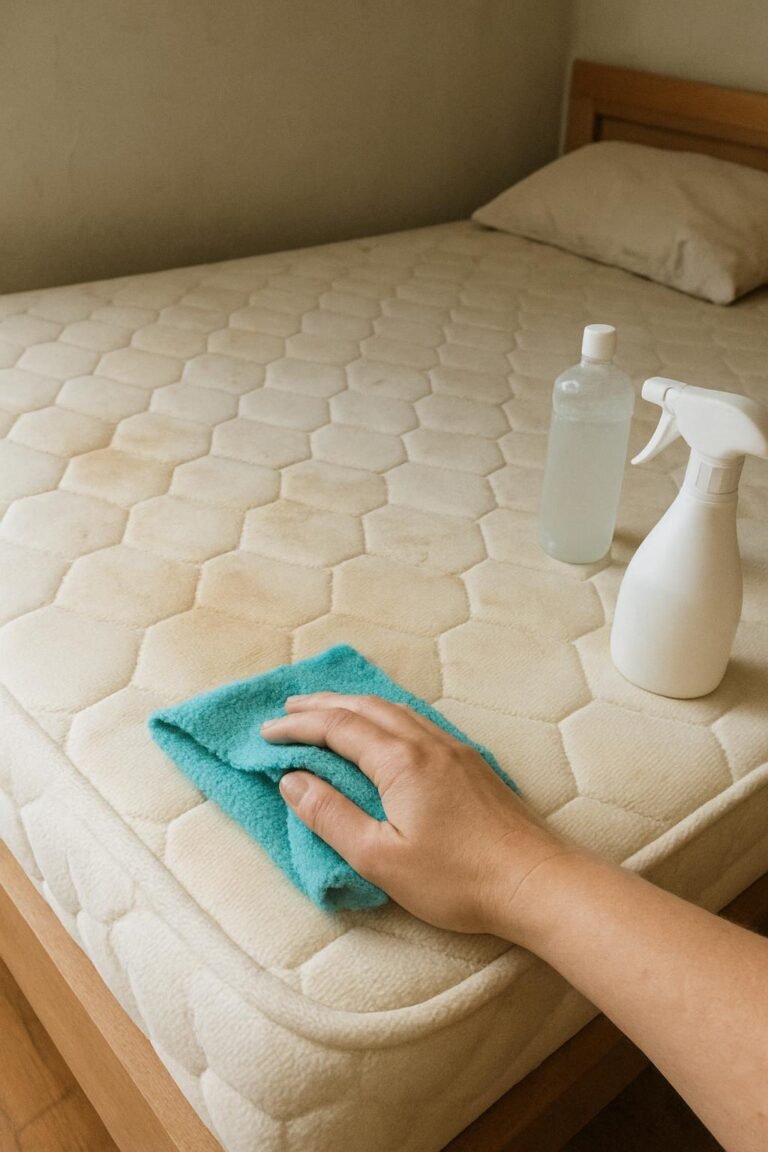
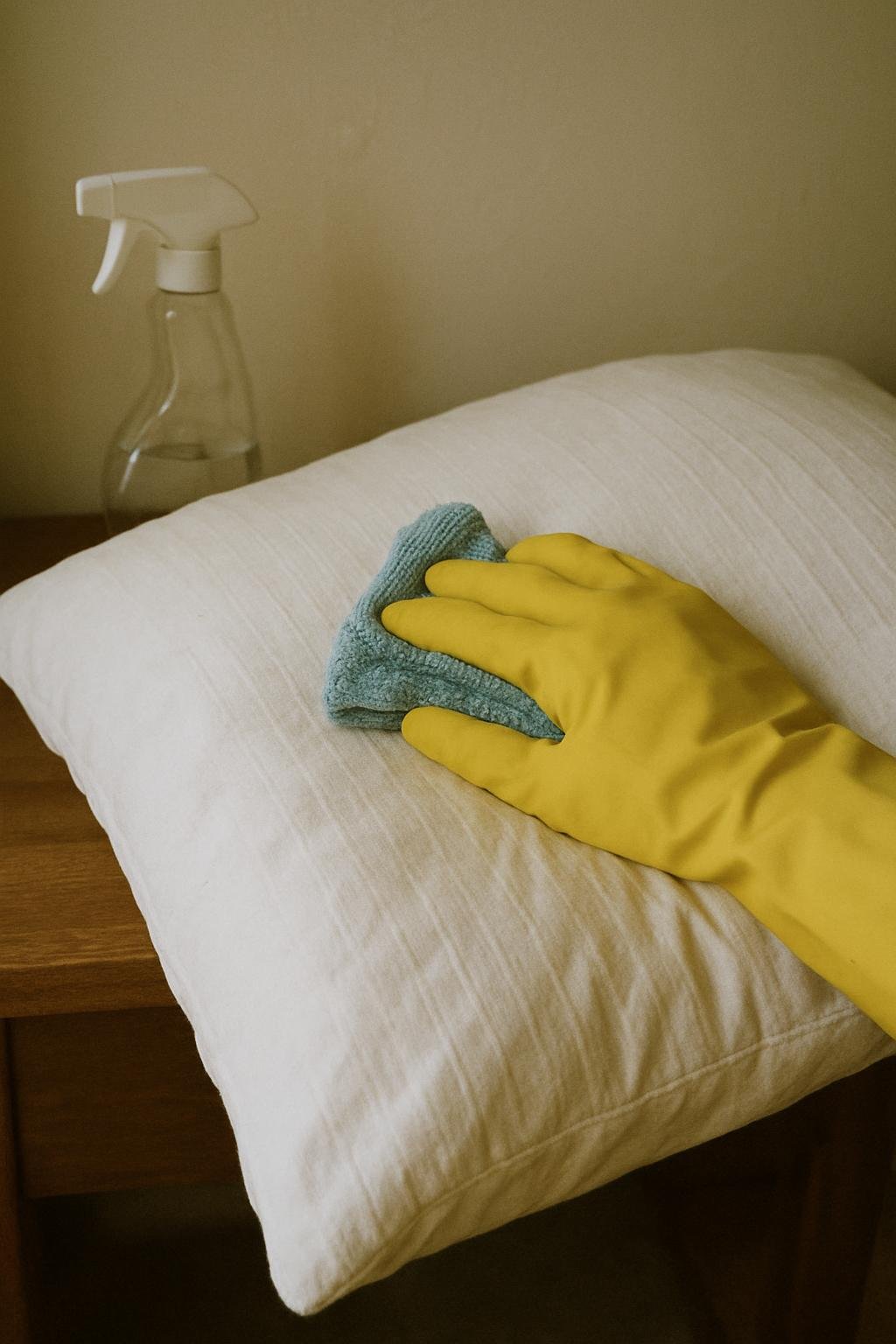
Memory foam and latex pillows should not go through a washing machine or get fully soaked, since the dense material holds water far longer than fabric or fiberfill, and prolonged moisture inside foam can lead to a musty smell that’s worse than the original problem. Instead, these pillows respond better to surface treatment: light spot cleaning of the outer inch of foam, baking soda application, and thorough air drying in a well-ventilated spot.
If you’re unsure whether your specific pillow can tolerate any water at all, review the manufacturer’s care instructions before treating it. For more detail on why full submersion is risky for this material, see whether a memory foam pillow can go in the washing machine.
Cleaning Mistakes That Make Sweat Smell Worse
- Spraying fragrance instead of treating the odor. Scented sprays mask sweat smell temporarily but don’t remove the oils and residue causing it, so the smell resurfaces once the fragrance fades.
- Skipping the extra rinse cycle. Leftover detergent trapped in fill material can smell almost as bad as the original sweat odor once it dries.
- Using high heat on foam pillows. High dryer heat or direct sun exposure can cause foam to become brittle or misshapen over time.
- Storing a pillow before it’s fully dry. Any dampness left inside fiberfill, down, or foam gives odor a chance to return, sometimes within days.
- Ignoring a dry-clean-only label. Attempting to hand-wash a pillow labeled dry-clean-only can damage internal fill that wasn’t designed to handle water at all.
Keeping Sweat Smell From Coming Back
A washable pillow protector under your pillowcase catches most sweat and oil before it reaches the pillow itself, and it’s far easier to wash a protector weekly than to deep-clean the pillow every time. Washing pillowcases and protectors on a regular schedule, letting hair dry fully before bed, and choosing a breathable pillowcase fabric all reduce how much moisture and oil builds up in the first place.
If a pillow continues to smell strongly after a full wash-and-dry cycle, or if the odor has shifted from a sweat smell to something musty or sour, that’s usually a sign the pillow has absorbed more moisture or residue than cleaning alone can reverse, and replacing it may be the more practical option.
Everything Mentioned Above
Before you leave, grab the tools you need to get the job done right the first time:
*As an Amazon Associate, TidyFormula earns from qualifying purchases.