How to Remove Smoke Smell from Curtains
The best way to remove smoke smell from curtains is to wash washable fabrics with a mild detergent and a full rinse cycle, and to air out or steam non-washable curtains since heat, sunlight, and hanging time break down odor molecules better than sprays alone. Skip any method the care label doesn’t allow, since smoke odor sits deep in fibers and needs real cleaning, not just masking.
Sheer curtains, heavy drapes, and lined panels don’t all respond the same way, and a method that works on cotton can shrink or water-stain a delicate lining.
⚡ The TidyFormula™ Quick Decision
Best approach: Machine wash care-label-safe curtains with regular detergent and an extra rinse, or hang non-washable curtains outdoors in fresh air and sunlight for several hours to a full day.
Use caution with: Dry-clean-only fabrics, fiberglass-backed drapes, delicate sheers, and any lined curtains where the lining and outer fabric may react differently to water or heat.
Stop and reassess if: The care label says dry-clean only, the fabric shows shrinkage or color bleeding during a spot test, or the odor persists after washing and airing, which usually means the smell has settled into padding, backing, or a lining that a home method can’t reach.
What I Use For This Job
Using the right tools saves time and protects your belongings. Here are my exact recommendations:
*As an Amazon Associate, TidyFormula earns from qualifying purchases.
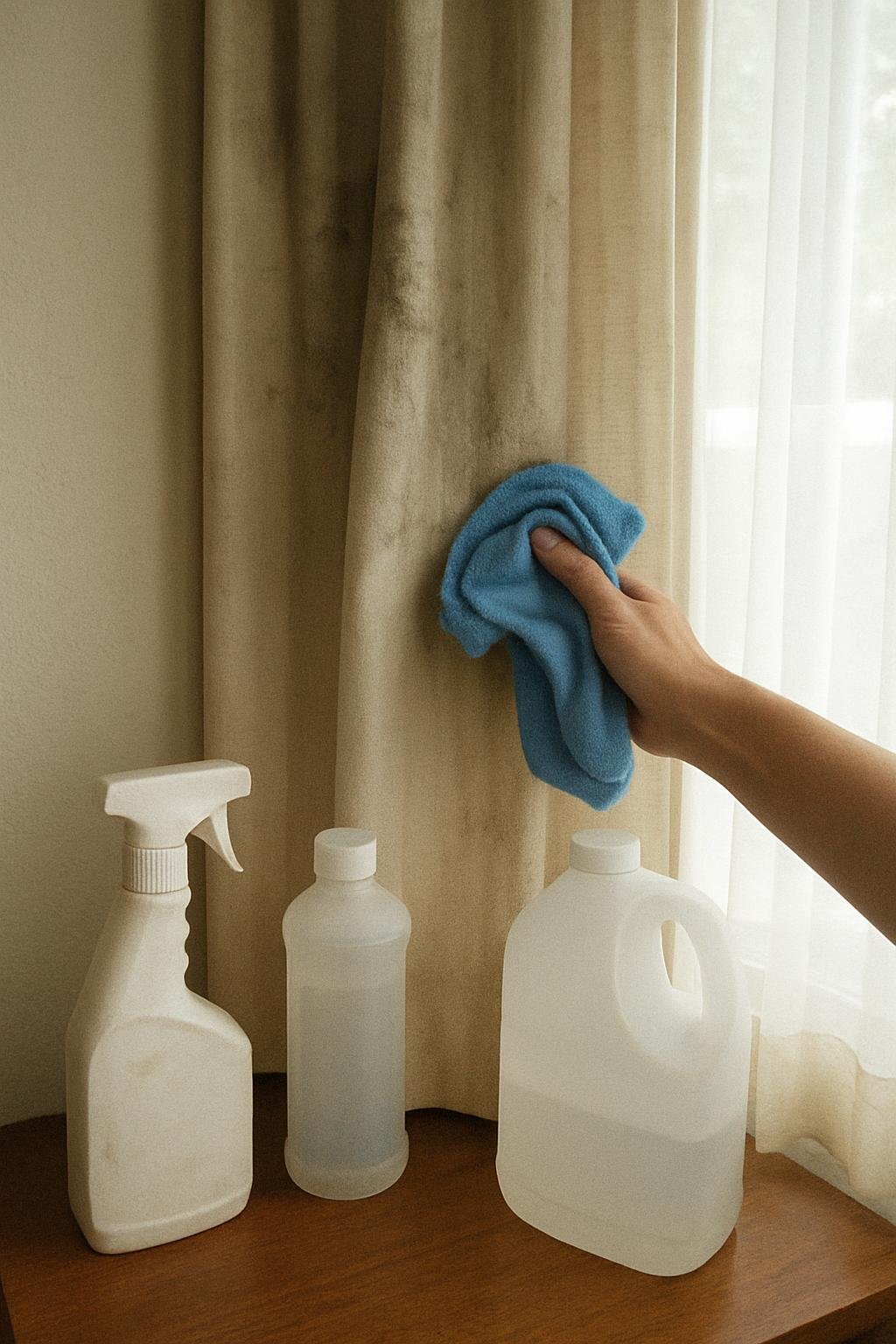
Check the Care Label Before You Start
Smoke odor removal only works if the cleaning method matches what the fabric can actually handle. Look for the care tag sewn into a bottom hem or side seam. A tag marked machine washable gives you the most reliable option. A tag marked dry-clean only means you should avoid soaking, machine washing, or heavy steaming, since water can shrink certain linings or cause dye to run.
If there’s no visible tag, treat the curtains as delicate until you know otherwise, especially with silk, velvet, or fabric that has a decorative backing or coating.
Washable Curtains: Machine Washing for Smoke Odor
Cotton, polyester blends, and most lightweight synthetic curtains that carry a machine-wash label respond well to a standard wash cycle, since the combination of water, detergent, and agitation lifts odor-carrying residue out of the fibers.
- Shake curtains outdoors first to remove loose ash and dust before they go anywhere near your washing machine.
- Wash in cool or warm water, following the temperature listed on the care tag, using a normal amount of regular laundry detergent.
- Add an extra rinse cycle if your machine allows it. A second rinse helps carry away dissolved odor residue instead of leaving it to dry back into the fabric.
- Skip fabric softener on the first wash. Softener can coat fibers and trap remaining odor rather than releasing it.
- Air dry when possible. A dryer’s heat can set any smell that wasn’t fully rinsed out, while open air continues to ventilate the fabric as it dries.
If the odor is still noticeable after the fabric is completely dry, run a second wash cycle before moving to a different method. Curtains that have absorbed heavy smoke, from a house fire or long-term indoor smoking, sometimes need two full washes.
Non-Washable Curtains: Airing and Steaming
For dry-clean-only fabrics, heavily lined drapes, or curtains with a backing that shouldn’t get wet, focus on ventilation and gentle heat instead of water.
- Outdoor airing: Hang curtains on a clothesline, railing, or sturdy rod outdoors on a dry, breezy day. Several hours of open-air exposure, and ideally a full day, allows odor to disperse gradually. Indirect sunlight can help, but check that the fabric won’t fade in direct sun for extended periods.
- Handheld steaming: A fabric steamer held several inches from the surface can loosen embedded odor in fabrics that tolerate light moisture. Test a hidden corner first, since steam introduces moisture even without full soaking, and some linings react poorly to heat or humidity.
- Baking soda treatment: Lay curtains flat if possible and sprinkle a light, even layer of baking soda over the fabric. Let it sit for several hours, then vacuum it off using a brush attachment. This can pull some surface odor out of the top layer of fibers, though it’s less effective on odor that has penetrated deeply.
If odor remains strong after airing and steaming, a professional dry cleaner familiar with smoke odor removal is usually the next reasonable step, since some fabrics need equipment and solvents you won’t have at home.
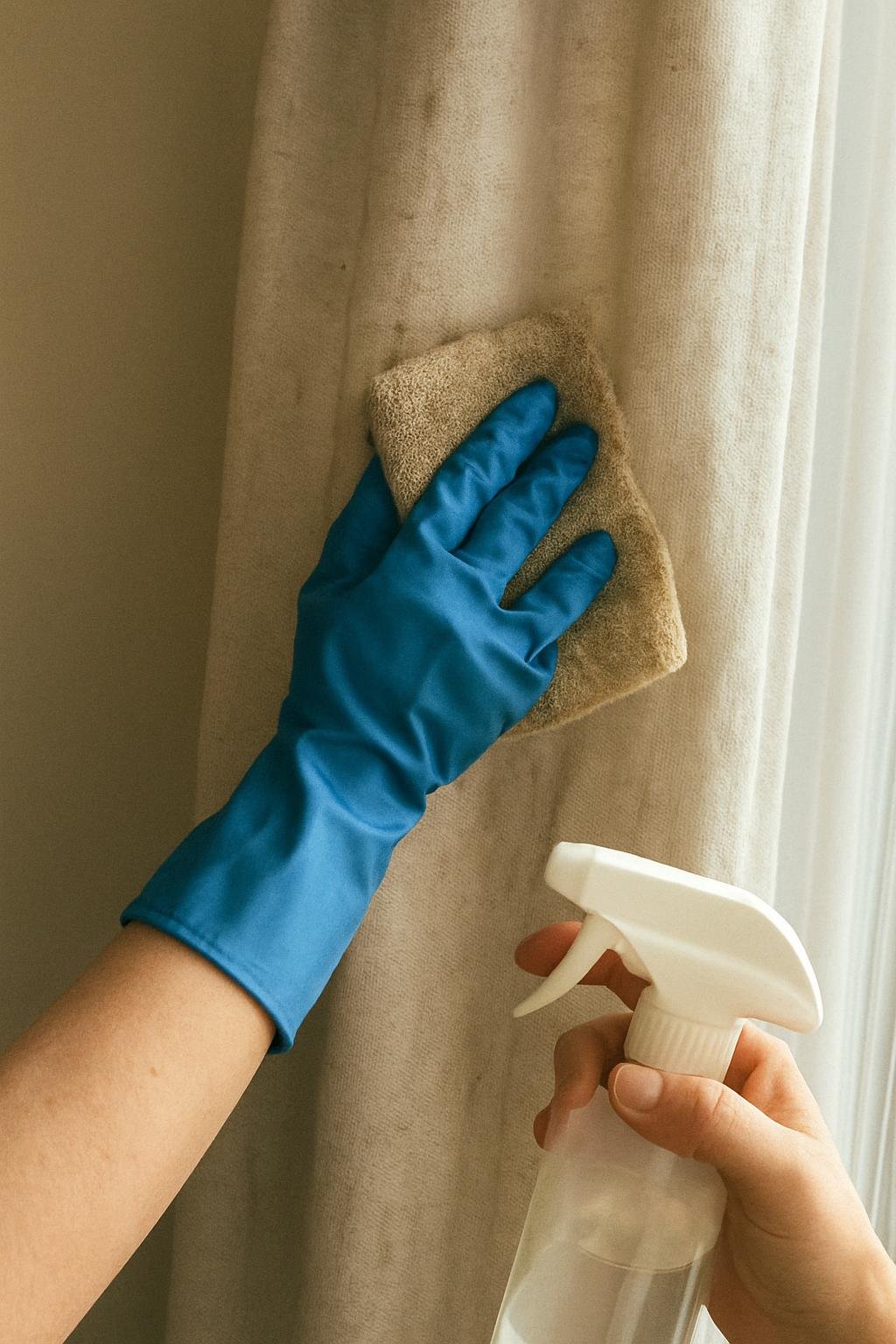
Spot Test Before Any Method
Before washing, steaming, or applying baking soda to a full curtain panel, test a small hidden section, such as an inside hem or bottom corner. Apply your chosen method, let it dry completely, and check for shrinkage, color change, or texture damage before treating the rest of the curtain. This step matters most with colored fabrics, curtains with printed patterns, and any material you’re unfamiliar with.
Common Mistakes That Make Smoke Odor Worse
A few habits tend to backfire when people try to remove smoke smell quickly:
- Relying only on fabric spray. Odor-masking sprays cover the smell temporarily but don’t remove the residue causing it, so the odor often returns within a day or two.
- Using hot dryer heat before the odor is fully gone. Heat can bake residual smoke particles into the fibers, making the smell harder to remove later.
- Ignoring the lining. Lined curtains sometimes trap more odor in the lining than in the visible outer fabric, so an outer-fabric-only cleaning method may leave a faint smell that lingers after the front looks and feels clean.
- Skipping the care label to save time. Washing a dry-clean-only panel can cause shrinkage or puckering that’s much harder to fix than the original odor problem.
Preventing Smoke Smell From Returning
Once curtains are odor-free, a few habits help keep smoke smell from building back up:
- Ventilate the room during and after smoking, cooking with heavy smoke, or using a fireplace, so odor particles have somewhere to go besides your fabric.
- Wash or air out curtains on a regular schedule if the room sees frequent smoke exposure, rather than waiting until the smell becomes obvious.
- Keep curtains a reasonable distance from grills, fire pits, or indoor smoking areas when possible.
Adding curtain care to a broader routine also helps you catch odor early instead of after it’s set in. A household cleaning checklist can help you build regular fabric care into your normal cleaning schedule.
Everything Mentioned Above
Before you leave, grab the tools you need to get the job done right the first time:
*As an Amazon Associate, TidyFormula earns from qualifying purchases.