
How to Remove Damp Smell from Bedroom
You remove damp smell from a bedroom by finding and fixing the moisture source first, then cleaning the affected surfaces with a mild, appropriate cleaner and improving airflow so the room can fully dry. Skipping the moisture-source step is the main reason the smell keeps coming back, even after cleaning.
In many homes, the odor gets worse in one corner near an exterior wall, behind furniture pushed against the wall, or under a bed with limited airflow underneath. Those spots often stay damp longer than the rest of the room, so they hold onto the smell even after the air seems to clear.
⚡ The TidyFormula™ Quick Decision
Best approach: Identify where moisture is collecting, ventilate the room, and clean hard surfaces with a mild detergent solution before relying on air fresheners or odor sprays.
Use caution with: Fabric items like curtains, rugs, and upholstered furniture, since they hold moisture longer and may need different care depending on the fabric care label.
Stop and reassess if: You notice visible dark spotting, a musty smell that returns within a day or two of cleaning, or moisture on walls or windows that reappears after drying, since these can point to a larger moisture problem that cleaning alone won’t solve.
What I Use For This Job
Using the right tools saves time and protects your belongings. Here are my exact recommendations:
*As an Amazon Associate, TidyFormula earns from qualifying purchases.
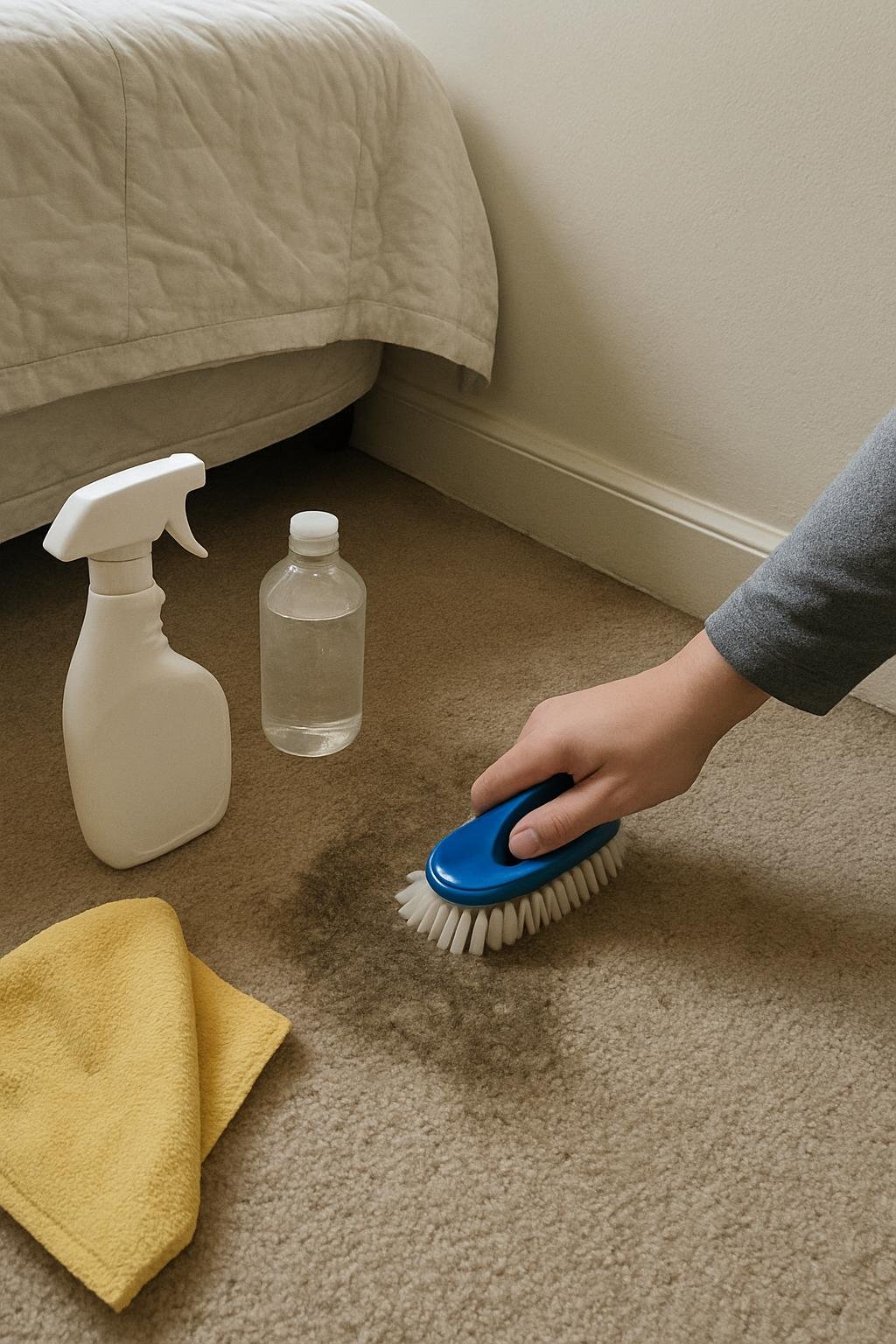
Why a Bedroom Holds Onto Damp Smell
Bedrooms often trap moisture more than other rooms because they’re closed off for long stretches of the day and night, have less airflow, and contain fabric-heavy items like bedding, curtains, and carpet that can absorb and hold moisture. If the room also has poor ventilation, a closed closet, or furniture blocking an exterior wall, damp air has fewer ways to escape.
Before you clean anything, take a few minutes to check likely trouble spots: window frames and sills, exterior-facing walls, closet interiors, under the bed, and any areas where furniture sits close to a wall. Look for cool, slightly damp-feeling surfaces or faint discoloration. This tells you where to focus your cleaning effort instead of treating the whole room the same way.
Step-by-Step: Removing Damp Smell from a Bedroom
- Open the room up first. Open windows if weather allows, and turn on any exhaust fan or air circulation you have. Fresh airflow alone can noticeably reduce a mild damp smell within an hour or two.
- Pull furniture away from exterior walls. Even a few inches of space behind dressers, headboards, or bookshelves allows air to move and helps walls dry faster.
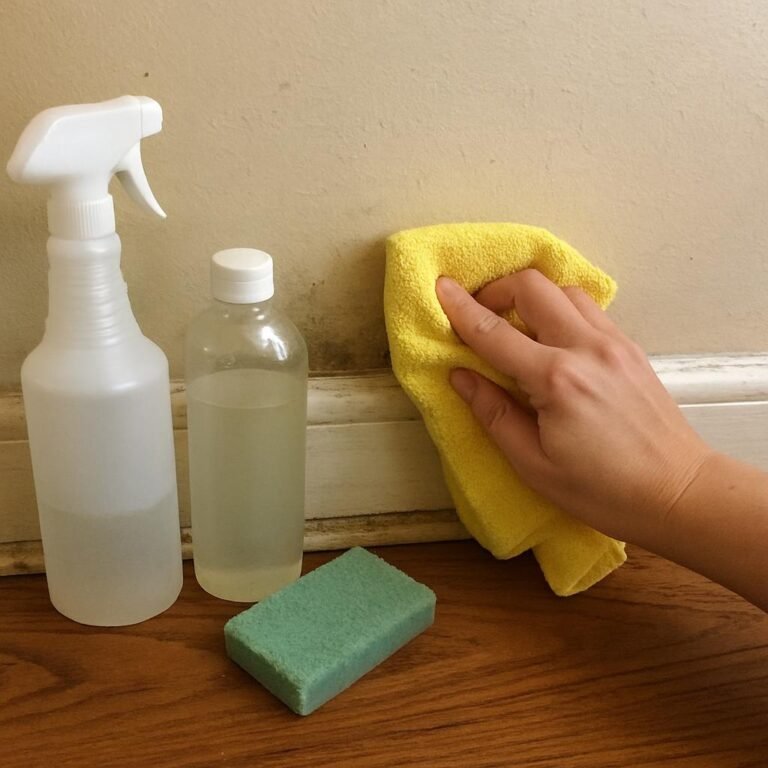
- Wipe down hard, sealed surfaces. Use a cloth dampened with a mild detergent-and-water solution on painted walls, window sills, baseboards, and sealed furniture. Avoid soaking painted drywall, since excess moisture can worsen the problem you’re trying to fix.
- Vacuum carpet and fabric surfaces. A vacuum with a good filter can pull out trapped dust and moisture-holding debris from carpet and rugs, which often carry more of the odor than people expect.
- Wash removable fabric items according to their care label. Curtains, washable rugs, and slipcovers can often go through a normal wash cycle if the care label allows it. Skip this step for dry-clean-only or delicate fabrics and follow the label instead.
- Let everything dry completely before replacing it. Putting damp curtains or rugs back in a closed room defeats the purpose of cleaning. Give fabric items time to fully air-dry, ideally with airflow moving across them.
- Run a dehumidifier if the room stays humid. If your bedroom consistently feels damp, a dehumidifier can help maintain lower humidity levels once the initial cleaning is done, especially in basement bedrooms or rooms with limited natural airflow.
For a broader room-by-room approach to staying ahead of moisture and odor issues, TidyFormula’s household cleaning checklist can help you build these habits into a regular routine instead of only addressing them when the smell shows up.
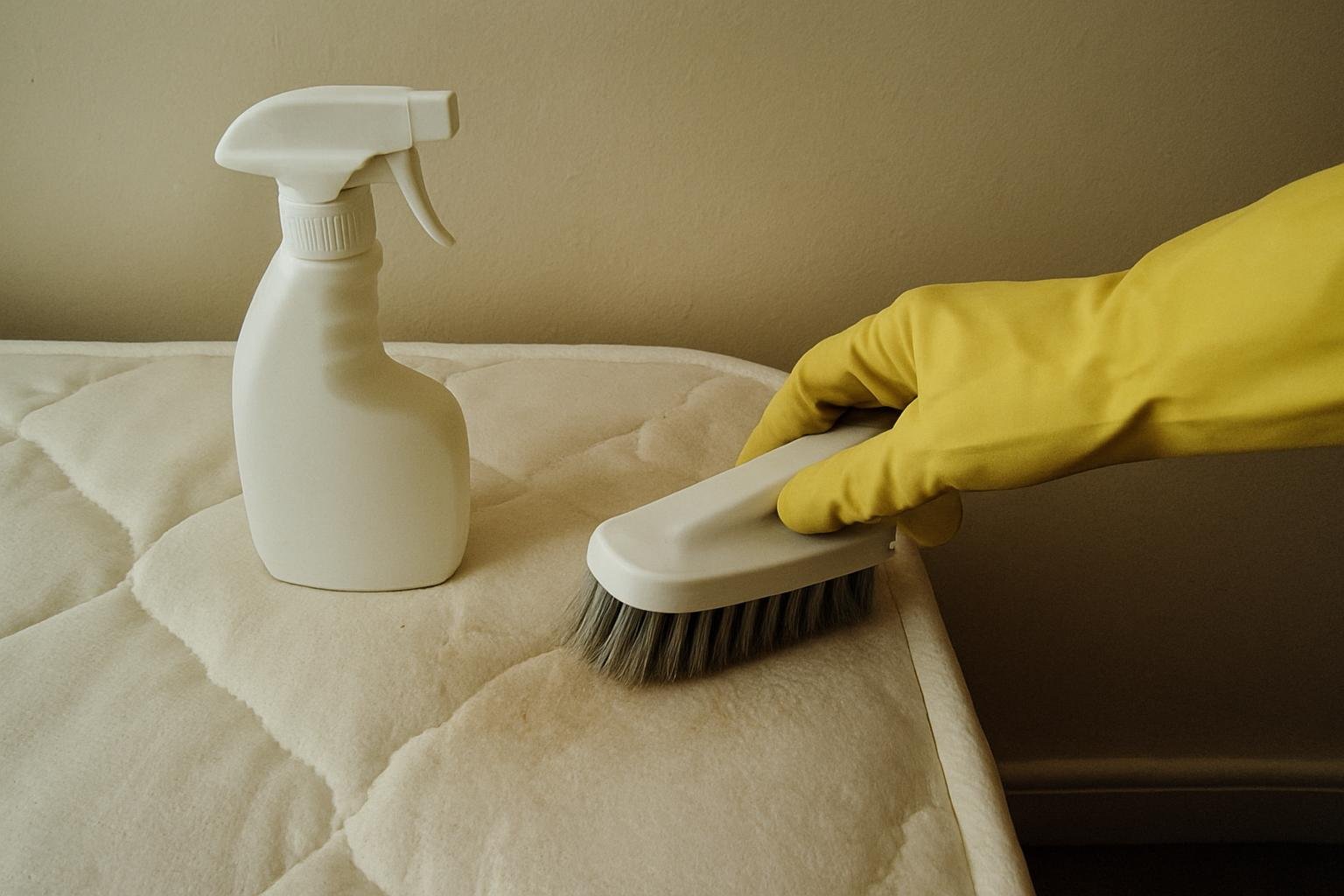
Choosing a Safe Cleaner for Damp Smell
A mild dish detergent diluted in water is a reasonable starting point for wiping down sealed, nonporous surfaces like painted walls, sealed wood furniture, and window sills. It’s gentle enough for most finishes while still lifting the grime that can hold onto musty odor.
Avoid reaching for strong solvents, abrasive powders, or any combination of cleaning products you wouldn’t normally mix. Combining household cleaners, especially anything containing bleach with ammonia, vinegar, or other acids, can create harmful fumes, so stick to one product at a time and always check the label for surface compatibility first.
If you’re dealing with fabric surfaces like a mattress, mattress topper, or upholstered headboard, treat those separately from hard surfaces. If the odor is tied to a specific stain source rather than general dampness, a guide like how to get a urine stain out of a mattress topper covers the more targeted cleaning steps those materials need.
Cleaning Mistakes That Make Damp Smell Worse
- Masking the smell instead of removing the moisture. Air fresheners and odor sprays can temporarily cover the smell, but they don’t address the damp source, so the odor typically returns.
- Over-wetting surfaces during cleaning. Soaking drywall, carpet, or wood furniture with cleaning solution adds moisture rather than removing it. Use a well-wrung cloth, not a saturated one.
- Closing the room back up too soon. Shutting windows and doors right after cleaning traps residual moisture inside instead of letting it escape.
- Ignoring closets. A damp-smelling closet with little airflow can reintroduce odor into the room even after the main space has been cleaned.
- Treating every fabric the same way. Delicate or dry-clean-only fabrics can be damaged by home washing or steam. Check the care label before treating curtains, rugs, or upholstery.
Preventing Damp Smell from Coming Back
Once the room is clean and dry, a few habits go a long way toward keeping the smell from returning. Leave a small gap between furniture and exterior walls so air can circulate. Open windows briefly on dry days when weather allows, and use exhaust fans or a dehumidifier if the room tends to run humid. Check window seals and frames periodically, since small gaps or condensation buildup can reintroduce moisture over time.
If you notice the smell returning within a few days of cleaning, or you see recurring moisture on walls, windows, or flooring, that points to an ongoing moisture source rather than a surface-cleaning issue. At that point, it’s worth having the room evaluated by a qualified professional who can identify whether the cause is ventilation, insulation, plumbing, or something structural that cleaning alone can’t fix.
Everything Mentioned Above
Before you leave, grab the tools you need to get the job done right the first time:
*As an Amazon Associate, TidyFormula earns from qualifying purchases.
2 Comments