Organizing a Coat Closet Made Simple
The best way to organize a coat closet is to start empty, sort items by season and frequency of use, add flexible storage like hooks, bins, and shelf dividers, then return only what you actually wear or use regularly. This creates visible, grab-and-go access (see our Entryway Reset Routine for tips on keeping the entry area tidy) instead of a jammed rod where jackets, shoes, and gear compete for the same small space.
⚡ The TidyFormula™ Quick Decision
Best approach: Empty the closet completely, group coats and gear by category, and use vertical storage (hooks, shelves, bins) to separate seasonal items from everyday ones so the closet stays functional year-round.
Use caution with: Overloading wire or laminate shelving beyond its weight rating, hanging heavy coats on flimsy hooks, and storing damp jackets or wet boots directly against walls or other garments (wet items often lead to mildew — see how to remove mildew smell from shoes).
Stop and reassess if: The closet rod sags, shelving pulls away from the wall, you notice persistent musty odors or moisture, or the space still feels overcrowded after removing out-of-season items—these are signs you need different hardware or a smaller inventory rather than a quick tidy-up.
Why Coat Closets Get Overwhelmed So Fast
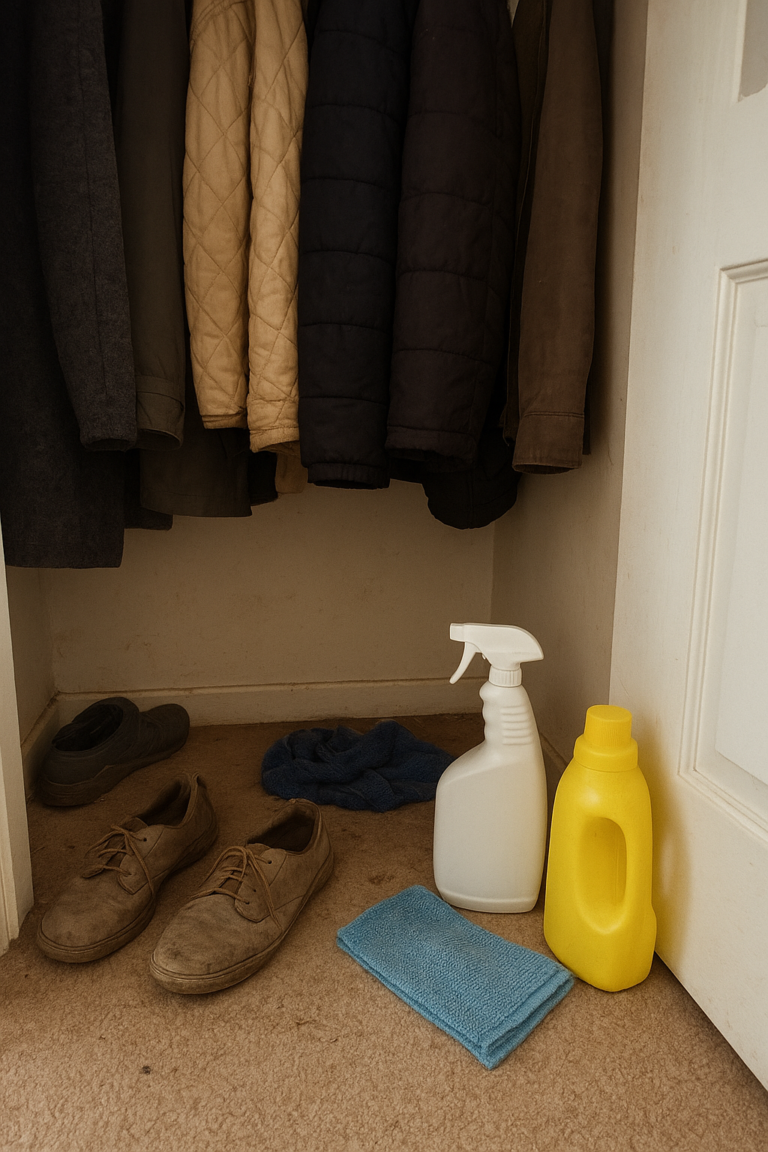
Coat closets tend to become catch-alls because they sit near the entryway, where everyone drops bags, umbrellas, and outerwear on the way in or out. Without a system, coats overlap on a single rod, shoes pile on the floor, and small items like gloves and scarves disappear into corners. Over time, this makes it harder to find what you need and easier to lose track of what you already own.
What I Use For This Job
Using the right tools saves time and protects your belongings. Here are my exact recommendations:
*As an Amazon Associate, TidyFormula earns from qualifying purchases.
Step 1: Remove Everything First
Take every item out of the closet, including hooks, bins, and anything sitting on the floor. Working with an empty space makes it easier to see how much room you actually have and whether the current shelf and rod layout still makes sense for your household’s needs.
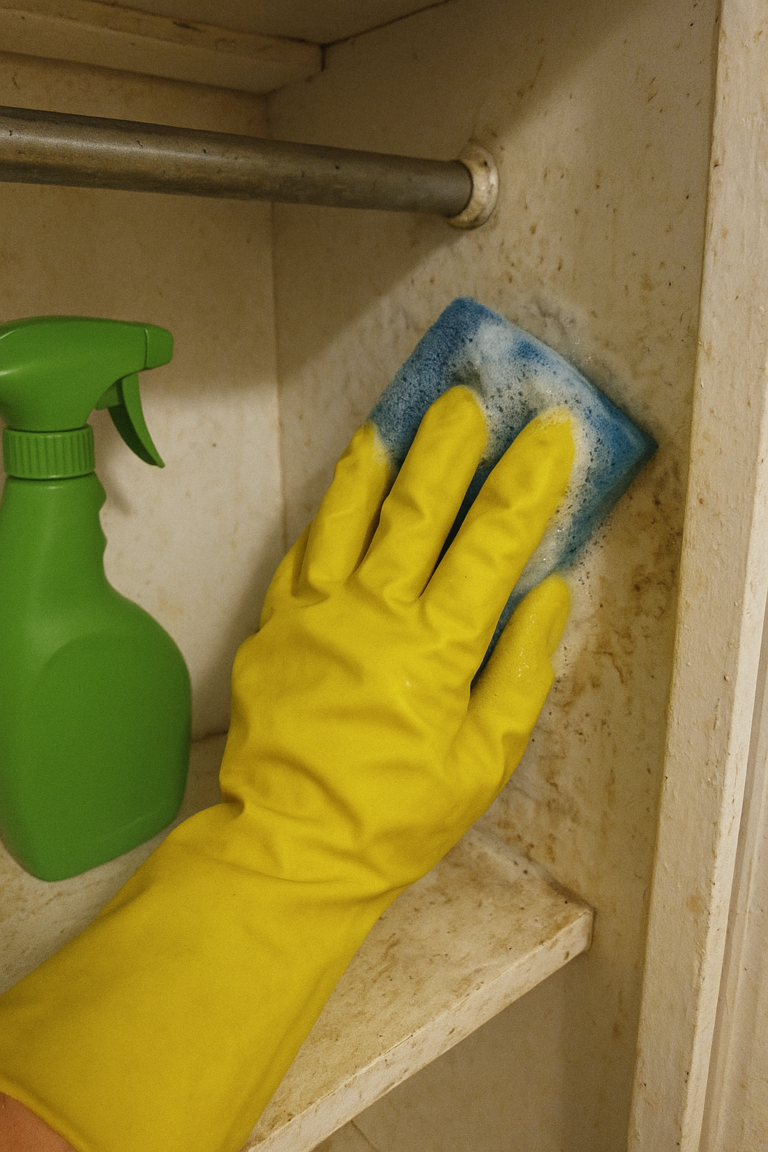
- Wipe down the closet floor and shelves as needed, following any manufacturer guidance for painted or finished surfaces.
- Check the rod, brackets, and any shelving for looseness or damage before reloading them.
Step 2: Sort by Category and Season
Group items into simple categories rather than trying to organize everything at once. This step is where most of the long-term improvement happens.
- Everyday outerwear: Coats and jackets worn weekly or more.
- Seasonal outerwear: Heavy winter coats or rain gear used only part of the year.
- Accessories: Hats, gloves, scarves, and umbrellas.
- Footwear: Boots or shoes that belong near the entry.
- Donate or discard: Anything unworn in the past year, damaged beyond repair, or no longer the right size.
Be honest during this step. A closet organized around what you actually use will stay tidy much longer than one that tries to store everything “just in case.”
Step 3: Choose Storage That Matches the Space
Not every coat closet has the same shape or hardware, so the right storage tools depend on what you’re working with.
Hooks
Hooks work well for jackets used daily, since they allow quick in-and-out access without needing a hanger. Choose hooks rated for the weight of heavier coats, and mount them into wall studs or use appropriate anchors if you’re attaching new hardware, following the hook manufacturer’s instructions.
Shelving and Bins
Upper shelves are useful for out-of-season coats, folded scarves, or bins holding gloves and hats. Clear or labeled bins make it easier to identify contents without digging through everything. If you’re using wire shelving, check its listed weight capacity before loading it with heavy winter gear.
For more on organizing shelves and bins and grouping by use, see our Linen Closet Reset Checklist for practical shelf and bin layouts that translate well to coat closets.
Rod Space
Reserve the rod mainly for coats that need to hang smoothly, such as dress coats or raincoats. Use slim hangers where possible to fit more items without crowding.
Step 4: Handle Footwear Separately
Shoes and boots often cause the most clutter at closet floors. A shoe rack, tray, or boot tray can keep footwear contained and off the closet floor directly. If boots come in wet or muddy, consider letting them dry outside the closet first, since enclosed spaces don’t allow much airflow and trapped moisture can affect nearby fabrics. For persistent smells or to refresh a rack area, consult our guide on removing odor from a shoe rack.
Step 5: Address Seasonal Rotation
Rotating coats by season keeps the closet from becoming overcrowded. Move current-season items to the most accessible hooks and shelves, and shift off-season coats to higher shelves, an upper storage bin, or another closet if space allows. This seasonal swap is a good time to check garment care labels for any storage guidance, especially for wool or specialty-fabric coats.
Step 6: Label and Maintain the System
Simple labels on bins or shelves help every household member put things back in the right spot. A short, printed label works better than a system only one person remembers. Reassess the closet every few months, especially at the start of a new season, to remove anything that’s drifted back into clutter.
Keep hooks and bins clearly assigned, do a quick seasonal check-in, and remove items that no longer fit the household’s needs. Small, regular adjustments are usually more effective than a single deep organizing session that isn’t maintained afterward — a quick refresher using a Weekly Reset Cleaning Checklist can help keep things on track.
Material and Fabric Considerations
Different coat materials have different storage needs, and checking each garment’s care label can help you decide the safest approach.
- Wool coats:
- Down or synthetic-fill jackets: Hanging rather than compressing for long periods can help maintain loft, though specific care depends on the manufacturer’s instructions.
- Leather or specialty fabrics: May have unique storage recommendations; check the label or manufacturer guidance before deciding on a storage method.
Troubleshooting Common Problems
Closet Still Feels Crowded
If the closet feels full even after organizing, the issue is usually inventory rather than layout. Consider narrowing down coats to a set number per person or moving true off-season storage elsewhere.
Rod or Shelf Sagging
A sagging rod or shelf may indicate it’s overloaded or wasn’t rated for the current load. Reducing weight or adding additional support brackets, if compatible with your closet’s construction, can help.
Musty or Stale Odors
Persistent odors can result from moisture, poor airflow, or items stored while damp. Improving air circulation and making sure coats and shoes are fully dry before closet storage may help, though ongoing odor or moisture concerns are worth addressing based on the specific cause in your home. For a step-by-step approach to a musty closet smell, see How to Remove Musty Smell from a Closet.
Keeping the System Working Long-Term
An organized coat closet stays that way when the system is easy to follow. Keep hooks and bins clearly assigned, do a quick seasonal check-in, and remove items that no longer fit the household’s needs. Small, regular adjustments are usually more effective than a single deep organizing session that isn’t maintained afterward.
Everything Mentioned Above
Before you leave, grab the tools you need to get the job done right the first time:
*As an Amazon Associate, TidyFormula earns from qualifying purchases.