How to Clean Fabric Blinds Effectively
Fabric blinds collect dust, pet hair, and light grime over time, and most can be cleaned with regular vacuuming plus occasional spot cleaning, as long as you check the care label first. Roman shades, pleated shades, and fabric roller blinds each have different sensitivities to moisture, so the safest routine combines dry dust removal with cautious, targeted spot treatment rather than soaking the fabric. If you prefer methods that avoid taking the treatment down, see How to clean blinds without taking them down for section-by-section approaches.
⚡ The TidyFormula™ Quick Decision
Best approach: Vacuum fabric blinds regularly with a soft brush attachment to remove surface dust, then use light spot cleaning with a mild solution only on isolated stains, always testing on a hidden area first.
Use caution with: Delicate or dry-clean-only fabrics, blinds with stiffened pleats or backing, and any blind where the care label warns against water or specific cleaning agents (for delicate sheers and how to avoid yellowing, see how to clean sheer curtains without yellowing).
Stop and reassess if: The fabric shows water rings, color bleeding, shrinking, or the backing starts to separate—these signs suggest professional cleaning or replacement may be a better option than continued home treatment.
Start by Checking the Care Label
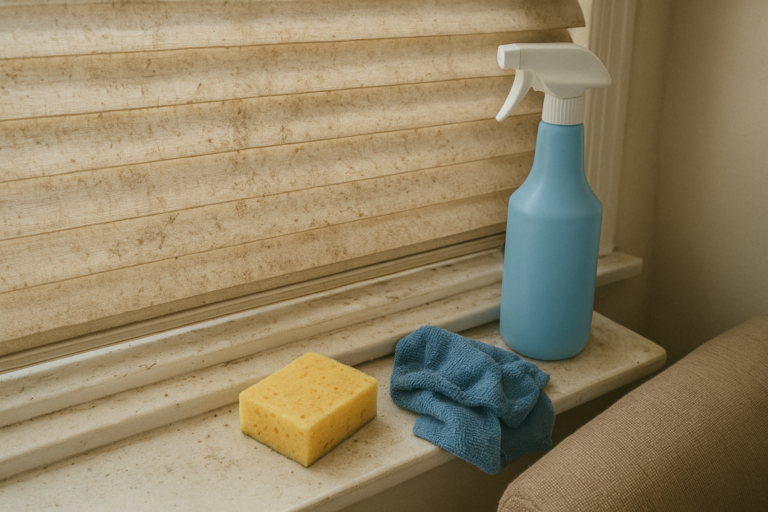
Before doing anything else, look for a care tag on the blind itself or check the manufacturer’s documentation that came with the product. Fabric blinds vary widely—some are washable, some are spot-clean only, and others are labeled dry-clean only. Because manufacturers use different fabrics, backings, and stiffening treatments, there’s no single method that works safely on every blind. When in doubt, following the label or contacting the manufacturer is the most reliable way to avoid damage.
What I Use For This Job
Using the right tools saves time and protects your belongings. Here are my exact recommendations:
*As an Amazon Associate, TidyFormula earns from qualifying purchases.
Step 1: Remove Surface Dust First
Dust and loose debris should always come off before any spot treatment, since rubbing dirt into fabric with a damp cloth can grind it deeper into the weave.
- Fully extend or lower the blinds so you can access the entire surface.
- Use a vacuum with a soft brush attachment on low suction, working from top to bottom in gentle, overlapping passes.
- For pleated or cellular shades, a microfiber duster or a hair dryer set to a cool, low airflow setting can help dislodge dust from folds without pushing it further in.
- If your blinds are made from a sturdier fabric, a lint roller can help lift pet hair or fine debris between vacuuming sessions.
If your window has a mesh screen, you can usually clean window screens without removing them using a soft brush or low-suction vacuum before you work on the blind itself.
Step 2: Spot Clean Isolated Stains
Once dust is removed, you can address specific marks. Because fabric composition, dye stability, and backing materials differ by manufacturer, always test any cleaning approach on a small, hidden section first and let it dry completely before treating a visible area.
- Dampen a soft, clean cloth with plain water or a mild solution suited to the fabric type, and blot rather than scrub.
- Work from the outside of the stain inward to avoid spreading it.
- Allow the spot-treated area to air dry fully before lowering or raising the blind again, since moisture trapped in folds can lead to warping or watermarks.
- Avoid saturating the fabric—excess moisture is one of the most common causes of shrinking, staining, or backing separation on fabric blinds.
Handling Tougher Grime or Odors
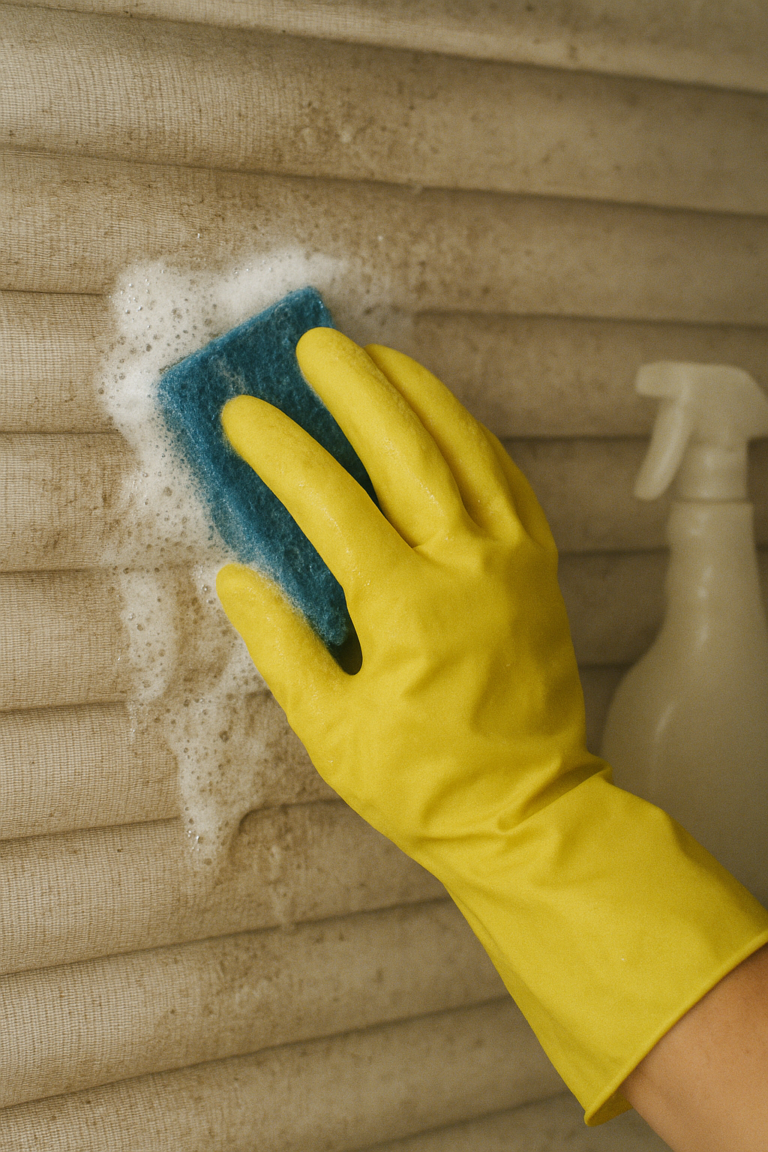
For blinds with more embedded dirt or a musty smell, some homeowners have the blind professionally cleaned rather than attempting an at-home deep clean. This is especially worth considering for lined Roman shades, blackout fabric blinds, or any shade with a stiffened or laminated backing, since these constructions can react unpredictably to moisture and home cleaning agents. A professional cleaner familiar with window treatments can assess the fabric and choose an appropriate method.
If smoke has affected the fabric, see guidance on how to remove smoke smell from curtains—the same principles apply to many fabric shades. If the odor seems musty or humidity-related rather than smoke, check tips for how to remove damp smell from a bedroom, since resolving the moisture source is key to preventing a return of the odor.
Drying and Aftercare
If any part of the blind gets damp during cleaning, let it dry fully in its extended position with good airflow in the room before raising or folding it again. Folding or rolling damp fabric can trap moisture and lead to musty odors or uneven fabric texture. Once dry, a final light vacuuming can help restore the blind’s appearance.
Preventing Buildup Between Cleanings
- Dust fabric blinds every one to two weeks with a vacuum brush attachment or microfiber duster to prevent heavy buildup.
- Keep windows and nearby surfaces dust-free—especially window sills; practical how-to instructions for this are available in how to clean dirty window sills.
- For light debris in tracks and channels, you can clean window tracks without a vacuum using a damp cloth and a small brush to prevent grime from migrating onto the fabric.
- Address spills or splashes promptly with a dry blot first, then follow up with light spot cleaning if needed.
- In kitchens or bathrooms, more frequent dusting may be necessary due to grease residue or humidity.
When to Consider Repair or Replacement
If a fabric blind has extensive staining, visible fading, a damaged backing, or if cords and mechanisms are worn beyond simple cleaning, replacement may be more practical than continued spot treatment. For blinds that are otherwise in good shape but have a stubborn stain, a professional cleaning service experienced with window treatments can offer guidance on whether the fabric is salvageable.
Everything Mentioned Above
Before you leave, grab the tools you need to get the job done right the first time:
*As an Amazon Associate, TidyFormula earns from qualifying purchases.