Can You Wash an American Flag: A Practical Guide
Yes, you can wash most American flags, but the safest method depends heavily on the fabric. Cotton and polyester flags generally tolerate gentle hand washing or a delicate machine cycle, while nylon flags and any flag with embroidered stars, printed seals, or delicate fringe often do better with careful hand washing or professional cleaning to avoid fading, fraying, or damage to stitching.
⚡ The TidyFormula™ Quick Decision
Best approach: Hand wash in cool water with a mild detergent, gently agitating and rinsing, then lay flat or hang to air dry away from direct sun.
Use caution with: Nylon flags, flags with embroidered or appliquéd stars, printed emblems, gold fringe, or any flag showing signs of age, brittleness, or loose stitching.
Stop and reassess if: The fabric feels weak or tears easily when wet, colors bleed heavily during washing, embroidery or fringe starts to loosen, or the flag has historical, ceremonial, or sentimental value that makes professional cleaning a better option.
Check the Fabric and Construction First
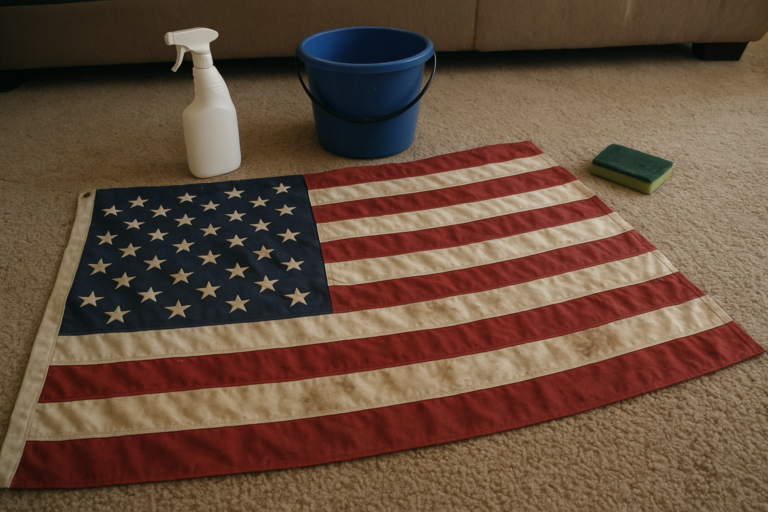
Before you wash anything, take a close look at how the flag is made. Most outdoor flags are polyester or nylon, while some ceremonial or indoor flags use cotton or cotton blends. The stars and stripes may be printed, sewn, or embroidered, and many indoor flags have fringe trim along the edges. Each of these details affects how much washing the flag can safely handle.
What I Use For This Job
Using the right tools saves time and protects your belongings. Here are my exact recommendations:
*As an Amazon Associate, TidyFormula earns from qualifying purchases.
If your flag has a manufacturer tag or care label, check it first. Some flags include specific washing or dry-cleaning guidance, and following that information is more reliable than any general rule of thumb. For similarly constructed heavy or lined textiles, guidance on how to wash blackout curtains without ruining them can be helpful because it covers fabric-backed and multi-layered materials.
Materials That Typically Handle Washing Well
- Polyester: Generally durable and colorfast; for practical tips on caring for outdoor polyester fabrics, see our guide to cleaning outdoor furniture cushions.
- Cotton or cotton blends: Often washable, but colors may fade faster and fabric can weaken with repeated washing over time.
Materials That Need Extra Caution
- Nylon: Lightweight and prone to snagging or fraying with rough handling; treat it similarly to other delicate, thin fabrics and review tips for cleaning delicate sheer fabrics.
- Embroidered stars or appliqué: Stitching can loosen or pucker if agitated too much.
- Fringe (especially metallic or gold-toned): Can tangle, fray, or lose its finish with machine washing.
- Printed emblems or seals: May fade or crack faster than woven designs.
How to Hand Wash an American Flag
- Fill a clean sink, tub, or large basin with cool water.
- Add a small amount of mild, color-safe laundry detergent and mix until dissolved.
- Submerge the flag and gently move it through the water without twisting, scrubbing, or wringing.
- Let it soak briefly, then drain the soapy water.
- Rinse with clean, cool water until no soap remains, gently pressing out excess water rather than wringing.
Handle the fabric gently throughout, especially around seams, stitched stars, and any fringe. Aggressive scrubbing or twisting is one of the most common ways flags get damaged during cleaning. The same low-moisture, test-first approach is recommended when you clean other fabric items like upholstered pieces—see our notes on cleaning fabric furniture gently for comparable precautions.

Can You Machine Wash an American Flag?
Some sturdy polyester or cotton flags without fringe or embroidery may tolerate a gentle, cold-water machine cycle inside a mesh laundry bag, but this depends on the flag’s condition and construction. Because machine agitation is harder to control than hand washing, it carries more risk of fraying edges, loosening stitched stars, or damaging fringe. If you choose to machine wash, use a delicate cycle, cold water, and a mild detergent, and check the flag afterward for any new fraying or loose threads.
Avoid the dryer. Heat and tumbling can shrink fabric, melt certain synthetic fibers, or warp embroidered or appliquéd elements. For guidance on drying large, fill-containing textiles and avoiding clumping or heat damage, compare the drying tips in our duvet insert drying guide.
Drying an American Flag Properly
Air drying is the safest choice for nearly all flag materials. Lay the flag flat on a clean towel or hang it over a rod or line, ideally out of direct sunlight, which can accelerate fading over time. Turning the flag periodically as it dries can help it dry evenly and reduce the chance of mildew odor from trapped moisture, especially in humid climates.
Avoid hanging a wet flag by a single point, such as a grommet, since the weight of the water can stretch or strain the fabric.
When to Consider Professional Cleaning Instead
Some flags are better left to a professional cleaner experienced with flags or delicate textiles, particularly if:
- The flag is antique, ceremonial, or has sentimental or historical value
- It has extensive embroidery, appliqué, or metallic fringe
- The fabric already shows signs of brittleness, tearing, or heavy fading
- You’re unsure how the specific material will react to water or detergent
A professional can assess the fabric and construction firsthand and choose a method suited to that specific flag, which isn’t always possible with general guidance. Items that include electronics, special linings, or integrated heaters (for example, some specialty blankets) often need manufacturer-approved or professional handling—see our piece on cleaning electric or electronically lined textiles for similar scenarios.
Stain and Odor Considerations
For dirt, dust, or light staining, a gentle hand wash as described above is usually enough. For tougher stains, avoid the temptation to scrub hard or use strong stain removers without testing them first on a hidden area, such as the back of a hem, to see how the fabric and color respond. If a stain persists after gentle washing, professional cleaning may be a safer option than repeated aggressive treatment at home.
Preventing Damage Between Washes
- Store flags clean and completely dry to help reduce the chance of mildew odor or fabric weakening over time.
- Fold flags loosely rather than tightly creasing them repeatedly in the same spots, which can weaken fibers.
- Bring outdoor flags in during severe weather when practical, since prolonged sun and moisture exposure contribute to fading and fabric fatigue.
- Rotate or replace outdoor flags periodically if you notice fraying edges, significant fading, or thinning fabric.
Repair or Replace?
Minor fraying along the edge or a small loose thread can sometimes be trimmed or restitched carefully. However, if a flag shows widespread tearing, significant fabric thinning, or heavy color loss, washing is unlikely to restore it, and replacement may be the more practical choice. For flags with sentimental or ceremonial significance, many communities and organizations have guidance on retiring a flag respectfully once it’s no longer in serviceable condition.
Final Thoughts
Washing an American flag is often possible, but the right method depends on its fabric, construction, and condition. When in doubt, gentle hand washing and air drying are the lower-risk choices, and checking any care label or manufacturer guidance first can help you avoid unnecessary damage. For particularly large, layered, or specialty textiles that resemble flags in complexity, consult dedicated cleaning resources like our blackout curtain care guide and follow the conservative, test-first approach described throughout this article.
Everything Mentioned Above
Before you leave, grab the tools you need to get the job done right the first time:
*As an Amazon Associate, TidyFormula earns from qualifying purchases.