Best Vacuums for Wood Floors: Gentle Models with Hard-Floor Settings
The best vacuums for wood floors are lightweight models with strong suction, a floor setting that turns off or softens the brush roll, and smooth wheels or soft rollers that won’t scratch the finish. Canister vacuums, many stick vacuums, and some robot vacuums with hard-floor modes tend to work well, but always check your flooring manufacturer’s care guidance for specific product recommendations.
⚡ The TidyFormula™ Quick Decision
Best approach: Choose a vacuum with a dedicated hard-floor or brush-off setting, good filtration, and gentle wheels or rollers, then use slow, deliberate passes to lift dust and grit without dragging debris across the finish. For finishing tips and to avoid streaks, see our guide on how to clean hardwood floors without streaks.
Use caution with: Vacuums with aggressive rotating brush rolls that can’t be disabled, beater bars designed for carpet, or worn wheels and casters that may carry grit and scuff the surface.
Stop and reassess if: You notice new scratches, dulling, or a hazy film appearing after vacuuming, or if your flooring warranty or care documentation restricts certain vacuum types or attachments.
What Makes a Vacuum “Good” for Wood Floors
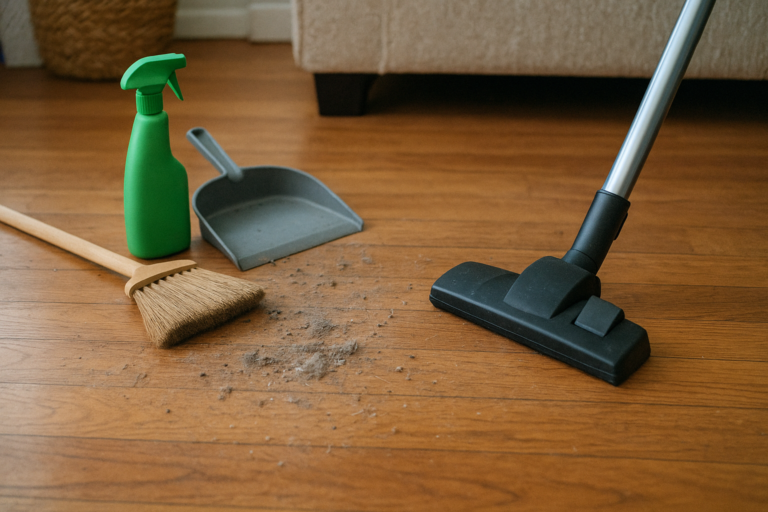
Wood floors are more sensitive to abrasion than carpet, so the features that matter most aren’t the same ones you’d look for in a carpet vacuum. A few characteristics consistently show up in vacuums that work well on wood without adding wear:
What I Use For This Job
Using the right tools saves time and protects your belongings. Here are my exact recommendations:
*As an Amazon Associate, TidyFormula earns from qualifying purchases.
- Adjustable or disable-able brush roll: A spinning brush designed for carpet can drag grit across a wood surface. Look for a switch or setting that stops the brush or swaps in a soft roller for hard floors.
- Strong, steady suction: Since the vacuum isn’t relying on agitation to pull debris out of fibers, suction does more of the work. Consistent airflow at the nozzle matters more than a high wattage number on the box.
- Soft or well-maintained wheels: Hard plastic wheels can pick up grit and transfer it to the floor as scratches. Rubberized or soft-wheeled designs reduce that risk, though wheels should still be checked periodically for embedded debris—see our guide on how to clean office chair wheels for maintenance tips.
- Manageable weight and maneuverability: A vacuum that’s easy to control reduces the chance of bumping furniture legs or dragging the body across the floor.
- Sealed filtration: Good filtration keeps fine dust from resettling on the floor right after you’ve cleaned it, though this is more about cleaning outcome than floor protection.
Vacuum Types That Tend to Work Well
Canister Vacuums
Canister vacuums with a separate hard-floor attachment are often a reliable choice. The head typically has soft bristles or a felt strip rather than a rotating brush, and the body stays off the floor entirely since you’re guiding a wand and hose.
Stick Vacuums
Many cordless stick vacuums include a hard-floor head or a setting that reduces brush roll speed. These are convenient for daily upkeep, though battery life and dustbin capacity vary a lot between models, so check specifications if you have a larger space. If you’re switching cleaning products or routines for specialty floors, our guide to cleaning laminate floors without leaving film has useful notes on residues and product choices that are relevant to finished hard surfaces.
Robot Vacuums
Robot vacuums with hard-floor detection or adjustable suction can handle daily dust and pet hair pickup between deeper cleanings. Results vary by brand and model, and some owners find certain robots better at edge cleaning than others—if you rely on automated edge work, read about methods for cleaning along trim and baseboards in our piece on how to clean baseboards without bending over—so read the manufacturer’s guidance on flooring compatibility before relying on one as your only cleaning method.
Upright Vacuums
Upright vacuums can still work on wood floors if they have a brush-off switch, but models built primarily for carpet may be harder to control gently and can be heavier to maneuver around furniture.
Vacuum Features to Avoid or Use Carefully
- Fixed, non-adjustable beater bars: If a brush roll can’t be turned off, it may scatter debris rather than lift it, and stiff bristles can be more likely to mark a finish over repeated use.
- Very heavy uprights: Extra weight combined with hard wheels increases the chance of scuffing, especially on floors with a worn or thin finish.
- Attachments with metal edges: Some crevice tools or edge attachments have exposed metal that could nick a finish if dragged carelessly.
Because finishes, wood species, and manufacturer coatings vary widely, it’s worth checking your flooring’s care documentation for any specific vacuum restrictions before settling on a routine.

How to Vacuum Wood Floors Without Adding Wear
- Check the vacuum’s brush setting first. Switch to the hard-floor or brush-off mode before you start, if your model has one.
- Inspect the wheels and head. Look for embedded debris, grit, or hair that could scratch the floor as you move the vacuum.
- Work in slow, overlapping passes. Fast, jerky movements are more likely to drag grit than slow, controlled strokes.
- Pay attention to corners and along baseboards. Dust and grit tend to collect there, and a crevice tool or angled attachment can help without needing to force the main head into tight spaces. If those low or narrow areas are hard to reach, try long-handled reach tools and techniques—see how to clean under the bed without moving it for practical reach tips.
- Empty the canister or bag regularly. A full bin reduces suction, which can mean more passes and more contact with the floor to pick up the same amount of debris.
Preventing Scratches Between Vacuuming Sessions
Vacuuming is only part of protecting a wood floor. A few habits can reduce the grit load that ends up under your vacuum in the first place:
- Use doormats at entry points to cut down on tracked-in dirt and small stones.
- Consider felt pads under furniture legs to prevent scuffing during regular movement.
- Sweep or dust-mop high-traffic areas between full vacuum sessions if the floor sees heavy use.
- Trim pet nails regularly, since sharp nails can contribute to surface scratches independent of vacuuming.
When Vacuuming Alone Isn’t Enough
Vacuuming removes loose dust, dirt, and debris, but it won’t address sticky residue, spills, or a dull-looking finish. For those situations, check your flooring manufacturer’s cleaning recommendations for an appropriate follow-up method and product (for example, our pet-safe floor cleaner for hardwood floors guide discusses gentle, finish-compatible options), since wood floor finishes differ and not every cleaner or technique is suitable for every surface.
Troubleshooting Common Concerns
The Vacuum Seems to Be Scattering Debris Instead of Picking It Up
This often points to a brush roll that’s still active on a hard-floor setting, or suction that’s too weak due to a full bin or clogged filter. Check both before assuming the vacuum itself is a poor fit for wood floors.
New Marks Appear After Vacuuming
If you notice fresh scratches or dulling, stop using that vacuum on the floor and inspect the wheels, brush roll, and attachments for grit, debris, or wear. If the marks continue with a different vacuum or cleaning approach, it may be worth consulting a flooring professional to evaluate the finish condition.
Robot Vacuum Leaves Streaks or Missed Spots
Robot vacuum performance on wood floors varies by brand, sensor type, and suction settings. If streaking or inconsistent pickup continues, check the manufacturer’s settings for hard-floor mode and consider supplementing with a manual vacuum for a more thorough clean.
Final Thoughts
A good vacuum for wood floors comes down to gentle contact and reliable suction rather than raw power or aggressive agitation. Whether you choose a canister, stick, upright, or robot vacuum, look for hard-floor-specific settings and attachments, and always confirm your approach against your flooring’s care instructions when you’re unsure.
Everything Mentioned Above
Before you leave, grab the tools you need to get the job done right the first time:
*As an Amazon Associate, TidyFormula earns from qualifying purchases.