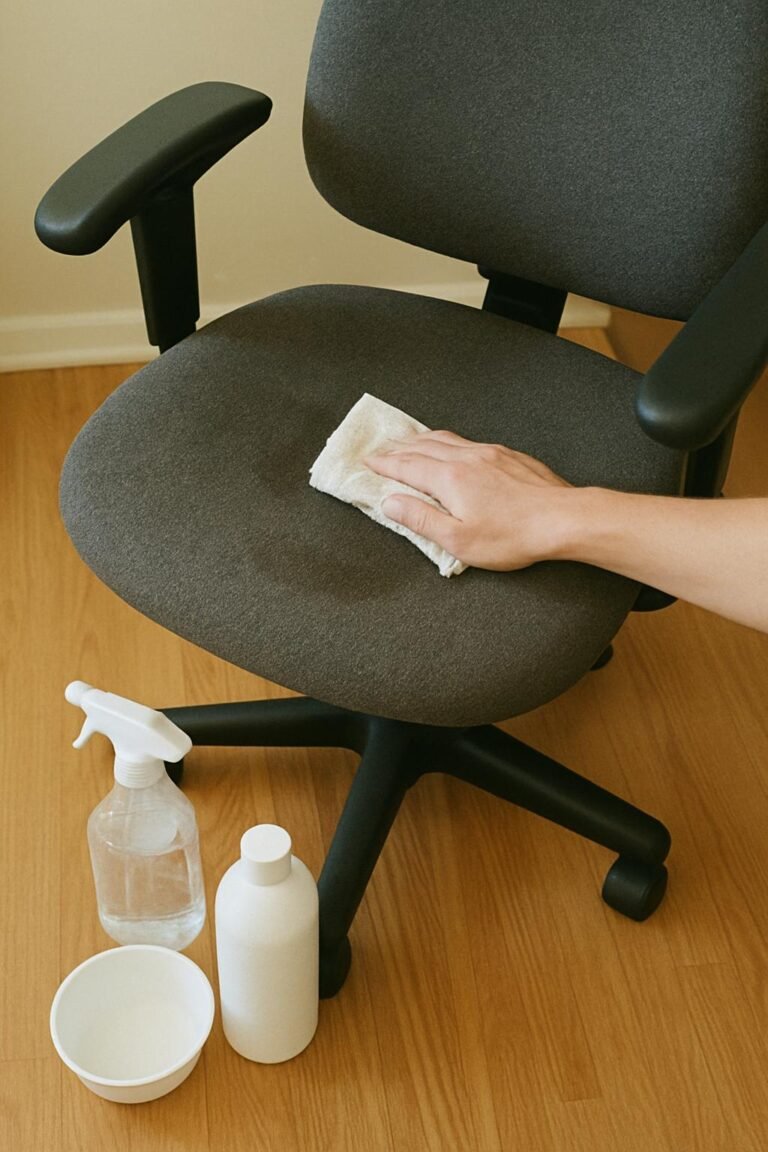
How to Clean Office Chair Wheels
The best way to clean office chair wheels is to remove them from the base if possible, pick out hair and debris with a flathead screwdriver or seam ripper, then wipe the wheel with a cloth dampened in mild dish soap and water. For caked-on grime, a soft brush loosens buildup without scratching the wheel casing or damaging the caster housing.
If your chair has been rolling roughly or squeaking on hardwood or laminate floors, the wheels have likely collected a mix of hair, carpet fibers, and dust wound tightly around the axle. That buildup is usually the reason the chair sticks, drags, or leaves marks on the floor.
⚡ The TidyFormula™ Quick Decision
Best approach: Pop the wheels off the base if they’re removable, cut away wound hair and fiber, then clean with a soft cloth and mild dish soap solution before drying and reattaching.
Use caution with: Soaking wheels in water, using sharp blades near rubber or plastic housings, and applying oil-based lubricants that attract more dust and debris.
Stop and reassess if: A wheel doesn’t spin freely after cleaning, the axle feels loose or wobbly, or you notice cracks in the plastic housing—these point to a worn part rather than a dirty one.
What I Use For This Job
Using the right tools saves time and protects your belongings. Here are my exact recommendations:
*As an Amazon Associate, TidyFormula earns from qualifying purchases.
What Usually Causes Sticky or Noisy Chair Wheels
Office chair casters roll on a small axle inside a plastic or metal housing. Hair, carpet fibers, food crumbs, and dust wrap around that axle over time, especially if the chair sits on carpet. As the debris tightens, it restricts the wheel’s spin, which is why chairs start to feel like they’re dragging or catching instead of rolling smoothly.
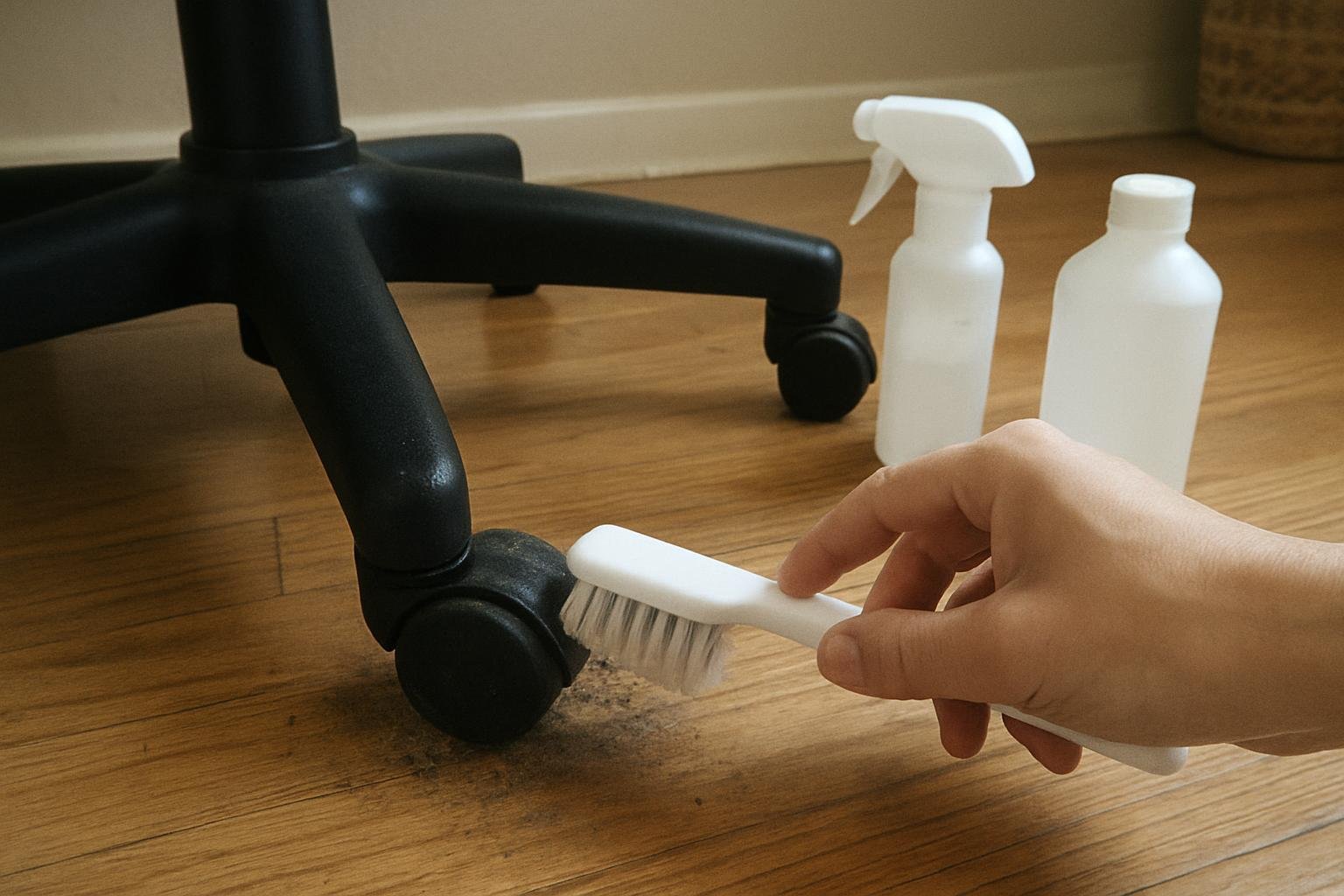
Dust and grit can also work into the wheel’s outer surface, leaving a gray film that transfers onto flooring. On hard floors, this buildup is often what causes the black scuff marks people mistake for scratches.
Tools You’ll Need
- A flathead screwdriver or butter knife for prying off wheels
- A seam ripper, small utility knife, or nail clippers for cutting wound hair and thread
- A soft-bristle brush (an old toothbrush works well)
- A microfiber cloth
- Mild dish soap and water
- A dry towel
How to Clean Office Chair Wheels Step by Step
- Tip the chair over or lay it on its side. This gives you clear access to the wheel base without straining to reach underneath.
- Remove the wheels if they’re designed to pop out. Most caster wheels on office and gaming chairs snap into a socket and pull straight out with firm, even pressure. If a wheel resists strongly, check whether your chair model uses a screw-in caster instead, since forcing it can crack the mounting stem.
- Cut away wound hair and fibers. Use a seam ripper or the tip of a utility knife to slice through tangled hair wrapped around the axle, then pull the loosened strands free with tweezers or your fingers. Work slowly around the axle rather than cutting straight across the plastic housing.
- Brush out loose debris. A dry toothbrush or small stiff-bristle brush removes dust and grit from the wheel treads and the inside of the housing.
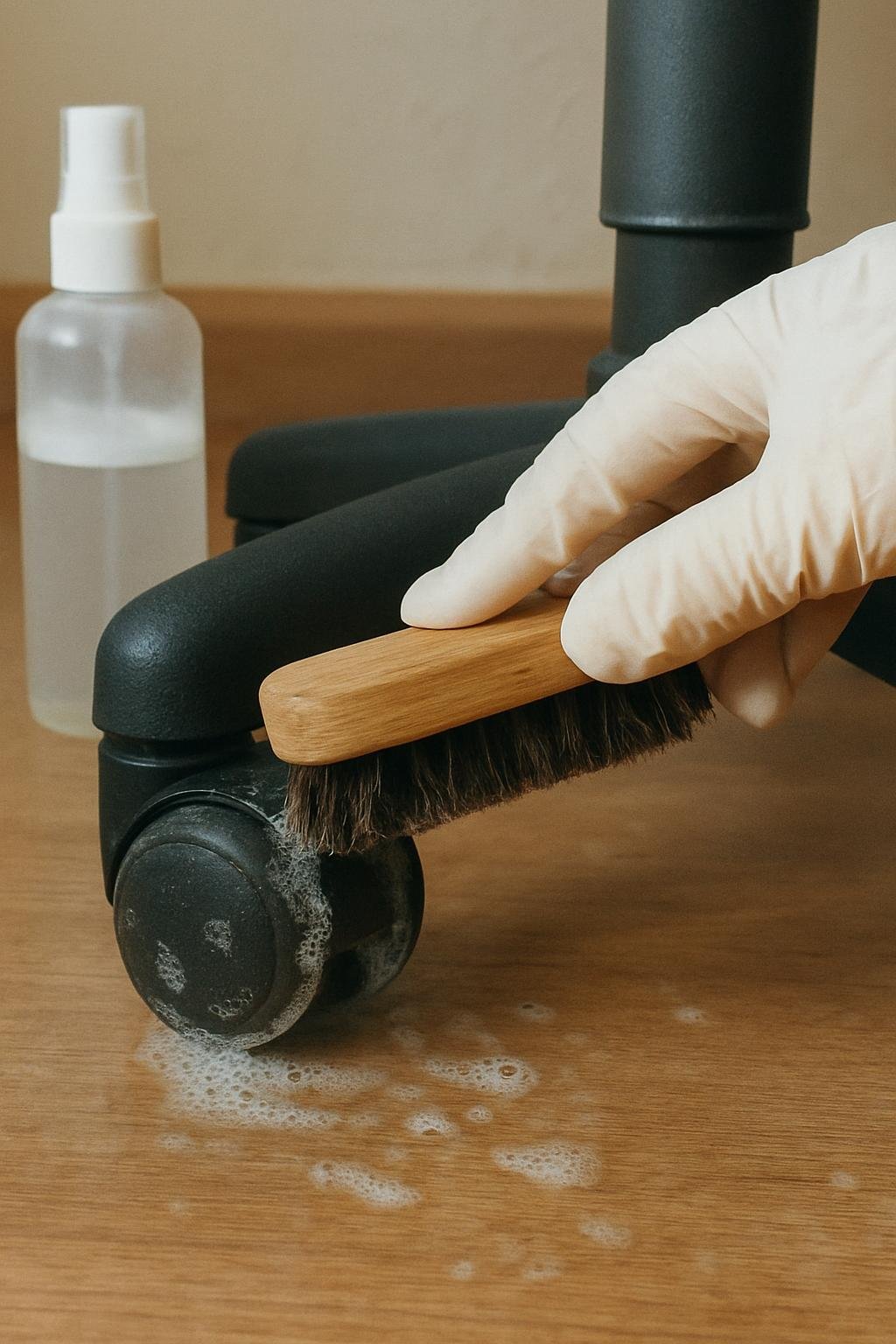
- Wipe with mild soapy water. Dampen a cloth with water and a small amount of dish soap, then wipe the wheel surface and housing. Avoid soaking the wheel, since water can seep into the axle mechanism and cause it to seize or rust over time.
- Dry thoroughly before reattaching. Let the wheels air dry completely, or pat them dry with a towel. Reinstalling a damp wheel can trap moisture inside the housing.
- Snap the wheels back into place. Push firmly until you feel or hear them lock into the socket, then test each wheel by rolling the chair a few feet on a hard surface.
Cleaning Wheels Without Removing Them
If your chair’s casters aren’t designed to be removed, or you’re not comfortable prying them off, you can still clean them in place. Use a seam ripper or thin flat tool to work hair and debris out from the sides of the wheel while spinning it slowly by hand. Wipe the exposed areas with a damp cloth, and use a dry cotton swab to clean tight gaps near the axle. This method won’t get the wheel as clean as full removal, but it’s the safer option when you’re unsure how the caster attaches to the base.
Safe Cleaners for Office Chair Wheels
Mild dish soap diluted in water is generally the safest option for both plastic and rubber caster wheels. It cuts through grease and grime without breaking down the wheel material. Avoid full-strength vinegar, ammonia-based glass cleaners, or solvent-based products on wheels, since these can dry out rubber components or dull plastic finishes over repeated use. If your chair manufacturer includes cleaning guidance in the assembly instructions, follow that over general advice, since some caster materials react differently than others.
Skip aerosol lubricant sprays unless the manufacturer specifically recommends one for your caster type. Many lubricants attract more dust and hair, which speeds up buildup rather than preventing it.
Mistakes That Can Damage Chair Wheels
- Cutting too aggressively near the axle. A slipped blade can nick the plastic housing or cut into the wheel’s rubber tread, creating a flat spot that causes vibration when rolling.
- Soaking wheels in water or cleaning solution. Excess moisture can rust metal axles or warp certain plastic components, leading to a wheel that no longer spins evenly.
- Using abrasive scrubbers. Steel wool or heavy-grit sponges can scratch the wheel surface, which may accelerate floor scuffing rather than reduce it.
- Forcing a screw-in caster like a snap-in one. Twisting instead of pulling can strip the threads, leaving the wheel loose or prone to falling out.
How Often to Clean Office Chair Wheels
For most home offices, checking and cleaning wheels every one to three months keeps buildup manageable, especially if the chair sits on carpet or in a room with pets. If you notice the chair dragging, squeaking, or rolling unevenly sooner than that, clean the wheels as needed rather than waiting for a set schedule. Chairs used daily on carpet tend to need attention more often than those on hard flooring.
When Cleaning Isn’t Enough
If a wheel still doesn’t roll freely after a thorough cleaning, or if it wobbles, grinds, or feels loose on the axle, the caster itself may be worn out rather than dirty. Replacement caster wheels are widely available and typically snap into the same style socket as the original, but check your chair’s specifications first since stem diameter and wheel size vary by manufacturer. Replacing a single worn wheel is usually more practical than trying to force a damaged one back into service.
While you’re addressing other cleaning tasks around your workspace, you might also find it useful to see how to clean a rug without a carpet cleaner if wheel marks or debris have worked into the carpet beneath your desk.
Everything Mentioned Above
Before you leave, grab the tools you need to get the job done right the first time:
*As an Amazon Associate, TidyFormula earns from qualifying purchases.