
Gentle Cleaning for Tarnish Prevention of a Sterling Silver Ring
The safest way to clean a sterling silver ring is to wash it with warm water and a few drops of mild dish soap, gently scrubbing with a soft-bristled brush, then rinsing well and drying completely with a soft cloth. For tarnish, a specialty silver polish or polishing cloth is generally a gentler choice than home remedies—if you prefer a chemical-free alternative, see how to clean silver without polishing.
⚡ The TidyFormula™ Quick Decision
Best approach: Wash with warm water and mild dish soap using a soft brush, rinse thoroughly, and dry with a lint-free cloth. Use a silver polishing cloth or a silver-specific polish for tarnish that soap and water can’t remove.
Use caution with: Rings with pavé or bezel-set gemstones, oxidized or “antiqued” finishes, glued stones, or plated coatings, since scrubbing or polishing can wear away detail or loosen settings.
Stop and reassess if: You notice loose stones, cracked prongs, flaking plating, or the tarnish sits in intentional dark grooves that seem to be a design feature rather than plain discoloration.

Why Sterling Silver Needs Gentle Care
Sterling silver is a mix of silver and other metals, usually copper, which gives it strength but also makes it prone to tarnishing when it reacts with air and moisture over time. This tarnish is a surface change, not dirt, so understanding that distinction helps explain why some cleaning methods work better than others. Abrasive scrubbing can wear down the metal’s surface, and harsh chemicals can dull the finish or damage any gemstones set in the ring.
What I Use For This Job
Using the right tools saves time and protects your belongings. Here are my exact recommendations:
*As an Amazon Associate, TidyFormula earns from qualifying purchases.
What You’ll Need
Favor mild, non-toxic products designed for jewelry care; for broader guidance on gentle household cleaners, see our non-toxic cleaning routine. If you prefer simple, homemade options that are safe when used correctly, read homemade cleaning solutions that are actually safe.
- Warm water
- A few drops of mild, fragrance-free dish soap
- A soft-bristled brush (an old, clean toothbrush works well)
- A soft, lint-free cloth
- Optional: a silver polishing cloth or silver-specific polish
Step-by-Step: Basic Cleaning
- Inspect the ring first. Check for loose stones, worn prongs, or any plating that looks thin or scratched. If you notice damage, cleaning may need to wait until a jeweler can take a look.
- Prepare a mild soap solution. Fill a small bowl with warm (not hot) water and add a few drops of mild dish soap. Avoid dish soaps with added moisturizers, antibacterial agents, or strong fragrances, since these can leave a residue.
- Soak briefly. Let the ring sit in the solution for a short time to loosen everyday grime like lotion, oils, or dust.
- Brush gently. Using the soft-bristled brush, lightly clean the surface, paying attention to any engraved details, filigree, or the underside of the setting where buildup tends to collect. Use light pressure only.
- Rinse thoroughly. Rinse under lukewarm running water, making sure no soap residue remains, especially around stone settings.
- Dry completely. Pat the ring dry with a soft, lint-free cloth. Make sure it’s fully dry before storing, since leftover moisture can encourage tarnish to form faster.
Dealing With Tarnish
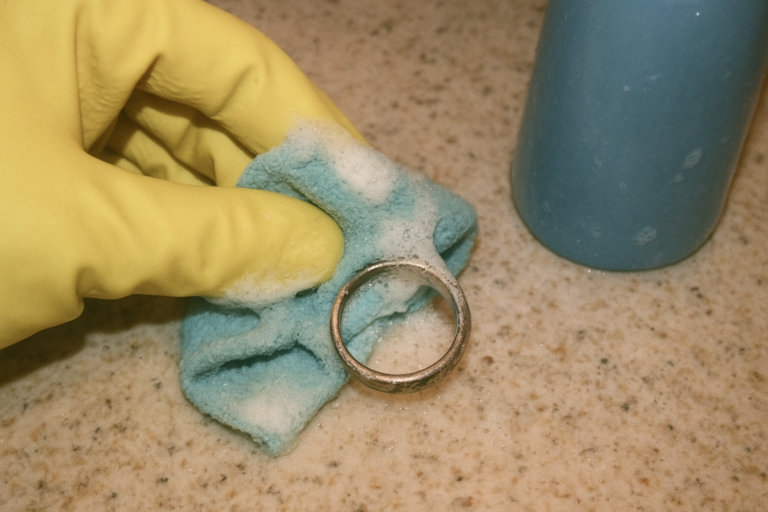
If soap and water alone don’t remove discoloration, a silver polishing cloth is usually the gentlest next step. These cloths are treated to lift tarnish without needing extra products, and they’re generally considered lower-risk for rings with delicate details. Rub gently in straight motions rather than circles, and check the ring periodically so you don’t over-polish any one area.
For heavier tarnish, a silver-specific polish or dip made for jewelry may work, but always read the product label first. Some polishes are not recommended for pieces with certain gemstones, pearls, or oxidized finishes, since the chemicals can dull stones or strip intentional dark accents. When in doubt, a local jeweler can advise on whether a particular product is appropriate for your specific ring.
A Note on Home Remedies
You may see suggestions online involving baking soda, aluminum foil, or other pantry items for cleaning silver. Because sterling silver rings often include gemstones, plating, or intentional finishes, and because results can vary by ring and by the exact materials involved, it’s best to approach these methods with caution or avoid them if your ring has any decorative or antique finish you want to preserve. Avoid using plain vinegar or acidic solutions on finishes and coatings that don’t tolerate acids—see our guide on surfaces you should never clean with vinegar for examples and explanations. If you choose to try one, test on a small, less visible area first and stop if you notice any dulling or unexpected change in color.
Rings With Gemstones or Special Finishes
Porous or soft stones such as opal, pearl, turquoise, or emerald can be sensitive to soaking, harsh chemicals, or excess moisture. If your ring includes any of these, or if you’re unsure what stone is set, cleaning with just a barely damp soft cloth may be a safer option than soaking. Oxidized or “black” finishes are also worth extra care, since polishing can unintentionally remove the dark detailing that gives the ring its designed look.
Rings that are silver-plated rather than solid sterling silver need a lighter touch overall, since the plating layer can wear thin with repeated cleaning or polishing. If you’re not sure whether your ring is solid sterling or plated, checking any markings inside the band or reviewing information from the retailer or manufacturer can help guide how much cleaning it can reasonably handle.
Drying and Storage to Slow Tarnish
Tarnish forms faster in humid environments and when silver is exposed to air for long periods, so how you store your ring matters. Consider these habits:
- Store the ring in a soft pouch or a lined jewelry box rather than loose in a drawer.
- Keep it away from direct sunlight and humid areas like bathroom counters.
- Anti-tarnish strips or bags, available at most jewelry or craft stores, can help slow the tarnishing process during storage.
- Avoid wearing the ring while swimming, showering, or using household cleaning products, since exposure to chemicals and moisture can accelerate tarnish and, in some cases, affect gemstones or plating.
When to See a Professional
If your ring has significant tarnish buildup in tight settings, a loose or wobbly stone, visible wear on plating, or sentimental or high value, a professional jeweler is generally a safer choice than at-home methods. Jewelers have access to equipment and cleaning approaches suited to the specific metals and stones in your piece, and they can also check for structural issues like weakened prongs that aren’t obvious from a visual inspection alone.
Quick Recap
For most sterling silver rings without fragile stones or special finishes, mild soap and water with gentle brushing handles routine cleaning well. A polishing cloth is a reasonable next step for tarnish, and stronger polishes should be used only after checking that they’re appropriate for your ring’s specific materials. When your ring includes delicate gemstones, plating, or an antique finish, lean toward gentler methods, and don’t hesitate to consult a jeweler when you’re uncertain. For general household safe-cleaning principles that apply to jewelry care, our non-toxic cleaning routine offers useful guidance.
Everything Mentioned Above
Before you leave, grab the tools you need to get the job done right the first time:
*As an Amazon Associate, TidyFormula earns from qualifying purchases.