Washing Floors With Vinegar: A Practical Guide
Washing floors with vinegar can work well as a light-duty cleaning method for many sealed hard floors, but it isn’t the right choice for every surface (surfaces you should never clean with vinegar). A diluted vinegar-and-water solution can help lift everyday dirt and grime on floors like sealed tile or finished laminate, but it can dull or damage certain finishes, natural stone, and unsealed wood, so checking your flooring manufacturer’s care instructions first matters more than any general rule.
⚡ The TidyFormula™ Quick Decision
Best approach: Use a well-diluted white vinegar and water solution on sealed, water-resistant floors such as sealed ceramic tile, vinyl, or finished laminate that the manufacturer confirms can tolerate mild acidic cleaners, and always test a small hidden area first. For tips on avoiding residue on laminate, see how to clean laminate floors without leaving film.
Use caution with: Natural stone (marble, granite, travertine, limestone), unsealed or waxed wood, and any flooring with a manufacturer warning against vinegar or acidic cleaners, since these surfaces are more prone to etching, dulling, or finish damage.
Stop and reassess if: You notice dulling, streaking, a hazy film, finish softening, or any change in texture after cleaning, or if your flooring warranty or care label specifically advises against vinegar-based products.
Why Vinegar Is a Popular Floor-Cleaning Choice
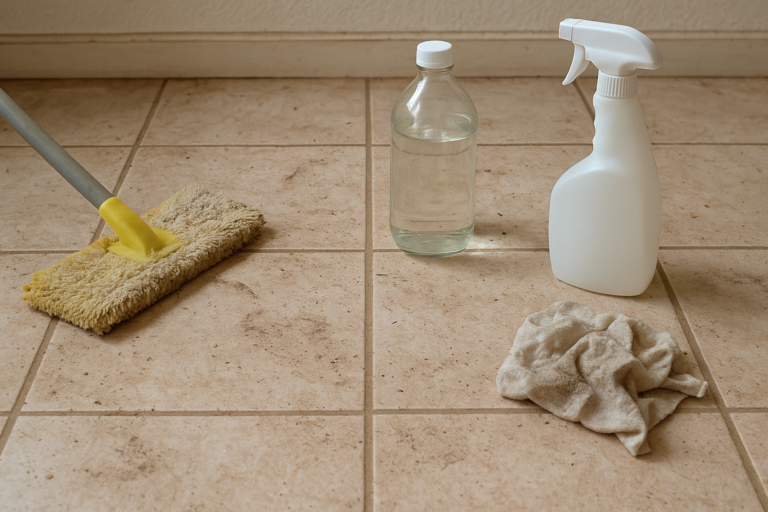
Vinegar is inexpensive, widely available, and appeals to people who want a simpler ingredient list than many commercial floor cleaners. It’s mildly acidic, which is part of why it can help cut through certain types of everyday residue on the right surfaces. That same acidity is also why it isn’t universally safe for flooring—some materials react poorly to acids over time, even in diluted form.
What I Use For This Job
Using the right tools saves time and protects your belongings. Here are my exact recommendations:
*As an Amazon Associate, TidyFormula earns from qualifying purchases.
Which Floors Can Typically Tolerate Vinegar
Many homeowners use diluted vinegar solutions on:
- Sealed ceramic or porcelain tile
- Sheet vinyl or vinyl plank flooring, when the manufacturer doesn’t advise against acidic cleaners
- Finished laminate flooring that specifically permits mild cleaning solutions, used sparingly and with minimal moisture
Even on these surfaces, results can vary by manufacturer, finish, and age of the flooring, so a manufacturer’s cleaning guide or care label should always take priority over general advice.
Floors Where Vinegar Is Usually Not Recommended
Vinegar is generally considered a poor match for:
- Natural stone such as marble, travertine, limestone, and some granite, since acids can etch or dull the surface
- Unsealed or waxed hardwood, where moisture and acidity can affect the finish or wood itself
- Floors with a specific manufacturer warning against vinegar, ammonia, or other acidic or alkaline cleaners
If you’re not sure what your flooring is made of or how it was finished, it’s worth checking any paperwork from installation or contacting the manufacturer before using vinegar at all. For guidance on engineered stone and resin-based surfaces, this article on how to clean quartz countertops without dulling explains why acidic cleaners can be problematic.
How to Prepare Before Washing a Floor With Vinegar
- Check the care label or manufacturer’s cleaning instructions for your specific flooring product.
- Sweep or vacuum the floor thoroughly to remove loose dirt, grit, and debris that could scratch the surface during mopping.
- Test your vinegar solution on a small, inconspicuous area and let it dry completely to check for any dulling, discoloration, or texture change before treating the whole floor.
General Steps for Mopping With a Vinegar Solution
- Fill a bucket with water and add a modest amount of white vinegar, keeping the mixture on the diluted side rather than concentrated, since stronger solutions increase the risk of residue or finish issues.
- Dip a mop or microfiber flat mop into the solution and wring it out well; excess standing water is a common cause of damage on floors like laminate or engineered wood, even when vinegar itself is tolerated.
- Mop in manageable sections, working from one side of the room to the other, and avoid letting the solution pool on seams, grout lines, or edges.
- Rinse the mop head periodically in clean water to avoid redistributing dirt across the floor.
Drying and Aftercare
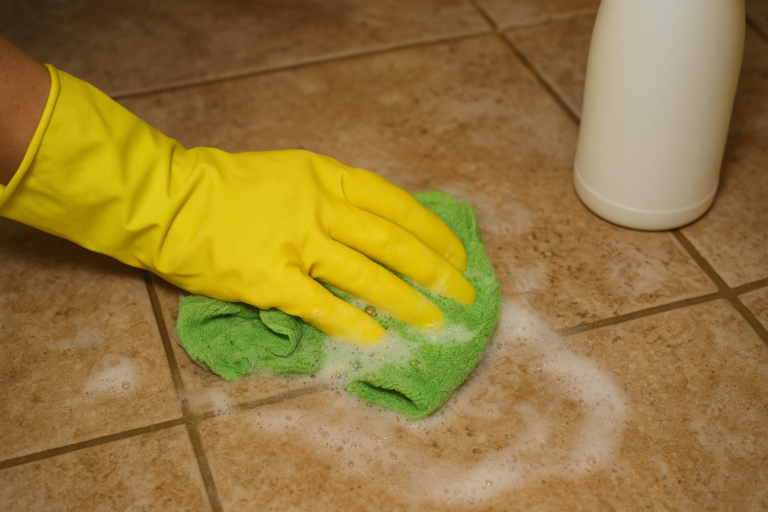
After mopping, go over the floor with a dry microfiber cloth or dry mop to remove excess moisture, especially in low-traffic corners where water can linger. Standing moisture is a common source of streaking, warping, or finish dulling on many floor types, so drying promptly is one of the more important steps in the whole process (see how to clean hardwood floors without streaks). Allow the floor to air dry fully before replacing rugs or furniture.
Troubleshooting Common Issues
- Streaking or haze: This can happen from using too much vinegar, not rinsing the mop often enough, or leaving the floor too wet. Try a more diluted solution and dry more thoroughly on your next cleaning.
- Dull or cloudy finish: If a formerly shiny floor looks flatter after cleaning, stop using vinegar on that surface and consult the manufacturer’s care guidance, since this can indicate the finish is reacting to the acidity.
- Sticky residue: This is often related to using too much solution or not rinsing thoroughly rather than the vinegar itself; a follow-up pass with a clean, damp mop can sometimes help. For tile specifically, see our guide on how to remove sticky residue from a tile floor for targeted steps.
Preventing Future Buildup
Regular sweeping or vacuuming, using doormats at entrances, and addressing spills promptly all reduce how often a deeper wash is needed. Less frequent, well-diluted cleaning is generally easier on most finishes than frequent heavy mopping, regardless of which cleaning solution you choose.
When to Choose a Different Cleaning Method
If your flooring manufacturer specifically advises against vinegar, if you notice any changes in the finish after testing, or if you have natural stone, waxed wood, or a floor with an uncertain finish history, it’s more practical to use a cleaner designed for that specific flooring type. When in doubt, a product formulated and labeled for your exact floor material is a safer long-term choice than a general-purpose solution. If you prefer a gentler overall approach, consider a non-toxic cleaning routine for the whole house that relies on mild, surface-appropriate choices rather than strong acids or solvents.
Everything Mentioned Above
Before you leave, grab the tools you need to get the job done right the first time:
*As an Amazon Associate, TidyFormula earns from qualifying purchases.