How to Wash a Vera Bradley Bag: A Simple Hand-Wash Guide
Most Vera Bradley bags are made from quilted cotton or lightweight nylon and are best cleaned by hand rather than in a washing machine. Hand washing in cool water with a mild detergent, followed by air drying, is generally the gentler and lower-risk approach, though care labels and trim materials like leather or vinyl can change what’s actually safe for your specific bag. For fabric-specific techniques that translate well to bags, see How to Clean Dirty Fabric Luggage.
⚡ The TidyFormula™ Quick Decision
Best approach: Hand wash in cool water with a small amount of mild, color-safe detergent, then reshape and air dry away from direct heat or sunlight.
Use caution with: leather-care guidance, vinyl trim, metal hardware, printed or embellished patterns, and any bag whose care label advises against submerging or machine washing.
Stop and reassess if: Colors begin to bleed, fabric seams start to separate, hardware shows rust or discoloration, or the care label explicitly says “spot clean only.”
Check the Care Label First
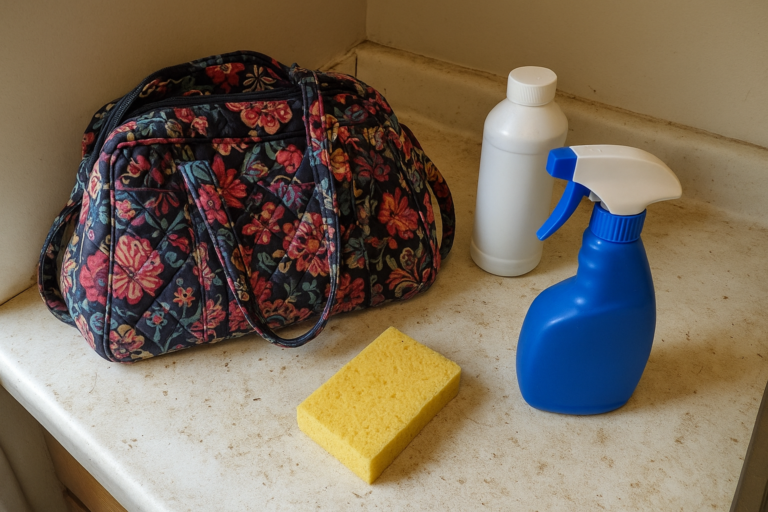
Before doing anything else, look inside the bag for a fabric care label. Vera Bradley has used different fabrics and constructions over the years, and washing instructions can vary by collection and material. If a label is present, follow it. If it’s missing or worn away, treat the bag conservatively and lean toward hand washing rather than a full machine cycle.
What I Use For This Job
Using the right tools saves time and protects your belongings. Here are my exact recommendations:
*As an Amazon Associate, TidyFormula earns from qualifying purchases.
Know Your Bag’s Material
Vera Bradley bags are commonly made from quilted cotton, cotton-blend fabric, or coated nylon, sometimes with faux leather or vinyl trim, zipper pulls, and metal feet. Cotton and cotton blends tend to hold up reasonably well to gentle hand washing when there’s no leather trim involved. Nylon bags may be more water-resistant but can still have prints or coatings that respond differently to scrubbing or heat. Any leather, faux leather, or vinyl accents should generally be treated separately from the fabric body. If you’re treating larger fabric panels, our guide on How to Clean a Fabric Bed Frame covers low‑moisture techniques that transfer well to bags.
Preparing the Bag
- Empty all pockets and compartments, checking corners and card slots for stray items.
- Remove any detachable straps, if possible, since hardware and strap materials sometimes need separate care. If straps can’t be removed, see How to Clean Stroller Fabric without Removing It for spot-cleaning straps and trim while they remain attached.
- Shake out crumbs and debris, then use a soft brush or lint roller to lift surface dust from the fabric.
- Spot test a hidden area, such as the inside seam or bottom corner, with a small amount of your chosen cleaning solution to check for colorfastness before treating the whole bag.
Hand Washing Steps
If the care label allows it and your spot test looks fine, hand washing is typically the more cautious route for quilted or fabric Vera Bradley bags.
- Fill a sink or basin with cool water and add a small amount of mild, color-safe detergent.
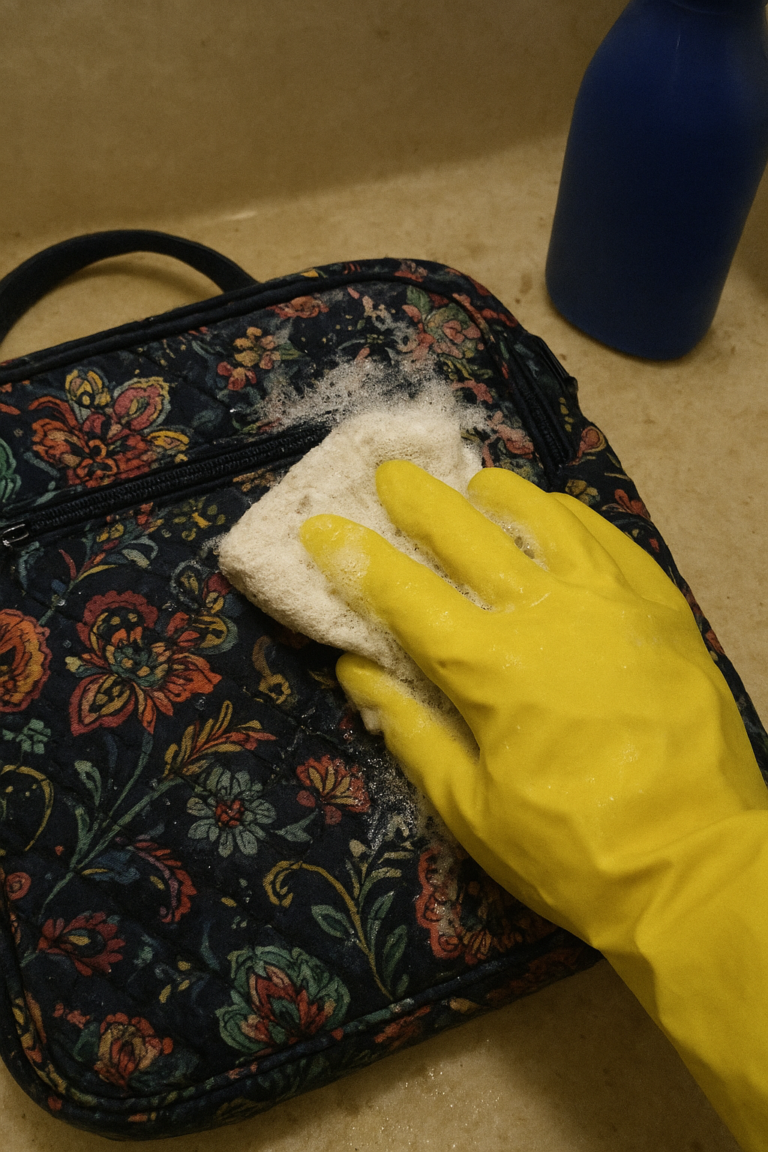
- Submerge the bag if the material and hardware allow it, or work the solution into the fabric with a soft cloth or sponge if you’d rather avoid full submersion.
- Gently agitate the fabric with your hands, focusing on visibly soiled areas rather than scrubbing the entire bag hard.
- Rinse thoroughly with clean, cool water until the water runs clear and no detergent residue remains.
- Press out excess water gently. Avoid wringing or twisting, which can distort the quilting or seams.
Spot Cleaning as a Lower-Risk Alternative
If you’re uncertain about your bag’s material, if the care label says spot clean only, or if there’s leather trim or delicate hardware involved, spot cleaning is usually the safer choice. Dampen a soft cloth with cool water and a small amount of mild detergent, then blot and gently dab at stains rather than saturating the fabric. Rinse the cloth and go over the area again with plain water to help lift residue, then blot dry with a clean towel.
Machine Washing: Proceed Carefully
Some owners choose to machine wash certain Vera Bradley bags on a gentle or delicate cycle inside a mesh laundry bag, using cool water and mild detergent. This approach carries more risk than hand washing, especially for bags with structured shapes, leather trim, or decorative hardware, since agitation and spinning can stress seams and zippers. If you decide to machine wash, always check the care label first, remove any detachable straps or accessories, and avoid hot water and high spin speeds. If your bag has no visible care label or contains non-fabric trim, hand washing or spot cleaning is generally the more conservative option.
For real-world examples of when machine washing can cause trouble, see this guide on machine washing Sprayground backpacks and the specific warning about Kånken backpacks.
Drying
Air drying is the recommended approach for most Vera Bradley bags. Reshape the bag while it’s still damp, stuffing the interior loosely with a clean towel to help it hold its form. Let it dry away from direct sunlight, radiators, or other heat sources, since heat can affect colors and coatings on some fabrics. Avoid tumble drying, as heat and tumbling can warp quilting, loosen seams, or damage trim.
Handling Stains and Odors
For localized stains, spot treat as soon as you notice them rather than waiting, since some stains become harder to address once they set. For odors, airing the bag out in a well-ventilated space for a period of time before storing it can help. Avoid using bleach-based products or mixing cleaning chemicals together, and steer clear of harsh scrubbing on printed or embellished areas, which can wear away pattern detail over time.
Caring for Leather and Vinyl Trim
If your bag has leather, faux leather, or vinyl straps, patches, or accents, treat these separately from the fabric body. A barely damp cloth with plain water is generally a gentler starting point than detergent for these materials. Because leather and vinyl products vary widely by manufacturer and finish, and because household cleaners can affect them differently, it’s worth checking any manufacturer guidance for the specific trim material if you have it.
Preventing Future Buildup
- Store the bag in a dust bag or breathable fabric cover rather than sealed plastic, which can trap moisture.
- Avoid setting the bag directly on wet or dirty surfaces.
- Wipe down visible spills or splashes promptly with a dry or barely damp cloth.
- Rotate bags in regular use so any one bag isn’t carrying constant wear and soil.
When to Consider Professional Cleaning or Replacement
If a bag has sentimental or higher value, shows deep-set stains, or has structural damage like torn seams or broken hardware, a professional cleaner experienced with fabric handbags may be a safer option than DIY washing. Persistent odors, spreading discoloration, or fabric that feels stiff or brittle after cleaning are signs it may be time to weigh repair costs against simply replacing the bag, especially if the damage affects how well it functions day to day.
Everything Mentioned Above
Before you leave, grab the tools you need to get the job done right the first time:
*As an Amazon Associate, TidyFormula earns from qualifying purchases.