
How to Remove Water Stains on Stainless Steel
Water stains on stainless steel are usually mineral deposits left behind when water evaporates on the surface instead of being wiped dry. The good news is that most water spots and light mineral haze can be removed with basic household methods and a little patience, without harming the finish, as long as you work with the grain and avoid abrasive tools. If the stain is on a kitchen appliance like a fridge door, follow appliance-specific care—see our guide to cleaning a stainless steel fridge without streaks for tips that help avoid streaking on large panels.
⚡ The TidyFormula™ Quick Decision
Best approach: Start with a mild dish soap and warm water solution applied with a soft cloth, wiping in the direction of the brushed grain, then dry thoroughly with a clean towel. For stubborn mineral buildup, a diluted white vinegar solution wiped on and rinsed off often helps, followed immediately by drying.
Use caution with: Abrasive pads, steel wool, bleach-based cleaners, and any product not labeled safe for stainless steel, since these can dull the finish or cause discoloration on some surfaces.
Stop and reassess if: You notice scratching, pitting, color change, or the stains keep returning quickly after cleaning, which may point to hard water buildup, a damaged finish, or an underlying appliance issue worth checking with the manufacturer.
Why Water Stains Show Up on Stainless Steel
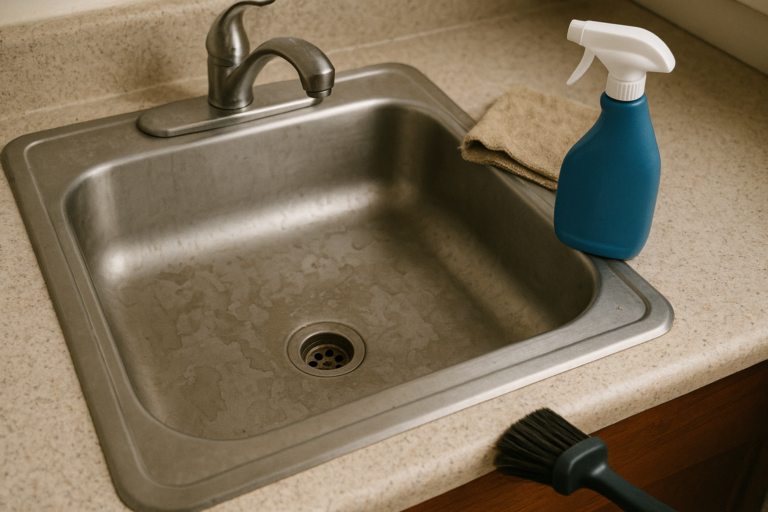
Stainless steel resists rust and corrosion, but it is not immune to mineral deposits left by hard water. When water sits and evaporates on the surface, dissolved minerals like calcium and magnesium can remain as a chalky or spotty film. This is especially common on refrigerator doors, sinks, dishwashers, range hoods, and any stainless surface near a faucet or steam source.
What I Use For This Job
Using the right tools saves time and protects your belongings. Here are my exact recommendations:
*As an Amazon Associate, TidyFormula earns from qualifying purchases.
The brushed texture common on many stainless appliances has tiny grain lines that can trap mineral residue, which is why stains sometimes look worse after a quick wipe with a wet cloth than before. For similar mineral-stain techniques applied to glass and exterior surfaces, our guide on removing hard water stains from exterior windows explains vinegar-based approaches and their limitations.
What You’ll Need
- Soft microfiber cloths or a non-abrasive sponge
- Warm water
- Mild dish soap
- White vinegar (for mineral buildup)
- A dry towel for final buffing
- Optional: a stainless-steel-specific cleaner, if you prefer a commercial product
Always check the appliance or fixture’s care instructions first, since some manufacturers recommend specific cleaners or advise against certain products for their particular finish. If hard water is affecting nearby plumbing fixtures like shower heads, see our guide to cleaning a shower head with hard water buildup. For appliance components that collect grease and grime (for example, a vent or filter), follow manufacturer guidance such as our range hood filter cleaning and dishwasher filter cleaning guides.
Step-by-Step: Removing Water Stains
- Identify the grain direction. Look closely at the surface for fine brushed lines. Cleaning motions should follow this grain to avoid creating new scratches or uneven streaking.
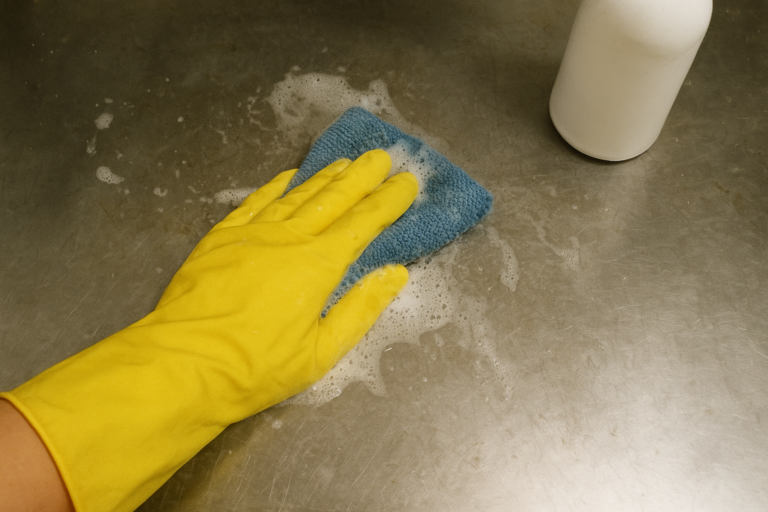
- Wash with mild soap and water. Dampen a soft cloth with warm water and a small amount of dish soap. Wipe gently along the grain to lift surface residue and light staining.
- Rinse and dry immediately. Wipe away soap residue with a clean, damp cloth, then dry the entire surface right away with a dry towel. Leftover moisture is often what causes new spots to form, so this step matters as much as the cleaning itself.
- Treat mineral buildup with diluted vinegar, if needed. For stains that don’t respond to soap and water, dampen a cloth with a mild vinegar-and-water solution and wipe along the grain. Rinse the area with a clean water-dampened cloth afterward, then dry thoroughly. Avoid letting vinegar sit for extended periods, and never combine it with other cleaning chemicals. For broader guidance on safe vinegar use against mineral haze, see our exterior-windows mineral-stain write-up above.
- Buff for shine, if desired. Once the surface is completely dry, a light buff with a dry microfiber cloth can help even out the appearance and reduce streaking.
Troubleshooting Stubborn or Recurring Stains
If mineral spots keep coming back quickly after cleaning, hard water may be the main driver, and the stains will likely return until moisture stops sitting on the surface. In that case, focusing on prevention becomes more important than repeated deep cleaning—our prevention tips for hard water in the shower explain routine steps you can adapt to sinks and appliances as well.
Streaking after cleaning is often a sign of cleaning against the grain, using too much liquid, or not drying thoroughly enough. Try a lighter touch, less liquid, and a completely dry final pass.
If you see discoloration, rainbow-like tinting, or a hazy film that doesn’t lift with soap or vinegar, this could be related to heat exposure, certain cleaning chemicals, or the specific finish used by the manufacturer. At that point, checking manufacturer guidance or consulting a professional familiar with your appliance’s finish is a reasonable next step, since not all stainless finishes respond the same way to home remedies. Also consider whether cleaning or service is needed on related components—dusty coils or clogged filters can affect how an appliance behaves; for refrigerators, see our refrigerator coils cleaning guide.
What to Avoid
- Steel wool, scouring pads, or abrasive scrub brushes, which can scratch the surface permanently
- Bleach or bleach-containing cleaners, which may discolor or damage stainless finishes on some appliances
- Mixing vinegar with other household cleaning products
- Cleaning in circular motions instead of following the grain
- Leaving any cleaning solution to air-dry on the surface instead of wiping it dry
Drying Matters More Than You Might Think
Because water stains form largely from evaporation, drying technique is one of the most effective prevention tools available. A dry microfiber cloth used immediately after any contact with water, whether from cleaning, cooking steam, or splashes at a sink, can prevent most new spots from forming in the first place.
Preventing Future Water Stains
- Wipe down stainless surfaces with a dry cloth after washing dishes, cooking, or cleaning nearby areas
- Keep a microfiber cloth near sinks and appliances for quick touch-ups
- If hard water is a known issue in your home, consider whether a water softening solution makes sense for your household, separate from surface cleaning
- Apply a manufacturer-approved stainless steel polish or protectant occasionally, if your appliance’s care instructions support this, to help reduce how much moisture clings to the surface
When to Consider Professional Help
Most water stains on stainless steel are cosmetic and manageable with basic home cleaning. However, if you notice pitting, rust-colored spots, warping, or damage that doesn’t match typical mineral staining, it may point to a different issue with the metal or finish. In those cases, reaching out to the appliance manufacturer or a professional appliance care service is a safer path than continuing to experiment with home remedies. If the stains seem tied to appliance performance (persistent leaks, clogged drains, or filtration issues), consider checking or servicing the related parts such as filters or drains—as a starting point, our guides on cleaning a dishwasher filter and cleaning a range hood filter explain safe maintenance steps.
Everything Mentioned Above
Before you leave, grab the tools you need to get the job done right the first time:
*As an Amazon Associate, TidyFormula earns from qualifying purchases.