How to Clean Granite Effectively
The best way to clean granite is to wipe up spills quickly, use a pH-neutral or granite-safe cleaner with a soft cloth for regular cleaning, and avoid vinegar, ammonia, bleach, or abrasive scrubbers, which can dull the surface or wear down sealants over time. Regular gentle cleaning and periodic resealing (if recommended for your granite) help keep countertops looking their best for years.
⚡ The TidyFormula™ Quick Decision
Best approach: Wipe granite daily with warm water and a few drops of mild dish soap or a cleaner labeled safe for natural stone, using a soft microfiber cloth, then dry thoroughly to prevent streaking or water spots.
Use caution with: Acidic cleaners (vinegar, lemon, citrus-based products), ammonia, bleach, and abrasive powders or scrub pads, which can etch the stone or break down existing sealant on some granite finishes.
Stop and reassess if: You notice dulling, etching, staining that won’t lift, or water that no longer beads on the surface—these can signal a worn sealant or a need for professional evaluation rather than continued at-home scrubbing.
Why Granite Needs Special Care
Granite is a natural stone, and while it’s generally durable, it’s porous to varying degrees depending on the specific slab, finish, and any sealant applied at installation. Because sealant quality and porosity can differ from one countertop to another, it’s worth checking with your installer or manufacturer about the type of sealant used and how often resealing is recommended, since this affects how the stone handles moisture, oils, and acidic substances.
What I Use For This Job
Using the right tools saves time and protects your belongings. Here are my exact recommendations:
*As an Amazon Associate, TidyFormula earns from qualifying purchases.
What You’ll Need
- Warm water
- Mild dish soap or a cleaner labeled safe for granite or natural stone
- Soft microfiber cloths or a non-abrasive sponge
- A soft-bristle brush for grout lines or textured finishes, if needed
- A dry towel for buffing
Step-by-Step: Everyday Cleaning
- Clear the surface. Remove crumbs, dishes, and clutter so you can see the entire countertop.
- Mix a mild solution. Combine warm water with a small amount of mild dish soap, or use a cleaner specifically labeled for granite or natural stone.
- Wipe in sections. Use a soft cloth or sponge to wipe the surface, applying gentle pressure rather than scrubbing hard.
- Rinse with plain water. Go over the surface again with a clean, damp cloth to remove any soap residue, which can build up and leave a film over time.
- Dry completely. Buff the surface with a dry towel to prevent water spots and streaking, especially around sinks and faucets.
Handling Spills and Stains
Granite’s resistance to staining depends on how well it’s sealed, so treating spills promptly matters. Wipe up oil, wine, coffee, and acidic foods (like citrus or tomato sauce) as soon as you notice them, since these substances can potentially penetrate the surface if left sitting, particularly on stone that’s due for resealing.
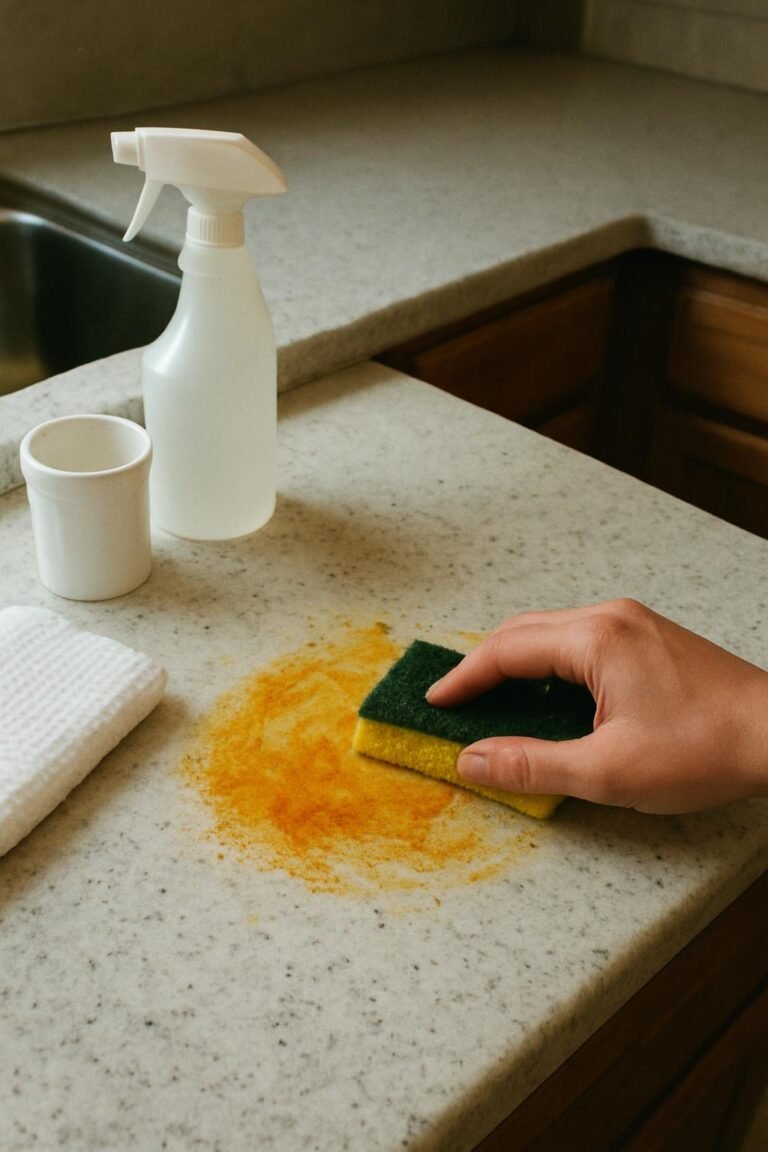
For dried spills or light residue, a granite-safe cleaner and a soft cloth are usually enough. Avoid reaching for vinegar, lemon juice, or other acidic household staples often recommended for other surfaces—these can be too harsh for natural stone and may dull the finish or affect the sealant. If a stain persists after gentle cleaning, consider consulting a stone care professional rather than intensifying the scrubbing or trying stronger chemicals at home. For strongly pigmented spills like turmeric, see a targeted guide for removing stubborn countertop stains (how to remove turmeric stains from countertops).
What to Avoid
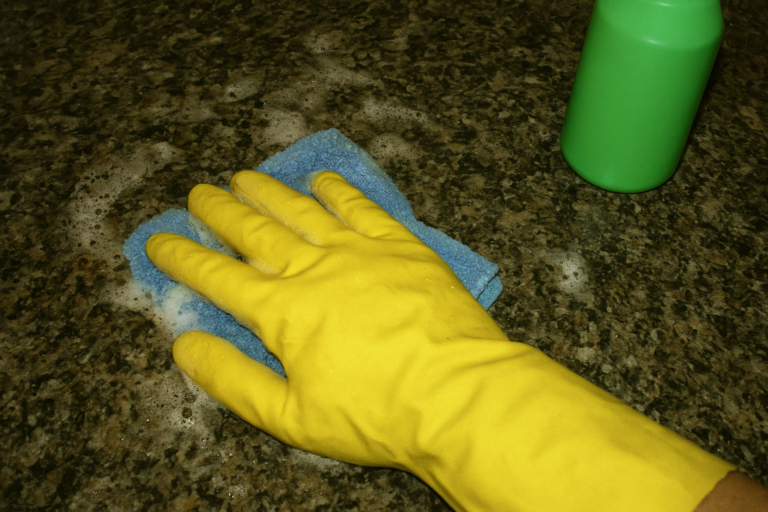
- Acidic cleaners: Vinegar, lemon juice, and other citrus-based products can etch granite over time, leaving dull spots that don’t polish out easily.
- Ammonia and bleach-based cleaners: These are commonly used on other kitchen surfaces but are generally not recommended for natural stone, as they may affect sealants and finishes.
- Abrasive pads or powders: Scouring pads, steel wool, and gritty cleaning powders can scratch the surface, especially on polished finishes.
- Mixing cleaning chemicals: Never combine different household cleaning products. Stick to one product at a time and rinse thoroughly between uses if switching products.
Because granite finishes and sealants vary by manufacturer and installer, check any care instructions provided at installation, and when in doubt, test a new cleaner in a small, inconspicuous area first. If your home includes other counters such as engineered quartz or wood, remember those materials have their own care needs—see guidance on cleaning quartz countertops without dulling and on caring for butcher block countertops.
Disinfecting Wipes and Specialty Cleaners
Many all-purpose or disinfecting wipes contain ingredients that aren’t formulated for natural stone. If you want to use a wipe or spray cleaner on granite, look for one specifically labeled as safe for granite or natural stone, and check the product’s own instructions, since formulations differ between brands. For general DIY options and safe home-made mixes that avoid harsh acids or solvents, review trusted homemade cleaning solutions that are actually safe.
Sealant and Long-Term Care
Granite sealant wears down gradually with use and cleaning, and how often it needs reapplying depends on the stone’s porosity, the sealant type, and how heavily the surface is used. A simple way many homeowners check seal condition is to observe whether water beads on the surface or soaks in; however, if you’re unsure how to interpret this or whether your particular granite needs resealing, a stone care professional or your installer can offer guidance specific to your countertop.
If resealing is recommended, follow the sealant manufacturer’s instructions closely, since application methods, dry times, and reapplication schedules can vary between products. Note: engineered surfaces like quartz rely on resin binders that react differently than natural stone—regularly using acidic cleaners or bleach can damage those resins, so treat each countertop material according to its own care guidance (learn more about quartz care).
Preventing Damage
- Use cutting boards instead of cutting directly on the stone.
- Use trivets or hot pads under cookware, since sudden temperature changes can be hard on some sealants and finishes.
- Wipe up spills, especially acidic or oily ones, as soon as you notice them.
- Avoid placing toiletries, cleaning products, or acidic foods directly on unprotected granite for extended periods.
- Use coasters under glasses, especially those containing alcohol or acidic beverages.
If you use different countertop materials in your kitchen, follow the manufacturer-specific care for each surface rather than assuming one method works for all. For example, butcher block has different cleaning and maintenance needs than granite or quartz (see butcher block care).
When to Call a Professional
If your granite shows persistent staining, etching, cracks, or chips, or if you’re not sure whether the sealant is intact, a stone care or countertop professional can assess the surface and recommend next steps. Attempting to sand, repolish, or treat significant damage yourself can sometimes make the problem harder to fix, so it’s worth getting an expert opinion before taking further action on visible damage.
Everything Mentioned Above
Before you leave, grab the tools you need to get the job done right the first time:
*As an Amazon Associate, TidyFormula earns from qualifying purchases.