How to Remove Commode Stains: A Practical Guide
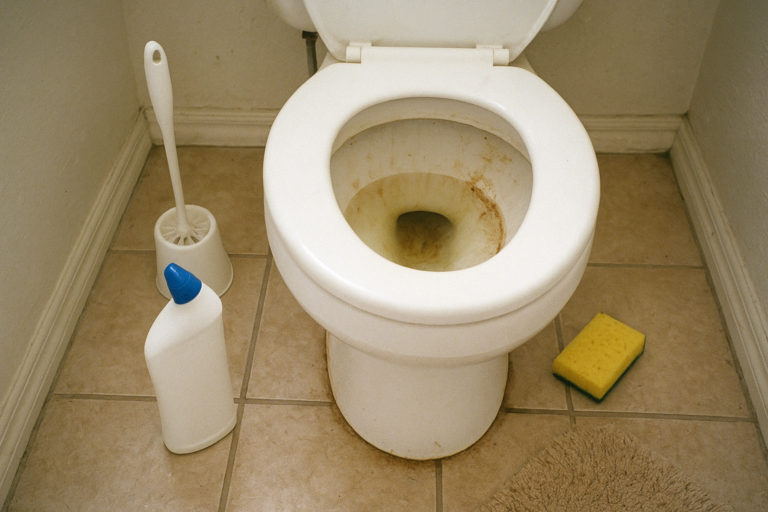
Commode stains—those ring-shaped mineral deposits, brownish rust marks, or dull discoloration below the waterline—usually respond well to a combination of a mild acidic cleaner, gentle scrubbing, and patience. The right approach depends on whether the stains are mineral buildup, rust, or general grime, and on the condition of your toilet’s finish; for mineral-scale specifics see How to Remove Urine Scale from Toilet Bowl.
⚡ The TidyFormula™ Quick Decision
Best approach: Drain as much water as possible from the bowl, apply a toilet-safe acidic cleaner or a paste made from a mild household cleaner, let it sit briefly, then scrub with a toilet brush or a non-scratch pad before flushing.
Use caution with: Abrasive pads, wire brushes, and pumice stones on porcelain finishes with visible glaze wear, hairline cracks, or on colored or older fixtures where the glaze may be thinner.
Stop and reassess if: Stains persist after several cleaning attempts, the surface feels rough or pitted, or you notice cracks, since these may point to worn glaze or a fixture issue rather than a cleaning problem.
Why Commode Stains Happen
Most toilet bowl stains fall into a few common categories, and knowing which one you’re dealing with helps you choose a cleaning method that actually works.
What I Use For This Job
Using the right tools saves time and protects your belongings. Here are my exact recommendations:
*As an Amazon Associate, TidyFormula earns from qualifying purchases.
- Hard water rings: Mineral deposits from water that sits in the bowl between flushes, often appearing as a ring at the waterline.
- Rust-colored stains: Frequently linked to iron or other minerals in the water supply, or to corrosion from an aging tank component.
- Dark or dull discoloration: Can result from a buildup of residue over time, especially in areas that aren’t reached during routine cleaning.
If hard water is a persistent issue around your home, the same scale chemistry that affects shower glass and fixtures applies to toilets as well—see How to Prevent Hard Water Stains in the Shower for long-term prevention ideas. If you’re unsure what’s causing a stain, or if discoloration seems unusual, spreading, or accompanied by odor changes, it may be worth consulting a plumber rather than relying solely on cleaning.
What You’ll Need
- A toilet brush or non-scratch scrub pad
- A toilet-bowl-safe acidic cleaner, or a mild household cleaner labeled safe for porcelain
- Rubber gloves
- Optional: a pumice stone specifically labeled for toilet bowl use, for stubborn mineral rings
Always check the cleaner’s label to confirm it’s appropriate for your fixture’s material and finish, and never combine different cleaning products, since mixing chemicals can create unsafe reactions.
Step-by-Step Cleaning Method
- Reduce the water level. Turn off the water supply valve behind the toilet and flush to lower the water in the bowl, which lets cleaner reach the stain directly instead of being diluted.
- Apply the cleaner. Follow the product label for how much to use and how long to let it sit. Many toilet-bowl cleaners are designed to cling to vertical surfaces, which helps with stains above the water level.
- Let it sit. Give the cleaner time to loosen mineral deposits before scrubbing, following the time noted on the product label rather than guessing.
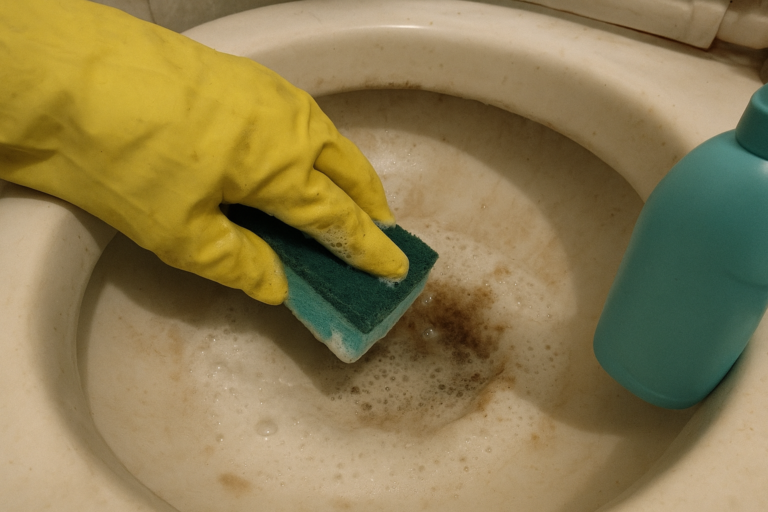
- Scrub thoroughly. Use a toilet brush for general cleaning. For stubborn spots, a non-scratch pad can help, but avoid metal scouring pads, which can scratch porcelain and make future staining worse by giving mineral deposits more surface texture to grip.
- Rinse and inspect. Turn the water supply back on, flush, and check the results. Stubborn stains may need a repeat treatment or a different approach.
Dealing with Stubborn Mineral or Rust Stains
If a standard toilet cleaner isn’t cutting through the ring, a pumice stone made specifically for toilet bowls is a commonly recommended option for mineral deposits on porcelain. Wet the stone and the bowl first, then rub gently in a small area to test the result before treating the whole stain. Pumice stones are abrasive, so they should be used with light pressure and are generally not recommended for fixtures with a glossy glaze that shows signs of wear, or for materials other than vitreous china—check your toilet manufacturer’s care guidance if you’re uncertain about your specific model. For blue or copper-based discoloration you can follow a targeted approach; see How to Remove Blue Stains from Toilet Bowl for techniques aimed at that type of staining.
Rust stains can sometimes be more resistant to standard cleaners. If a bowl-safe cleaner labeled for rust or mineral stains doesn’t improve things after a couple of attempts, the cause may be related to your home’s water supply or an aging tank part, which a plumber can evaluate. For comparable rust-removal strategies on glazed bathroom fixtures, How to Remove Rust Stains from Bathtub describes safe options that translate to toilets in many cases.
Troubleshooting
- Stain returns quickly: This often points to ongoing mineral content in your water rather than a cleaning failure. More frequent light cleaning may help manage it between deeper treatments.
- Cleaner isn’t loosening the stain: Try letting the product sit longer per the label’s guidance, or switch to a cleaner formulated specifically for mineral or rust stains.
- Surface looks scratched after cleaning: Avoid abrasive tools going forward and consider switching to non-scratch pads or bowl-safe cleaners only.
Drying and Aftercare
After flushing away cleaner residue, wipe the exterior rim, seat, and base with a clean cloth and mild cleaner to remove any drips. Allow the bowl to air-dry naturally, and avoid closing the lid immediately if you’ve used a strong-smelling product, to let odors dissipate.
Preventing Future Stains
- Clean the bowl on a regular basis rather than waiting for visible stains to build up, since fresh mineral deposits are typically easier to remove than set-in ones.
- Consider a toilet bowl cleaner designed for routine maintenance between deeper cleanings.
- If hard water is a persistent issue in your home, a water softening system may reduce mineral buildup throughout your plumbing, though this is a larger decision best discussed with a plumbing professional. For everyday hard-water maintenance on fixtures that share the same supply—like shower heads—see How to Clean a Shower Head with Hard Water Buildup and How to Prevent Hard Water Stains in the Shower for complementary guidance.
When to Consider Repair or Replacement
If a toilet’s porcelain glaze appears permanently etched, rough, or discolored despite consistent cleaning, this may reflect wear that cleaning products can’t reverse. In that case, a plumber or fixture specialist can advise whether refinishing or replacement makes sense, particularly for older toilets where the glaze has thinned over years of use. If you suspect the tank’s components are corroding or contributing rust to the bowl, consult instructions on How to Clean Buildup inside a Toilet Tank or contact a professional for a closer inspection.
Everything Mentioned Above
Before you leave, grab the tools you need to get the job done right the first time:
*As an Amazon Associate, TidyFormula earns from qualifying purchases.