Cleaning Old Records: A Simple Guide to Vinyl Care
Cleaning old records means removing dust, grime, and fingerprints from the vinyl grooves using a soft brush and a mild, alcohol-free cleaning solution, then drying the record fully before it goes back in its sleeve. The safest approach always starts gentle, since aggressive scrubbing or the wrong liquid can scratch the surface or damage the label.
The TidyFormula Quick Decision
Best approach: Use a carbon-fiber or velvet record brush for dust, and a distilled-water-based record cleaning solution with a microfiber or dedicated cleaning pad for grooves that feel gritty or sticky, always wiping in the direction of the grooves. For guidance on safer, low-residue mixtures see Homemade Cleaning Solutions That Are Actually Safe.
Use caution with: Rubbing alcohol, tap water, dish soap, paper towels, and any cleaner not made for vinyl, since these can leave residue, dull the surface, or affect the plastic over repeated use.
Stop and reassess if: The record has visible warping, cracks, deep gouges, or a label that is peeling and getting wet, or if mold-like growth appears on the sleeve or vinyl surface.
How Should You Clean Old Vinyl Records?
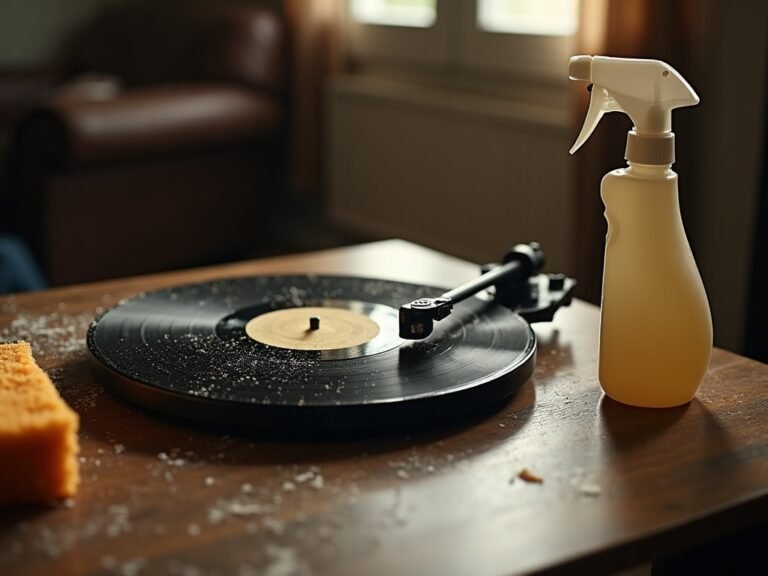
Old vinyl records should be cleaned in stages, starting with dry dust removal before any liquid touches the surface. Most records that have simply sat in storage only need this first stage, and jumping straight to a wet cleaning process on a lightly dusty record adds unnecessary handling and risk.
What I Use For This Job
Using the right tools saves time and protects your belongings. Here are my exact recommendations:
*As an Amazon Associate, TidyFormula earns from qualifying purchases.
Records that feel sticky, look hazy, or have visible fingerprints and grime baked into the grooves need a wet cleaning step as well. The goal in every case is the same: lift particles out of the grooves without dragging debris across the surface, which is what causes fine scratches over time.
What Do You Need Before You Start?
A basic cleaning kit for old records includes a carbon-fiber or velvet anti-static brush, a lint-free microfiber cloth, and a record cleaning solution made specifically for vinyl. Many collectors also use a dedicated cleaning pad or a soft-bristle brush designed to reach into the groove walls rather than just skim the surface.
- Anti-static or carbon-fiber brush for dry dust
- Vinyl-safe cleaning solution or distilled water with a small amount of vinyl-formulated cleaner
- Microfiber cloths, kept separate from cloths used for other cleaning tasks
- A clean, flat, dry surface to work on
- New inner sleeves for after cleaning, if the old ones are worn or gritty
Check any product label on a commercial record cleaning solution before use, since formulas vary and some are meant to be used full-strength while others are diluted with distilled water first. For broader guidance on gentle, household-safe cleaners and when to avoid harsh chemicals, see our Non Toxic Cleaning Routine for the Whole House.
How to Remove Dust and Light Grime
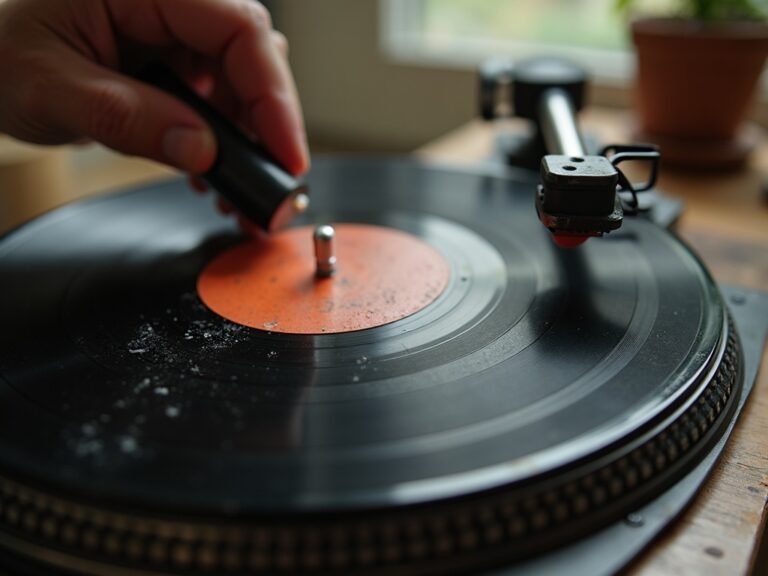
Dust and light grime come off most records with a dry brush and light pressure, without any liquid at all. This step alone resolves surface noise caused by loose particles sitting in the grooves.
- Place the record on a clean, flat surface or turntable mat, away from other dusty items.
- Hold the anti-static brush flat against the surface and rotate the record slowly, letting the brush follow the grooves rather than pressing straight down.
- Lift the brush away from the record rather than dragging it off the edge, which can flick collected dust back onto the surface.
- Repeat on the opposite side.
- Inspect the surface under angled light to check for remaining grime before deciding whether a wet clean is needed.
If the record still shows visible fingerprints, sticky residue, or a dull film after brushing, move on to a wet cleaning step rather than pressing harder with the dry brush. When you work near a turntable or other gear, keep nearby electronics unplugged and dust-free—our guide to How to Clean Cables and Power Strips Safely covers safe practices around plugs and power strips.
How to Deep Clean Sticky or Grimy Records
Records with sticky residue, old fingerprints, or ground-in grime need a liquid cleaning solution made for vinyl, applied sparingly and wiped in the direction of the grooves. Circular scrubbing motions across the grooves are more likely to create fine scratches than motions that follow the groove path.
- Do a small spot test on an inconspicuous area of the label edge or run-out groove area to confirm the solution does not affect any printed labeling or leave a residue.
- Apply a small amount of vinyl-safe cleaning solution to a microfiber pad rather than pouring it directly onto the record.
- Wipe gently along the groove direction, working in one consistent motion rather than back and forth scrubbing.
- Use a second, dry section of the cloth to lift away any remaining moisture and loosened grime.
- Let the record air dry fully in a dust-free area before placing it in a sleeve or on a turntable.
For records with heavier buildup across many titles, a dedicated record cleaning machine that uses vacuum suction or ultrasonic cleaning can reach grime that hand cleaning struggles with. These machines vary significantly by model, so follow the manufacturer’s instructions for solution type, dwell time, and drying steps rather than assuming one process applies to every machine.
What About Mold, Mildew, or Musty Smells?
A musty smell on old records usually comes from the cardboard sleeve or jacket rather than the vinyl itself, since vinyl is a poor surface for mold growth compared to paper. If mold-like spots or a musty smell are present, the paper sleeve is the most likely source and often needs to be replaced rather than cleaned. For room-level odor sources and general approaches to stale, “old house” smells, see How to Remove Old House Smell from a Room.
If you notice visible mold growth, a strong musty odor, or any health symptoms when handling old sleeves or records stored in a damp basement or attic, consider having the storage area assessed and take care handling affected materials, since mold exposure can affect some people more than others. This article focuses on cleaning the vinyl itself rather than mold remediation.
Wiping the vinyl surface with a vinyl-safe cleaner and replacing a musty inner sleeve with a new one often resolves the smell attached to a specific record, even when the vinyl was not the actual source. For household-level humidity control and drying tips that help prevent recurring odors, our guide on How to Remove Damp Smell from Bedroom has practical steps.
What Should You Avoid When Cleaning Records?
Certain products and habits cause more damage to old vinyl than the dust or grime they’re meant to remove. Avoiding these keeps a collection playable for far longer.
- Rubbing alcohol and household glass cleaners, which can affect the vinyl surface and are not necessary for routine cleaning.
- Tap water, which can leave mineral residue in the grooves as it dries.
- Dish soap or other household soaps, which can leave a film that attracts more dust.
- Paper towels, which are more abrasive than microfiber and can leave fibers behind.
- Pressing hard while wiping, which forces debris deeper into the grooves instead of lifting it out.
Never mix cleaning solutions together in an attempt to make a stronger formula. If a record cleaning product does not work as expected, switch to a different vinyl-formulated product rather than combining chemicals.
How Should You Dry and Store Records After Cleaning?
Records should air dry completely on a clean rack or flat surface before they go back into a sleeve, since any trapped moisture can attract dust or affect the paper sleeve over time. A soft microfiber cloth can speed this along, but avoid forcing a still-damp record into a tight sleeve.
For long-term storage, use inner sleeves designed for vinyl, store records vertically rather than stacked flat, and keep them away from direct sunlight, heat sources, and damp areas. Consistent, moderate storage conditions do more to prevent future grime and warping than any cleaning routine can undo after the fact.
Frequently Asked Questions
Can I clean old records with just water?
Plain tap water is not recommended, since minerals in it can dry into the grooves and leave residue. Distilled water combined with a small amount of vinyl-formulated cleaning solution is a safer choice, and following the product label for the correct ratio gives more consistent results than water alone. For safe at-home recipes and dilution tips, check Homemade Cleaning Solutions That Are Actually Safe.
How often should I clean a record collection?
Dust brushing before and after each play keeps most records in good shape indefinitely. A full wet cleaning is only needed occasionally, such as when a record feels sticky, sounds noisy despite dusting, or has come from long-term storage with visible grime.
Is a record cleaning machine worth it for a small collection?
For a handful of records, hand cleaning with a brush and vinyl-safe solution is usually enough. Cleaning machines make more sense for larger collections or records with heavy, long-term buildup, since they can process many records more consistently than repeated hand cleaning.
Will cleaning fix scratches or skips?
Cleaning removes dust, grime, and residue, but it cannot repair a physical scratch or gouge in the vinyl. If skips or noise continue after a thorough cleaning, the issue is likely physical damage rather than surface dirt, and the record may need replacing.
Everything Mentioned Above
Before you leave, grab the tools you need to get the job done right the first time:
*As an Amazon Associate, TidyFormula earns from qualifying purchases.