
How to Remove Pee Odor From a Mattress: A Quick Guide
To get a pee smell out of a mattress, blot up excess moisture right away, then treat the area with an enzyme-based pet or urine odor remover, which is designed to break down the compounds that cause the smell rather than just mask it. Follow that with baking soda to absorb residual odor, and make sure the mattress is completely dry before covering it again. Full odor removal may take more than one treatment cycle, and some deep-set or older stains may never fully resolve.
⚡ The TidyFormula™ Quick Decision
Best approach: Blot fresh urine immediately, apply an enzyme-based cleaner formulated for urine odor, let it sit as directed on the product label, then apply baking soda and vacuum once dry. Repeat if odor lingers.
Use caution with: Memory foam and other dense foam mattresses, which absorb liquid more slowly and can trap moisture inside for a long time; mattresses with non-removable covers; and any mattress with a care label that restricts wet cleaning or specific chemical products.
Stop and reassess if: The mattress has soaked through to the core, odor keeps returning after multiple cleaning attempts, you notice soft or sagging spots, or the mattress is old enough that replacement may be more practical than repeated deep cleaning.
Why Pee Smell Lingers in a Mattress
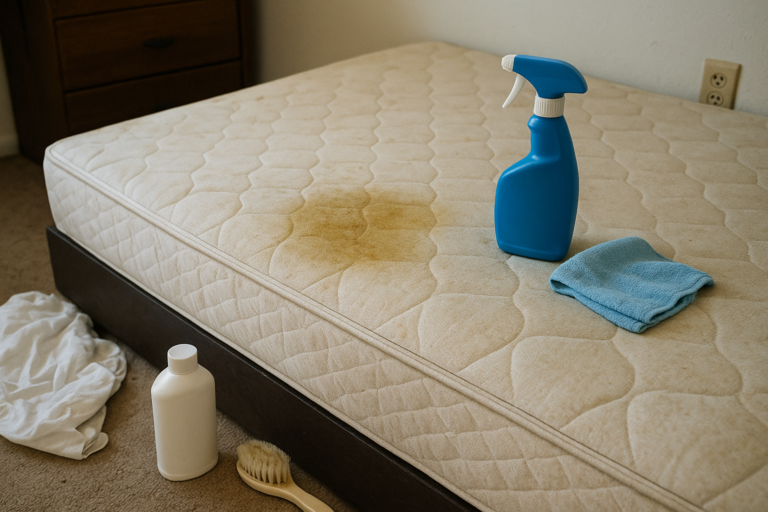
Urine odor tends to stick around because mattresses are layered materials that can pull liquid deep below the surface. Once urine soaks past the cover into foam, batting, or coils, it becomes harder to reach with surface cleaning alone. Simply airing out the mattress or spraying a scented product on top often covers the smell temporarily without addressing what is underneath.
What I Use For This Job
Using the right tools saves time and protects your belongings. Here are my exact recommendations:
*As an Amazon Associate, TidyFormula earns from qualifying purchases.
Enzyme cleaners are commonly recommended for this kind of odor because they are formulated to target the specific organic compounds found in urine. Results can vary by product, mattress material, and how long the stain has been present, so always check the product label and mattress care instructions before applying anything.
What You’ll Need
- Clean absorbent towels or paper towels
- An enzyme-based urine odor remover labeled safe for mattresses or upholstery
- Baking soda
- A vacuum with an upholstery attachment
- A fan or access to good airflow for drying
- Optional: a waterproof mattress protector for future use
Step-by-Step: Removing Pee Smell From a Mattress
1. Act Quickly on Fresh Stains
If the urine is still wet, press clean towels firmly into the area to soak up as much liquid as possible before it spreads further into the mattress. Avoid rubbing, which can push moisture deeper and widen the stained area.
2. Check the Care Label
Look for a care label or manufacturer tag on the mattress. Some materials, especially certain foams and specialty covers, have specific cleaning restrictions. If the label recommends professional cleaning only or restricts liquid cleaners, follow that guidance instead of the steps below.
3. Apply an Enzyme-Based Cleaner
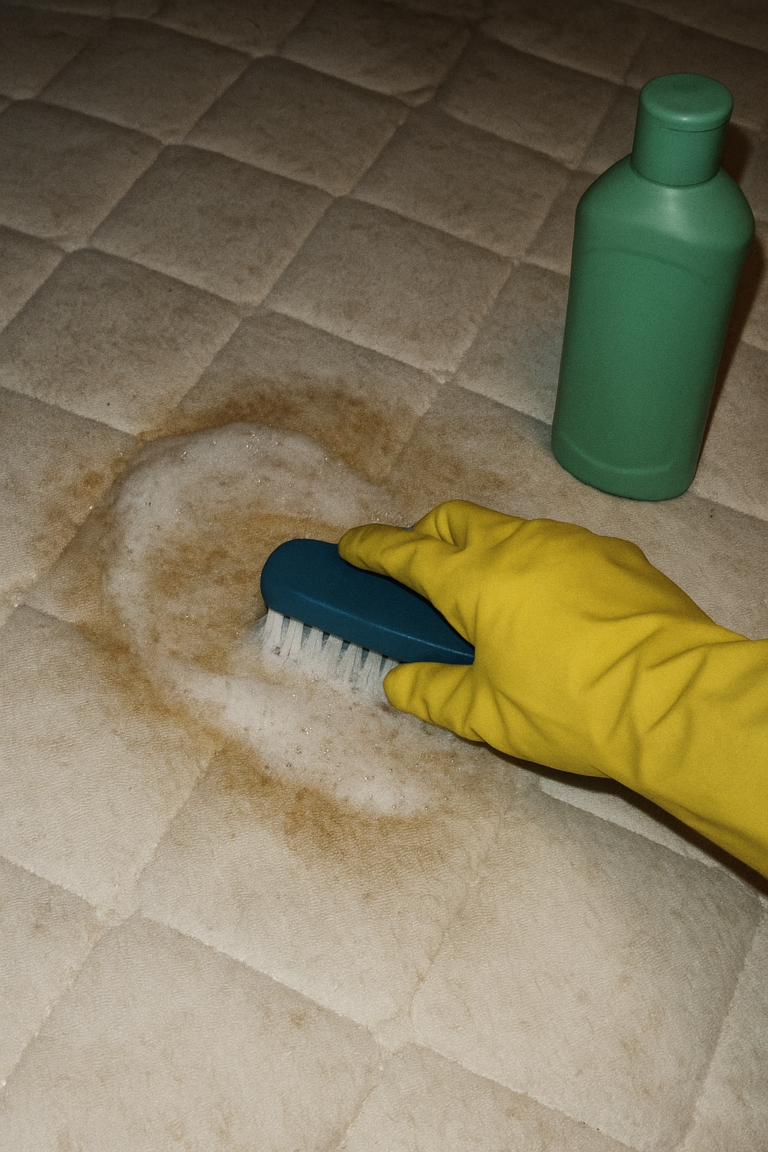
Choose a product labeled for pet or human urine odor removal on upholstery or mattresses. Apply it according to the instructions on the bottle, since application amounts and wait times vary by brand and formula. Avoid soaking the mattress more than necessary, since excess liquid is harder to dry out fully.
4. Let It Sit, Then Blot
Allow the cleaner to sit for the time recommended on the label so it has a chance to work into the affected fibers. Blot the area again with clean towels to remove excess product and moisture rather than letting it air-dry on its own.
5. Treat With Baking Soda
Once the area is mostly dry to the touch, sprinkle a generous layer of baking soda over the spot. Baking soda can help absorb lingering odor as the mattress finishes drying. Leave it in place for several hours or overnight if possible. If you prefer to avoid powders, see how to deodorize a mattress without baking soda for alternative approaches.
6. Vacuum Thoroughly
Vacuum up the baking soda completely using an upholstery attachment. Go over the area more than once to make sure no residue remains, since leftover baking soda can leave a chalky texture or feel gritty under sheets.
7. Dry Completely Before Reuse
Point a fan toward the mattress or set it near open airflow to speed up drying. Do not cover the mattress with sheets or a protector until it is fully dry, since trapped moisture inside foam or batting can lead to lingering odor or other issues over time.
When One Treatment Isn’t Enough
Older or larger stains, especially ones that have had time to soak deep into foam layers, may need more than one round of enzyme treatment. If odor returns after the mattress dries, repeat the enzyme application rather than switching to a different type of cleaner, since combining products isn’t recommended and enzyme treatments often need repeat applications to fully break down deeper residue.
If you notice the odor is still strong after two or three treatment cycles, or if you can see visible staining that won’t lift, the urine may have reached the mattress core. At that point, deep cleaning has real limits, and it may be worth weighing repair-style cleaning against mattress replacement — see how to get urine stain out of a mattress for guidance on escalation and replacement decisions.
Repair Versus Replace
A mattress that is relatively new, in good structural condition, and only lightly affected is generally a reasonable candidate for cleaning. A mattress that is old, sagging, or has absorbed a large volume of urine on multiple occasions may be harder to fully restore, both in terms of odor and general hygiene concerns. If odor persists despite repeated enzyme treatment and thorough drying, replacement may be the more practical option.
Preventing Future Odor Problems
- Use a waterproof mattress protector, checking that it’s compatible with your mattress type and doesn’t trap heat in a way that conflicts with manufacturer guidance.
- Address any accidents as soon as you notice them rather than letting moisture sit.
- Keep a small kit of towels and an enzyme cleaner on hand for quick response.
- Rotate or flip the mattress periodically if the manufacturer recommends it, which can help you spot issues early.
A Few Practical Notes
Results with enzyme cleaners and baking soda can vary depending on the mattress material, how much urine was involved, and how long the stain sat before treatment. Memory foam in particular tends to dry more slowly than traditional innerspring mattresses, so plan for extra drying time and good airflow — and if you use a topper, review how to clean a mattress topper for topper-specific care. Always test any new cleaning product on a small, hidden area first, and stop using it if you notice discoloration or damage to the mattress cover. When in doubt about a specific mattress brand or material, the manufacturer’s care instructions are the most reliable guide for what cleaning methods are appropriate.
Everything Mentioned Above
Before you leave, grab the tools you need to get the job done right the first time:
*As an Amazon Associate, TidyFormula earns from qualifying purchases.