
How to Clean a Down Comforter the Right Way
Cleaning a down comforter starts with checking the care label, since many are machine washable on a gentle cycle while others require professional cleaning. If machine washing is allowed, use a large-capacity front-loading washer, a small amount of mild detergent, and low heat for drying with dryer balls to help the down clumps break up and fluff back out. For similar guidance on inserts, see how to clean a duvet insert without clumping.
⚡ The TidyFormula™ Quick Decision
Best approach: Check the care label first; if it permits machine washing, use a large-capacity front-loader with a gentle cycle, mild detergent, and thorough low-heat drying with clean tennis or wool dryer balls to restore loft.
Use caution with: Older comforters, delicate shell fabrics, thin baffles, or any label marked “dry clean only,” since home washing can stress seams or unevenly wet the fill.
Stop and reassess if: You notice torn seams, feathers leaking out, a musty smell that won’t dissipate after drying (see how to remove damp smell from a bedroom), or a washer too small to let the comforter move freely, since any of these suggest professional cleaning or repair may be the safer route.
Why Down Comforters Need a Different Approach
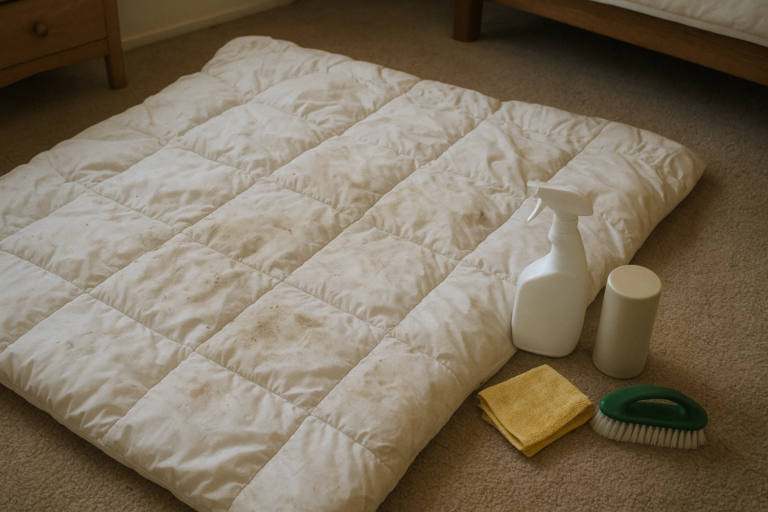
Down clusters trap air to create warmth, and that same airy structure makes them vulnerable to matting, uneven drying, and mildew if moisture gets trapped inside the fill. Unlike synthetic fiberfill, down needs gentle handling, patient drying, and enough space in the washer and dryer to avoid clumping. Manufacturer instructions vary by brand and shell fabric, so always check the label before choosing a method.
What I Use For This Job
Using the right tools saves time and protects your belongings. Here are my exact recommendations:
*As an Amazon Associate, TidyFormula earns from qualifying purchases.
Step 1: Check the Care Label
Look for a fabric care tag sewn into a seam. It will tell you whether the comforter is machine washable, whether it requires a specific water temperature, and whether the manufacturer recommends professional cleaning instead. If the label is missing, worn, or unclear, treat the comforter as a candidate for professional cleaning rather than guessing.
Step 2: Decide Between Home Washing and Professional Cleaning
- Home washing may be appropriate for comforters labeled machine washable, in good structural condition, with a shell fabric that tolerates water and mild detergent.
- Professional cleaning is often the safer choice for antique or heirloom comforters, silk-shell comforters, oversized king or cal-king sizes that won’t fit a home washer with room to spare, or any comforter with a “dry clean only” label.
Step 3: Prepare the Comforter for Washing
- Inspect the shell fabric and seams for tears, thin spots, or loose stitching. Repair small tears before washing if you can, since agitation can make existing damage worse.
- Spot-check any visible stains with a small amount of mild detergent diluted in water on an inconspicuous area first to see how the fabric responds.
- Remove any duvet cover and close all closures, such as zippers or snaps, if the comforter has them.
Step 4: Choose the Right Washer
A front-loading machine without a center agitator is generally preferred because it allows the comforter to move freely without getting caught or unevenly compressed. If your home machine is too small to let the comforter circulate with a few inches of space around it, consider a larger-capacity machine at a laundromat instead. Overcrowding a washer can lead to uneven cleaning and rinsing; if you need alternative no-machine approaches for bulky bedding, see options for how to clean a mattress topper without a washing machine.
Step 5: Wash on a Gentle Cycle
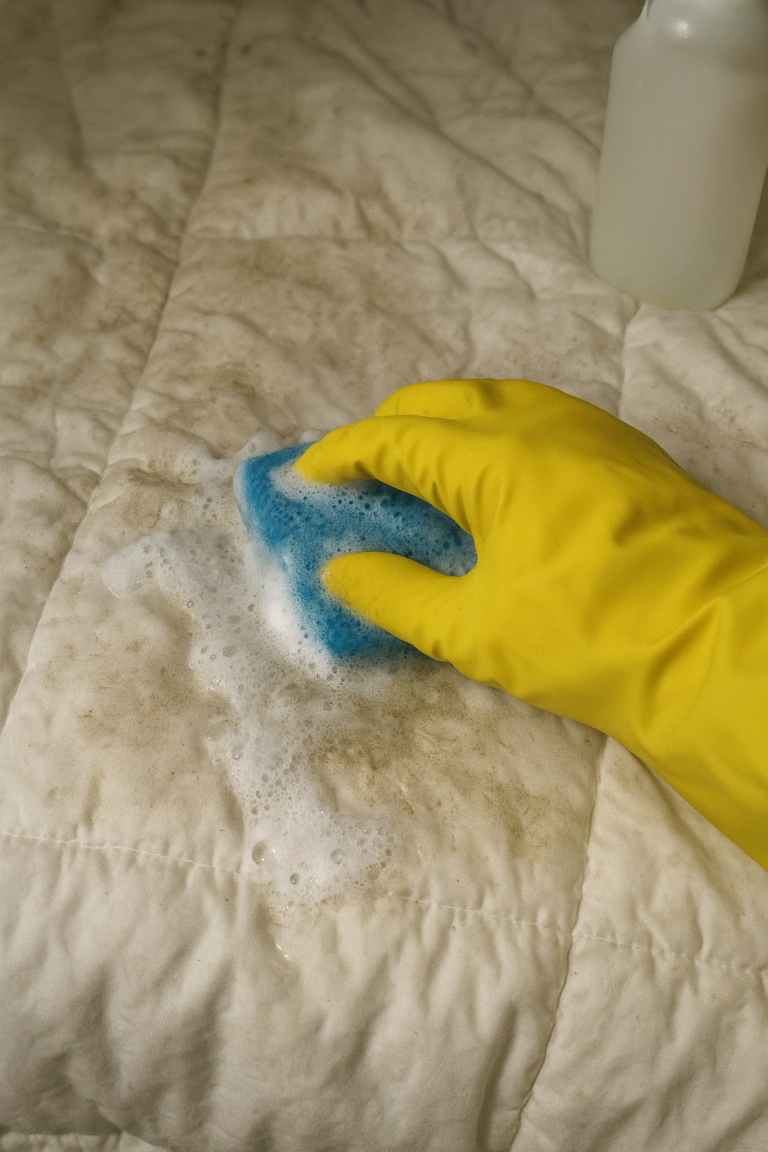
- Use a mild, residue-free detergent formulated for delicates or down products if available, and follow the amount listed on the detergent packaging.
- Select a gentle or delicate cycle with cold or lukewarm water, depending on what the care label allows.
- Avoid fabric softener, bleach, or any additional cleaning products, since these can affect down’s natural loft and the shell fabric’s coating.
- Run an extra rinse cycle if your machine offers one, to help remove detergent residue that can weigh down feathers.
Step 6: Dry Thoroughly and Patiently
Drying is the step most likely to go wrong, because down that stays damp inside the baffles can develop odor or uneven clumping. Use a large-capacity dryer on a low-heat setting, and add a few clean dryer balls, tennis balls in a cotton sock, or similar bounce tools to help break up clumps as the comforter dries.
- Stop the dryer periodically to fluff and redistribute the fill by hand.
- Check that the comforter is completely dry throughout, not just on the surface, before storing it.
- If air-drying is necessary or preferred, lay the comforter flat in a well-ventilated area and fluff it by hand at intervals, understanding that this method takes considerably longer and requires patience to avoid trapped moisture (see how to get sour smell out of laundry after washing if a sour odor develops).
Troubleshooting Common Issues
Clumped or Flat Spots After Washing
This usually means the down needs more time and agitation in the dryer. Continue tumbling on low heat with dryer balls, pausing to fluff by hand, until clusters redistribute.
Lingering Odor
A persistent smell after a full drying cycle may mean moisture remains trapped inside the fill. Extend drying time and fluff frequently; if odor continues after the comforter is fully dry, professional cleaning may be worth considering. For related advice on bedding odors, including pillow cases, see How to Remove Sweat Smell from Pillows.
Feathers Poking Through the Fabric
Occasional quill poke-through can happen with normal use and isn’t necessarily a sign of damage, but frequent leakage may indicate a worn shell fabric that a professional cleaner or repair service can evaluate.
Aftercare and Storage
Store a clean, completely dry down comforter in a breathable cotton storage bag rather than a sealed plastic bin, since down needs airflow to maintain its loft and avoid trapped moisture. Keep it in a cool, dry space away from direct sunlight and humidity. If you use an electric blanket under your bedding, follow the manufacturer’s cleaning and storage guidance—see How to Clean an Electric Blanket Safely for details.
Prevention Tips
- Use a duvet cover to reduce how often the comforter itself needs washing.
- Spot-clean small stains promptly rather than waiting for a full wash cycle.
- Air out the comforter periodically by hanging it in a well-ventilated space, if the care label allows, to help maintain freshness between washes.
When to Repair Instead of Replace
A comforter with minor seam separation or a small tear may be worth repairing with a needle and thread or a patch, especially if the down fill is otherwise in good condition. However, if the shell fabric is thinning broadly, if fill has shifted unevenly despite fluffing, or if the comforter no longer provides the warmth it once did, replacement may be the more practical option. When in doubt about a valuable or specialty comforter, a professional cleaner or textile repair specialist can help you weigh the cost of repair against replacement.
Everything Mentioned Above
Before you leave, grab the tools you need to get the job done right the first time:
*As an Amazon Associate, TidyFormula earns from qualifying purchases.