
How to Remove Sweat Odor from Clothes: A Practical Guide
Removing sweat smell from clothes usually comes down to washing with enough detergent and the warmest water the care label allows, then adding a vinegar or baking soda step for odor that lingers after a normal cycle. Air drying, rather than machine heat, also helps confirm the smell is actually gone before the item goes back in the closet. If a load still smells sour after drying, see our guide on getting a sour smell out of laundry after washing.
The TidyFormula Quick Decision
Best approach: Wash with regular detergent in the warmest water the care label allows, adding a plain white vinegar rinse or a short baking soda soak for stubborn underarm odor, then air dry before deciding if the smell is fully gone.
Use caution with: Wool, silk, rayon, activewear with special moisture-wicking finishes, and any garment where the care label limits water temperature or discourages soaking.
Stop and reassess if: The odor returns within a day of wearing the item again, the fabric feels stiff or altered after treatment, or the smell persists after two full wash cycles with pretreatment.
What I Use For This Job
Using the right tools saves time and protects your belongings. Here are my exact recommendations:
*As an Amazon Associate, TidyFormula earns from qualifying purchases.
Why Sweat Smell Stays in Clothes After Washing
Sweat itself is mostly odorless, but it mixes with skin oils, antiperspirant residue, and body soil to create a film that regular detergent does not always fully break down, especially in cooler water. That leftover residue is what produces the sour or musty smell that reappears once the fabric warms up again from body heat.
Synthetic fabrics like polyester and nylon tend to hold odor more stubbornly than cotton because the fibers absorb oils rather than releasing them easily in the wash. This is why the same detergent and cycle can leave a cotton shirt smelling clean while a workout shirt still smells off.
How to Remove Sweat Smell from Clothes in a Regular Wash
A properly loaded wash with enough detergent and the correct water temperature removes most everyday sweat odor on its own. Overloading the washer or using too little detergent are common reasons a normal cycle fails to fully clear the smell.
- Check the care label for the warmest water temperature the fabric allows, since heat helps loosen oily residue.
- Turn heavily sweated garments inside out so the underarm and back areas get more direct contact with water and detergent.
- Use the amount of detergent recommended on the product label rather than a reduced amount, since underdosing is a frequent cause of leftover odor.
- Avoid overloading the washer drum, since crowded loads limit how well water and detergent can move through the fabric.
- Run an extra rinse cycle if the washer offers one, which helps clear residue that can otherwise trap odor.
If clothes still feel stiff or seem to hold residue after washing, the problem may be detergent buildup—see our guide to removing detergent buildup from clothes. If the item still smells sour once it comes out of the wash, treat it as unfinished business rather than assuming the dryer will resolve it. Heat can set odor into fabric rather than remove it.
Using Baking Soda or Vinegar for Odor That Won’t Wash Out
Plain white vinegar added to the rinse portion of a wash cycle can help loosen residue that regular detergent leaves behind, and baking soda added to the wash can serve a similar purpose. Both are mild, low-risk options for most washable fabrics, but they work differently and should not be combined in the same step.
- For a vinegar approach, add plain white vinegar to the washer’s rinse dispenser or during the rinse cycle rather than mixing it directly with detergent. If the dispenser is gummed up or musty, follow the steps to clean your washing machine detergent drawer before adding vinegar.
- For a baking soda approach, add it directly to the wash along with detergent rather than treating it as a substitute for detergent.
- Never mix vinegar and bleach, since combining an acid with bleach can produce hazardous fumes.
- Spot test on a hidden seam first if the fabric is delicate, brightly colored, or unfamiliar to you.
These steps help lift odor-causing residue rather than acting as a disinfecting step, so they should be understood as odor control rather than sanitizing. If odors persist after treating garments, also check and clean parts of your machine that trap soil—like the lint and pump areas—by learning how to clean your washing machine filter.
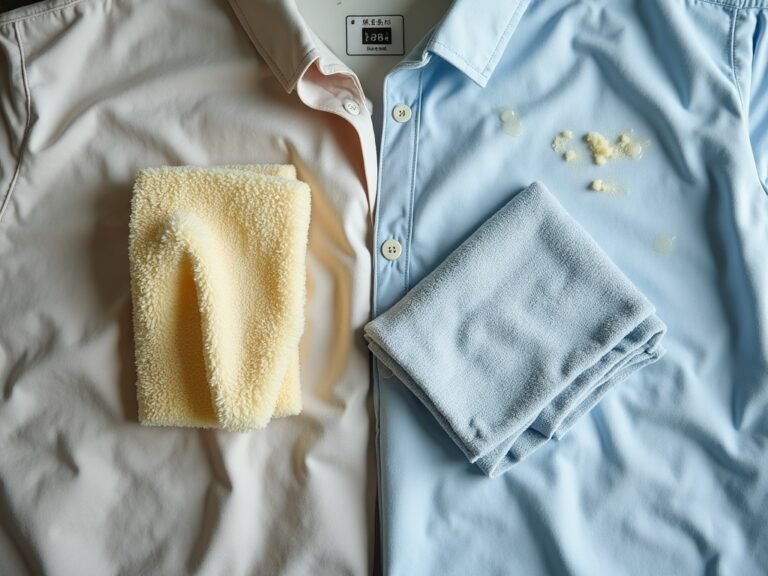
Treating Underarm Buildup and Yellowed Fabric
Underarm areas often need direct pretreatment because sweat and antiperspirant residue can build up in the fibers faster than a regular wash cycle can remove it. This buildup is also what commonly causes yellowing on white or light-colored shirts over time.
Applying a small amount of liquid detergent directly to the underarm area and gently working it into the fabric before washing can help loosen this residue. For fabrics that tolerate soaking, letting the pretreated area sit briefly in cool to lukewarm water before the wash cycle can also help, but always check the care label first since some performance fabrics discourage extended soaking.
If yellowing has already set into the fabric, repeated gentle pretreatment over a few washes is usually more effective and less risky than a single aggressive treatment with a strong product.
What to Avoid When Removing Sweat Odor
Certain habits make sweat odor worse or risk damaging the fabric instead of solving the problem.
- Avoid drying a garment on high heat before confirming the odor is gone, since heat can set residue deeper into the fibers.
- Avoid mixing bleach with vinegar or ammonia-based products, since combining these chemicals is not safe.
- Avoid using excess fabric softener on activewear, since it can coat synthetic fibers and trap odor rather than release it.
- Avoid assuming a strong scent from detergent or fabric softener means the odor is actually gone, since fragrance can mask rather than remove residue.
- Avoid soaking delicate fabrics like silk or wool for extended periods without checking the care label first.
Drying and Preventing Sweat Smell From Returning
Air drying in open air or sunlight, when practical, gives you a clearer chance to smell whether odor is fully gone before the garment is stored. If a garment still smells faintly sour once dry, it usually needs another treatment cycle rather than simply being worn again.
To reduce recurring odor, avoid letting sweaty clothes sit in a closed hamper or gym bag for extended periods, since trapped moisture allows odor to build further into the fibers. Washing activewear and heavily sweated garments promptly, rather than letting them wait for a full laundry day, also reduces how deeply odor sets in. For related textile mildew and damp-towel problems, see our guide on removing mildew smell from towels.
TidyFormula Tip
Turn heavily worn shirts inside out before washing so detergent has more direct contact with the underarm and collar areas where odor tends to concentrate.
For related bedroom textiles that trap sweat, see our article on removing sweat smell from pillows.
Frequently Asked Questions
Does adding more detergent always remove sweat smell faster?
Not necessarily. Using more detergent than the label recommends can leave residue behind if it does not fully rinse out, which can trap odor rather than remove it. Following the labeled amount and adding an extra rinse cycle is usually more effective.
Can I use vinegar and baking soda together in the same wash?
You can use them in the same overall laundry routine, but they are typically most effective when used separately rather than combined in one step, since mixing them creates a reaction that reduces their individual effectiveness. Add baking soda to the wash and vinegar to the rinse instead.
Is it safe to use vinegar on all fabrics?
Most washable cotton and synthetic fabrics tolerate diluted vinegar in the rinse cycle well, but delicate fabrics like silk or certain wool blends may react differently. Spot testing on a hidden area first is the safer approach for unfamiliar fabrics.
What should I do if the smell comes back after the first wash?
Repeat the wash with a pretreatment step on the underarm area and add a vinegar rinse or baking soda soak, since residue that survived the first cycle often needs a second pass. Avoid drying on high heat until the odor is confirmed gone.
Can dry cleaning remove sweat smell from non-washable clothing?
Professional dry cleaning can often help with sweat odor on garments that cannot be machine washed, since cleaners have access to solvents and processes not available at home. Point out the affected area specifically so it receives targeted attention.
Everything Mentioned Above
Before you leave, grab the tools you need to get the job done right the first time:
*As an Amazon Associate, TidyFormula earns from qualifying purchases.