The Ultimate Guide to Gutter Cleaning Tools: The “Hydro-Mechanical Displacement” Protocol
“I stood in my driveway watching a waterfall of brown sludge spill onto my porch for a solid week before I finally admitted I had to drag the ladder out.” There is a specific, distinct smell that comes with cleaning gutters in late November. It isn’t just the smell of wet leaves; it is the scent of anaerobic decomposition. It smells like sulfur, old mulch, and cold, stagnant water. It’s the smell of a chore you have been putting off for three months.
I hate heights. Standing twelve feet in the air on a wobbling aluminum ladder while digging my hand into cold sludge is not my idea of a perfect Saturday. That is why I—like you—have spent hours staring at “telescopic cleaning wands” and “gutter robots” online, hoping there is a magic bullet that keeps my feet on the grass.
As the Lead Researcher at TidyFormula, I decided to stop hoping and start testing. I bought the wands, the robots, the blowers, and the scoops. I spent a weekend covering myself in black grit to answer one question: What is the actual best tool for the job?
If you are searching for the ultimate guide to gutter cleaning tools, you don’t need a sales pitch. You need to know which tools work, and which ones are just expensive plastic trash that will break on the first pinecone.
⚡ The TidyFormula™ Quick Answer
The Recommendation: Stop looking for “no-ladder” magic. The most effective setup is a Ladder Stabilizer (for safety) combined with a flexible Polypropylene Scoop (for sludge).
What I Use For This Job
Using the right tools saves time and protects your belongings. Here are my exact recommendations:
*As an Amazon Associate, TidyFormula earns from qualifying purchases.
- The Mix: Dish Soap + Water (to lubricate the downspout).
- Time: 60–90 Minutes (Average Home).
- Effectiveness: High (Manual scooping is the only way to remove 100% of debris).
The TidyFormula Protocol: The “Scoop & Slide” Method
After testing every gadget on the shelf, I realized a hard truth: You cannot clean a clogged gutter from the ground.
Telescopic wands lack the torque to lift wet, heavy mats of leaves. Robots get stuck on gutter hangers. The only way to truly clean a gutter is to get up there—but we can make it safer, faster, and less gross.
🧪 Tools & Gear
We are skipping the $300 robots. Here is the practical kit:
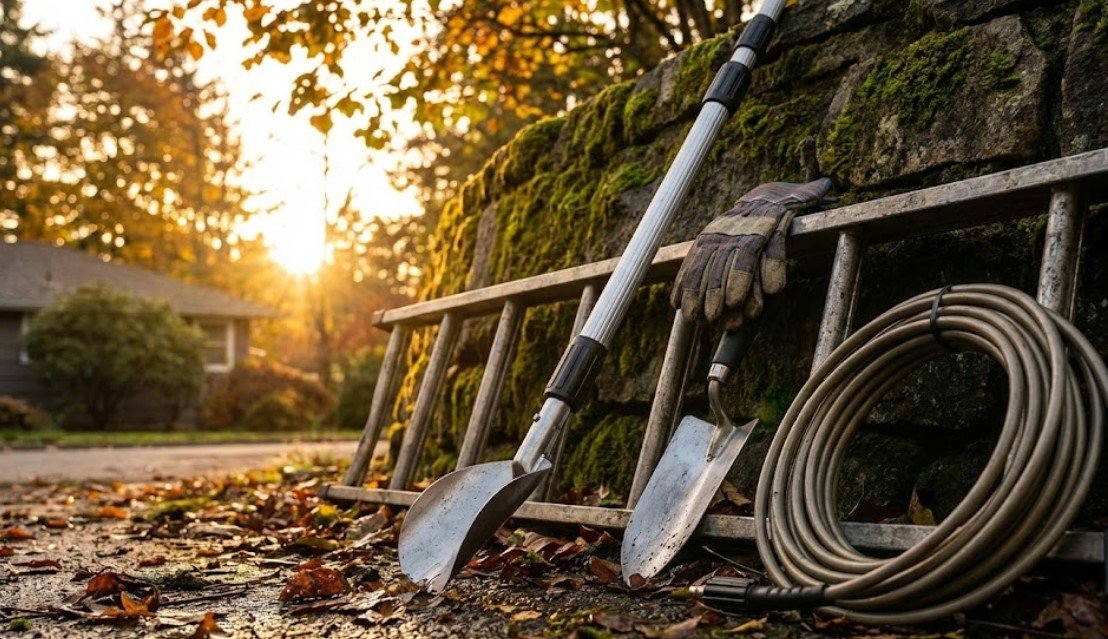
- The Stabilizer (Mandatory): A “Ladder Standoff” bar. It keeps the ladder off the gutter lip.
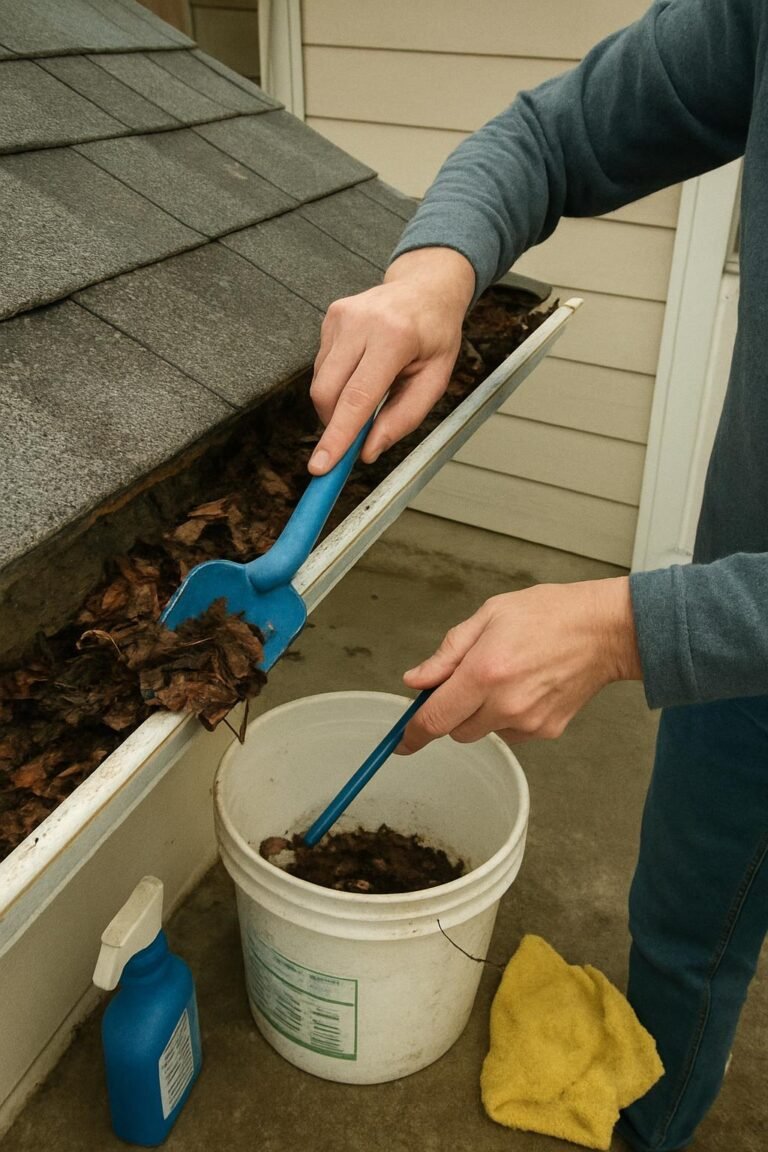
- The Scoop: A specialized plastic scoop (like the Gutter Getter) with a flexible tip.
- The Bucket Hook: A simple S-hook to hold your bucket.
- Dish Soap: Our secret weapon for flow.
Step-by-Step Execution
Step 1: The Dry Excavation (The Blower Pass)
Before you climb, assess the debris. If you have a layer of dry, crispy leaves on top, don’t waste time scooping them. Use a Leaf Blower with a Gutter Attachment (the long J-hook tube).
Walk the perimeter. Blast the dry stuff out. It’s satisfying—like watching confetti fly. But stop immediately if you see wet clumps. If you try to blow wet leaves, you will just compress them into a brick.
Step 2: The “Slip Mix” Prep
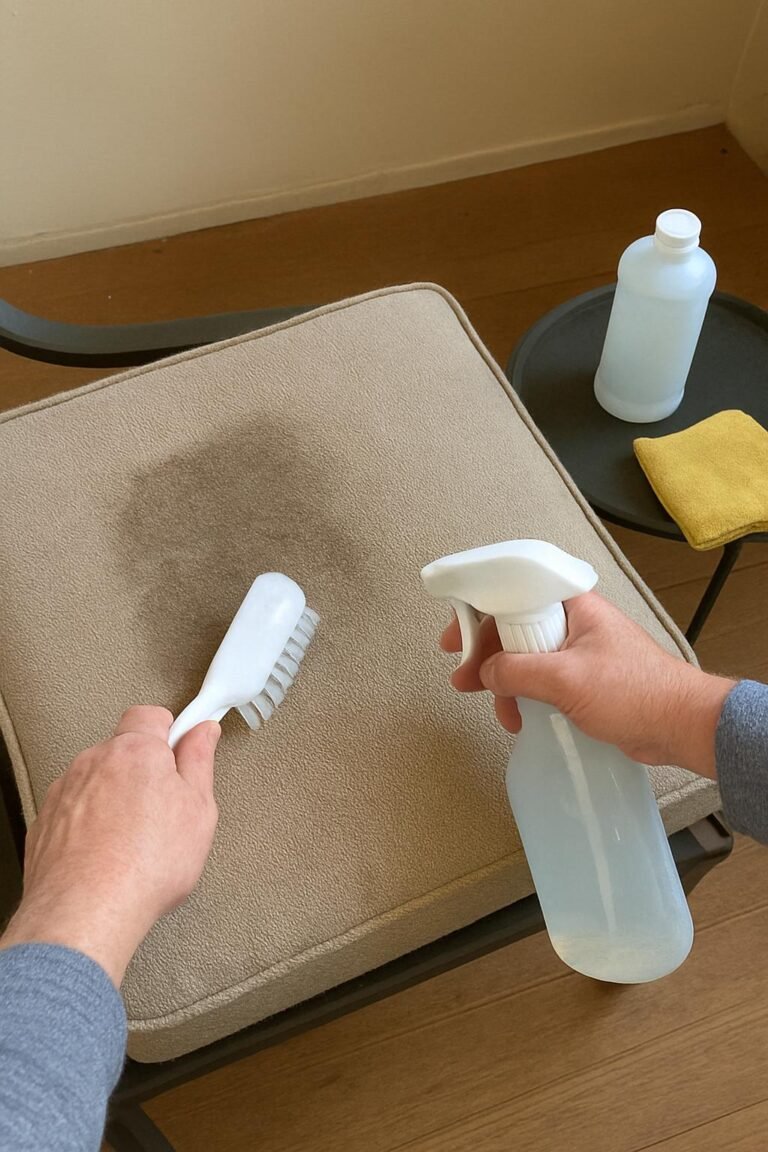
This is a trick I learned from a pro. Fill a spray bottle (or a pump sprayer) with warm water and 2 tablespoons of Dish Soap.
Climb the ladder and spray the downspout opening and the heavy sludge piles. The soap breaks the surface tension. It makes the gritty, sandy “shingle sludge” slippery, so it doesn’t stick to your scoop or the aluminum trough.
Step 3: The Manual Extraction
This is the main event. Secure your ladder with the stabilizer (this stops that terrifying side-to-side wobble). Hook your empty bucket to the rung.
Take your plastic scoop—never use a metal garden trowel, it scratches the paint and causes rust—and dig in. You will hear a wet, suction-like thwuck sound as you pull the debris up.
Drag the scoop toward you. The flexible tip should scrape the bottom clean, removing that layer of black silt that causes corrosion.
Step 4: The Hydro-Flush
Once the solids are in your bucket, grab the garden hose. Place the nozzle at the far end of the gutter and spray toward the downspout.
Watch the water. It should flow clear and fast. If it backs up, your downspout is clogged. Since you pre-lubricated it with dish soap in Step 2, a quick blast of high-pressure water usually dislodges the plug.
Reality Check: Why I Ditched the “Fancy” Tools
You might be reading this and thinking, “But I don’t want to climb a ladder!” I get it. I tried the alternatives. Here is why they failed the Ultimate Guide to Gutter Cleaning Tools test.
1. The Telescopic Water Wand
The Promise: Blast leaves out from the ground with high-pressure water.
The Reality: Physics is cruel. When you shoot water up into a curved gutter, it has to come down. It rained black, gritty sludge water all over me. My glasses were covered. My shirt was ruined. Worse, I couldn’t see what I was doing, so I missed huge patches of wet pine needles.
2. The Gutter Robot (iRobot Looj & Clones)
The Promise: A tank that drives through your gutters.
The Reality: It’s a cool toy, but it’s not a tool. My robot got stuck on a gutter hanger (the metal clip inside) within 4 feet. I had to climb the ladder to rescue the robot. Then it flipped over on a thick twig. I spent more time babysitting the robot than I would have spent cleaning the gutter myself.
3. The Vacuum Attachment
The Reality: Great for dry leaves. Useless for wet mulch. The vacuum tube clogged every 30 seconds. Unclogging a 12-foot plastic tube is more annoying than cleaning the gutter.
🧪 The Science: Why “Sludge” Sticks
Why do we need a scoop? Because of Adhesion and Viscosity. As leaves decompose, they turn into a cellulose paste that bonds to the aluminum gutter. This “gutter cake” has high viscosity—it resists flow. Air blowers and water wands apply surface pressure, but they lack the shear force needed to break the adhesive bond with the metal. Only a physical scraper (the scoop) provides enough mechanical advantage to peel the sludge off.
Pro-Tip: The “Tennis Ball” Hack
Here is a mistake I made once: I was scraping debris and accidentally pushed a huge clump of pine needles down the downspout. It clogged instantly underground.
The Fix: Before you start scooping, plug the downspout hole with an old tennis ball (or a rag). This acts as a stopper. Clean the gutter, remove the debris, and then remove the tennis ball to flush. It saves you from a $200 plumber bill.
Frequently Asked Questions (FAQ)
1. Are gutter guards actually worth the money?
It depends on your trees. If you have big leaves (Oak/Maple), mesh guards work great. If you have Pine trees? No. Pine needles are like tiny spears—they poke right through the mesh and get stuck. I actually found it harder to clean gutters with guards because I had to unscrew them first.
2. How often should I clean my gutters?
Twice a year is the bare minimum. Late Spring (after the “helicopters” and pollen strings drop) and Late Fall (after the leaves drop). If you skip the Fall clean, that wet sludge will freeze in Winter, expanding and potentially ripping the gutter off your fascia board.
3. Can I use a pressure washer?
Be careful. A high-PSI pressure washer can strip the paint off your aluminum gutters or dent them. If you use one, use a “fan tip” (wide spray) and don’t get too close. I prefer a standard hose with a high-pressure nozzle—it’s gentler and provides more volume to flush the dirt.
4. Why is water dripping behind the gutter?
This usually means the gutter is overflowing, or the “drip edge” (the metal flashing on the roof) isn’t tucked inside the gutter properly. Clean the clog first. If it still leaks, water is wicking behind the metal, which causes wood rot. That’s a repair job, not a cleaning job.
5. Is the “Gutter Sense” claw tool good?
The “Gutter Sense” (tongs on a rope) is the best of the ground-based tools. It actually grabs the debris. However, looking up and pulling a rope for an hour gives you a serious neck cramp (“Gutter Neck”). It’s good for a spot clean, but slow for the whole house.
Everything Mentioned Above
Before you leave, grab the tools you need to get the job done right the first time:
*As an Amazon Associate, TidyFormula earns from qualifying purchases.