Cleaning Pillows in a Washing Machine: A Practical Guide
Most pillows can go in the washing machine, but the right method depends on the fill type. Down, feather, synthetic, and foam pillows each need different water temperatures, detergent amounts, and drying approaches. Always check the care label first, since some pillows are machine-washable while others—especially memory foam—are not.
⚡ The TidyFormula™ Quick Decision
Best approach: Wash two pillows at a time in a front-loading or large top-loading machine using a gentle cycle, a small amount of mild detergent, and thorough rinsing, then dry completely on low heat with dryer balls or clean tennis balls to help restore loft.
Use caution with: Memory foam, latex, and buckwheat-fill pillows, which generally should not be machine washed, along with older or delicate pillows that may have weakened seams.
Stop and reassess if: The pillow feels waterlogged with clumped filling after washing, the seams tear or stretch during the cycle, or the care label specifically says “dry clean only” or “do not wash.”
Check the Care Label Before You Start
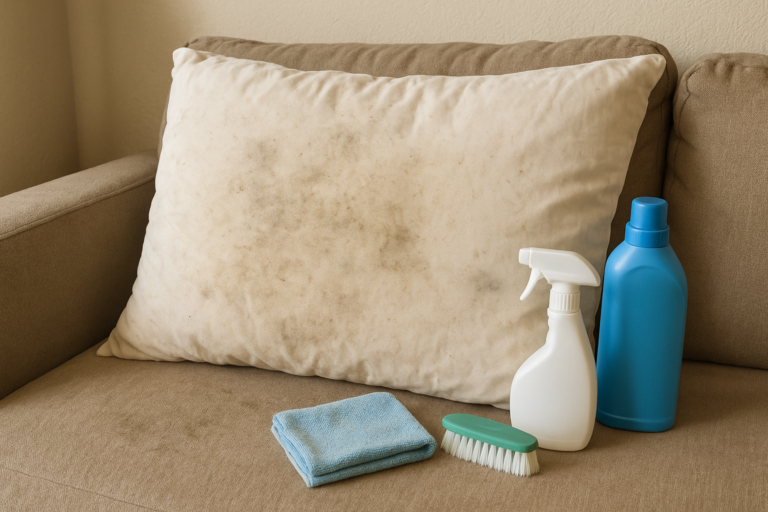
Before washing any pillow, look for a care tag, usually sewn into a seam. This label reflects the manufacturer’s testing and knowledge of the specific materials used, so it should take priority over general advice. If the tag is missing or unreadable, consider the fill type and err on the side of caution, especially for foam or specialty fills.
What I Use For This Job
Using the right tools saves time and protects your belongings. Here are my exact recommendations:
*As an Amazon Associate, TidyFormula earns from qualifying purchases.
Which Pillows Are Generally Machine-Washable
- Polyester fiberfill pillows: Usually tolerate machine washing well and are among the most straightforward to clean.
- Down and feather pillows: Many can be machine washed, but they require gentler handling, thorough rinsing, and extended drying time to avoid mildew odor from trapped moisture — for similar care and drying tips on large bedding items, see How to Clean a Duvet Insert without Clumping.
- Memory foam pillows: Typically not machine washable. The foam can break apart in a washer and may not dry properly, which can lead to lingering dampness inside the pillow.
- Latex pillows: Usually not suited to machine washing for similar reasons—foam materials tend to absorb water rather than release it easily.
- Buckwheat or specialty-fill pillows: Typically require the fill to be removed and cleaned separately, if at all, rather than washing the whole pillow.
When in doubt about your specific pillow’s fill or construction, checking the manufacturer’s website or included documentation is a reasonable extra step.
How to Wash Down or Fiberfill Pillows in a Machine
- Inspect the pillow first. Look for tears, weak seams, or loose stitching. A washing machine’s agitation can stress existing damage, so repairing small tears beforehand can prevent filling from escaping mid-cycle.
- Load two pillows together, not one. Washing a pair helps balance the drum, which reduces excessive shifting and banging during the cycle.
- Use a gentle or delicate cycle with warm water. Extremely hot water isn’t necessary and may affect certain fabrics or fill materials over time. Follow any temperature guidance on the care label.
- Add a small amount of mild liquid detergent. Powdered detergent can sometimes leave residue trapped in filling, so liquid detergent is often easier to rinse out completely.
- Run an extra rinse cycle if your machine allows it. Leftover detergent inside the fill can cause odor or stiffness later, so thorough rinsing matters more with pillows than with typical laundry. Also, check and maintain your washer so it rinses properly — learn how to clean the washing machine filter if your washer is older or showing signs of buildup.
Drying Pillows Thoroughly
Drying is often the step that determines whether a machine-washed pillow turns out well. Filling that stays damp inside a pillow can lead to a musty smell or uneven clumping, so taking time here is worthwhile.
- Use low heat, not high heat. High heat can scorch certain fabrics or affect synthetic fill fibers, so check the label for any dryer temperature guidance.
- Add clean tennis balls or wool dryer balls. These help break up clumps of filling as the pillow tumbles, which supports more even loft as it dries.
- Stop periodically to fluff and reshape the pillow by hand. This redistributes filling and helps you check how dry the interior feels.
- Confirm the pillow is completely dry before use. Squeeze different sections to feel for hidden dampness, particularly in the center, before putting it back on the bed. If the room still smells damp after drying, see How to Remove Damp Smell from Bedroom.
If your dryer doesn’t have a low-heat or air-fluff setting, air-drying flat in a well-ventilated space is an alternative, though it typically takes considerably longer — for advice on cleaning and drying bulky foam or padding without a machine, see How to Clean a Mattress Topper without a Washing Machine.
Handling Pillows That Shouldn’t Go in the Washer
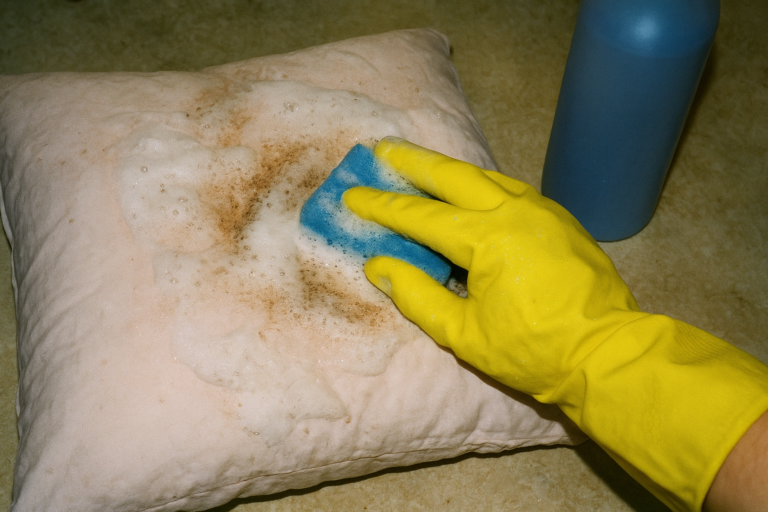
For memory foam, latex, or other pillows not suited to machine washing, spot cleaning the outer cover with a mild solution and a clean cloth is usually the safer route. Removable pillow covers, if included, can often be laundered separately according to their own care label, even when the foam insert itself should not be submerged or machine washed. If odors persist after spot-cleaning, refer to targeted odor-removal advice such as How to Remove Sweat Smell from Pillows.
Preventing Future Buildup
- Use a washable pillow protector under the pillowcase to reduce how often the pillow itself needs deep cleaning.
- Wash pillowcases and protectors regularly, since they absorb most everyday oils and moisture before it reaches the pillow.
- Air out pillows periodically by leaving them uncovered in a ventilated room for a short time, which can help with general freshness between washes.
When to Replace Instead of Clean
If a pillow has persistent lumps that fluffing doesn’t fix, a smell that lingers after thorough washing and complete drying, or seams that have failed in multiple spots, replacement is often more practical than continued cleaning attempts. Pillows also naturally lose loft and support over time regardless of care, so periodic replacement is a normal part of pillow maintenance rather than a sign that something went wrong.
Everything Mentioned Above
Before you leave, grab the tools you need to get the job done right the first time:
*As an Amazon Associate, TidyFormula earns from qualifying purchases.