How to Clean Dust from Popcorn Ceiling
The safest way to clean dust from a popcorn ceiling is with a dry method first, using a soft microfiber duster, a lamb’s wool duster, or a vacuum with a soft brush attachment held slightly above the surface. Popcorn ceiling texture is fragile and often loosely bonded, so avoid pressing, scrubbing, or using water unless you already know the ceiling is sealed and painted.
If your ceiling was installed decades ago, there’s a reasonable chance it was never repainted or sealed, which makes the texture more likely to flake or crumble if you’re too aggressive. Working carefully and testing a small area first can save you from knocking loose chunks of texture onto the floor.
⚡ The TidyFormula™ Quick Decision
Best approach: Use a dry microfiber duster on an extension pole or a vacuum with a soft brush attachment, working in light, gentle passes without pressing into the texture.
Use caution with: Unpainted or unsealed popcorn ceilings, older textures that already look powdery or loose, and any method involving water, steam, or scrubbing tools.
Stop and reassess if: You notice texture flaking off, crumbling, discoloration, sagging, or water stains, since these can signal a damaged or deteriorating ceiling that needs a professional look rather than more cleaning.
What I Use For This Job
Using the right tools saves time and protects your belongings. Here are my exact recommendations:
*As an Amazon Associate, TidyFormula earns from qualifying purchases.
Check the Ceiling Before You Start
Popcorn ceilings vary a lot depending on age, whether they were painted, and how they were installed. A ceiling that’s been painted with a standard latex paint is generally more durable and better able to handle light dry cleaning than a raw, unpainted texture, which tends to be softer and more prone to shedding.
Before cleaning the whole ceiling, test a small, inconspicuous corner. Run your duster or vacuum brush over it once and check for any texture coming loose. If small bits fall or the surface feels chalky to the touch, treat the rest of the ceiling with extra care and lighter pressure.
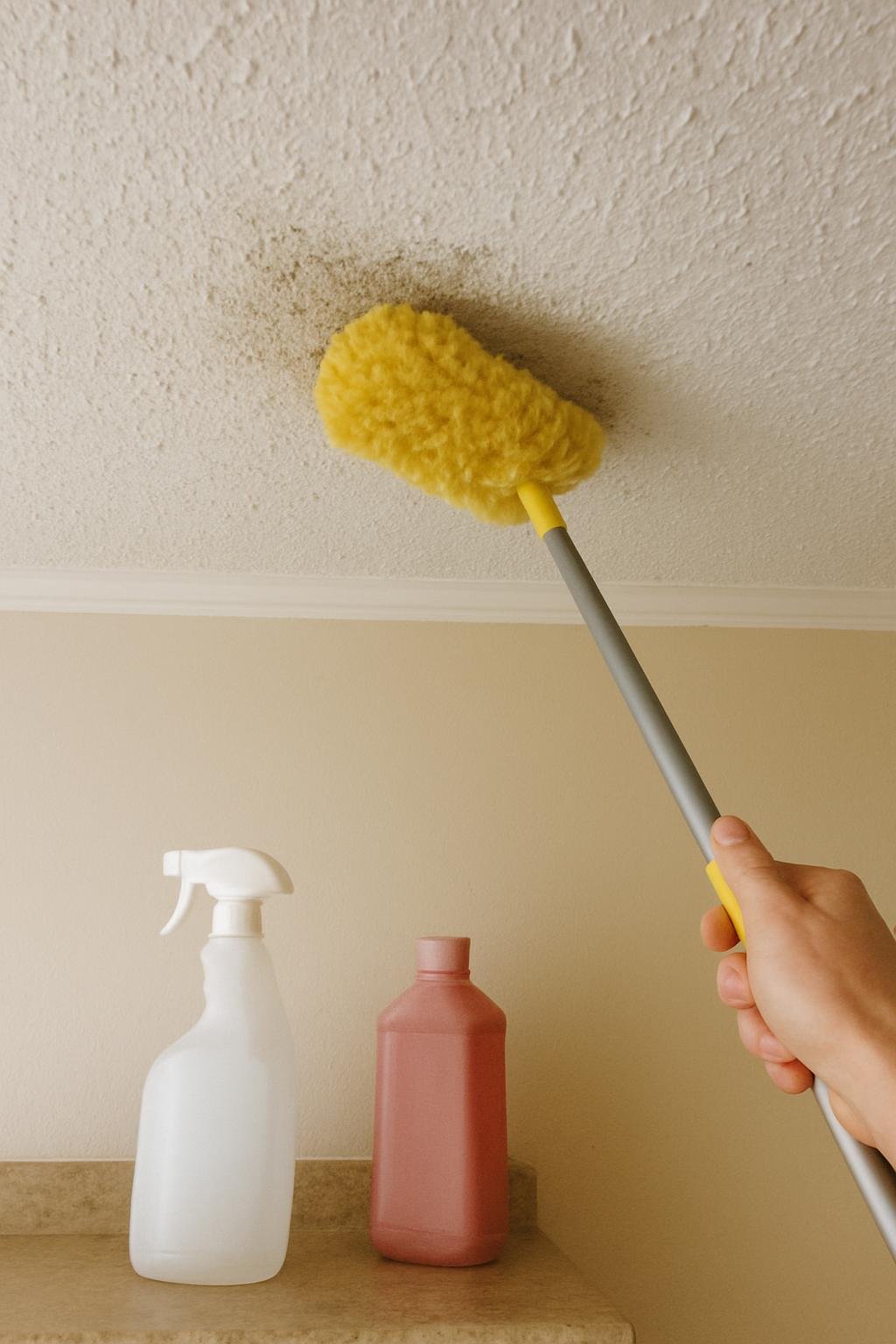
If you see cracking, sagging, brown or yellow staining, or areas that feel soft or damp, don’t clean over them. Those signs can point to a moisture problem or ceiling damage that a cleaning method won’t fix, and continuing to work on that spot could make things worse.
Tools That Work Well for This Job
- Microfiber duster with an extension pole for reaching ceilings without a ladder and for trapping dust rather than scattering it.
- Vacuum with a soft brush attachment for a deeper dust pull, especially in corners and along the edges near walls.
- Lamb’s wool duster as a gentle alternative that some people find effective on delicate textures.
- Step stool or ladder rated for your height, positioned on stable, level flooring.
- Drop cloth or old sheet to catch falling dust and any loose texture flakes.
Skip stiff-bristled brooms, stiff scrub brushes, and anything abrasive. These tools apply more pressure than the texture can usually handle and are a common way people accidentally knock off chunks of popcorn ceiling.
How to Clean Dust from a Popcorn Ceiling
- Clear the room below. Move furniture out of the way or cover it, and lay down a drop cloth to catch dust and any debris that falls.
- Start with the driest, gentlest tool. Attach a microfiber duster head to an extension pole and pass it lightly across the ceiling in one direction, letting the fibers pick up dust rather than pushing into the texture.
- Work in small sections. Clean one manageable area at a time so you can watch for flaking or loose material before moving to the next section.
- Follow up with a vacuum if needed. If dust is heavy or has built up in the texture’s crevices, switch to a vacuum with a soft brush attachment on low suction, holding it just above the surface instead of pressing it into the ceiling.
- Pay extra attention to corners and edges. Dust tends to collect more heavily near walls, light fixtures, and ceiling fans, so give those areas a slightly closer pass without increasing pressure.
- Stop if you see texture coming loose. If flakes start falling or an area looks like it’s crumbling, back off that spot and switch to an even lighter touch or skip it entirely.
Avoid wiping the ceiling with a damp cloth or sponge unless you’re certain the surface is painted and sealed, and even then, use minimal moisture. Water can soften unsealed texture, cause staining, or leave the surface uneven once it dries.
Mistakes That Cause Damage
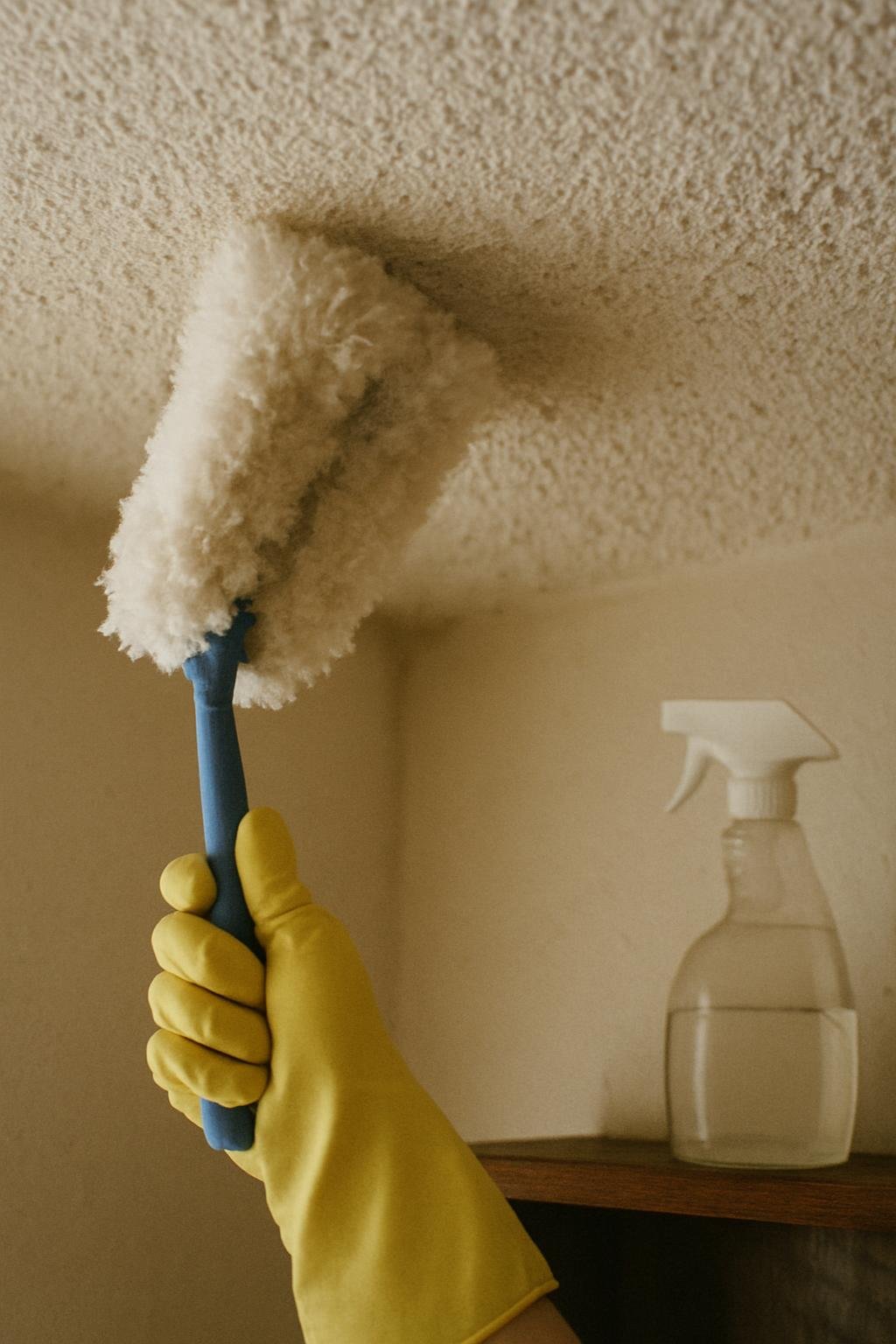
Pressing too hard is the most common way people damage a popcorn ceiling while trying to clean it. The texture is often only lightly bonded to the ceiling surface, so any tool that pushes rather than glides can pull pieces loose.
Using a broom or stiff brush is another frequent misstep. These tools are designed for flat, durable surfaces and tend to be too rough for textured ceilings, even ones that are painted.
Skipping the test patch is a mistake that’s easy to avoid. A thirty-second test on a small area tells you how the ceiling will react before you commit to cleaning the entire surface, and it can prevent a small mistake from becoming a large, visible one.
Applying water or cleaning sprays without knowing whether the ceiling is sealed is also risky. If you’re unsure whether your ceiling has been painted, treat it as unsealed and stick with dry methods only.
How Often to Clean a Popcorn Ceiling
Most homes do fine with dusting a popcorn ceiling once or twice a year, since it isn’t a high-touch surface and dust tends to build up slowly. Rooms with more airflow, ceiling fans, forced-air vents nearby, or nearby cooking areas may need attention a bit more often, since dust and light grease particles can settle there faster.
If you notice visible dust clumps, cobwebs, or a gray film forming sooner than that, there’s no harm in cleaning again as needed. Regular light dusting is easier on the texture than letting dust build up and then needing a more aggressive cleaning pass later.
When to Call a Professional Instead
If your popcorn ceiling shows signs of water damage, sagging, significant crumbling, or texture that comes off easily even with gentle dusting, cleaning isn’t going to solve the underlying problem. A contractor or ceiling specialist can evaluate whether the texture needs patching, resealing, or removal.
Ceilings installed before the late 1980s may also contain asbestos in the texture material, depending on the product used at the time. If your home falls into that age range and you’re planning anything beyond light surface dusting, such as scraping, sanding, or removing texture, it’s worth having the material tested or consulting a professional before doing any work that disturbs it.
While you’re working through other household cleaning tasks, you might also find these guides useful: cleaning an oven without harsh chemicals or cleaning a rug without a carpet cleaner.
Everything Mentioned Above
Before you leave, grab the tools you need to get the job done right the first time:
*As an Amazon Associate, TidyFormula earns from qualifying purchases.