How to Use a Pool Vacuum Robot (And Why I Threw Away My Pole)
“There is a specific kind of rage you feel when you’re standing in 98-degree heat, trying to fish a single dead beetle out of the deep end with a net that is always three inches too short.”
One Tuesday last summer, I was standing at the edge of my pool, holding that flimsy blue aluminum pole. It was 95 degrees. Sweat was stinging my eyes.
I watched a clump of wet leaves float to the bottom of the deep end. I lunged with the pole, missed, and the vacuum head floated up like a dead fish. I almost threw the whole pole into the water out of pure spite.
I realized I was spending more time cleaning the pool than actually swimming in it. That’s when I caved. I bought a pool vacuum robot.
I was skeptical. I don’t trust “smart” devices. My smart toaster burns bread. But after a month of testing, watching this little tank crawl up my walls, I have thoughts. It’s not perfect—it gets confused, and it’s heavy—but it changed my weekends.
What I Use For This Job
Using the right tools saves time and protects your belongings. Here are my exact recommendations:
*As an Amazon Associate, TidyFormula earns from qualifying purchases.
Here is the honest truth about using a robot to clean your pool, including the parts the manufacturers don’t tell you.
⚡ The TidyFormula™ Quick Answer
The Recommendation: A robotic cleaner is 90% better than manual vacuuming, but you still need to brush the stairs manually.
- The Mix: One robot, a power source, and patience.
- Time: 5 minutes setup, 2–3 hours run time.
- Effectiveness: High (Great on floors, struggle on tight corners).
The “Drop and Pray” Method

I jokingly call this the “Submarine Launch.” It sounds tactical. Really, it’s just trying not to drop a heavy machine on your toe.
Using a pool vacuum robot isn’t just “plug and play.” There is a rhythm to it. If you mess up the setup, you come back two hours later to find the robot floating upside down like a capsized turtle. I learned that the hard way.
Step 1: The Cord Spaghetti
First, drag the unit to the center of the pool’s length. Not the shallow end. The center.
You have to untangle the blue cord. It feels rubbery and warm from the sun. If you don’t straighten this out completely, the robot will drive in circles and strangle itself. I spent twenty minutes once untying a knot that looked like a sailor’s exam.
Step 2: The Purge
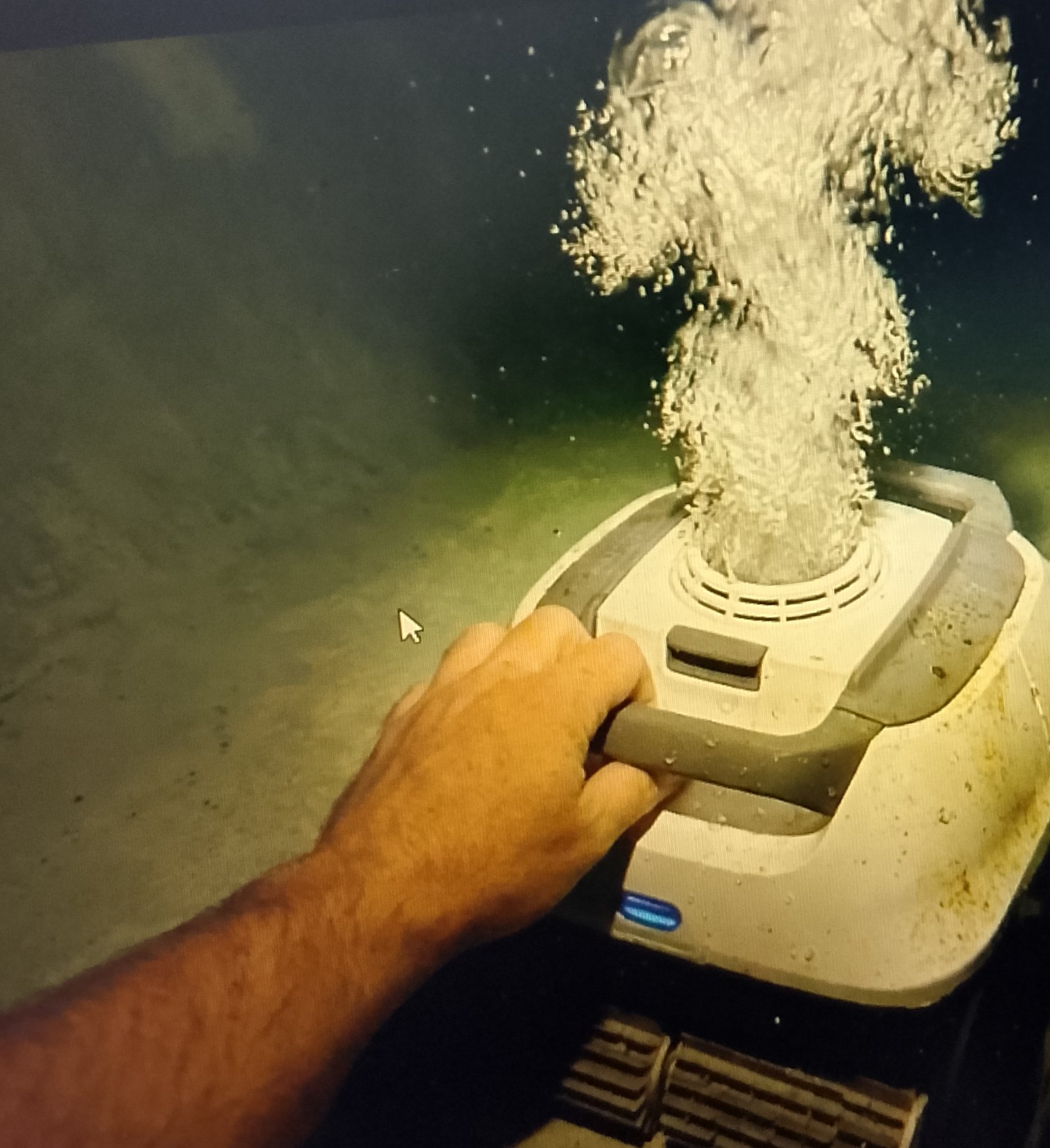
You can’t just toss it in. It has air inside.
Lower it gently. Hold it underwater. You will hear a loud glug-glug-glug sound as the air escapes. You have to wait until the bubbles stop. If you let go too early, the front end floats, and it can’t get traction.
Once it sinks heavy to the bottom with a soft thud, you’re good.
Step 3: The Cycle (and The Noise)
Press the button on the power supply. The robot hums to life.
It’s surprisingly quiet underwater, but you can hear a faint whirring sound, like a distant blender. Watch it for the first two minutes. Does it climb the wall? If it slips, your filters might be full already, or your water chemistry is off (slick walls = algae).
Now, walk away. Go drink coffee. This is the best part.
Step 4: The Gross Reveal
When the cycle is done, pull it up by the cord gently until it reaches the surface. Then grab the handle. Do not lift it out by the cord.
Open the filter basket. This is where reality hits.
It will be filled with grey sludge, hair, and slimy leaves. It smells like a mix of swamp water and chlorine. You have to hose this out immediately. If that gunk dries on the mesh screens, it turns into concrete. I use a garden hose on the “Jet” setting. It splashes back on my legs. I hate it. But it’s necessary.
🧪 The Science: Why It Beats Suction
Old-school vacuums suck water through your pool’s pump into the big sand filter. It puts strain on your system. A pool vacuum robot is independent. It has its own electric motor and filter. It scrubs the surface with rubber brushes while vacuuming, physically loosening that thin layer of “bio-film” (slime) that algae loves to grow on.
Reality Check: It’s Not Magic
I want to be honest here because the ads lie. They show a sparkling pool in 30 seconds.
The Robot Blind Spots:
- The Stairs: Most robots are terrible at stairs. They climb up, teeter on the edge, and fall off. You still have to brush the stairs manually.
- The Corners: If you have a square pool, the robot will miss the sharp 90-degree corners. It just can’t reach.
- The Fine Dust: Unless you have “ultra-fine” filters installed, very fine silt might just get blown out the top vent. It looks like a little cloud following the robot.
But compared to sweating with the pole? I’ll take the robot any day. It gets 95% of the dirt. I can live with the other 5%.
Wrap Up
Buying a robot didn’t make my pool maintenance zero, but it made it manageable. I no longer dread seeing leaves on the bottom.
If you get one, treat it nice. Don’t leave it in the sun. Clean the filters. And don’t expect it to climb out of the pool and make you a sandwich. It’s just a vacuum, but it’s a really good one.
Frequently Asked Questions
1. Can I leave the robot in the pool all the time?
You can, but you shouldn’t. The chlorine eats away at the plastic and rubber tracks over time. Plus, the cord gets sun-baked and brittle. I pull mine out after every cycle.
2. Why does my robot get stuck on the main drain?
This is annoying. The robot sucks itself onto the bottom drain like a leech. Most pools have a raised drain cover. If this happens, you might need a special “main drain hook” or just turn off the pool’s main pump while the robot runs.
3. Does it clean algae?
It scrubs it, yes. But it won’t kill it. If your pool is green, a robot won’t fix it. You need chemicals (Shock) for that. The robot is for debris, not chemistry.
4. How often should I run it?
In the summer, I run mine 2–3 times a week. If it’s autumn and leaves are falling? Every single day.
5. Is a cordless robot better?
I tested one. I loved the freedom, but I hated charging it. It died in the middle of the deep end once, and I had to fish it out with a hook. I stick to the corded ones for power consistency.
Everything Mentioned Above
Before you leave, grab the tools you need to get the job done right the first time:
*As an Amazon Associate, TidyFormula earns from qualifying purchases.