How to Remove Rust Stains from Concrete
The most reliable way to remove rust stains from concrete is an oxalic acid–based rust remover made for masonry: wet the slab, apply the cleaner, let it dwell 10–15 minutes without drying out, scrub with a stiff nylon brush, then rinse thoroughly. Light, fresh stains often lift with lemon juice or white vinegar. Bleach does nothing for rust.
Rust stains have a way of showing up in the worst spots. Under a planter stand. Where the grill legs sat all winter. A long orange fan across the driveway from a sprinkler running well water. And because concrete is porous, the stain sinks in instead of sitting on top, which is why a quick hose-down never works.
⚡ The TidyFormula™ Quick Decision
Best approach: Use an oxalic acid rust remover labeled for concrete, keep the surface damp during the dwell time, scrub with a stiff nylon brush, and rinse well — repeat a second round rather than scrubbing harder.
Use caution with: Muriatic (hydrochloric) acid, which can etch and lighten concrete; sealed, stamped, or colored concrete, which acid can dull; and runoff that reaches lawns, garden beds, ponds, or storm drains.
Replace or resurface instead of cleaning if: The stain is coming from rusting rebar that’s cracking and lifting the slab from below — that’s a structural repair, not a stain.
What I Use For This Job
Using the right tools saves time and protects your belongings. Here are my exact recommendations:
*As an Amazon Associate, TidyFormula earns from qualifying purchases.
First, Figure Out Where the Rust Is Coming From
Cleaning without finding the source is how you end up doing this twice. Take thirty seconds and look at the pattern.
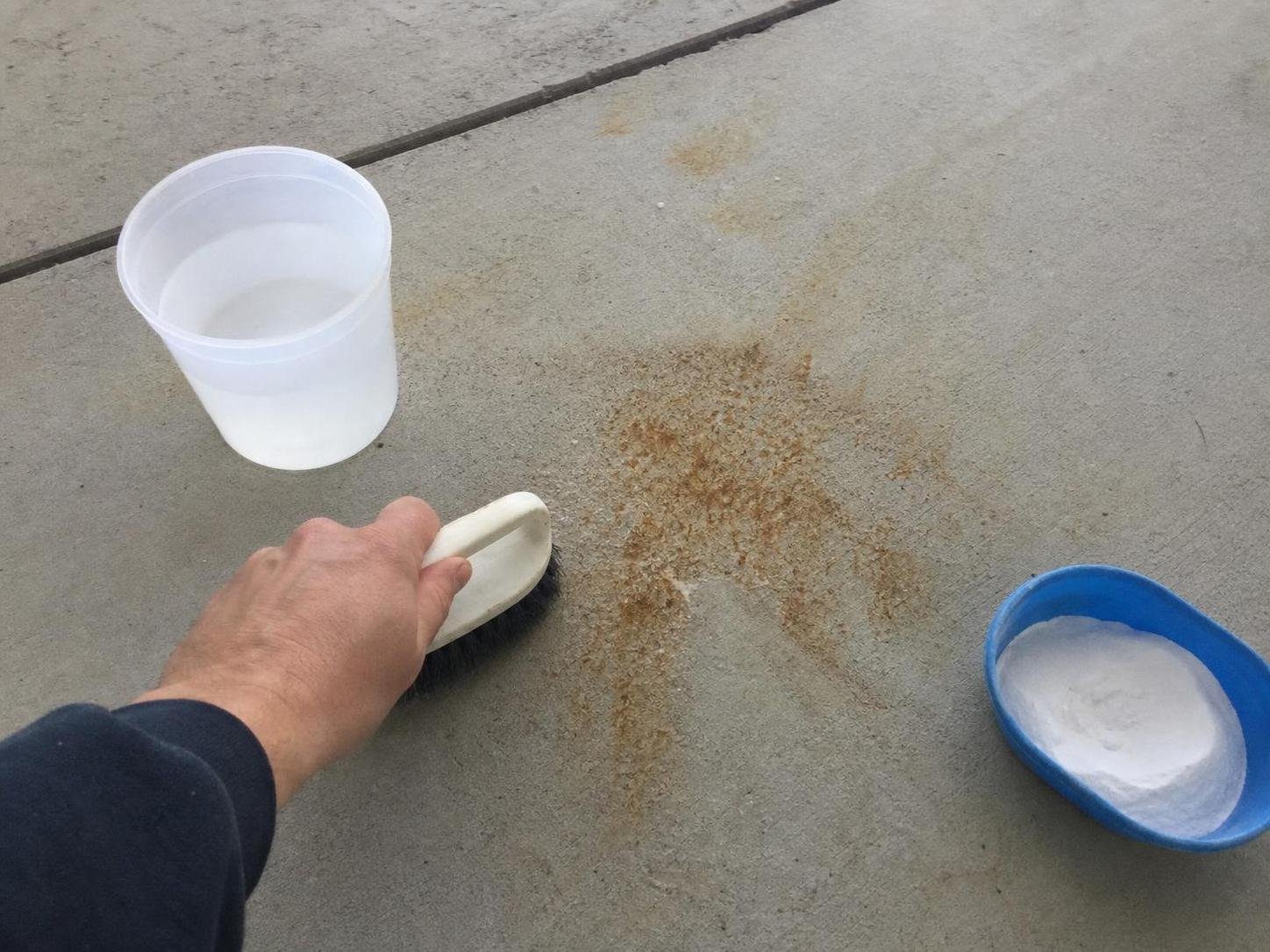
- Round or footprint-shaped spots: metal furniture feet, planter stands, jack stands, a forgotten wrench or nail. Surface staining, usually the easiest to remove.
- Fan-shaped or arcing streaks: irrigation water high in iron, common with well water. It will come back every season unless you filter or redirect the spray.
- Scattered orange freckles: fertilizer with iron, dropped or spread too close to the walkway.
- Rust bleeding out of a crack or a spalling edge: that’s likely rebar or wire mesh corroding inside the slab. Cleaning the surface is cosmetic here, and the stain will keep returning.
- Drips near a garage door or under a vehicle: often rust mixed with oil or brake dust, which needs a degreaser first, then the rust treatment.
That last point matters more than people expect. Acid rust removers work on iron oxide, not on grease. If oil is sitting on top of the stain, the acid can’t reach the rust underneath.
Method Comparison: What to Use and When
Light or fresh stains: lemon juice or white vinegar
Citric and acetic acid are mild, cheap, and already in your kitchen. This is the right starting point for a few small spots on a plain gray patio, and it’s the safest option if you’re worried about a nearby lawn.
Saturate the stain, let it sit 10–15 minutes (don’t let it dry), scrub, rinse. Repeat two or three times if it’s fading but not gone. If nothing changes after three rounds, move up to oxalic acid — more vinegar isn’t the answer.
Moderate to heavy stains: oxalic acid rust remover
This is the workhorse. Oxalic acid is the active ingredient in most products sold as “concrete rust remover” or “rust stain remover for masonry,” and it’s also what’s in many wood deck brighteners. It chemically converts iron oxide into a form that rinses away, which is exactly what stubborn orange staining requires.
Follow the label dilution. Concentrated is not automatically better, and stronger mixes increase the chance of leaving a lighter, cleaner patch that stands out against the surrounding concrete.
Deep, old stains: a poultice
For a stain that’s been baking into the slab for years, a poultice keeps the cleaner in contact with the concrete far longer. Mix the rust remover with diatomaceous earth, unscented clay cat litter (crushed fine), or talc until it’s the texture of peanut butter. Spread it about a quarter-inch thick over the stain, cover with plastic, tape the edges, and leave it 24 hours. Scrape it off and rinse.
Poultices are slower but gentler. Long contact time does the work that scrubbing and stronger acid can’t.
What to skip
Chlorine bleach won’t remove rust. It’s an oxidizer, which is great on organic staining — the same logic behind the oxidation method for yellow mattress stains — but rust is already fully oxidized. Bleaching it accomplishes nothing except making the concrete around it look slightly different. And never mix bleach with an acid cleaner.
Muriatic acid deserves its own warning. It will strip rust, and it will also etch the surface, expose aggregate, and permanently change the texture and color of the concrete. Pros use it deliberately, at controlled dilutions, for prep work — not for spot-cleaning a patio.
Step-by-Step: The Oxalic Acid Method
- Gear up. Chemical-resistant gloves, sealed eye protection, closed shoes, and long sleeves. Work outdoors with real airflow.
- Clear and sweep. Remove furniture, pots, and debris. Sweep the area clean so grit doesn’t dilute the cleaner.
- Degrease if needed. If there’s oil in the mix, clean that first with a concrete degreaser and let the slab dry.
- Protect the surroundings. Pre-wet nearby plants and grass with plain water so they’re less likely to absorb runoff. Cover aluminum thresholds, painted trim, and metal downspouts with plastic. Block or divert the path to storm drains.
- Dampen the concrete. A damp surface keeps the cleaner from soaking straight down and holds it where the stain is.
- Apply. Pour or brush the diluted product over the stain, extending an inch or two past the edges to avoid a hard line.
- Dwell 10–15 minutes. Mist lightly with water if it starts drying. A dried-out acid film does nothing and can leave a residue ring.
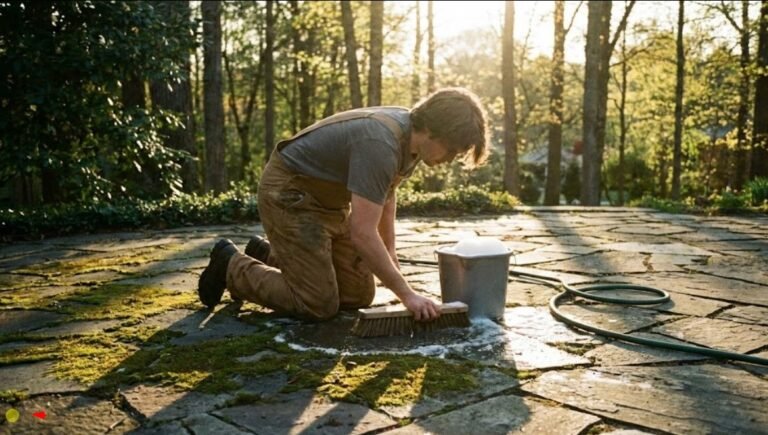
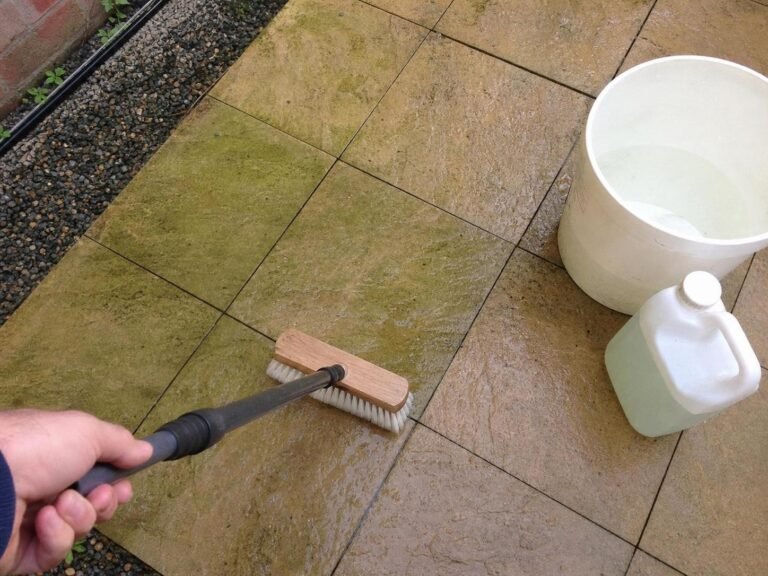
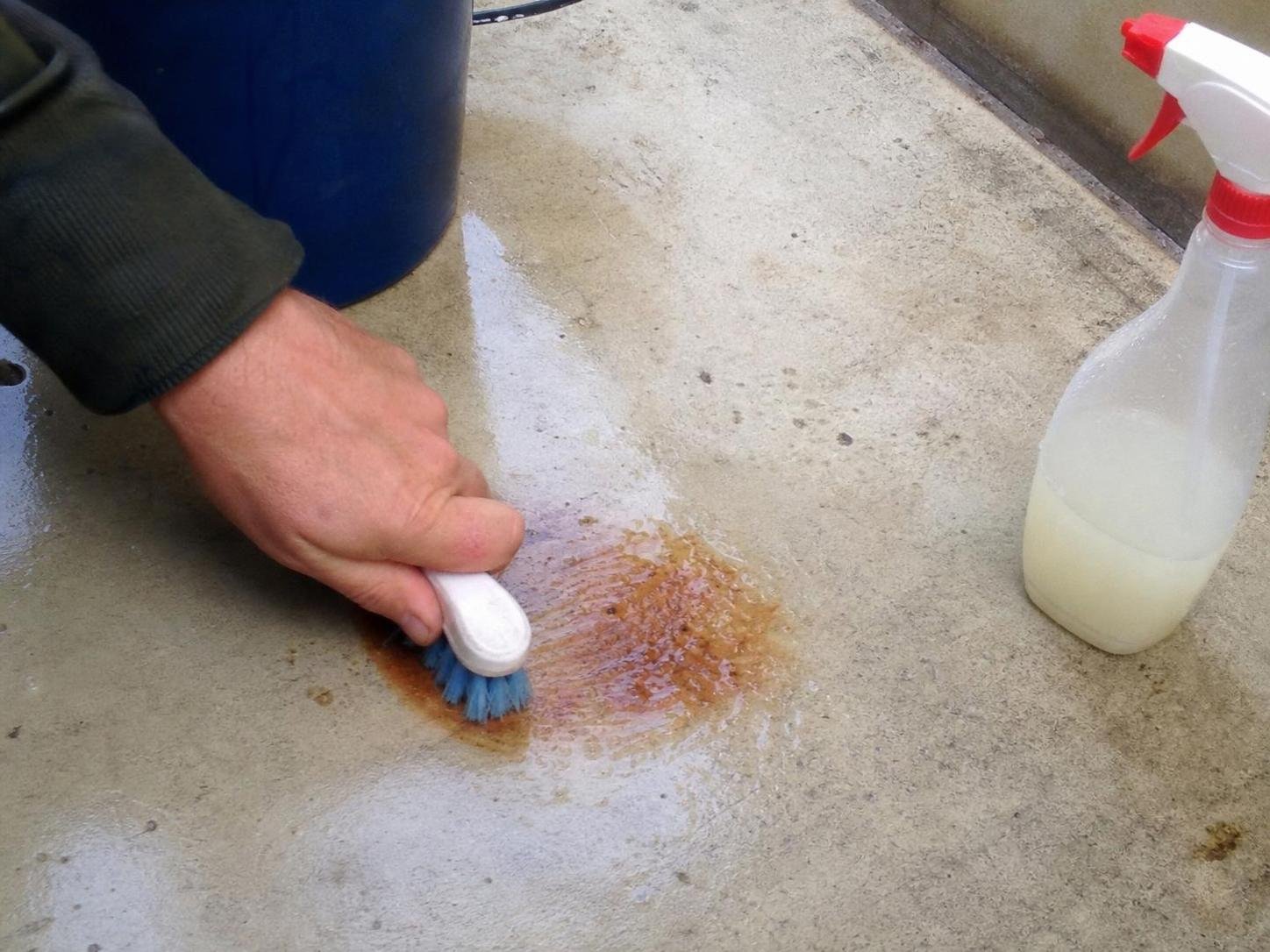
- Scrub. Use a stiff nylon brush on a pole. Skip steel or wire brushes — they shed metal fibers into the concrete, which rust later and create brand-new spots.
- Rinse hard and long. Flush with plenty of water, pushing the runoff toward soil or a designated area rather than a storm drain. The EPA’s guidance on nonpoint source pollution explains why household runoff matters, and your municipality may have its own disposal rules worth checking.
- Let it dry, then judge. Wet concrete lies. Give it several hours before deciding whether to repeat.
Two moderate applications beat one aggressive one nearly every time. That’s the single most useful habit here.
Rust Stain Cleaning Mistakes That Make Things Worse
Starting with a pressure washer. I get the appeal — it feels like progress. But blasting rust that hasn’t been chemically loosened mostly erodes the cement paste, leaving a visibly rougher, lighter halo shaped exactly like your wand pattern. Use the pressure washer for the final rinse at a wide fan tip and moderate pressure, after the chemistry has done its job.
Cleaning one small spot in the middle of a big slab. You may remove the rust and still be unhappy, because that patch is now cleaner than everything around it. If the stain sits in an obvious location, plan to clean the whole section or the whole panel.
Working in direct sun on hot concrete. The cleaner evaporates before it can react. Early morning, late afternoon, or an overcast day gives much better results.
Using a wire brush or steel wool. Broken-off metal fibers embed in the pores and rust within weeks. Nylon only.
Mixing products. Acid rust remover plus bleach, or acid plus ammonia-based cleaners, is genuinely dangerous. One product, one rinse, then stop.
Assuming all stains behave the same. Rust responds to acid; protein and organic stains respond to enzymes or oxidizers, the way an enzyme approach handles old blood stains. Matching chemistry to stain type is most of the battle.
Removing Rust Stains from Concrete Without Damage
“Without damage” mostly comes down to three things: test first, keep dwell times short, and respect sealed or decorative surfaces.
Always test in a hidden spot — behind a downspout, along a foundation edge, under where the grill sits. Wait for it to dry fully and check for lightening, chalkiness, or a change in texture.
Sealed concrete, stamped concrete, integrally colored concrete, and exposed aggregate all react less predictably. Acid can cloud a sealer or dull a pigment, and on colored concrete that damage is permanent. If your slab is decorative, start with lemon juice or a product specifically labeled as safe for sealed and colored concrete, and be honest with yourself about whether a faint stain is worth the risk.
Stop immediately and rinse if you see the surface turning noticeably lighter than the surrounding area, sand or aggregate becoming exposed, a chalky white bloom developing, or any bubbling of an existing sealer.
When to accept the stain and change tactics
Some rust stains just won’t fully leave. Concrete is porous, and an old, deep stain can be permanently discolored below where any cleaner reaches. That’s the point to think about a concrete stain, a solid-color masonry coating, an outdoor rug, or a resurfacing overlay instead of another round of acid. Repeated aggressive cleaning does more visible harm than the original mark.
And if rust is weeping from a crack while the slab edge crumbles, that’s corroding steel expanding inside the concrete. Call a concrete contractor. No cleaner solves that.
How to Prevent Rust Stains on Concrete
Prevention here is unusually easy, which makes it worth actually doing.
- Lift metal off the slab. Add rubber or plastic feet, glides, or caps to furniture legs, planter stands, and grills. Wet metal touching concrete is the whole mechanism.
- Don’t store bare steel on concrete. Tools, weights, jack stands, and rebar offcuts should sit on a shelf, a pallet, or a mat.
- Aim sprinklers away from hardscape. If you’re on well water with high iron, adjust the heads or add filtration. Otherwise the streaks come back annually no matter how well you clean.
- Sweep up iron-containing fertilizer immediately. Don’t hose it across the walkway — that spreads it.
- Seal the concrete. A quality penetrating or film-forming concrete sealer reduces absorption dramatically, so future spots sit on top where they rinse off. Reapply on the manufacturer’s schedule.
- Move fast on new spots. A stain caught within a day or two often comes out with vinegar and a brush. Give it a season and you’re mixing a poultice.
Quick Answers
Does WD-40 or CLR work on concrete rust stains?
CLR and similar calcium-lime-rust products can help with light staining, but check the label — some are not recommended for all masonry surfaces, and coverage on a large slab gets expensive fast. WD-40 is a lubricant, not a stain remover; using it on concrete leaves an oil stain on top of your rust stain.
Will baking soda remove rust from concrete?
Not really. Baking soda is a mild alkaline abrasive, and rust removal needs acid. It’s fine for gentle scrubbing on other messes, but it won’t dissolve iron oxide.
How long should a rust remover sit on concrete?
Follow the label. As a general rule, 10–15 minutes for a liquid application while keeping the surface damp, or up to 24 hours for a covered poultice. Longer isn’t better with liquid acid on an open slab — it just raises the risk of etching.
Can I use the same product on brick or pavers?
Sometimes, but verify the label first. Some brick and natural stone react poorly to acid, and mortar joints are especially vulnerable. Test an inconspicuous piece before treating a whole walkway.
Everything Mentioned Above
Before you leave, grab the tools you need to get the job done right the first time:
*As an Amazon Associate, TidyFormula earns from qualifying purchases.