How to Clean a Range Hood Filter
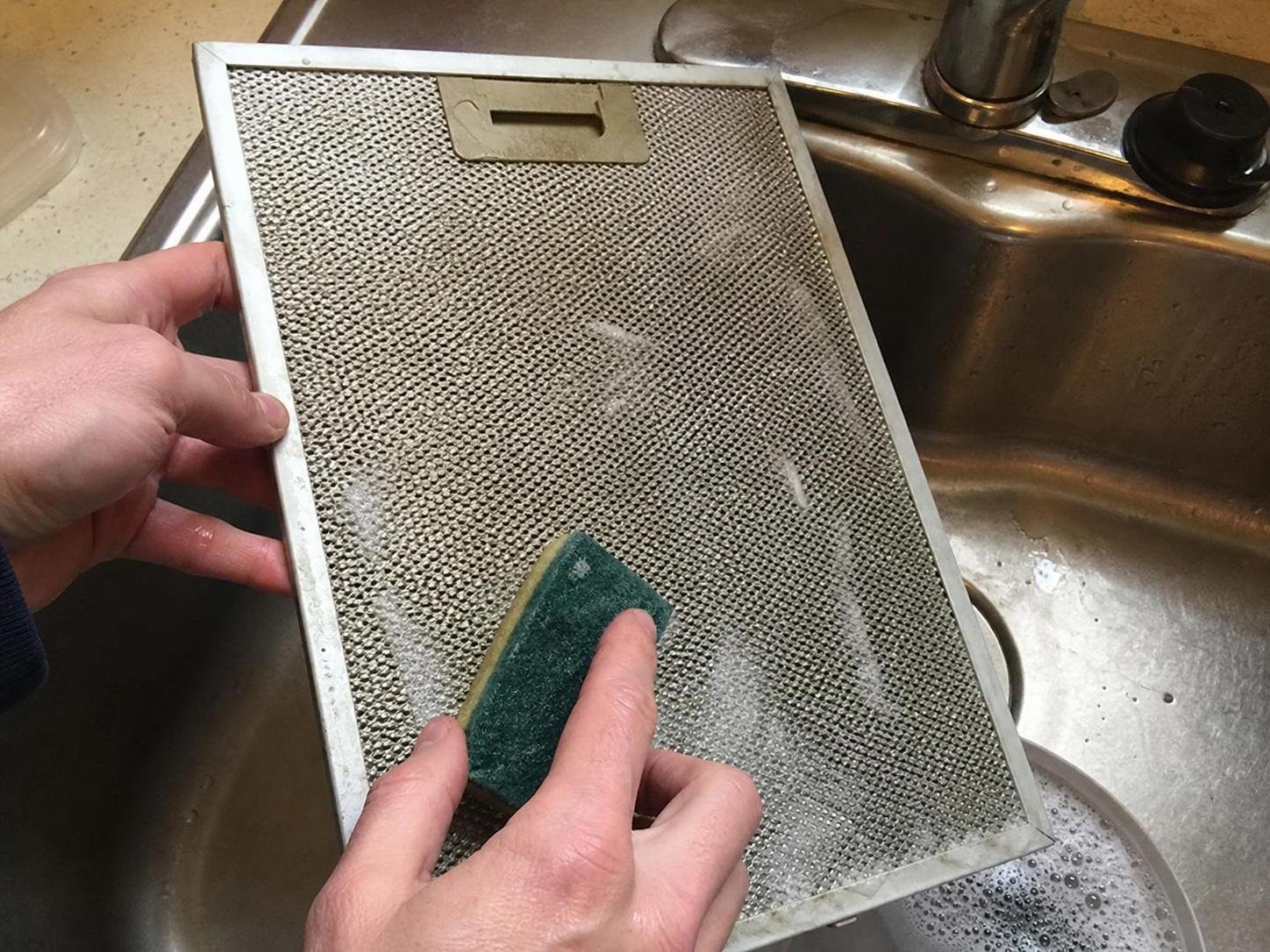
The best way to clean a range hood filter is to soak it in hot water mixed with a degreasing dish soap for 10–15 minutes, then scrub loosened grease off with a soft brush and rinse thoroughly before letting it air dry. Aluminum mesh and stainless steel baffle filters typically tolerate this well, but charcoal or carbon filters are not washable and need replacement instead.
If your filter has years of baked-on grease that won’t budge with soap alone, you may need a stronger degreasing soak or a baking soda paste for the worst spots. What works depends heavily on how long the grease has been sitting and what the filter is made of.
⚡ The TidyFormula™ Quick Decision
Best approach: Soak a metal mesh or baffle filter in hot water with degreasing dish soap for 10–15 minutes, then scrub with a soft brush and rinse before drying.
Use caution with: Charcoal or carbon filters, which absorb odors rather than trap grease and cannot be washed or reused. Also go easy on abrasive scrubbers on thin aluminum mesh, since it dents and tears easily.
Stop and reassess if: The mesh is warped, torn, or discolored beyond grease staining, or if the filter frame no longer sits flush in the hood after cleaning. Replace rather than keep cleaning at that point.
What I Use For This Job
Using the right tools saves time and protects your belongings. Here are my exact recommendations:
*As an Amazon Associate, TidyFormula earns from qualifying purchases.
Identify Your Filter Type Before You Clean
Range hoods use a few different filter styles, and the right cleaning method depends on which one you have.
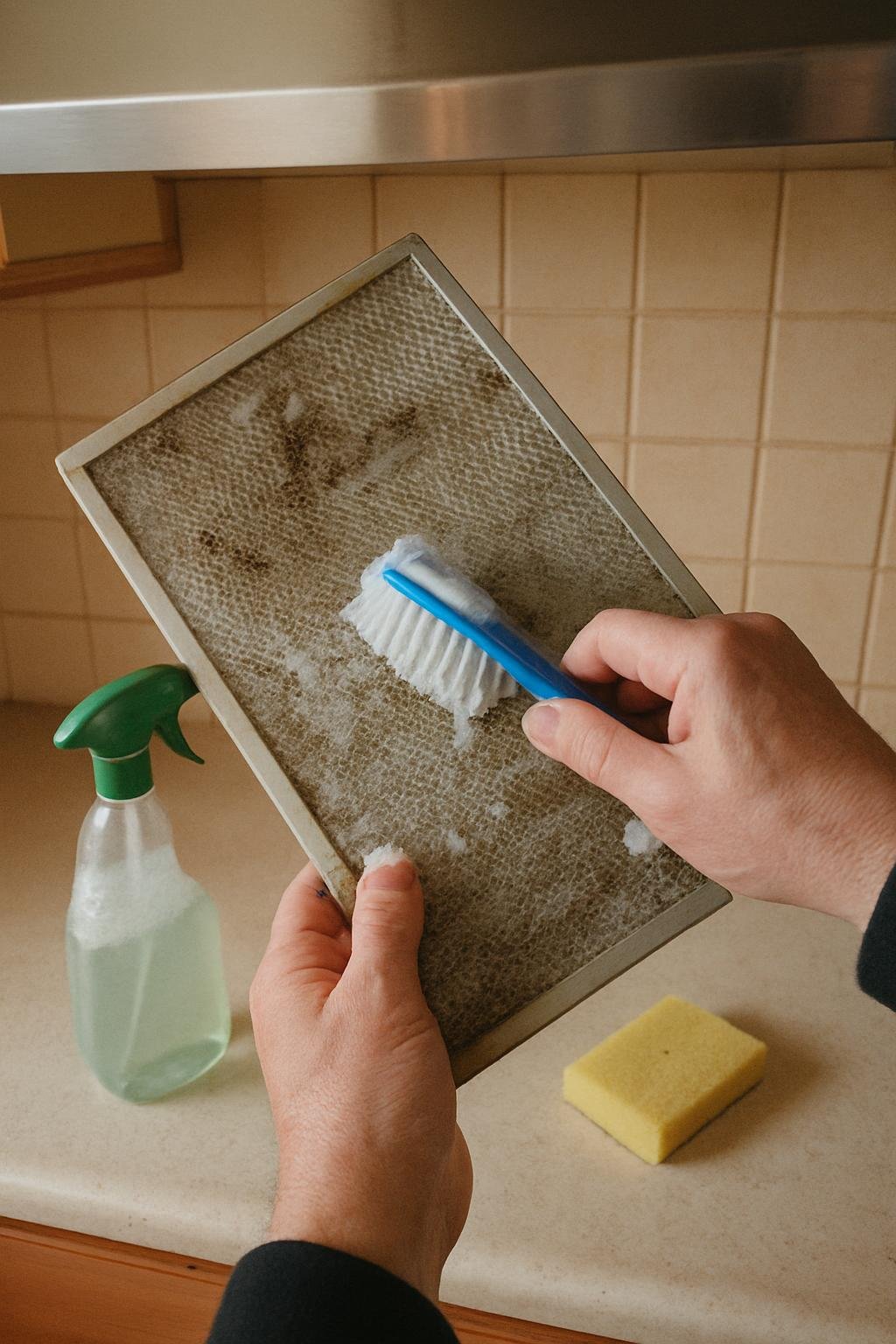
- Aluminum mesh filters are the thin, accordion-folded metal screens found in most residential hoods. These are generally washable and are the type most soap-and-water methods are designed for.
- Stainless steel baffle filters are heavier, solid metal panels with angled slots. They’re more durable than mesh and usually stand up well to soaking and scrubbing.
- Charcoal or carbon filters are used mainly in ductless (recirculating) hoods. These are not washable. Water and soap won’t restore their odor-absorbing capacity, and manufacturers typically specify replacement on a set schedule rather than cleaning.
If you’re not sure which type you have, check the hood’s manual or look at the filter itself. Solid dark panels or foam-like pads are usually charcoal-based and should not be soaked.
What You’ll Need
- A sink, basin, or container large enough to submerge the filter, or a covered area if it won’t fit
- Hot water and a degreasing dish soap
- A soft-bristle brush (an old toothbrush works for grooves and corners)
- Baking soda for stubborn buildup, if needed
- A towel or drying rack
How to Clean a Range Hood Filter Step by Step
- Turn off the range hood and let the filter cool completely before removing it, especially if it was in use recently. Most filters slide or unclip out from underneath the hood; check your manual if you’re unsure how yours releases.
- Scrape off loose debris over a trash can or sink before adding water. This keeps thick grease from clogging your drain.
- Fill a sink or basin with hot water and add a generous amount of degreasing dish soap. Submerge the filter fully if it fits.
- Let it soak for 10 to 15 minutes. This gives the soap time to break down cooking grease so you’re not fighting it with a brush alone.
- Scrub gently with a soft brush, working along the mesh grooves or baffle slots where grease tends to collect. Avoid metal scouring pads on aluminum mesh, since the material is soft and dents or tears under pressure.
- Rinse thoroughly under hot running water until no soapy residue or grease film remains. Residual soap can leave streaks or attract dust once the filter dries.
- Air dry completely before reinstalling. Standing the filter upright on a towel or drying rack speeds this up. Reinstalling a damp filter can trap moisture against the hood’s interior.
Dealing With Heavy, Baked-On Grease
If soap and water alone aren’t cutting through old, hardened grease, a baking soda paste can help lift stubborn spots. Mix baking soda with a small amount of water into a thick paste, spread it over the greasy areas, and let it sit for several minutes before scrubbing with your brush and rinsing well.
This approach is similar in spirit to the grease-breakdown methods used on other kitchen surfaces; if you’re also dealing with a heavily soiled oven, the same general logic of loosening grease before scrubbing applies, as described in this oven degreasing method. Avoid combining baking soda with any other cleaning product beyond dish soap and water, since mixing household chemicals can create unpredictable and unsafe reactions.
Aluminum mesh filters share some similarities with other fine metal mesh components, like reusable air filters. If you want a closer look at a comparable soap-based degreasing approach for metal mesh, this dish soap method for metal mesh filters covers the same basic soak-and-scrub logic.
Common Range Hood Filter Cleaning Mistakes
- Running an aluminum mesh filter through a full dishwasher cycle without checking the manual first. Some manufacturers allow this, others don’t, and hot dishwasher cycles combined with certain detergents can dull or discolor aluminum over repeated washes. Check the care instructions for your specific hood before making this a habit.
- Soaking a charcoal or carbon filter. Water breaks down the absorbent material and won’t restore its function. If your filter looks dark, dense, or pad-like rather than metallic, it likely needs replacing rather than cleaning.
- Scrubbing with abrasive pads or stiff wire brushes. These can bend mesh wires or scratch baffle panels, creating rougher surfaces that grease clings to more easily next time.
- Reinstalling a filter before it’s fully dry. Trapped moisture near the motor housing isn’t ideal, and a damp filter will just collect grease and dust faster once the hood is running again.
How Often to Clean a Range Hood Filter
For households that cook frequently, especially with frying or high-heat methods, a monthly cleaning is a reasonable baseline. Lighter cooking households may be able to stretch that to every six to eight weeks. If you notice visible grease buildup, reduced airflow from the hood, or a greasy film on nearby cabinets, that’s a sign the filter needs attention sooner regardless of the calendar.
When Cleaning Isn’t Enough
If an aluminum mesh filter has visible tears, warping, or corrosion after repeated washing, it’s no longer doing its job effectively and should be replaced. Charcoal filters have a fixed service life set by the manufacturer and should be swapped on schedule rather than cleaned indefinitely. If you’re unsure whether your specific model is washable or how often the manufacturer recommends replacement, check the manual that came with your range hood or contact the manufacturer directly rather than guessing.
Everything Mentioned Above
Before you leave, grab the tools you need to get the job done right the first time:
*As an Amazon Associate, TidyFormula earns from qualifying purchases.