How to Clean Sliding Glass Door Tracks
The fastest, safest way to clean sliding glass door tracks is to vacuum out loose debris first, then loosen packed grime with a stiff brush or an old toothbrush and a mild solution of dish soap and warm water, followed by a thorough wipe-down and full drying. Skip metal scrapers or abrasive pads, which can scratch the track and damage the rollers.
If the tracks haven’t been cleaned in a while, you may be dealing with a mix of dirt, dead insects, sand, and old lubricant residue packed into the corners. That buildup is normal, but it’s worth clearing out before it affects how smoothly the door slides.
⚡ The TidyFormula™ Quick Decision
Best approach: Vacuum loose debris, scrub with a soft brush and mild dish soap and water, then rinse and dry completely before letting the door slide again.
Use caution with: Metal tools, steel wool, or abrasive scrubbers on aluminum tracks, and excess water pooling around the rollers or weep holes.
Stop and reassess if: The door sticks, drags, or grinds after cleaning, the track shows dents or corrosion, or you notice standing water that won’t drain out.
What I Use For This Job
Using the right tools saves time and protects your belongings. Here are my exact recommendations:
*As an Amazon Associate, TidyFormula earns from qualifying purchases.
What Builds Up in Sliding Door Tracks
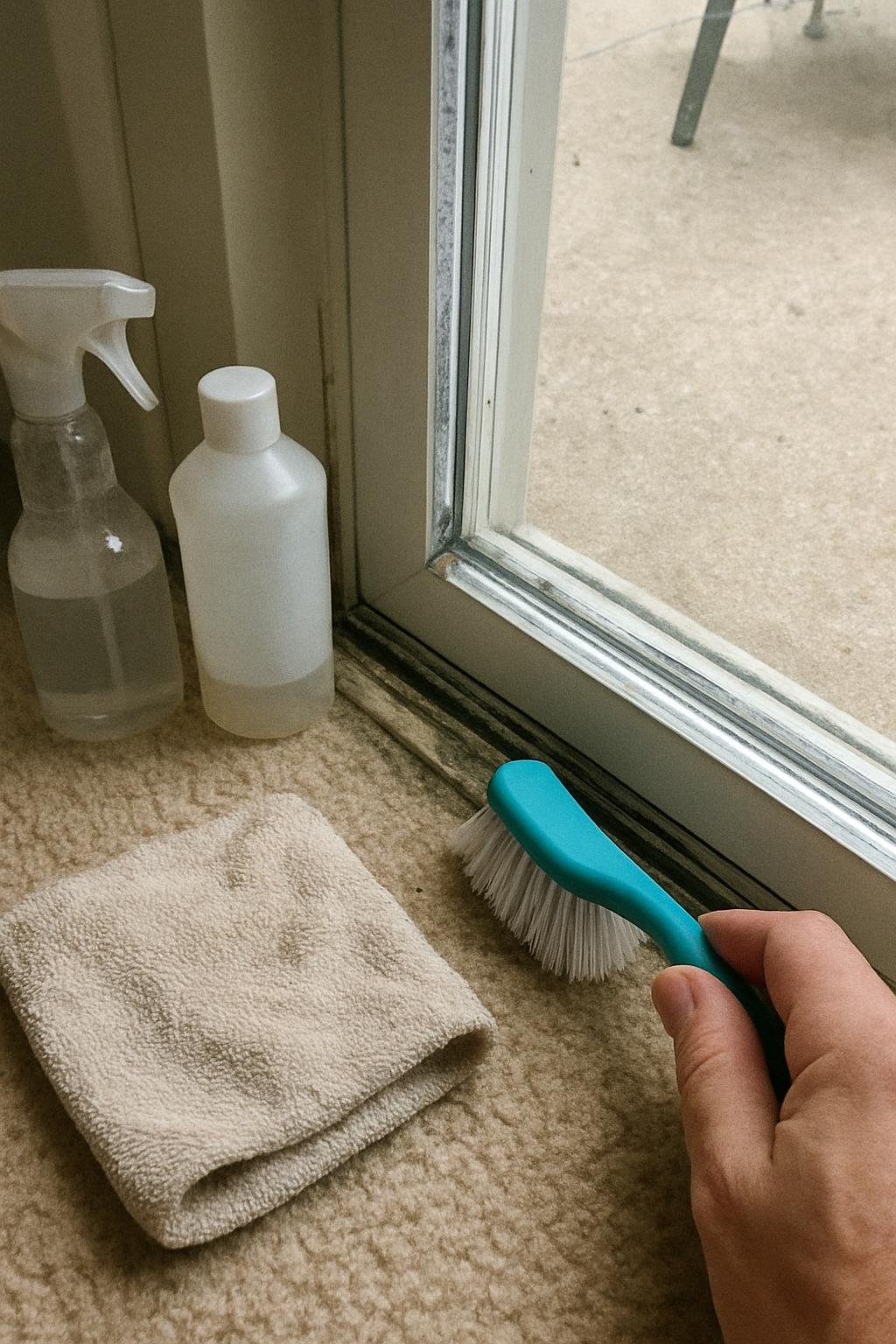
Sliding glass door tracks sit low to the ground and stay exposed to whatever comes in from outside. Dirt, pollen, spider webs, dead bugs, pet hair, and sand collect in the grooves, and combined with humidity, that debris can compact into a sticky layer that’s harder to remove than fresh dust. Some tracks also have small weep holes designed to let water drain out; if those get clogged, water can sit in the track and contribute to corrosion on metal frames over time.
Tools That Work Without Scratching the Track
Stick with tools that won’t gouge the metal or vinyl surface of the track:
- A vacuum with a narrow crevice attachment
- A stiff-bristled brush, an old toothbrush, or a small grout brush
- Microfiber cloths or old rags
- A spray bottle for rinsing
- Mild dish soap diluted in warm water
Avoid metal scrapers, butter knives, steel wool, and heavy-duty abrasive pads. Aluminum tracks in particular can scratch or dent easily, and once the surface is damaged, dirt tends to catch there faster in the future.
Step-by-Step: How to Clean Sliding Glass Door Tracks
- Vacuum first. Use a crevice tool to pull out loose dirt, sand, and debris before adding any liquid. This step alone often removes most of the bulk material and keeps you from turning dry dirt into mud.
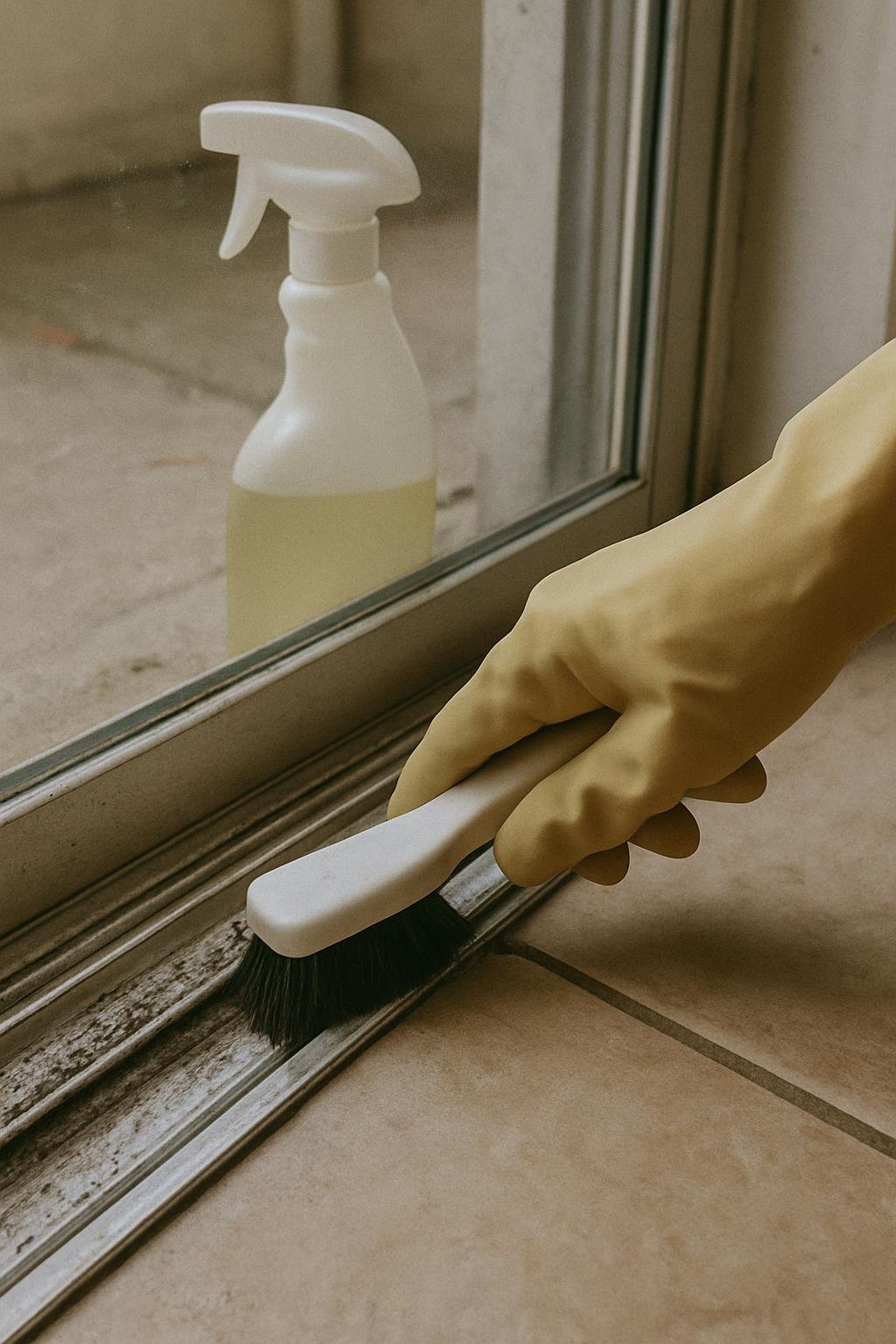
- Loosen stuck-on grime. Dip a stiff brush or toothbrush in warm water mixed with a small amount of dish soap and scrub along the grooves, focusing on corners and areas around the rollers where debris tends to pack tightly.
- Wipe out the loosened residue. Use a damp rag or paper towel to pull out the grime you just loosened rather than pushing it further into the track.
- Rinse lightly. A light mist from a spray bottle helps rinse away soap residue. Avoid pouring water directly into the track, since excess moisture can pool if drainage is limited.
- Dry the track completely. Use a dry cloth or let the track air dry before sliding the door. Leftover moisture can attract dirt again quickly or contribute to corrosion on some metal finishes.
- Check the rollers. Once the track is dry, slide the door a few times to see whether it moves smoothly. If it still drags, there may be debris caught in the roller wheels themselves, which sit at the bottom edge of the door panel.
Stuck-On or Heavily Packed Debris
If scrubbing with soap and water doesn’t fully clear the grooves, a bit more patience helps more than a stronger chemical. Let the soapy water sit in the track for a few minutes before scrubbing again, which gives it time to soften compacted dirt. A folded rag wrapped around a flathead screwdriver or thin tool can help you reach into narrow grooves without scratching the metal, but move slowly and check your pressure so you don’t gouge the track. Skip any temptation to combine cleaning products to boost strength; stick with one mild cleaner at a time.
Cleaning Mistakes That Cause Damage or Make the Job Harder
| Mistake | Why It Causes Problems |
|---|---|
| Using a metal scraper or knife | Can scratch or dent aluminum tracks, creating grooves that trap more dirt |
| Skipping the vacuum step | Turns dry dirt into mud once water is added, making cleanup messier |
| Pouring water directly into the track | Can overwhelm weep holes and leave standing water that promotes corrosion |
| Leaving the track wet | Attracts dirt faster and can affect roller movement on some doors |
| Using strong abrasive cleaners | May dull or damage painted or coated finishes on some frames |
How Often to Clean Sliding Glass Door Tracks
For most households, a light vacuum every few weeks and a full soap-and-water cleaning every one to three months keeps debris from building up to problem levels. Homes with pets, nearby trees, or high foot traffic through the door may need more frequent attention. If you notice the door starting to stick or drag between cleanings, that’s a sign to check the track sooner rather than waiting for a scheduled cleaning.
When the Door Still Doesn’t Slide Smoothly
If the track is clean and dry but the door still drags, catches, or feels heavy, the issue may be with the rollers rather than the track itself. Rollers can wear down, bend, or come loose from years of use, and that’s a separate repair rather than a cleaning problem. Check your door’s manufacturer instructions before attempting to adjust or remove roller hardware, since access points and adjustment screws vary by model. If adjusting the rollers doesn’t resolve the drag, or if the track shows dents, rust, or bent sections, it’s worth contacting a door repair professional rather than continuing to force the door.
Once the track and glass panel are both clean, you may also want to address streaks or smudges on the glass itself. If you’re avoiding standard glass cleaner, the guide on cleaning glass without Windex covers alternative methods that work on sliding door panels too. For a streak-free finish once the door itself is clean, see the tips in how to clean windows without streaks.
Everything Mentioned Above
Before you leave, grab the tools you need to get the job done right the first time:
*As an Amazon Associate, TidyFormula earns from qualifying purchases.