How to Remove Sticky Residue from Painted Walls
The fastest way to remove sticky residue from painted walls is to soften it with a small amount of warm water and mild dish soap, then gently lift it with a soft cloth or plastic scraper rather than scrubbing. On most latex or satin-finish paint, this loosens tape, sticker, and adhesive residue without stripping the finish, but flat and matte paints can mark or dull if you use too much moisture or pressure.
If the residue has been there a while, or it came from packing tape, a poster, or a decal that sat in the sun, it may feel more stubborn than a fresh spot. That doesn’t mean you need a stronger chemical, just a little more patience with the softening step.
⚡ The TidyFormula™ Quick Decision
Best approach: Warm water with a few drops of mild dish soap on a soft cloth, applied with light pressure and short dwell time, then wiped clean with a barely damp cloth.
Use caution with: Flat, matte, or chalky paint finishes, older paint that may be soft or already flaking, and any oil-based or specialty solvents that can dissolve or discolor the paint film.
Stop and reassess if: The paint starts to soften, bubble, streak, or lift, or if the wall color changes where you’re cleaning. That signals the paint can’t tolerate the moisture or product you’re using.
What I Use For This Job
Using the right tools saves time and protects your belongings. Here are my exact recommendations:
*As an Amazon Associate, TidyFormula earns from qualifying purchases.
Check the Paint Finish Before You Start
How much moisture and pressure your wall can handle depends heavily on the paint finish. Glossy, semi-gloss, and satin paints are more washable because they have a harder, more sealed surface. Eggshell can usually handle gentle cleaning too. Flat and matte finishes are the most porous and the most likely to show water marks, shine spots, or color changes if you scrub or over-wet them.
If you’re not sure what finish is on your wall, test your cleaning method in a small, inconspicuous spot first, such as behind a door or near a baseboard. Wait a few minutes to see how the paint reacts before treating the visible residue.
Step-by-Step: Removing Sticky Residue Without Damaging the Paint
- Dry-scrape loose material first. Use your fingernail or the edge of a plastic scraper (never metal) to gently lift any bits of tape, paper, or sticker that are already peeling. This reduces how much residue you need to dissolve.
- Mix a mild cleaning solution. Combine a few drops of dish soap with warm water in a small bowl. Avoid making the solution too concentrated; a light, soapy solution is usually enough for adhesive residue.
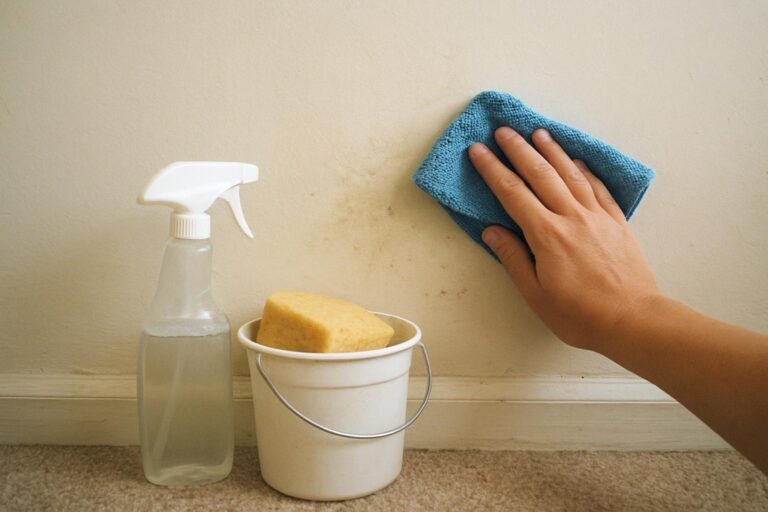
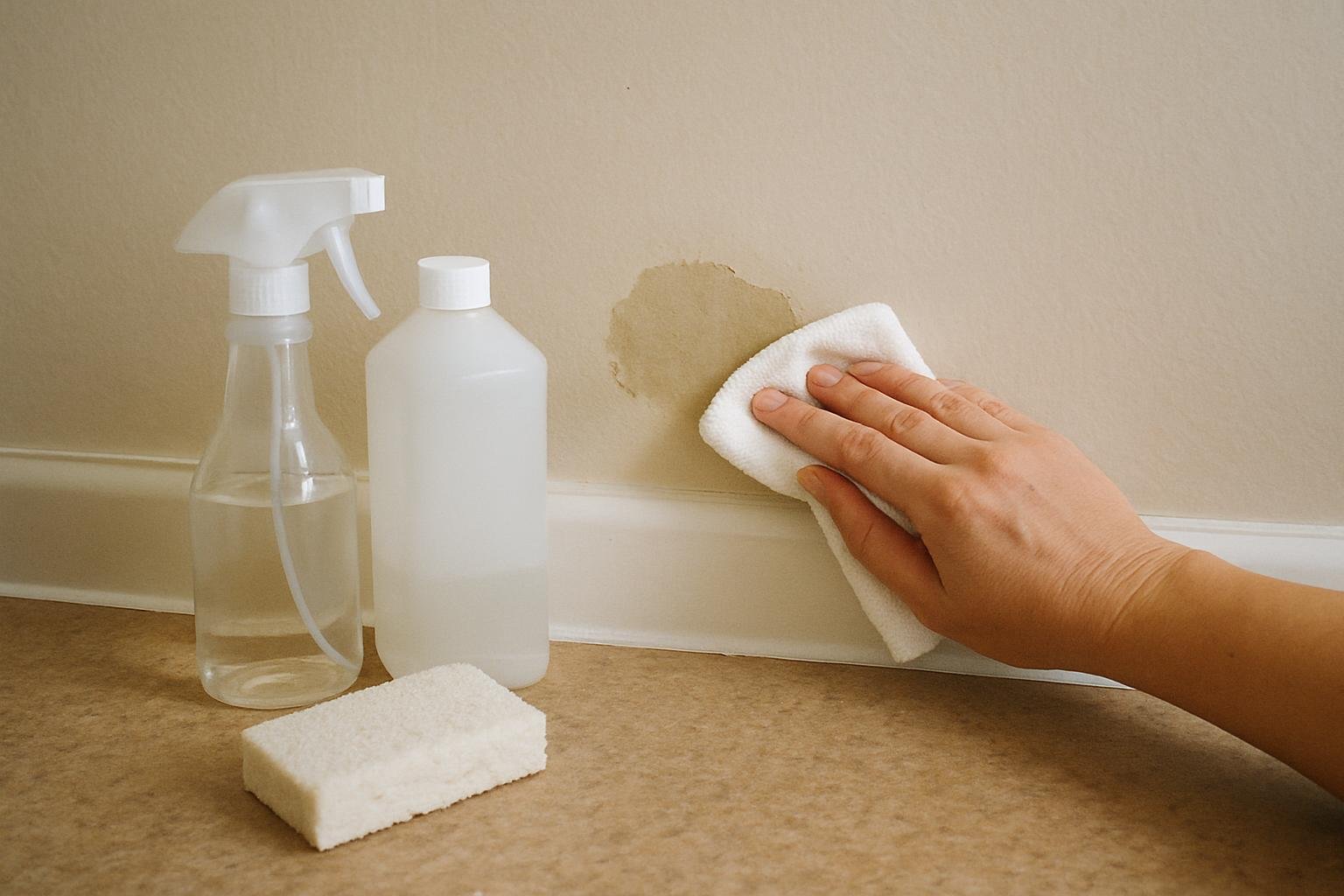
- Dampen a soft cloth, not the wall. Dip a microfiber cloth or soft rag in the solution and wring it out well. The cloth should feel damp, not wet. Excess water can seep behind the paint film, especially on drywall.
- Press and hold, don’t rub. Lay the damp cloth over the sticky spot and hold it there for 20 to 30 seconds. This softens the adhesive so it releases more easily instead of smearing across the wall.
- Wipe in one direction with light pressure. Use a clean section of the cloth to wipe the softened residue away in a single direction rather than scrubbing back and forth, which can burnish or streak the paint.
- Rinse with a clean, barely damp cloth. Go over the area once more with a cloth dampened only in plain water to remove any soap residue, then dry the wall with a dry cloth or paper towel.
If residue remains after one pass, repeat the softening step rather than pressing harder or adding more soap. Repetition is gentler on the paint than force.
When Soap and Water Isn’t Enough
For residue that resists a soap-and-water approach, such as older packing tape adhesive or a decal that’s been up for months, a small amount of rubbing alcohol on a cotton ball can sometimes help, but only on durable finishes like satin, semi-gloss, or gloss paint. Always test it first in a hidden spot, since alcohol can dull or discolor some paints, especially flat or matte finishes and any wall with a specialty or decorative coating.
Avoid reaching for stronger solvents, adhesive removers, or abrasive scrub pads on painted walls. These products are formulated for hard, nonporous surfaces like glass or metal, and they can strip, discolor, or permanently mark paint. If a manufacturer-labeled adhesive remover is your only option, follow the product label exactly and test it on an inconspicuous area first.
Common Mistakes That Damage Paint
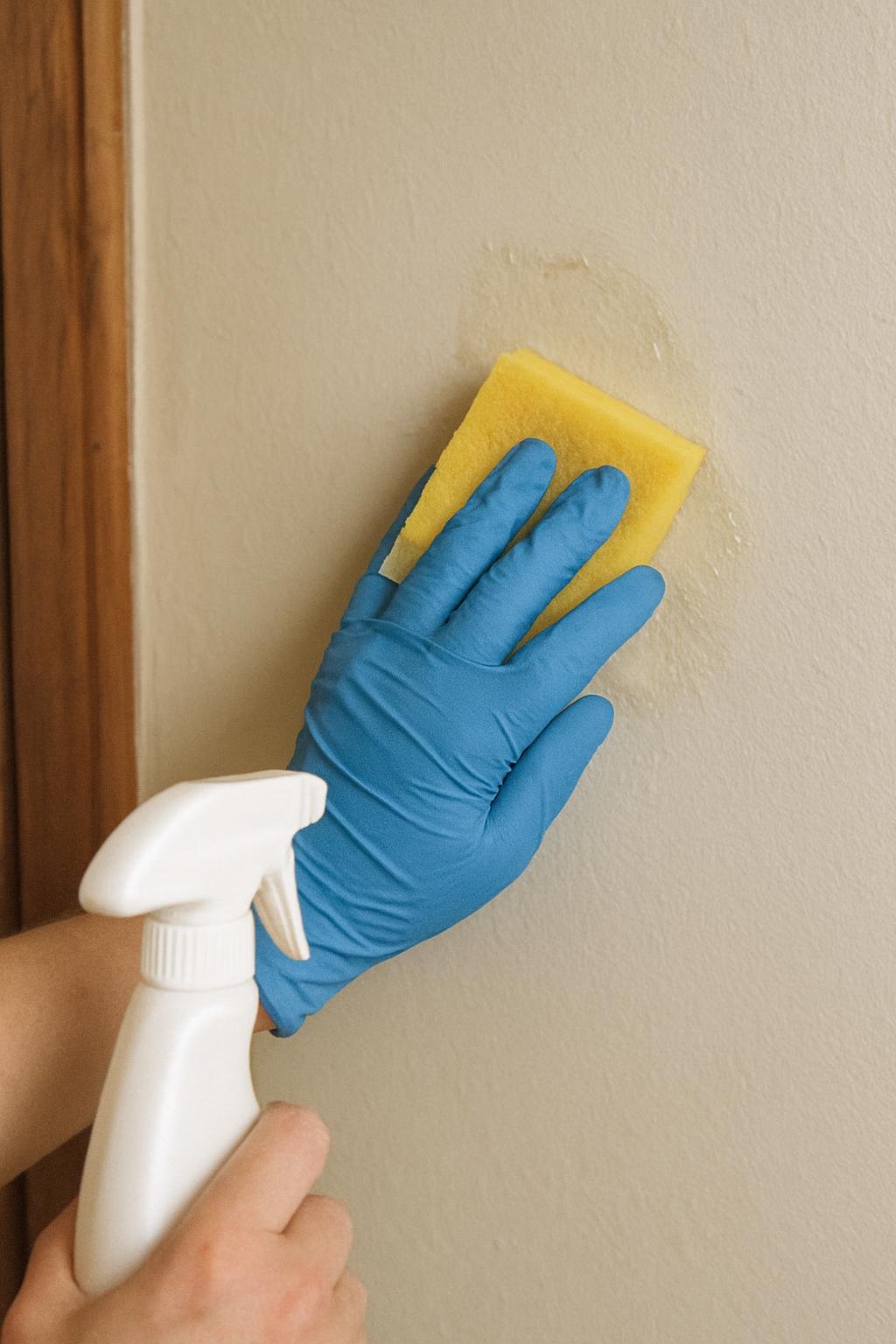
- Scrubbing instead of soaking. Vigorous scrubbing on flat or matte paint often burnishes the surface, leaving a shiny patch that’s more noticeable than the original residue.
- Using too much water. Wet cloths or spray bottles that soak the wall can cause water to seep behind the paint, especially on drywall seams or around switch plates.
- Skipping the test spot. Jumping straight to alcohol or a stronger cleaner without testing can leave a visible discolored patch that’s harder to fix than the original sticky spot.
- Using metal scrapers or abrasive pads. These can gouge or scratch the paint film, creating a mark that shows up more under certain lighting.
Preventing Sticky Residue in the First Place
Removable putty or low-tack mounting strips designed for walls leave far less residue than standard tape, packing tape, or adhesive-backed hooks. If you’re hanging posters, decorations, or seasonal decor, choosing products labeled safe for painted walls and removing them promptly, rather than leaving them up for months, makes cleanup much easier later.
If you’re dealing with sticky residue elsewhere in the house, such as dried slime worked into carpet fibers, the same general principle applies: gentle softening beats aggressive scrubbing, and the right method depends on the material you’re cleaning.
When to Call In Help
If the residue has damaged the paint underneath, leaving a dull patch, a color shift, or a spot where the texture feels rough or tacky even after cleaning, cleaning alone won’t fix it. At that point, a small touch-up with matching paint is usually the most practical fix. For textured walls or larger damaged areas, a painting professional can advise on whether a patch or a full repaint of that wall section makes more sense.
Everything Mentioned Above
Before you leave, grab the tools you need to get the job done right the first time:
*As an Amazon Associate, TidyFormula earns from qualifying purchases.