How to Clean White Sneakers without Washing Machine
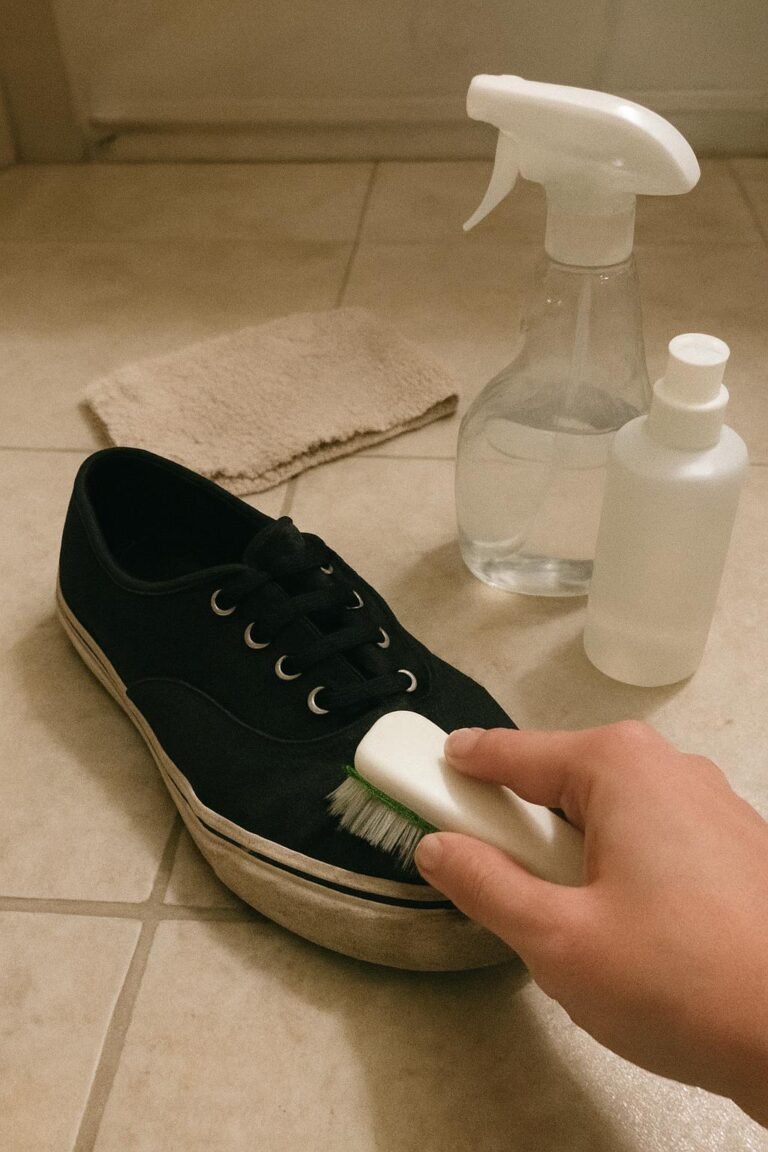
You can get white sneakers looking clean without a washing machine by hand-cleaning them with a soft brush, mild soap, and warm water, then air-drying them away from direct heat. This works well for canvas, mesh, and most synthetic leather uppers, though the exact approach should change based on the material and how dirty the shoes actually are.
If your sneakers have suede panels, glued overlays, or midsoles that have gone yellow, a basic scrub-and-dry routine may not fully solve the problem, and pushing too much water into glued seams can weaken the bond over time.
⚡ The TidyFormula™ Quick Decision
Best approach: Hand-clean with a soft-bristle brush, mild dish soap or sneaker cleaner, and warm water, working in small sections and wiping away excess moisture as you go.
Use caution with: Suede, nubuck, leather trim, glued overlays, and any sneaker with a specific care label or manufacturer cleaning instructions.
Stop and reassess if: The upper starts separating from the sole, the fabric feels saturated instead of just damp, or the color changes unevenly after cleaning.
What I Use For This Job
Using the right tools saves time and protects your belongings. Here are my exact recommendations:
*As an Amazon Associate, TidyFormula earns from qualifying purchases.
Check the Material Before You Start
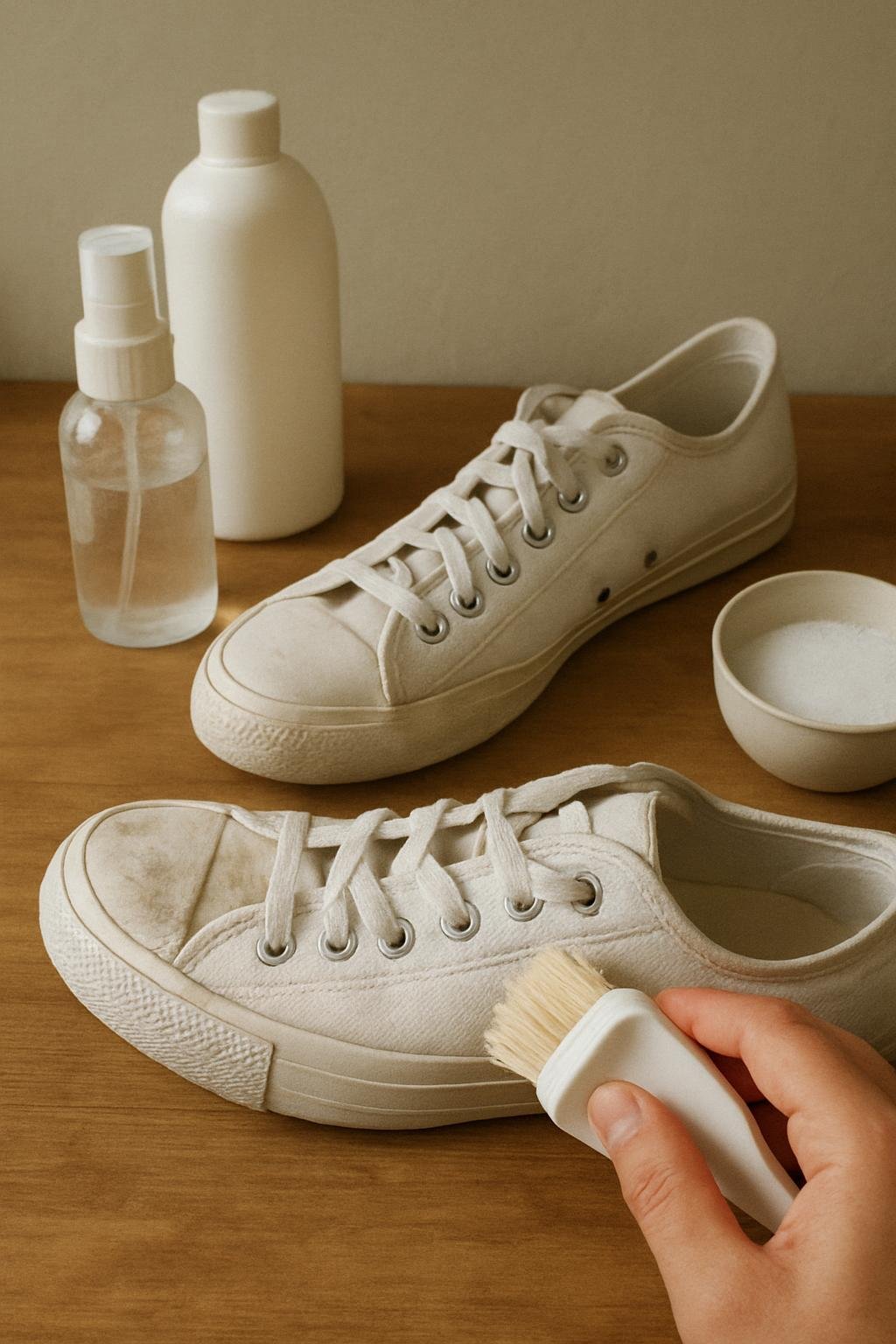
Not every white sneaker responds the same way to water and soap. Canvas and mesh uppers tolerate a damp scrub well because the fibers are woven and reasonably water-tolerant. Synthetic leather (often used on budget and mid-range sneakers) also handles a mild soap solution fine as long as you don’t soak it.
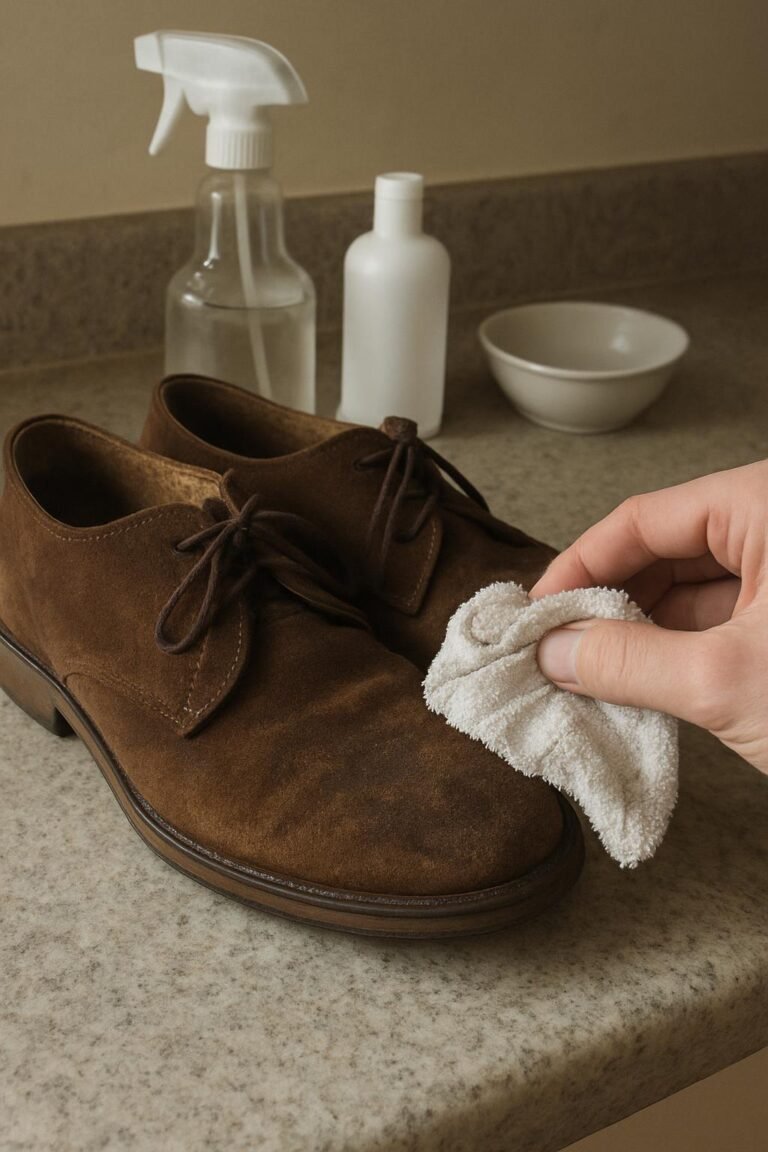
Genuine leather uppers need less water and more careful drying, since excess moisture can leave the material stiff or cause the surface to crack later. Suede and nubuck should not be scrubbed wet at all; use a dry suede brush or a suede-specific eraser instead, since water can permanently darken or stain these materials.
If your sneakers came with a care card or you can find manufacturer cleaning guidance online, check it before choosing a cleaning product, especially for designer or performance sneakers with bonded or laminated panels.
What You’ll Need
- A soft-bristle brush (an old toothbrush works for small areas; a slightly firmer shoe brush works for larger canvas sections)
- Mild dish soap or a sneaker-specific cleaner
- A bowl of warm water
- Microfiber cloths or an old towel
- A separate cloth or cotton swabs for detail work around seams and stitching
Step-by-Step: Cleaning White Sneakers by Hand
- Remove loose dirt first. Tap the soles together outdoors or brush off dried mud and debris before introducing any water. Cleaning wet dirt just smears it deeper into the fabric.
- Take out the laces and insoles. These often hold more grime than the upper itself and are easier to clean separately. Laces can usually sit in a small bowl of warm soapy water while you work on the shoe.
- Mix a mild cleaning solution. A few drops of dish soap in warm water is usually enough for canvas and synthetic uppers. Avoid oversaturating the brush; you want it damp, not dripping.
- Scrub in small circular motions. Work section by section rather than soaking the entire shoe at once. This limits how much water reaches the glue lines and interior lining.
- Wipe away soap residue with a clean, damp cloth. Leftover soap can attract dirt faster once it dries, so go over each section again with plain water on the cloth.
- Blot excess moisture immediately. Press a dry towel against the upper rather than rubbing, which helps prevent water from spreading into seams or the toe box.
Drying Without a Machine
Stuff each shoe loosely with paper towels or a clean cloth to help hold its shape and absorb moisture from the inside. Let the sneakers air-dry at room temperature, away from direct sunlight, radiators, or hair dryers. Heat can cause glued soles to loosen and may yellow white materials faster than natural aging does.
Plan on letting them sit for a full day or more depending on how damp they got and how humid your space is. Rushing this step is one of the more common reasons sneakers come out of a cleaning session looking worse, not better.
Treating Stubborn Scuffs and Yellowing
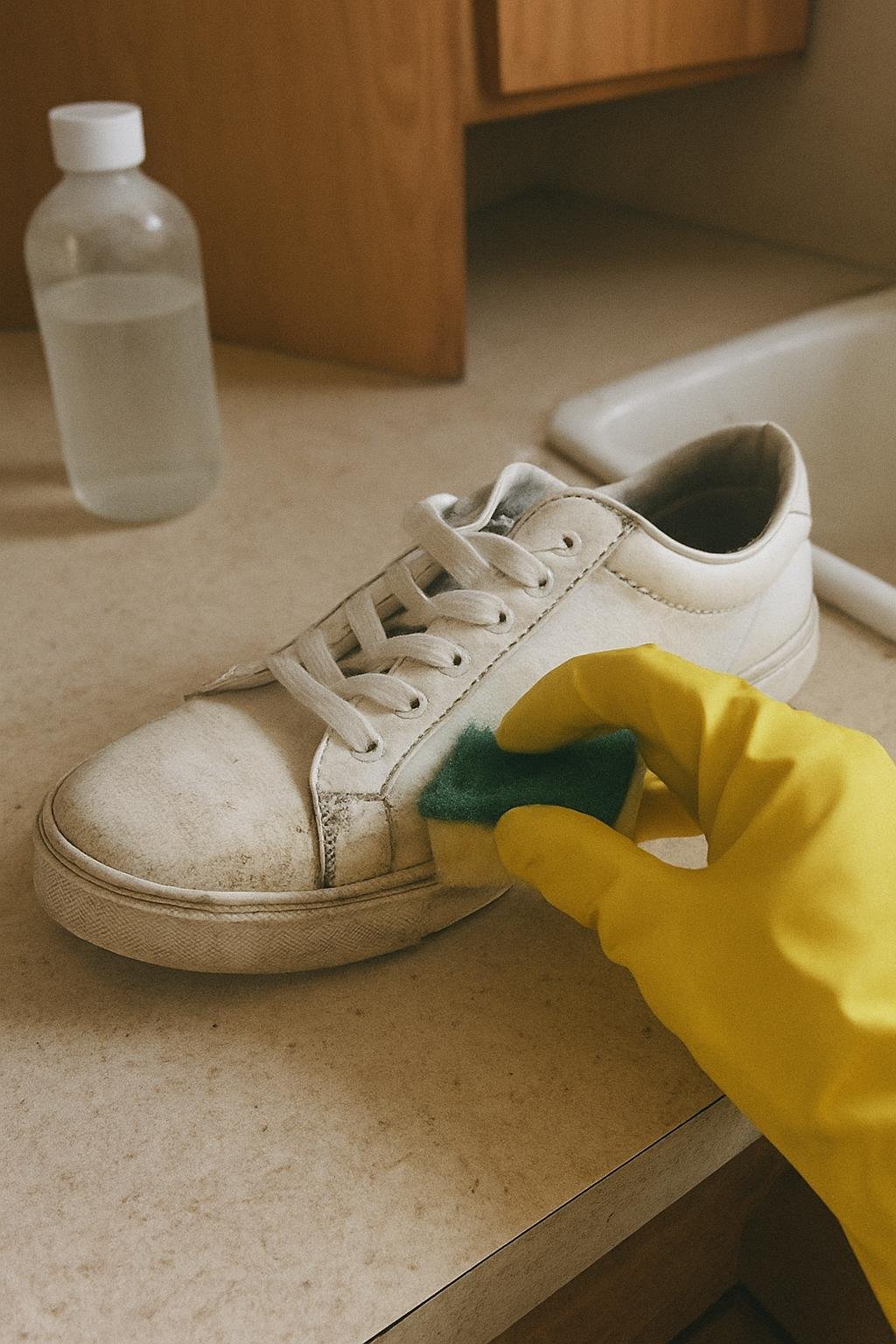
For scuff marks on rubber soles or synthetic overlays, a bit of baking soda paste worked in with a soft brush can help lift surface marks without heavy scrubbing. Apply it gently, let it sit briefly, then wipe clean with a damp cloth.
Yellowing on rubber soles is often a slower cosmetic change related to sunlight exposure and material aging rather than dirt itself, so a standard soap-and-water clean may not fully reverse it. If yellowing is significant, treat it as a cosmetic limitation of the material rather than something a single cleaning session will fix.
Mistakes That Damage Sneakers Instead of Cleaning Them
| Mistake | Why It Causes Problems | Better Approach |
|---|---|---|
| Soaking the entire shoe in water | Weakens glue bonds and can loosen the sole over time | Clean in small, damp sections instead |
| Using a stiff wire brush | Can scratch synthetic leather or fray canvas fibers | Use a soft-bristle brush suited to the material |
| Drying with a hair dryer or near a heater | Heat can warp foam midsoles and loosen adhesives | Air-dry at room temperature with paper towel stuffing |
| Scrubbing suede when wet | Can permanently darken or stain the nap | Use a dry suede brush or eraser |
How Often to Clean Them
Light surface cleaning after visibly dirty wear (a quick wipe-down or brush) helps prevent grime from setting into the fabric. A fuller hand-cleaning session, like the one described above, is usually enough every few weeks depending on how often you wear the sneakers and what surfaces you walk on. Cleaning more often than that isn’t necessary and can add unnecessary wear to glued seams and fabric fibers.
When Hand-Cleaning Isn’t Enough
If stains have soaked deep into canvas, if the interior lining smells musty despite cleaning the exterior, or if the sole is separating from the upper, a home cleaning method has reached its limit. At that point, a professional shoe cleaning service or the shoe manufacturer’s care recommendations are a more reliable next step than repeated home attempts.
If you’re also dealing with other fabric items around the house that need care without a washing machine, the approach for cleaning a couch without a machine follows a similar logic of section-by-section cleaning and controlled drying.
Everything Mentioned Above
Before you leave, grab the tools you need to get the job done right the first time:
*As an Amazon Associate, TidyFormula earns from qualifying purchases.