How to Clean a Fabric Office Chair
The safest way to clean most fabric office chairs is to vacuum the surface first, check the manufacturer’s cleaning code if one exists, then spot-clean with a mild, water-based cleaner or a small amount of upholstery shampoo applied with a soft cloth. Work in gentle, circular motions and let the fabric air dry fully before you sit on it again.
Office chairs get more daily contact than almost any other piece of furniture in the house, so buildup from skin oils, dust, and the occasional coffee spill is common. The right method depends heavily on the fabric type and whether the chair has a code that tells you what it can tolerate.
⚡ The TidyFormula™ Quick Decision
Best approach: Vacuum the fabric first, then spot-clean with a mild water-based cleaner or upholstery shampoo suited to your chair’s cleaning code, using a soft cloth and light pressure.
Use caution with: Chairs marked with an “S” or “X” code, mesh-back chairs, and any chair with foam padding that can trap moisture if oversaturated.
Stop and reassess if: The fabric changes color, the padding feels wet at the center after drying, or the cleaner leaves a ring or stiff residue that won’t lift with a dry cloth.
What I Use For This Job
Using the right tools saves time and protects your belongings. Here are my exact recommendations:
*As an Amazon Associate, TidyFormula earns from qualifying purchases.
Check the Cleaning Code Before You Start
Most upholstered office chairs have a small tag, often underneath the seat, with a letter code that tells you what kind of cleaner is appropriate:
- W means the fabric can generally tolerate water-based cleaners.
- S means the manufacturer recommends a solvent-based cleaner rather than water, since water can leave marks or cause shrinkage on that fabric.
- WS means either type is generally acceptable.
- X means the fabric should only be vacuumed or professionally cleaned, since liquid cleaners of any kind may cause damage.
If you can’t find a tag, treat the chair conservatively. Test any cleaner on a small, hidden area first, such as the underside of the seat cushion, and wait for it to dry completely before judging the result.
What You’ll Need
- A vacuum with an upholstery attachment or a stiff-bristled brush
- A mild, water-based upholstery cleaner or a small amount of dish soap diluted in water, if your care code allows water
- Two clean, soft microfiber cloths
- A soft-bristled brush for lifting embedded dirt
- A dry towel for blotting
Avoid steam cleaners unless the chair’s manufacturer specifically states the fabric can handle steam. Heat and moisture together can warp foam padding or loosen glued seams on some chair models.
Step-by-Step Cleaning Method
- Vacuum thoroughly. Use the upholstery attachment to remove loose dust, crumbs, and pet hair from the seat, back, and armrests. This step prevents you from grinding debris deeper into the fabric once you introduce moisture.
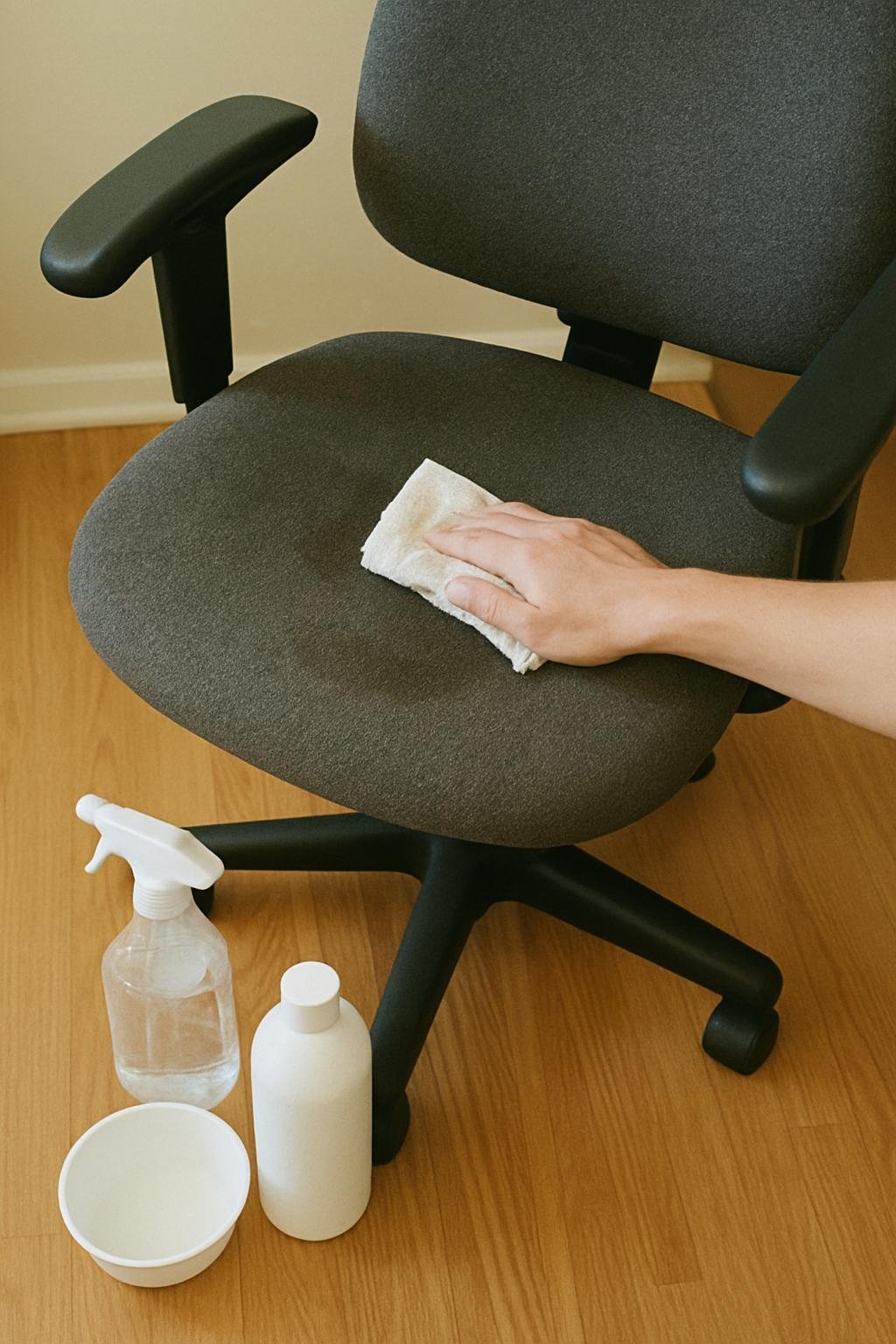
- Mix a mild cleaning solution. If your chair’s code allows water, combine a small amount of dish soap with water in a bowl until it’s mostly foam. Avoid soaking a cloth in liquid soap, since excess moisture is one of the most common causes of fabric staining and slow drying.
- Test in a hidden spot first. Apply a small amount to an inconspicuous area, wait a few minutes, and check for color change or texture shifts before treating the whole chair.
- Work the solution into the fabric. Using a soft cloth or brush, apply the foam in small circular motions, focusing on visibly soiled areas like the seat and headrest. Use light pressure. Scrubbing hard can push dirt deeper or fray delicate synthetic weaves.
- Wipe away residue. Use a clean, damp cloth to lift the soap and loosened dirt. Change the cloth or rinse it often so you’re not redistributing grime.
- Blot, don’t rub, to dry. Press a dry towel against the fabric to absorb excess moisture. Repeat until the fabric feels only slightly damp.
- Air dry completely. Leave the chair in a well-ventilated area, ideally with some airflow, and avoid sitting on it until the fabric and padding underneath are fully dry. This can take several hours depending on humidity and how much moisture was used.
Common Cleaning Mistakes That Can Damage the Fabric
A few habits show up again and again when fabric office chairs end up looking worse after cleaning instead of better:
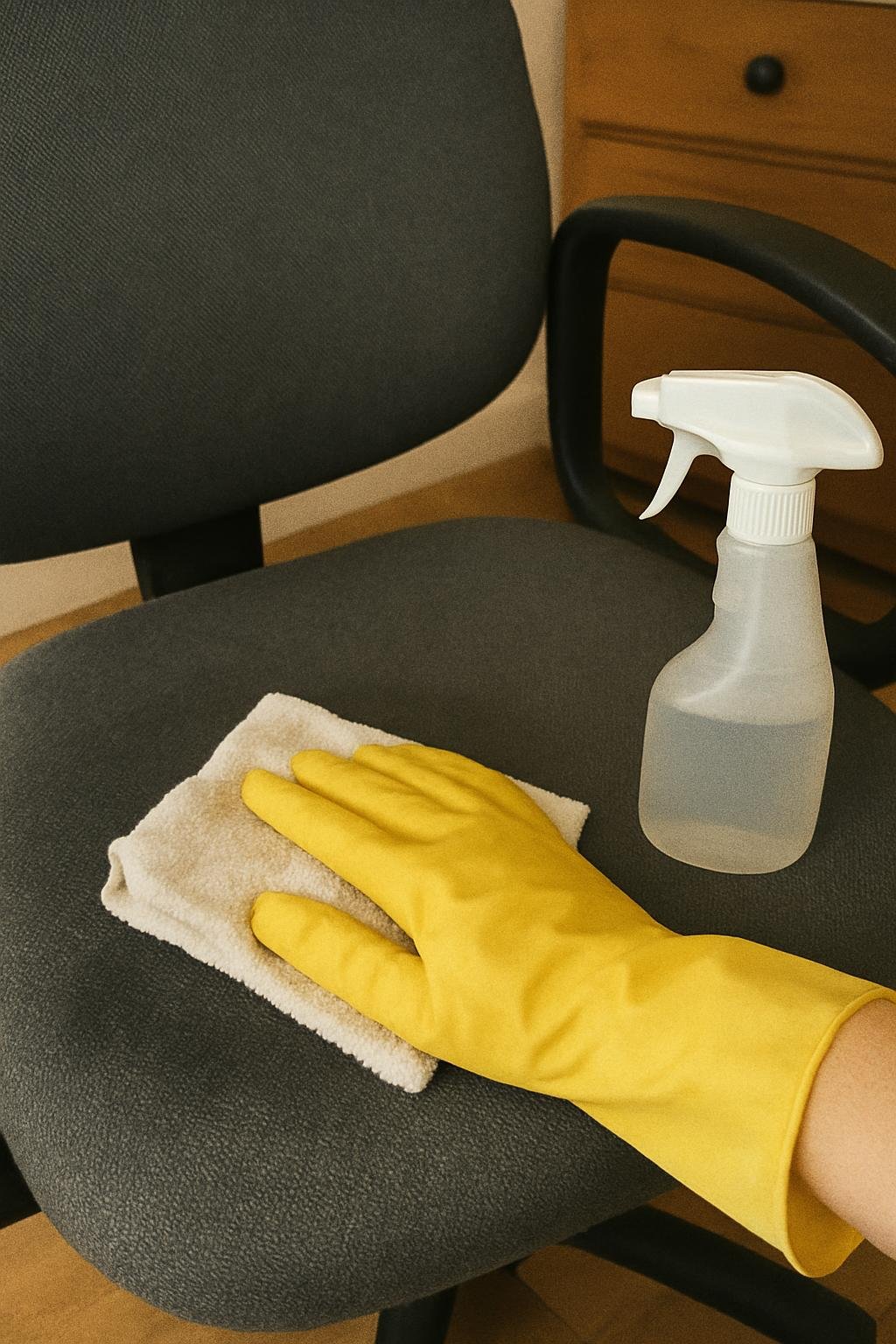
- Using too much liquid. Oversaturating the fabric can soak into the foam underneath, leading to a musty smell, slow drying, and possible mildew if the chair sits in a humid room.
- Skipping the spot test. Some fabric dyes react to cleaners with discoloration or a faded patch that’s difficult to reverse.
- Scrubbing aggressively. Hard rubbing can wear down delicate mesh or woven synthetic fabrics faster than normal use would.
- Ignoring the cleaning code. Applying a water-based cleaner to an “S” or “X” rated fabric can leave permanent watermarks or cause the fibers to pucker.
- Sitting on a damp chair. This can flatten padding unevenly and press moisture further into the foam.
How Often to Clean a Fabric Office Chair
Light vacuuming every one to two weeks helps prevent dust and skin oils from settling deep into the fibers. A full spot-clean every one to three months is usually enough for a chair in regular daily use, though a chair used by multiple people or in a dusty environment may need attention more often. Treat spills right away rather than waiting, since fresh spots are almost always easier to lift than ones that have dried and set into the fabric.
When Cleaning Isn’t Enough
If the fabric has deep, set-in stains, a persistent odor that doesn’t improve after drying, or padding that feels compressed and uneven no matter how it’s cleaned, cleaning alone may not resolve the issue. At that point, a professional upholstery cleaning service or a replacement seat cover, if your chair model supports one, is a more realistic option than repeated at-home attempts.
If you’re dealing with fabric care questions on other household items, the guidance for cleaning dirty fabric luggage covers a similar spot-testing and gentle-cleaning approach that translates well to other fabric surfaces.
Everything Mentioned Above
Before you leave, grab the tools you need to get the job done right the first time:
*As an Amazon Associate, TidyFormula earns from qualifying purchases.