How to Strip Towels: A Quick Guide to Stripping for Fresh, Absorbent Towels
Stripping towels means washing them through one or more extra-hot cycles with a laundry booster (like a washing soda, borax, or a dedicated stripping product) to help release built-up detergent residue, fabric softener, hard-water minerals, and body oils that can make towels feel stiff, smell musty, or lose absorbency over time. It’s an occasional deep-clean step, not a regular part of your laundry routine.
⚡ The TidyFormula™ Quick Decision
Best approach: Soak white or colorfast cotton towels in the hottest water your washer allows with a laundry booster, then follow with a plain hot-water rinse cycle and a normal wash with regular detergent before drying.
Use caution with: Delicate, colored, dark, or specialty towels (bamboo, microfiber, or those with printed designs), towels with fire-retardant or other special finishes, and any towel where the care label restricts hot water or bleach-based products.
Stop and reassess if: You notice fading, pilling, fraying, or a change in texture during the process, if the care label warns against hot water or specific chemicals, or if the towels are older and already showing signs of wear that stripping might worsen.
Why Towels Need Stripping
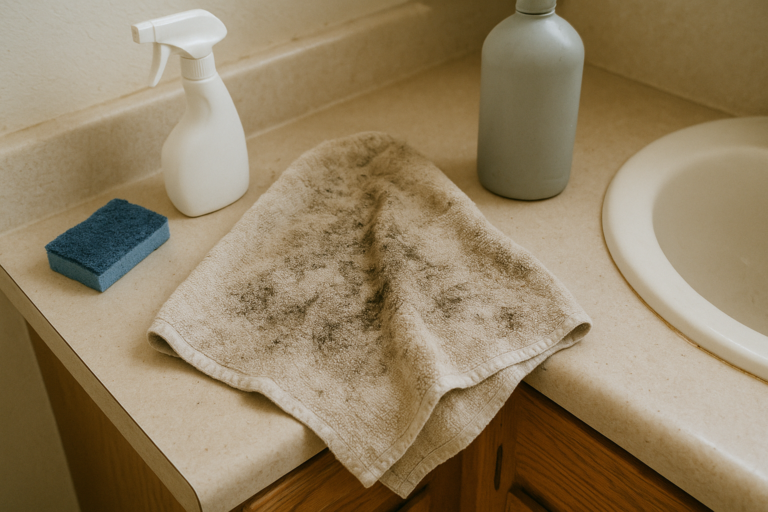
Over weeks and months of regular washing, towels can accumulate a layer of residue from fabric softener, detergent that wasn’t fully rinsed out, and minerals from hard water. This buildup sits inside the fibers and can make towels feel less absorbent, look dingy, or develop a musty smell in towels even after a normal wash cycle. Stripping is designed to loosen and flush out that residue more thoroughly than a standard wash.
What I Use For This Job
Using the right tools saves time and protects your belongings. Here are my exact recommendations:
*As an Amazon Associate, TidyFormula earns from qualifying purchases.
This is generally considered an occasional maintenance step rather than something to do every laundry day. Many households find once every few months, or when towels noticeably lose absorbency, is a reasonable starting point—though your own water hardness, detergent habits, and towel usage will affect how often it’s needed.
Check the Care Label First
Before you start, look at the care label sewn into your towels. Some towels are made with blends, specialty fibers, or finishes that don’t tolerate high heat or certain laundry additives well. If the label restricts water temperature, bleach, or specific cleaning agents, follow that guidance rather than a general stripping method. When in doubt, contact the manufacturer for their specific recommendations.
What You’ll Need
- A washing machine filter capable of a hot water cycle (top-loaders with a soak option or large tubs are often preferred for this task, though front-loaders can work depending on the model)
- A laundry booster such as washing soda or borax, or a product specifically labeled for stripping laundry
- Your regular laundry detergent for the follow-up wash
- A well-ventilated space, since some boosters can have a noticeable odor
Never mix different cleaning chemicals or laundry boosters together, and always read the product label for instructions on how it’s meant to be used and any precautions.
Step-by-Step: How to Strip Towels
- Sort by color and fabric. Only strip towels that are colorfast and made of sturdy natural fibers like cotton, unless the care label and product instructions confirm the method is suitable for other materials.
- Fill the machine with hot water. Use the hottest setting your washer and the towel’s care label both allow. If your washer has a soak or extended cycle option, that can help give the booster more time to work.
- Add the laundry booster according to its label. Follow the amount and usage instructions printed on the product packaging rather than guessing at a ratio, since products vary in strength and formulation.
- Let the towels soak. Many stripping methods call for letting the towels sit in the hot water and booster solution for a period of time before agitation begins. Check your washer’s manual for how to pause or extend a cycle if needed.
- Run the wash cycle. Once soaking is complete, let the machine complete a full wash cycle.
- Run a second rinse cycle if needed. If you notice residue, discoloration in the water, or a strong odor from the booster, an extra rinse cycle with plain water can help make sure everything is flushed out.
- Wash again with regular detergent. Follow up with a normal wash using your usual laundry detergent to remove any remaining booster residue before drying.
Drying After Stripping
Dry towels according to their care label. Most cotton towels tolerate a normal or high-heat dryer setting, but check the label to confirm. Giving towels a good shake before loading the dryer, and avoiding overcrowding the drum, can help them dry more evenly and stay fluffy.
Troubleshooting
- Towels still feel stiff after stripping: This can happen with very hard water or heavy long-term buildup. A repeat treatment, done conservatively and with attention to the towel’s condition, may help, but avoid stripping the same towels repeatedly in a short period.
- Colors look faded or uneven: This may indicate the towel wasn’t fully colorfast or that the water temperature was too aggressive for that fabric. Discontinue stripping that item and wash it normally going forward.
- Odor lingers after washing: Try an additional plain-water rinse cycle. If the smell persists, it may be worth checking your washing machine for buildup. Start by inspecting the detergent drawer and filter for trapped residue, and clean the detergent drawer if you see hardened soap or softener deposits. Also inspect the rubber door gasket, since mold-like buildup there often causes persistent odors.
- Towels feel thinner or fibers look frayed: This can be a sign of age and wear rather than something stripping can fix. At this point, replacing older towels may be more practical than continued deep-cleaning attempts.
Preventing Heavy Buildup Going Forward
A few habits can help reduce how often towels need stripping:
- Use the amount of detergent recommended on your product’s label rather than assuming more is better, since excess detergent can contribute to residue buildup.
- Consider limiting or skipping fabric softener on towels, since it can coat fibers and reduce absorbency over time. Check your softener’s label for guidance on suitable fabrics.
- Wash towels regularly rather than letting them sit damp or go many uses between washes, which can contribute to odor and residue buildup.
- If you have hard water, a water softening system or a laundry additive designed for hard water may help reduce mineral buildup, though results vary by household and product.
When to Repair, Replace, or Just Let It Go
Stripping is meant to refresh towels with buildup issues, not to reverse fraying, thinning, or years of general wear. If your towels are old, visibly worn, or were already losing absorbency before any buildup occurred, stripping may offer only a modest improvement. In that case, it may be more practical to view worn towels as due for replacement rather than expecting a deep-clean method to restore them like new.
Everything Mentioned Above
Before you leave, grab the tools you need to get the job done right the first time:
*As an Amazon Associate, TidyFormula earns from qualifying purchases.