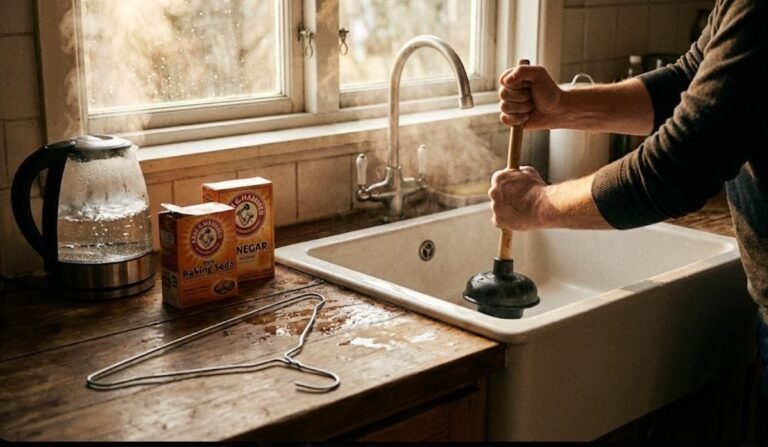
dish soap substitute ideas for light cleaning
If you’re out of dish soap, several household items can step in for light cleaning: baking soda, white vinegar diluted with water, or a small amount of laundry detergent can cut through grease on dishes and countertops in a pinch. These substitutes won’t work exactly like dish soap, though, and none are a long-term replacement for the real thing.
⚡ The TidyFormula™ Quick Decision
Best approach: For hand-washing dishes or wiping greasy surfaces, a paste of baking soda and water or a diluted vinegar-and-water solution is usually the safest short-term stand-in. Baking soda works well as a mild abrasive for stuck-on food, while vinegar helps cut through light grease and water spots.
Use caution with: Laundry detergent, dish soap “hacks” involving shampoo or body wash, and any product not designed for food-contact surfaces. These can leave residue or fragrance behind and may not rinse as cleanly as dish soap.
Stop and reassess if: Dishes feel slick or filmy after rinsing, glassware looks streaky, or a substitute leaves a strong scent or residue that doesn’t wash away with plain water. If that happens, switch back to dish soap as soon as you can get some.

Why You Might Need a Dish Soap Alternative
Running out of dish soap mid-meal-prep is common, and so is wanting to try something different because of scent sensitivities, ingredient preferences, or simply what’s on hand. Whatever the reason, it helps to know which household items can reasonably substitute for dish soap and which ones are better left alone.
What I Use For This Job
Using the right tools saves time and protects your belongings. Here are my exact recommendations:
*As an Amazon Associate, TidyFormula earns from qualifying purchases.
Common Dish Soap Substitutes
Baking Soda
Baking soda is mildly abrasive and can help lift grease and food residue from plates, pots, and pans. Sprinkle a small amount directly onto a damp sponge or make a thin paste with water for tougher spots. It works best on sturdy dishware and cookware; use a lighter touch on delicate glassware or anything with a nonstick coating, since abrasive scrubbing can dull finishes over time.
White Vinegar Diluted with Water
Vinegar diluted with water can help cut through light grease and remove water spots from glasses and flatware. It won’t create suds, so it may feel less effective for heavily soiled dishes. Avoid using vinegar on natural stone, some metals, or surfaces where the manufacturer specifically advises against acidic cleaners.
Laundry Detergent (Small Amount, Diluted)
In a genuine pinch, a small, well-diluted amount of liquid laundry detergent can cut grease, but it’s formulated for fabric, not food-contact surfaces. Rinse dishes thoroughly and repeatedly if you use this method, and avoid it if you have any sensitivity to fragrances or residues.
Castile Soap
Liquid castile soap, diluted with water, is a plant-based option some people keep on hand for multiple cleaning uses. It can work reasonably well for dishes, though it may leave a slight film in hard water areas. Rinse well and check that dishes don’t feel waxy or slick afterward.
How to Hand-Wash Dishes with a Substitute
- Scrape off excess food into the trash or compost before washing.
- Fill the sink or a basin with warm water and add your chosen substitute in a small amount.
- Wash dishes as you normally would, using a sponge or dishcloth, paying extra attention to greasy spots.
- Rinse thoroughly under running water until no residue, slickness, or film remains.
- Dry with a clean towel or place in a rack to air-dry completely before storing.

Using Substitutes in a Dishwasher
Dish soap substitutes generally aren’t a good match for automatic dishwashers. Regular dish soap, laundry detergent, and many homemade mixtures can produce excessive suds that leak out of the appliance or interfere with the wash cycle. If you’re out of dishwasher-specific detergent, check your dishwasher’s manual for guidance rather than substituting an unapproved product, since dishwasher formulas are different from hand-washing dish soap for a reason.
Also, keeping your dishwasher filter clean helps the machine rinse effectively and reduces leftover film or spots on dishes.
Troubleshooting Common Issues
- Greasy residue remains: Try warmer water and a longer soak time, or switch to a substitute with more grease-cutting power, like diluted vinegar for glass and diluted detergent for heavily soiled cookware. For heavier kitchen grease on walls or backsplash, see our guide on removing grease from kitchen walls.
- Glassware looks streaky: Hard water combined with some substitutes can leave spots. A vinegar rinse followed by thorough drying with a lint-free towel may help.
- Dishes feel slippery after rinsing: This usually means residue wasn’t fully rinsed away. Rinse again under running water and dry completely before storing.
- Substitute isn’t cutting grease at all: Some substitutes, like plain baking soda without added abrasion or scrubbing, may not be strong enough for very oily pans. Pre-soaking in hot water can help loosen grease before washing.
Materials and Care-Label Considerations
Cast iron, wood, and some nonstick cookware often have specific manufacturer care instructions that differ from standard dishware. Always check any care labels or manufacturer guidance for cookware, since some finishes react differently to abrasive substitutes like baking soda or acidic ones like vinegar. When in doubt, test any substitute on a small, inconspicuous area first.
When to Go Back to Dish Soap
Household substitutes are useful for short-term gaps, but dish soap is formulated specifically for cutting grease and rinsing cleanly from food-contact surfaces. If you notice ongoing residue, streaking, or a substitute isn’t working well for your regular dishwashing needs, it’s reasonable to pick up dish soap again as your primary option and reserve substitutes for occasional backup use. For general guidance on safe homemade cleaners and what really works, our homemade cleaning solutions and non-toxic kitchen checklist can help you choose compatible options for your kitchen surfaces.
Everything Mentioned Above
Before you leave, grab the tools you need to get the job done right the first time:
*As an Amazon Associate, TidyFormula earns from qualifying purchases.