Clean Record: Essential Dry and Wet Cleaning Steps for Vinyl Care
A clean record starts with dry dust removal using a soft carbon-fiber or velvet brush, followed by a damp wipe with distilled water and a small amount of mild dish soap only when dust alone will not lift the grime. Always wipe along the grooves, never across them, and let the record air dry fully before playing it again.
The TidyFormula Quick Decision
Best approach: Use a soft carbon-fiber brush for routine dust, then a distilled-water and mild-soap solution applied with a microfiber cloth for fingerprints or grime, always following the groove direction.
Use caution with: Paper labels, tap water, alcohol-based cleaners on colored vinyl, rough paper towels, and any vacuum-style record cleaning machine you have not used before on that particular pressing.
Stop and reassess if: The vinyl feels sticky or tacky after drying, you see white residue building up in the grooves, the label starts to soften or peel, or the surface shows deep scratches rather than surface grime.
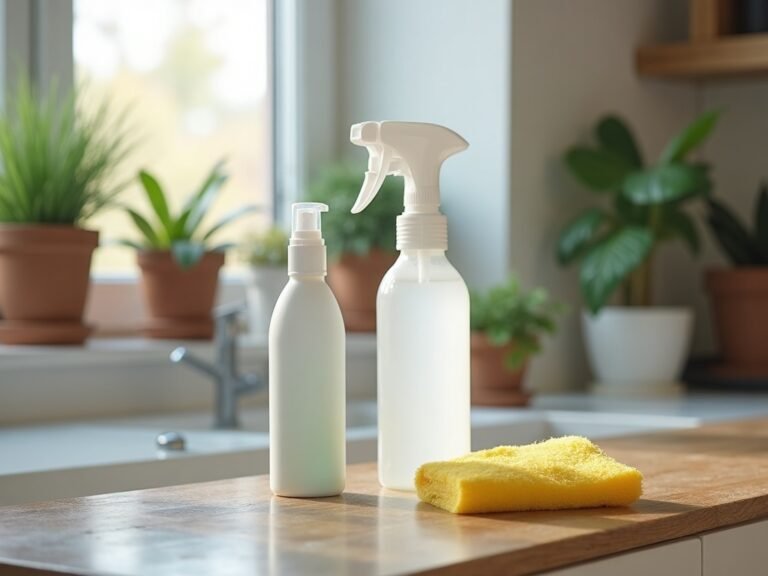
Most records do not need a deep wet clean every time they come off the shelf. Dust, light fingerprints, and static buildup account for the majority of the surface noise people hear, and those problems usually respond to dry cleaning tools alone. Wet cleaning is worth reserving for records that look visibly dirty or that have picked up grime from storage, secondhand shops, or long stretches without a sleeve.
What I Use For This Job
Using the right tools saves time and protects your belongings. Here are my exact recommendations:
*As an Amazon Associate, TidyFormula earns from qualifying purchases.
What You Need to Clean a Record Safely
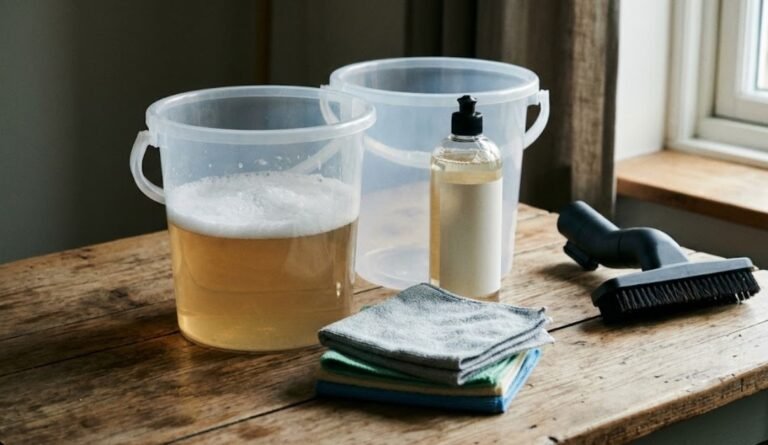
The basic toolkit is small: a carbon-fiber or velvet anti-static brush, a lint-free microfiber cloth, distilled water, and a mild dish soap with no added moisturizers or fragrance oils (see homemade cleaning solutions that are actually safe for guidance on gentle, effective mixes). Distilled water matters because tap water can leave mineral deposits in the grooves once it dries, and those deposits can add noise rather than remove it.
Avoid paper towels and cotton cloths with visible lint, since loose fibers tend to catch on the groove walls. A record-specific cleaning brush or a soft, dedicated microfiber cloth kept only for this purpose works better and stays cleaner between uses.
How to Clean a Record With Light Dust
Light dust is best handled dry, before it gets pressed deeper into the grooves by the stylus. Hold the record by its edges and label, then brush in a light, even motion.
- Place the record on a clean, flat surface or turntable mat.
- Hold the carbon-fiber brush flat against the surface and rotate the record slowly, or gently rotate the brush along the groove direction.
- Lift dust off with a light touch rather than pressing down, since pressure can drive particles into the grooves instead of lifting them out.
- Repeat on the opposite side.
This step alone resolves a large share of surface crackle on records that have simply been sitting out or handled a few times. If you prefer a simple maintenance rhythm, our weekly reset cleaning checklist can help you keep a predictable routine without over-handling your collection.
How to Clean a Record With Fingerprints or Grime
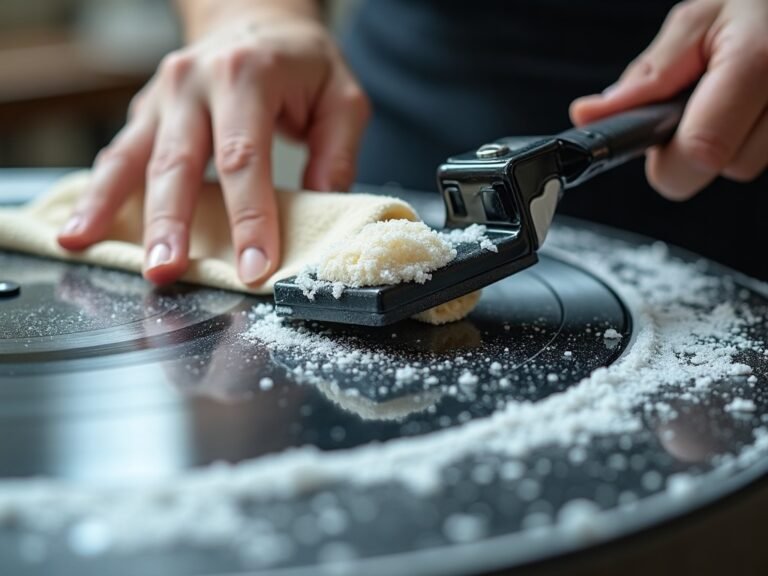
Visible grime, oily fingerprints, or a dull haze on the surface usually calls for a damp clean rather than dry brushing alone. Mix a small amount of mild dish soap into distilled water rather than applying soap directly to the vinyl.
Dampen a microfiber cloth with the solution, not the record itself, and wipe gently in the direction of the grooves. Turn the cloth or switch to a clean section as it picks up grime, and avoid soaking the label at the center. Follow with a second pass using a cloth dampened with plain distilled water to help lift any leftover soap residue, since dried soap film can add its own noise during playback (the same minimal-moisture approach used when you clean a laptop screen without streaks helps avoid streaking or residue on sensitive surfaces).
If a small hidden area, such as the outer edge near the label, shows any dulling or color change after this pass, stop wet cleaning that pressing and stick with dry brushing going forward.
Handling Mold-Like Spots or Musty Odor
A musty smell or fuzzy-looking spot on a record usually points to storage in a damp space rather than a defect in the vinyl itself. Wipe the affected area with a distilled-water and mild-soap solution as described above, then let the record dry completely in a dry, well-ventilated area before returning it to its sleeve.
If the odor persists after cleaning and drying, or if you have concerns about mold exposure from a collection that was stored somewhere damp, that is a question better directed to a health professional or an indoor air specialist rather than resolved through cleaning alone. For practical steps on drying and odor control in rooms where collections are stored, see our guide on how to remove damp smell from a bedroom. Continue storing the rest of the collection in a dry space with paper or poly-lined inner sleeves to help reduce the chance of the same problem returning.
TidyFormula Tip
Clean records in small batches and let each one dry fully on a rack or stand before sliding it back into its sleeve, since a damp record sealed into a sleeve can pick the moisture right back up.
What to Avoid When Cleaning a Record
Certain habits cause more damage than the dirt they are meant to remove. Isopropyl alcohol solutions and other harsh solvents can affect the plastic in some vinyl formulations, so they are best left out of a routine cleaning unless you have specific guidance from the record’s manufacturer or a trusted restoration source. Also review common pitfalls in general household cleaning—our piece on surfaces you should never clean with vinegar highlights how well-intentioned cleaners can damage finishes.
- Do not use tap water as a final rinse, since mineral residue can dry into the grooves.
- Do not scrub in a circular motion; always follow the groove direction.
- Do not let water or cleaning solution touch the paper label.
- Do not use household glass cleaners, furniture polish, or all-purpose sprays on vinyl.
- Do not play a record while it is still damp, since moisture in the grooves can affect the stylus and the sound.
Skipping these shortcuts takes little extra time and protects both the record and the stylus that plays it.
Drying and Storing a Clean Record
Air drying is the safest option for a freshly cleaned record. Stand it upright in a drying rack or lean it carefully against a clean, soft surface so air reaches both sides evenly, and avoid wiping it dry with a cloth, since that can redistribute lint or fine residue back into the grooves.
Once fully dry, return the record to a clean inner sleeve, ideally a poly-lined one, and store it upright rather than flat to reduce warping over time. Keeping records away from direct sunlight and heat sources also helps preserve both the vinyl and the printed sleeve artwork.
Frequently Asked Questions
Can I use a regular cloth instead of a microfiber cloth?
A soft, lint-free cloth can work in a pinch, but standard cotton cloths and paper towels often shed fibers that catch in the grooves. A dedicated microfiber cloth kept only for records gives a cleaner result with less risk of adding new debris.
How often should I clean my records?
Dry brushing before and after each play is a reasonable habit for most collections, while a full wet clean is usually only needed when a record looks visibly dirty or has been stored without a sleeve for a long stretch. Cleaning more often than that is rarely necessary and adds handling risk.
What if brushing does not remove all the surface noise?
If dry brushing leaves noise behind, move to the damp cleaning method with distilled water and mild soap before considering a record cleaning machine. Persistent noise after both steps often points to actual wear or scratches rather than surface dirt.
Is a record cleaning machine worth using?
Vacuum-style or ultrasonic record cleaning machines can help with heavier grime on a large collection, but results vary by machine and by the condition of the vinyl. If you are trying one for the first time, test it on a less valuable record before using it on a record you cannot easily replace, and take care around the electronics and power connections involved—our guide on cleaning cables and power strips safely covers safe practices when working near powered devices.
Can I clean a record that has visible scratches?
Cleaning can remove dust and grime sitting on top of a scratch, but it will not repair the scratch itself or reliably restore lost sound quality in that section. A cleaning pass is still worthwhile before deciding whether the record is playable as is.
Everything Mentioned Above
Before you leave, grab the tools you need to get the job done right the first time:
*As an Amazon Associate, TidyFormula earns from qualifying purchases.