Can You Put Eyeglasses in the Dishwasher? (Read This First)
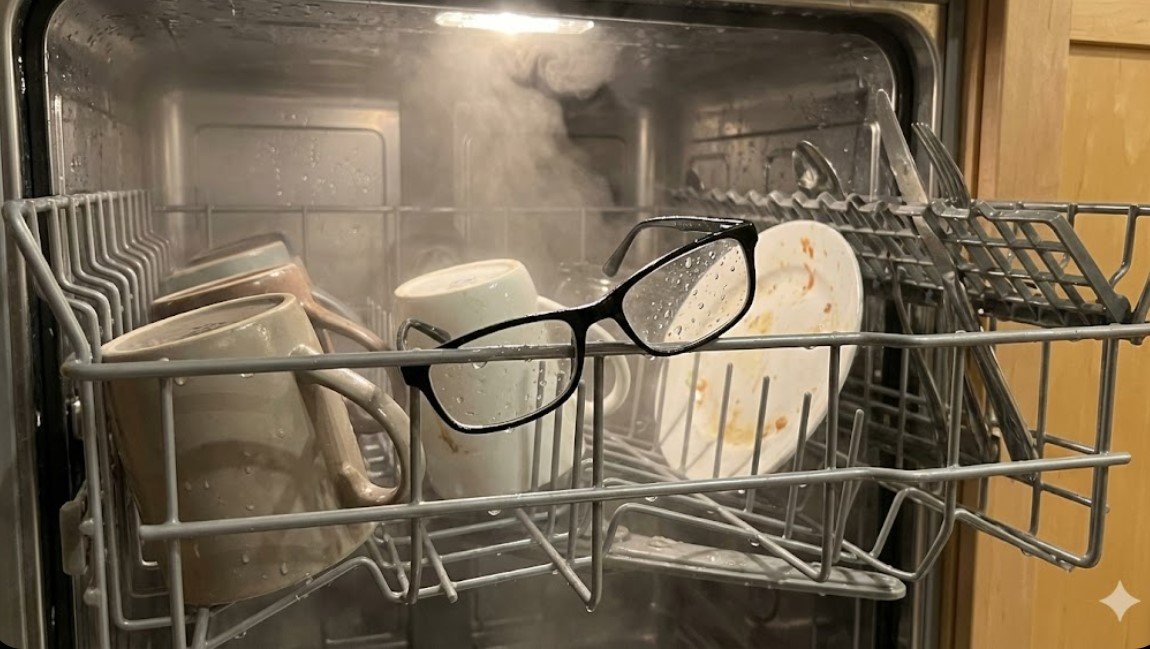
No. You shouldn’t put eyeglasses in the dishwasher; high heat and harsh detergents can strip coatings, warp frames, and ruin your expensive lenses with cloudiness, scratches, and cracks.
The Science: Why Eyeglasses Aren’t Dishwasher Safe
Eyeglasses are precision optical devices, not kitchenware. They’re built from specific materials that do not tolerate dishwasher conditions well:
1. Lens materials
Most prescription lenses today are:
- Polycarbonate – light and impact-resistant but very heat-sensitive.
- CR-39 plastic – clearer and more scratch-resistant than polycarbonate but still softer than glass.
- High-index plastics – thinner but even more dependent on delicate surface coatings.
On their own, these plastics are already softer than dishes or glassware. They scratch easily and can warp when exposed to high heat.
2. Delicate surface coatings
What I Use For This Job
Using the right tools saves time and protects your belongings. Here are my exact recommendations:
*As an Amazon Associate, TidyFormula earns from qualifying purchases.
Almost all modern lenses have multiple coatings:
- Anti-reflective (AR) coating
- Anti-scratch coating
- UV or blue-light filters
- Anti-fog or hydrophobic (water-repelling) layers
Dishwasher cycles use high temperatures, strong alkaline detergents, and prolonged exposure. This combination can cause:
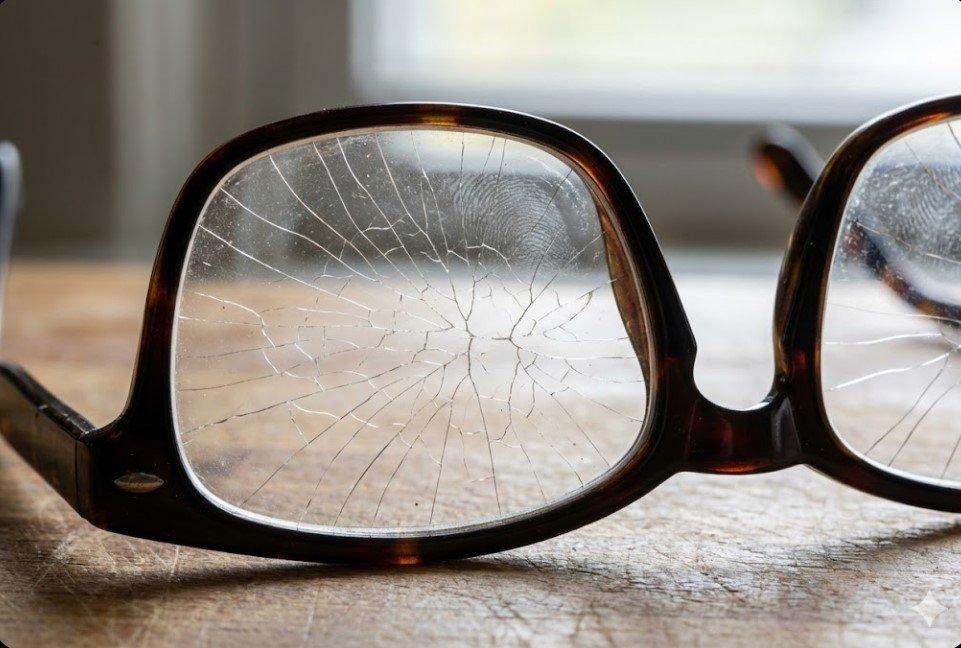
- Crazing (tiny spiderweb cracks in coatings)
- Peeling or flaking of AR or mirror coatings
- Permanent haze that never wipes clean
Once a coating is damaged, the only real fix is replacing the lenses.
3. Frame materials
Frames are often made from:
- Acetate or plastic – can bend or warp in heat.
- Metal (including plated metal) – can corrode, discolor, or loosen at solder points and hinges.
- Memory plastics (like TR-90) – more forgiving, but not dishwasher-proof.
Dishwasher heat and repeated expansion/contraction can:
- Twist frames out of alignment
- Loosen screws and hinges
- Discolor or damage nose pads and temple tips
4. Dishwasher environment vs. eyeglasses
A dishwasher is optimized for ceramic, stainless steel, and thick glass, not soft plastics and micro-thin coatings. During a cycle, glasses are hit with:
- High-pressure spray jets
- Detergent with enzymes, bleaches, and strong alkali
- Hot water and often a heated dry cycle
That’s a worst-case scenario for fine optical surfaces.
💡 Bottom line: Eyeglasses may “survive” a cycle or two, but cumulative damage adds up. For expensive prescription lenses, it’s just not worth the risk.
The “Top Rack” Rule (And Why It Still Doesn’t Make Glasses Safe)
You’ve probably heard: “If it’s delicate, put it on the top rack.” That rule exists because:
- The bottom rack sits closer to the heating element.
- The top rack gets slightly gentler spray and lower temperatures.
So… does putting eyeglasses on the top rack make it safe?
Still no—and here’s why:
- The chemical problem remains
Even on the top rack, your lenses are bathed in the same harsh detergent. It’s the chemistry, not just the location, that destroys coatings. - Heat is still too high
Many dishwashers reach temperatures that are well above what lens coatings and plastics are designed to handle, even on the top rack. - Movement and impact risk
Lightweight eyeglasses can be:- Knocked around by water jets
- Slammed into mugs, plates, or rack wires
- Bent when they slip through the rack
- Rare exception (still risky)
The only borderline case is cheap, uncoated safety glasses specifically labeled dishwasher-safe by the manufacturer. Even then, you’re likely shortening their usable life.
Step-by-Step Washing Guide (Safe Method for Eyeglasses)
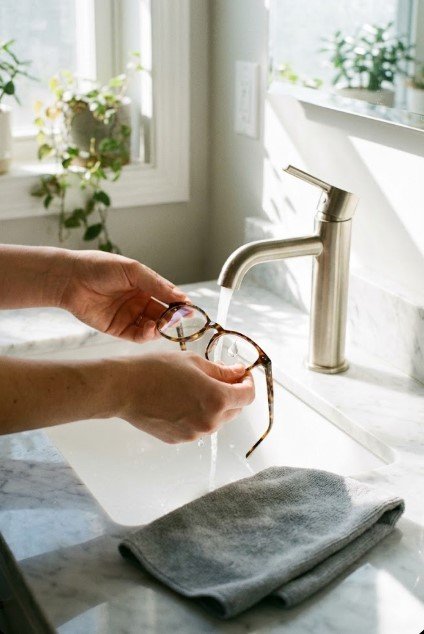
Instead of the dishwasher, clean eyeglasses the way opticians do: by hand, with mild soap and water.
Step 1: Wash your hands
- Use mild hand soap (no heavy fragrance, lotion, or grit).
- Rinse thoroughly to remove any residue that could transfer to lenses.
Step 2: Rinse the glasses with lukewarm water
- Hold your glasses under a gentle, lukewarm stream.
- This removes dust and grit that could scratch lenses if rubbed in.
Avoid hot water – it can warp lenses and damage coatings.
Step 3: Add a drop of mild dish soap
- Put 1 tiny drop of lotion-free, dye-free dish soap on your fingertips.
- Gently rub:
- Both sides of each lens
- The frame front and back
- Nose pads
- Temples (the arms), especially areas that touch skin and hair
Step 4: Rinse thoroughly
- Rinse until there’s no slippery feeling left anywhere.
- Leftover soap will smear when you dry the lenses.
Step 5: Shake off excess water
- Lightly shake to remove droplets.
- If available, let them drip for a few seconds on a clean, lint-free towel.
Step 6: Dry with a clean microfiber cloth
- Use a clean microfiber lens cloth only.
- Gently blot, then polish in small circles.
⛔ Do not use:
Paper towels, tissues, your shirt, or kitchen towels – they can scratch and leave lint.
Step 7: Finish with a lens spray (optional)
- If you have an optician-approved lens cleaning spray, use it for a final polish.
- Avoid glass cleaners with ammonia, vinegar, bleach, or alcohol, which can wreck coatings.
What Could Go Wrong If You Put Eyeglasses in the Dishwasher?
If you’ve already done it (no judgment!) or are tempted to, here’s what you’re risking:
1. Coating damage
- Crazing: tiny cracks that create a starburst pattern in bright light.
- Cloudiness: a permanent haze that never wipes off.
- Peeling: AR or mirror coatings starting to flake at the edges.
Once this happens, wiping harder doesn’t help—it makes things worse.
2. Scratches and micro-abrasions
- Detergent particles and food residue can act like sandpaper.
- Strong water jets can rub lenses against dishes or rack wires.
- Micro-scratches build up, reducing clarity and increasing glare.
3. Frame warping and misalignment
- Plastic frames may:
- Twist or bend
- No longer sit straight on your face
- Feel loose or pinch in weird spots
- Heated metal can loosen solder joints and tiny screws.
4. Damage to nose pads and decorative parts
- Nose pads can become:
- Yellowed
- Hard and uncomfortable
- Brittle and more likely to crack
- Glued-on decorations or logos can loosen or fall off.
5. Hygiene & comfort issues
- Detergent residue near your eyes can cause:
- Stinging
- Redness
- Irritation, especially if you have sensitive skin or allergies
At that point, your glasses aren’t just ugly—they’re uncomfortable and potentially unsafe for your eyes.
Alternatives (Hand Washing & Maintenance Tips)
If your goal is “super clean with minimal effort”, here are safer options than the dishwasher.
1. Regular hand-wash routine (daily or as needed)
- Rinse, mild dish soap, rinse, microfiber dry – the method above.
- Takes about a minute and dramatically extends lens life.
2. Pre-moistened lens wipes
Great for on-the-go cleaning:
- Choose alcohol-free, lens-safe wipes designed for eyeglasses.
- Avoid generic household wipes – they may contain harsh chemicals.
3. Eyeglass cleaning spray
- Use a lens-safe spray from an optician or optical brand.
- Spray on both sides of lenses, wipe with microfiber cloth.
4. Ultrasonic cleaners (for some frames)
Small ultrasonic cleaners (designed for jewelry and glasses) can:
- Shake loose oil and debris using high-frequency waves.
- Be safe if:
- You use plain water or the recommended solution
- Your lenses and frames are approved by your optician for ultrasonic cleaning
Note: Not all coatings or frames are suitable. When in doubt, ask your eye care professional.
5. What to avoid altogether
- Dishwasher (even top rack)
- Hot water
- Window cleaner, vinegar, bleach, ammonia products
- Baking soda or abrasive powders
- Paper products (tissues, napkins, paper towel)
FAQ: People Also Ask
1. Can I wash my glasses with dish soap and water?
Yes—by hand, with the right soap.
Use lukewarm water and a tiny drop of mild, lotion-free, dye-free dish soap. Rinse thoroughly and dry with a microfiber cloth. The danger is not dish soap itself, but dishwasher conditions (heat + harsh cycles).
2. Can I put sunglasses in the dishwasher?
No. Sunglasses are often even more vulnerable than regular glasses because they have polarized, tinted, or mirror coatings. The dishwasher can strip these coatings, cause peeling, and warp plastic frames. Clean sunglasses the same way as eyeglasses—by hand.
3. How do I clean really greasy or dirty eyeglasses?
- Rinse under lukewarm water first.
- Use a small drop of dish soap and gently massage lenses and frame.
- For heavy buildup around nose pads, use a soft, clean toothbrush.
- Rinse thoroughly and dry with microfiber.
- Repeat if needed—still safer than one dishwasher cycle.
Everything Mentioned Above
Before you leave, grab the tools you need to get the job done right the first time:
*As an Amazon Associate, TidyFormula earns from qualifying purchases.