
Can You Put Golf Balls in the Dishwasher? (Safe Cleaning Guide from a Home Care Pro)
No, you shouldn’t put golf balls in the dishwasher. A gentle cycle probably won’t melt them, but heat, harsh detergent, and violent spinning can scuff the cover, affect performance, damage the finish—and even jam or break your dishwasher’s spray arms.
You’re probably staring at a pile of muddy balls thinking, “It’s just plastic and rubber… why not toss them in with the dishes?” Or maybe you’re worried about ruining expensive urethane balls (hello, Pro V1s) or damaging an already noisy dishwasher. Let’s break down what’s actually happening inside that machine and the safest way to get your golf balls looking new again.
The Science: Why Golf Balls Aren’t Dishwasher-Safe
What golf balls are made of
Most modern golf balls are built in layers:
- Core: Rubber or synthetic rubber designed for energy transfer.
- Mantle layer(s): Additional rubber or synthetic materials.
- Cover: Usually ionomer (harder, more durable) or urethane (softer, more spin, more expensive).
- Paint & logos: Thin coatings and ink printed on top of the cover.
These materials are engineered for impact and compression, not for prolonged exposure to heat + hot water + chemicals.
What dishwashers do to materials
A typical dishwasher cycle involves:
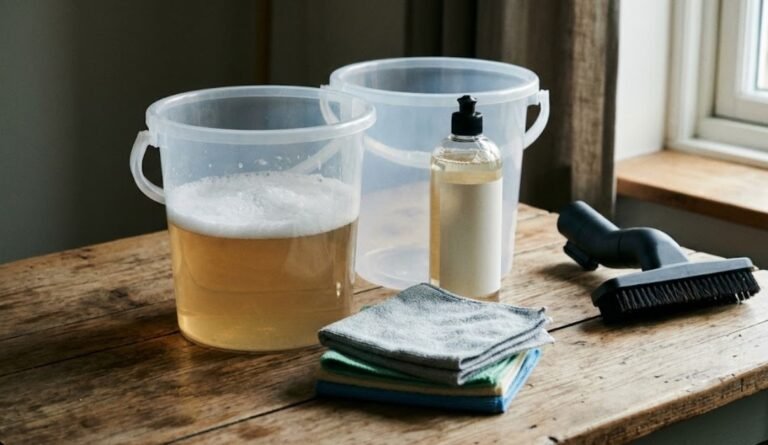
What I Use For This Job
Using the right tools saves time and protects your belongings. Here are my exact recommendations:
*As an Amazon Associate, TidyFormula earns from qualifying purchases.
- Hot water: Often 50–70°C (122–158°F).
- High-pH detergents: Strong alkalinity and surfactants designed to strip grease and food.
- Mechanical agitation: Spray arms blasting water and items banging around.
- (Optional) Heated dry: Extended exposure to high temperatures.
For dishes, this combo is great. For golf balls, not so much:
- Heat can soften or slightly deform softer covers over time.
- Detergent can dull paint, logos, and cover coatings.
- Agitation can cause balls to slam into racks, tines, and each other, creating scuffs and micro-cracks.
Performance matters
Even if the ball looks fine, repeated dishwasher cycles can:
- Rough up the cover, changing how it spins and flies.
- Create tiny surface damage that affects aerodynamics.
- Reduce the lifespan of premium urethane balls—exactly the ones you’re trying to protect.
Bottom line: A single emergency dishwasher run probably won’t destroy a ball, but making it your go-to cleaning method slowly ruins both your balls and potentially your dishwasher.
The “Top Rack” Rule (And Why It Still Isn’t Great for Golf Balls)
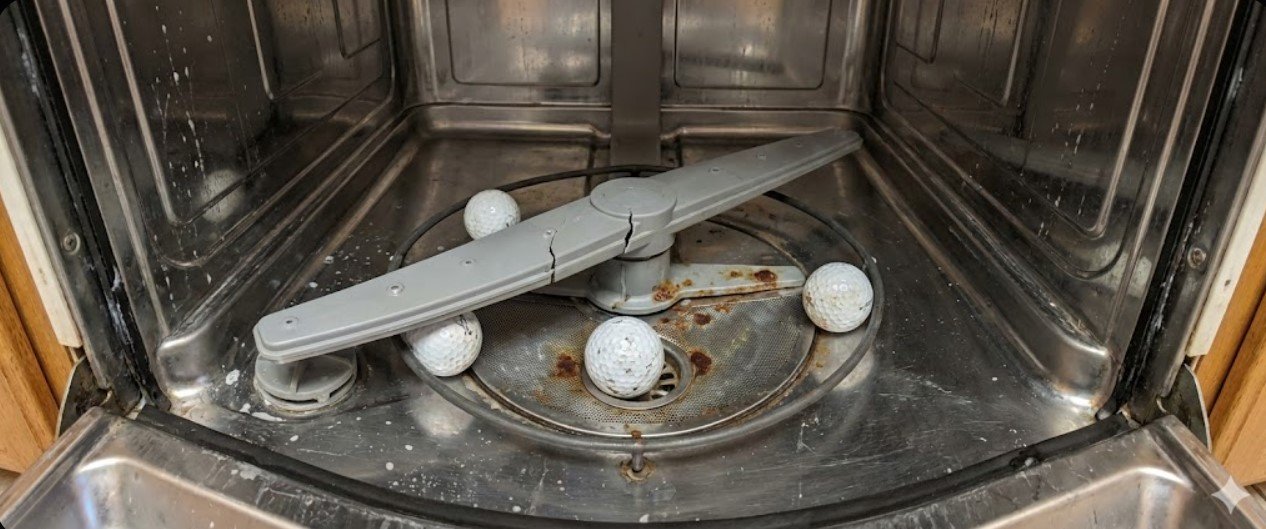
You’ve probably heard the rule: “If it might be heat-sensitive, put it on the top rack.” The top rack is farther from the heating element and sees slightly gentler spray.
Does the top rack make golf balls safe?
Not really—at best, it makes them less risky, but problems remain:
- Balls can roll around, fall through gaps, or lodge against the door or spray arms.
- If they drop to the bottom rack, they’re closer to the heating element.
- Multiple balls can clack together, causing extra scuffing and noise.
- There’s still strong detergent and hot water hitting them.
When people use the top rack anyway
Some golfers still toss old, practice-only balls on the top rack when they don’t care about performance—just cleanliness. That’s a personal gamble, but if you’re here, you likely:
- Care about distance and spin, or
- Don’t want to risk your dishwasher for a few dirty balls.
Step-by-Step Washing Guide (Safe Method If You Insist on the Dishwasher)
TidyFormula recommends hand washing (see next section). But if you still decide to use the dishwasher, here’s how to reduce the risk as much as possible.
⚠️ Warning: Use this only for older or practice balls you’re willing to sacrifice a bit.
1. Use a mesh bag
- Place golf balls in a zippered mesh laundry bag or small, holey basket.
- This prevents them rolling around, falling onto the heating element, or blocking spray arms.
2. Top rack only
- Put the mesh bag flat on the top rack.
- Avoid packing it too full; balls need space so water can circulate, but not so much space that they slam into each other.
3. Choose a gentle, cooler cycle
- Pick a quick or eco cycle with lower temperatures if your dishwasher offers it.
- Avoid: “Sanitize,” “Heavy,” or “Pots & Pans” cycles—these use higher heat and harsher action.
4. Skip heated dry
- Turn off heated dry and let the balls air dry after the cycle.
- Extra heat during drying just adds unnecessary stress to the covers.
5. Use less detergent
- Use about half your usual amount of detergent.
- You’re dissolving dirt and mud, not baked-on lasagna.
6. Inspect after the wash
After the cycle:
- Check balls for new scuffs, cracks, or dullness.
- Spin them on a flat surface—if they wobble oddly, the internal structure could be compromised.
- Check your dishwasher’s spray arms and filter to make sure no balls or bag parts jammed anything.
What Could Go Wrong?
Even with “careful” dishwasher use, several issues can pop up.
1. Damage to the golf balls
- Scuffed covers: Impacts against metal racks and other items.
- Dulled finish & logos: Hot, alkaline detergent can fade paint and shine.
- Micro-cracks: Repeated cycles can weaken the cover, especially on softer urethane balls.
- Performance loss: Changes in the cover can alter spin, trajectory, and feel.
2. Damage to your dishwasher
- Blocked spray arms: Loose balls can wedge into or block spray arms from spinning.
- Noise & vibration: Balls knocking around make cycles noisier and harder on your machine.
- Filter clogs: Bits of mud, grass, or cover material can clog filters over time.
3. Hygiene concerns
- Golf balls pick up soil, fertilizer, bacteria, and who-knows-what from the course.
- Running them with dishes may not be ideal if you’re cautious about cross-contamination—especially if they’re visibly muddy or have fertilizer residue.
Alternatives (Hand Washing Tips)
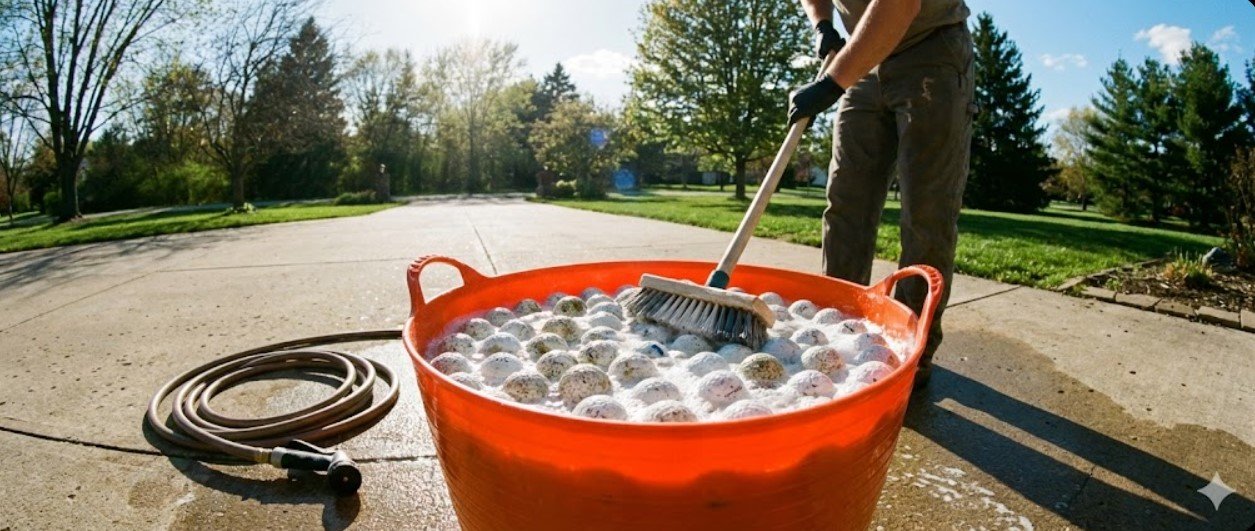
If you want safe, effective, and dishwasher-free, hand washing is your best friend.
Simple hand-wash method for golf balls
- Pre-rinse
- Knock off loose dirt with a garden hose or under a strong tap.
- Soak in warm, soapy water
- Fill a bucket or sink with warm (not hot) water.
- Add a small amount of mild dish soap (nothing with bleach or abrasives).
- Soak balls for 10–15 minutes to loosen grime.
- Scrub gently
- Use a soft brush (old toothbrush or soft nylon brush).
- Scrub around dimples and logos; avoid super-aggressive wire brushes on urethane covers.
- Rinse thoroughly
- Rinse under clean water until all soap is gone.
- Soap film can attract more dirt and affect feel.
- Dry completely
- Towel dry, then leave balls to air dry in a single layer.
- Avoid leaving them in hot cars or in direct scorching sun for hours.
For heavily stained or yellowed balls
- Try a soak in warm water + a bit of oxygen cleaner (never mix with chlorine-based products).
- Always test on an older ball first in case it dulls the surface.
FAQ: Golf Balls, Dishwashers & Cleaning
1. Can you put golf balls in the washing machine instead?
You can, but it’s not ideal. The drum and high-speed spin cycle can beat up the covers and make a ton of noise. If you try it, use:
- A mesh laundry bag
- A cold or warm, gentle cycle
- No high-speed spin if your machine lets you adjust it
Even then, hand washing is safer for both the balls and your appliances.
2. Will hot water ruin golf balls?
Moderate warm water for short periods (like a quick soak) is fine. However:
- Prolonged exposure to high heat (very hot water, dryers, hot car trunks) can affect the core and cover over time.
- This may change compression, feel, and distance.
Stick to warm, not near-boiling water, and avoid heated drying cycles or leaving balls in extreme heat.
3. How do you clean really dirty or yellowed golf balls without a dishwasher?
For very dirty or discolored balls:
- Soak in warm water + mild dish soap for 15–20 minutes.
- Scrub with a soft brush.
- For stubborn staining, briefly soak in warm water + oxygen cleaner, then scrub again.
- Rinse thoroughly and air dry.
Yellowing from age or UV exposure might not fully come out; in that case, reserve those balls for practice rather than play.
Everything Mentioned Above
Before you leave, grab the tools you need to get the job done right the first time:
*As an Amazon Associate, TidyFormula earns from qualifying purchases.