
How to Clean Carpet Without a Carpet Cleaner: The Science of DIY Extraction
You can clean carpet without a carpet-cleaning machine by vacuuming thoroughly, blotting stains with a small amount of diluted clear dish soap, rinsing with a barely damp cloth, and extracting moisture with dry towels. The keys are using as little liquid as possible, testing first, and drying the carpet quickly.
This manual method works well for spills, stains, odors, and light surface soil. It does not replace professional hot-water extraction when an entire wall-to-wall carpet is heavily soiled, contaminated, or wet beneath the backing.
⚡ The TidyFormula™ Quick Answer
The Recommendation: Vacuum first. Then blot the carpet with a white cloth lightly dampened with a solution of 1 cup lukewarm water and 1/4 teaspoon clear dishwashing liquid. Blot again with plain water, press with dry towels, and use a fan until the area is completely dry.
- Best for: Fresh spills, isolated stains, traffic marks, and routine surface cleaning.
- Time: About 20–30 minutes of cleaning, plus drying time.
- Main rule: Blot rather than scrub, and never saturate the carpet.
⚠️ Important Limitation
Manual cleaning can remove many surface stains without a carpet cleaner, but it has limited rinsing and extraction power. Stop if liquid reaches the backing, the carpet color transfers to your cloth, an odor becomes stronger, or the treated area remains wet after several hours. Large sewage, floodwater, mold, and extensive pet-waste problems require professional assessment.
WHAT MANUAL CLEANING CAN AND CANNOT DO
- It can: Lift fresh spills, loosen light soil, reduce removable odors, and improve small high-traffic areas.
- It cannot: Provide the same deep rinsing and water recovery as an extraction machine.
- Primary risk: Overwetting can cause browning, dye transfer, backing damage, odors, or a stain that reappears as the carpet dries.
Before You Start: Check the Carpet Material
Check the carpet or rug care label before applying moisture. If no label is available, test the proposed method in a hidden area and let the test spot dry completely before continuing.
What I Use For This Job
Using the right tools saves time and protects your belongings. Here are my exact recommendations:
*As an Amazon Associate, TidyFormula earns from qualifying purchases.
- Nylon: Usually durable, but strong cleaners and aggressive scrubbing can still damage stain-resistant treatments.
- Polyester and olefin: Generally tolerate gentle water-based spot cleaning. Oily marks may need repeated blotting rather than more soap.
- Wool: Use cool or lukewarm water, very little moisture, and a wool-safe cleaner. Avoid alkaline products, peroxide, ammonia, and heat.
- Silk, viscose, rayon, and bamboo silk: These can develop watermarks, texture changes, or dye bleeding. Professional cleaning is the safer choice.
- Jute and sisal: Avoid wet cleaning unless the manufacturer specifically permits it. Moisture can cause browning, shrinkage, and distortion.
- Handmade, antique, or unstable-dye rugs: Do not proceed if color transfers during the hidden-area test.
What You Need
- A vacuum cleaner or a stiff broom if no vacuum is available
- Several clean, absorbent white towels or microfiber cloths
- Two bowls or buckets
- Clear, dye-free dishwashing liquid
- Lukewarm water
- A spray bottle, if desired
- A soft-bristled carpet brush for durable synthetic carpet only
- A fan for drying
White cloths make dye transfer and lifted soil easy to see. Avoid colored towels, laundry detergent, dishwasher detergent, bleach, and heavily fragranced soap. Do not combine cleaning products; use one treatment at a time and rinse before changing methods.
How to Clean Carpet Without a Carpet Cleaner
Step 1: Remove Solids and Vacuum Thoroughly
Pick up solid debris with a spoon or dull scraper, working from the outside toward the center. Vacuum slowly in two directions to remove grit, hair, and dry soil. If you do not have a vacuum, sweep with a stiff broom and collect the loosened debris with a dustpan.
Do not add liquid before removing dry soil. Water can turn remaining dust into mud and make it harder to extract manually.
Step 2: Perform a Colorfastness Test
Mix 1 cup of lukewarm water with 1/4 teaspoon of clear dishwashing liquid. Dampen a white cloth with the solution and press it against an inconspicuous area for 10 seconds. Do not continue if color transfers, the fibers become rough, or the area changes appearance after drying.
Step 3: Blot With a Minimal Amount of Cleaning Solution
Apply the solution to a white cloth rather than pouring it directly onto the carpet. Blot the stained or soiled area from the outside toward the center. Turn the cloth frequently so you do not redeposit soil.
For durable synthetic carpet, a soft brush can be moved gently in the direction of the pile. Avoid hard scrubbing, which can spread the stain, untwist fibers, and create a permanently fuzzy patch.
Step 4: Rinse Without Soaking
Dampen a second clean cloth with plain water and blot the treated area. This removes soap residue that could otherwise attract new dirt. Repeat with a freshly rinsed cloth if the carpet still feels slippery or produces foam when pressed.
Step 5: Extract Moisture With Towels
Place a folded dry towel over the damp area and press down firmly. Standing on the towel briefly can provide additional pressure. Replace the towel and repeat until it no longer absorbs noticeable moisture.
Step 6: Dry the Carpet Quickly
Point a fan across the carpet, open nearby windows when outdoor humidity is low, and keep people and pets away until the fibers and backing are dry. Raise a movable rug so air can circulate underneath, provided doing so will not stretch or distort it.
Cleaning a Larger Carpeted Area by Hand
Manual cleaning is safest when performed in small sections rather than by saturating an entire room.
- Vacuum the entire area slowly in overlapping passes.
- Divide the carpet into sections of approximately 3 feet by 3 feet.
- Use the diluted dish-soap solution on a cloth or soft brush, applying only enough moisture to dampen the tips of the fibers.
- Blot each section with a plain-water cloth to remove residue.
- Press with dry towels before moving to the next section.
- Run fans continuously and leave an exit path so you do not walk across damp carpet.
If the carpet is uniformly dark with embedded soil, has sticky residue across a large area, or becomes wet near the backing, stop. A carpet extractor or professional cleaner is more appropriate because manual wiping cannot rinse and recover enough water.
Why Baking Soda and Vinegar Are Not the Best Combined Method
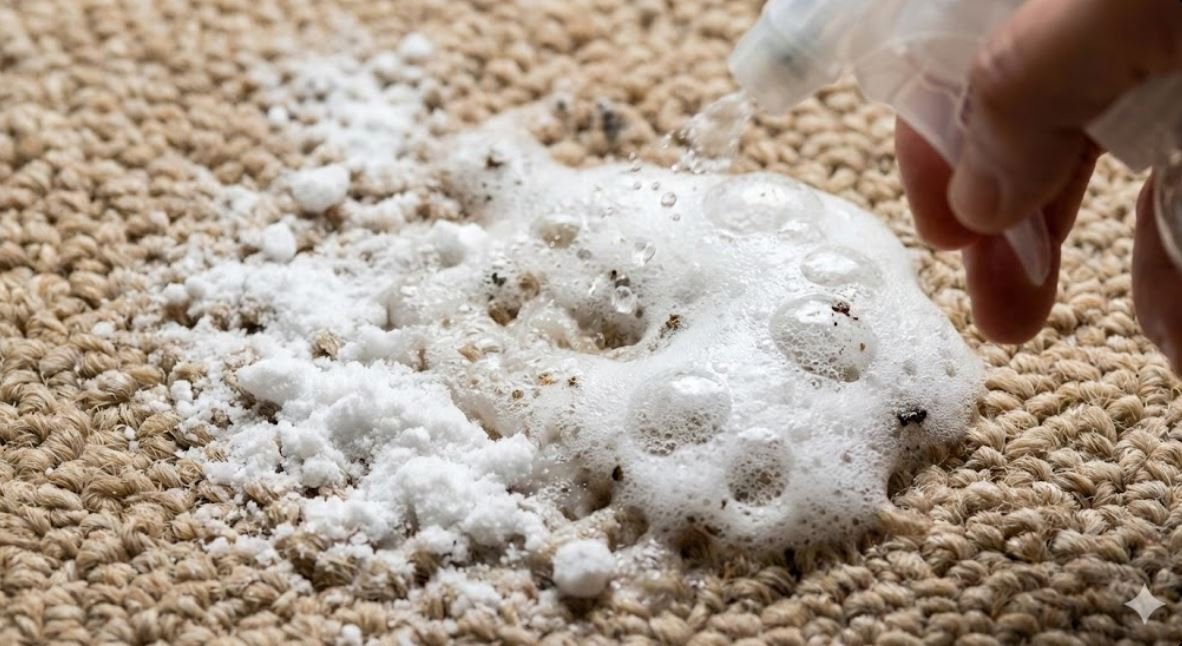
Baking soda and vinegar visibly fizz because sodium bicarbonate and acetic acid react and release carbon dioxide. However, the reaction largely neutralizes the two ingredients and does not provide the suction needed to remove dissolved soil. It can also leave powdery residue deep in the pile.
For odor control, dry baking soda may be used by itself on a dry, colorfast synthetic carpet if the carpet and vacuum manufacturers permit it. Apply a light dusting, leave it briefly, and vacuum thoroughly. Do not wet the powder, grind it into the backing, or use it on moisture-sensitive natural fibers.
Diluted white vinegar may be appropriate by itself for certain colorfast synthetic carpets, but it is not a universal cleaner. Never combine it with bleach, peroxide, ammonia, or another cleaning product.
Why the Steam Iron Hack Is Risky
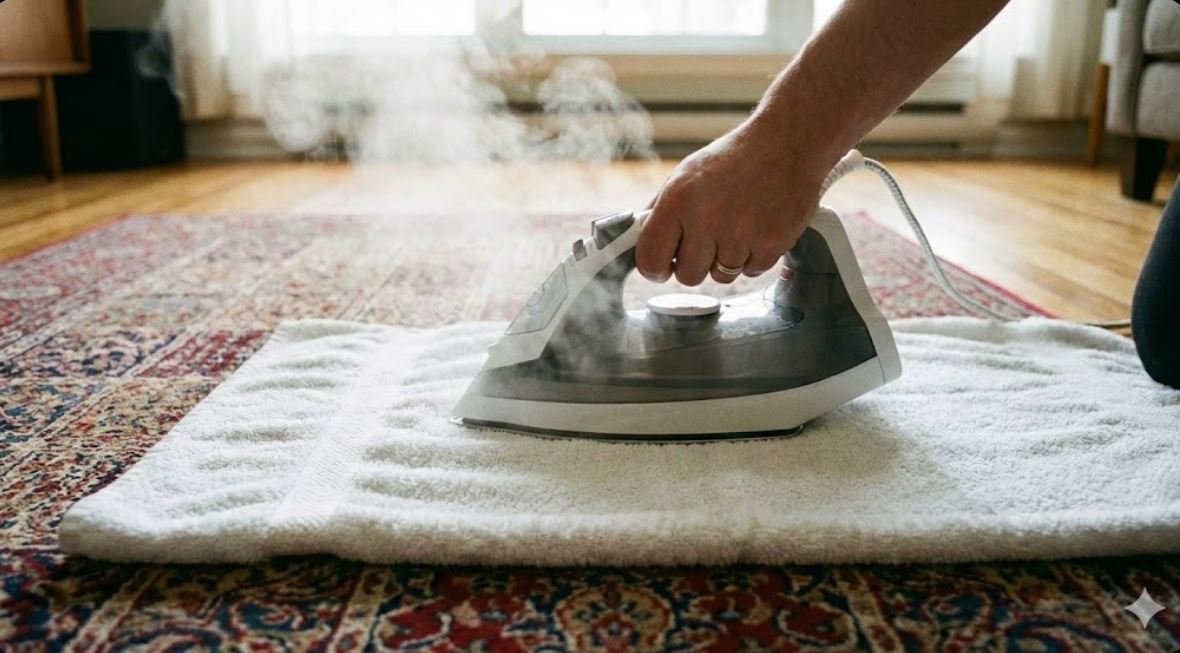
Although heat may transfer some material to a towel, placing an iron on carpet is not recommended. Heat can melt synthetic fibers, set protein-based stains, damage adhesive, distort the pile, or scorch natural fibers. Ammonia also presents odor and fiber risks and should not be heated.
Use repeated cool or lukewarm blotting instead. For wax or another material that may require a specialized heat-transfer process, follow the carpet manufacturer’s instructions or consult a professional.
Stain-Specific Cleaning Guide
Start with the gentlest suitable treatment. Use only one cleaner at a time, rinse out residue, and allow the spot to dry before deciding whether another treatment is necessary.
| Stain Type | Recommended Approach | Important Caution |
|---|---|---|
| Coffee/Tea | Blot immediately, then use diluted clear dish soap and rinse with a damp cloth. | Do not rub. Milk or cream in the drink may leave odor if residue remains. |
| Grease/Oil | Blot excess oil. On suitable dry synthetic carpet, apply dry baking soda separately, vacuum it up, and then blot with diluted dish soap. | Do not wet the baking soda or grind oily residue deeper into the pile. |
| Blood | Use cold water first. If needed, use a carpet product labeled for protein stains. | No heat. Peroxide can permanently lighten carpet dye and should not be used without label approval and a colorfastness test. |
| Pet Urine | Absorb as much liquid as possible, then use an enzymatic carpet cleaner exactly as its label directs. | Do not use ammonia or add another cleaner. Repeated odor may mean urine reached the pad or subfloor. |
Fresh Liquid Spills
Place a thick stack of white towels over the spill and press firmly. Replace the towels until little moisture transfers. Clean only after absorbing as much of the spill as possible.
Dried or Reappearing Stains
Lightly dampen the spot with plain water to soften removable residue, then blot with the diluted dish-soap solution. If a stain disappears while wet but returns during drying, soil may be wicking upward from the backing. Use less liquid, repeat the towel press, and dry more quickly. Persistent wicking usually requires extraction.
Pet Odors
An enzyme cleaner needs direct contact with the urine residue and must be used according to its label. Do not pre-treat the area with another cleaner, because residue can interfere with the product. If odor returns in humid weather, contamination may extend beyond the carpet fibers.
The Drying Protocol
Removing moisture is the most important limitation when cleaning carpet without machine suction. Overwet carpet can develop odor, dye migration, browning, delamination, and microbial growth.
- The Towel Press: Lay a dry towel over the spot and press or stand on it briefly. Replace it until moisture no longer transfers.
- Airflow: Point a fan across the damp area rather than straight down. Use a dehumidifier if the room is humid.
- Ventilation: Open windows only when outdoor air is drier than indoor air.
- No Traffic: Keep shoes, furniture, children, and pets off the carpet until it is fully dry.
- Final Vacuuming: Once dry, vacuum to lift the pile and remove loosened residue.
Check the carpet by pressing a dry paper towel firmly against it. Also feel underneath a movable rug. If either surface is cool or damp, continue drying. Seek professional help if the backing remains wet, a musty odor develops, or the affected area is larger than you can dry promptly.
Common Mistakes to Avoid
- Pouring cleaner directly onto the carpet: This can soak the backing before the surface looks wet.
- Using too much soap: Excess detergent is difficult to rinse manually and attracts soil.
- Scrubbing aggressively: Friction can spread stains and permanently distort the pile.
- Using hot water on unknown stains: Heat can set blood, dairy, egg, and other protein residues.
- Using colored towels: Dye can transfer from the towel to damp carpet.
- Replacing furniture too soon: Metal legs can rust and wood finishes can transfer to damp fibers.
- Combining treatments: Cleaning products can react unpredictably. Rinse and dry the area before considering a different product.
Aftercare and Prevention
- Vacuum high-traffic areas at least once or twice a week to prevent abrasive grit from becoming embedded.
- Blot spills immediately instead of waiting for them to dry.
- Use washable entry mats and remove outdoor shoes when practical.
- Rotate area rugs periodically so traffic and sunlight affect them more evenly.
- Place protective pads under furniture legs only after the carpet is completely dry.
- Store leftover cleaning products in their original labeled containers, away from children and pets.
Frequently Asked Questions
Is it really possible to clean a carpet without a machine?
Yes. Manual blotting can handle fresh spills, isolated stains, and light surface soil. It is less effective for heavily soiled rooms because it cannot rinse deeply or recover water as efficiently as an extraction machine.
What is the safest homemade carpet-cleaning solution?
For many colorfast synthetic carpets, start with 1/4 teaspoon of clear dishwashing liquid in 1 cup of lukewarm water. Test it in a hidden area, use it sparingly, and rinse by blotting with a separate cloth dampened with plain water. Wool and specialty fibers may require a manufacturer-approved product.
How do I clean carpet without a carpet cleaner if I have pets?
Absorb fresh urine first, then use an enzymatic carpet cleaner labeled for the carpet type. Follow its directions without adding vinegar, ammonia, soap, or another product. If odor returns, the urine may have reached the carpet pad or subfloor.
Why does the cleaned spot look darker after drying?
A dark outline can result from detergent residue, overwetting, or soil wicking from below. Blot with a minimally damp plain-water cloth, extract moisture with towels, and increase airflow. Stop adding liquid if the mark continues to return.
When should I call a professional?
Get professional help for widespread soil, recurring pet odor, unstable dyes, valuable rugs, wet padding, sewage or floodwater exposure, visible mold, or carpet that remains damp or smells musty despite active drying.
Everything Mentioned Above
Before you leave, grab the tools you need to get the job done right the first time:
*As an Amazon Associate, TidyFormula earns from qualifying purchases.