
How to Clean Stainless Steel Fridge Without Streaks (The Oil Hack)
Honestly, I didn’t realize how dirty my fridge had gotten until I caught it in the wrong light. Last Sunday I stood in my kitchen staring at it—greasy fingerprints by the handle, a weird smudge near the bottom (probably my dog), and streaks from my last “cleaning” attempt.
I tried the internet hacks. Windex left blue streaks, soapy water just smeared the grease, and a “specialty” stainless wipe smelled awful and left a sticky film. I was done.
So I tested a bunch of methods. Most failed—but one simple, slightly weird combo actually worked. How to Clean Stainless Steel Fridge Without Streaks? No streaks. No sticky residue. Just shine.
⚡ The TidyFormula™ Quick Answer
The Verdict: Clean the surface grime with vinegar first, then buff it with a tiny amount of oil to hide imperfections. Always wipe with the grain.
- The Mix: White Vinegar (for cleaning) + Olive Oil or Baby Oil (for polishing).
- Time: 10 Minutes.
- Effectiveness: 9/10 (The only way to get a true showroom finish).
The Setup: What You Actually Need
Put down the expensive sprays. You likely have this stuff in your pantry.
What I Use For This Job
Using the right tools saves time and protects your belongings. Here are my exact recommendations:
*As an Amazon Associate, TidyFormula earns from qualifying purchases.
- White Vinegar: In a spray bottle. (The cheap stuff is fine).
- Olive Oil or Baby Oil: You only need a drop. Literally.
- Microfiber Cloths: Two of them. One for cleaning, one for drying/buffing. Don’t use paper towels (they leave lint everywhere).
- A Critical Eye: To find the “grain” of the steel.
Step 1: Finding the “Grain” (The Secret Sauce)
Before you spray anything, look closely at your fridge door. You see those tiny, faint lines running through the metal? That’s the grain. It usually runs vertically (up and down) or horizontally (left to right).
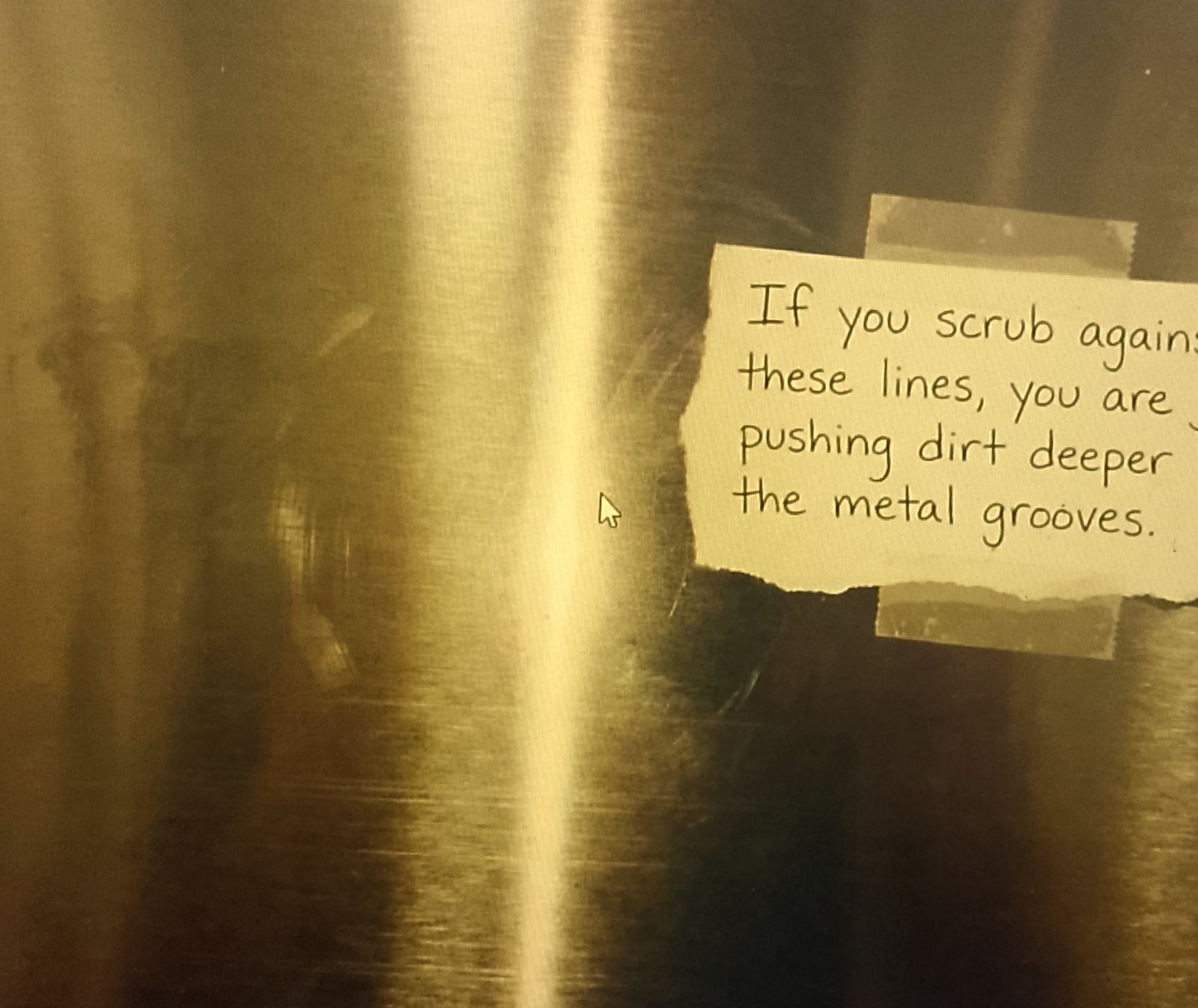
If you wipe against the grain, you will never get a streak-free finish. You’ll just leave residue trapped in those microscopic valleys. Always, always wipe parallel to the lines.
Step 2: Cleaning the Grime (The Vinegar Wash)
Oil polishes don’t clean; they just coat. If you put oil on a dirty fridge, you just seal the dirt in. We need to strip the surface first.
Spray the white vinegar generously onto the fridge door. Or, dampen your first microfiber cloth with it. (Don’t soak the floor.)
Wipe with the grain. The vinegar is acidic, so it cuts through the grease, ketchup splatters, and sticky fingerprints effortlessly. It will smell like a salad for a minute. Deal with it. It’s better than smelling like toxic fumes.
Wipe until the surface is clean and dry. It might look a little dull or streaky right now. That’s okay. We fix that next.
Step 3: Polishing with Olive Oil/Baby Oil (The Hydrophobic Layer)
This is the part that feels wrong but works so right.
Take your second, dry microfiber cloth. Put a tiny amount of olive oil or baby oil on the cloth. Tiny. Like, the size of a dime.
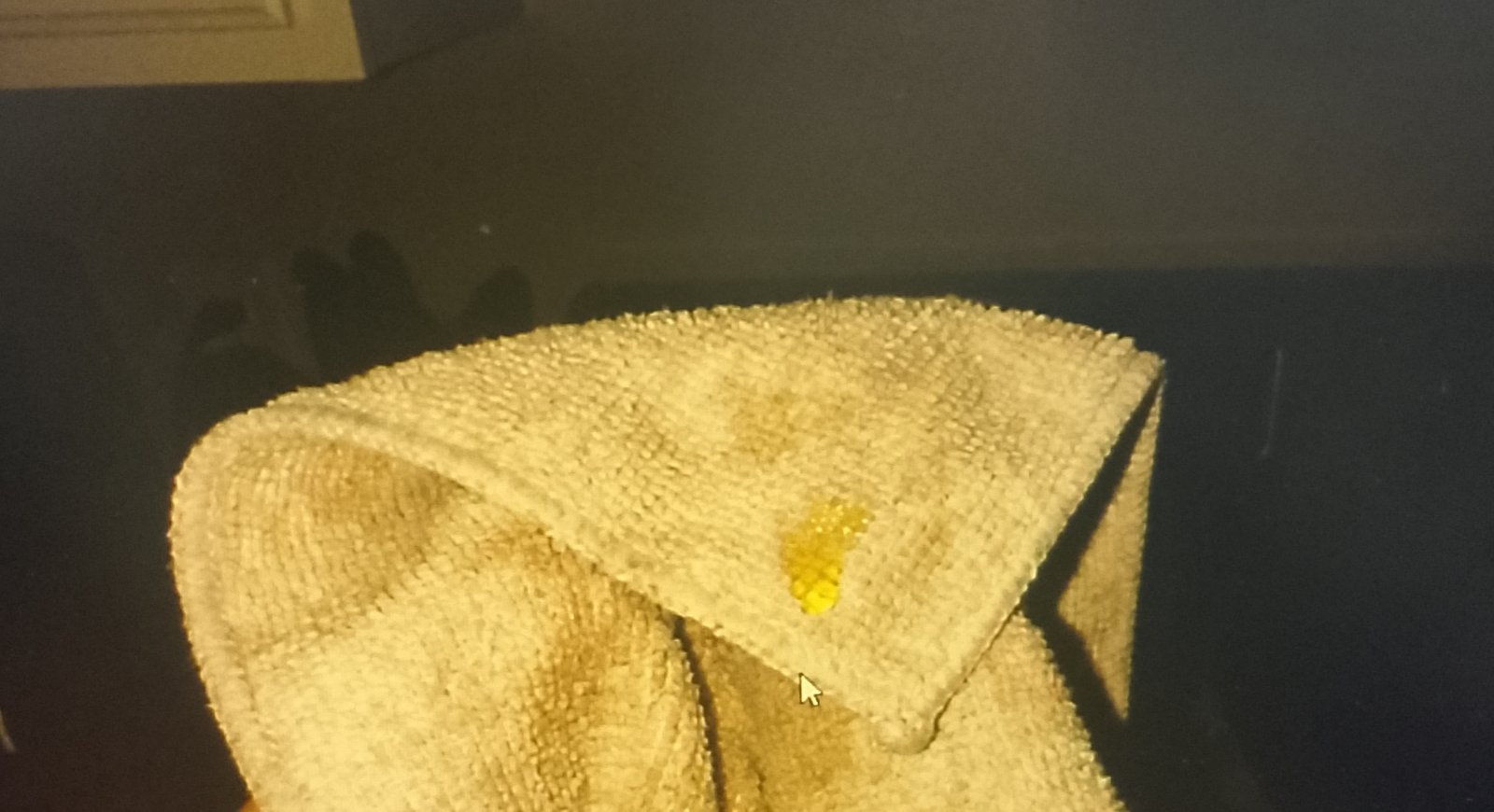
Buff the steel, moving with the grain. The oil fills in those microscopic grooves we talked about earlier. It hides minor scratches and creates a barrier against new fingerprints.
🧪 The Science: Why It Works
Stainless steel isn’t perfectly smooth; it has microscopic peaks and valleys. Light hits these uneven surfaces and scatters, making it look dull. The oil fills the valleys, creating a flat surface that reflects light uniformly (shine). Plus, oil is hydrophobic (repels water), so it prevents new smudges from sticking.
How to Clean Countertops Without Streaks
Since you have the supplies out, let’s talk countertops. If you have granite or quartz, do NOT use the vinegar. Acid eats natural stone sealants. Use warm soapy water instead.
But if you have stainless steel or laminate countertops, the streak struggle is real. The trick? Isopropyl Alcohol (Rubbing Alcohol).
Mix 50% water and 50% rubbing alcohol in a spray bottle. Spray and wipe. The alcohol evaporates almost instantly, leaving zero streaks behind. It’s faster than vinegar and sanitizes too. Just don’t use it near an open flame (obviously).
When This Method Fails (Reality Check)
Sometimes, you inherit a fridge that has been abused. If you have deep scratches or rust spots:
- Rust: Make a paste of baking soda and water. Gently rub the spot (with the grain!). Rinse well.
- Scratches: Oil hides them, but doesn’t fix them. For deep gouges, you need a specialized stainless steel scratch removal kit. Don’t try to sand it out yourself unless you want a ruined finish.
One Lazy Maintenance Tip
Keep a dry microfiber cloth draped over the fridge handle. When you’re waiting for the microwave or the coffee pot, just give the door a quick buff. It takes 5 seconds and keeps the oil layer active, preventing new fingerprints from setting in.
FAQ: The Skeptic’s Answers
1. Can I use Windex on stainless steel?
You can, but I wouldn’t. Windex often contains ammonia, which can damage the finish over time or leave a rainbow-colored haze. Stick to vinegar or alcohol.
2. Why does my fridge still look streaky after oiling?
You used too much oil. Grab a fresh, dry cloth and buff it again. You want a microscopic layer, not a salad dressing coating.
3. Will the olive oil go rancid?
Technically, yes, eventually. But the layer is so thin it usually dries out or gets wiped off before it smells. If you’re worried, use mineral oil or baby oil instead (they don’t spoil).
4. Can I use a paper towel?
No. Paper towels are wood pulp. They can leave tiny micro-scratches on polished steel. Plus, they leave lint. Use microfiber.
5. What about “fingerprint-resistant” stainless steel?
If you have this, skip the oil. These appliances have a clear coating on them already. Just clean with mild soap and water. Adding oil to them just makes a mess.
Everything Mentioned Above
Before you leave, grab the tools you need to get the job done right the first time:
*As an Amazon Associate, TidyFormula earns from qualifying purchases.