Clean the Floor: A Practical Guide to Floor Cleaning
The best way to clean a floor is to sweep or vacuum up loose debris first, then mop with a cleaner that’s appropriate for your specific floor type—using a damp mop rather than a soaking wet one for wood, laminate, or engineered materials, and rinsing tile or stone floors well to avoid a dull, cloudy residue. Always check your flooring manufacturer’s care instructions before choosing a product, since cleaners that work well on one surface can dull, warp, or damage another.
⚡ The TidyFormula™ Quick Decision
Best approach: Dry-clean first (sweep, dust mop, or vacuum), then damp-mop with a cleaner matched to your floor type, working in small sections and drying as you go.
Use caution with: Solid hardwood, engineered wood, and laminate floors, which can warp, swell, or dull with excess water or the wrong cleaning product; also natural stone, which may need a pH-neutral, stone-safe cleaner rather than a general all-purpose one.
Stop and reassess if: You notice standing water seeping into seams, a cleaner leaving a hazy film, new scratches appearing after cleaning, or your care label specifically warns against wet mopping or certain chemical types.
Start With the Right Prep
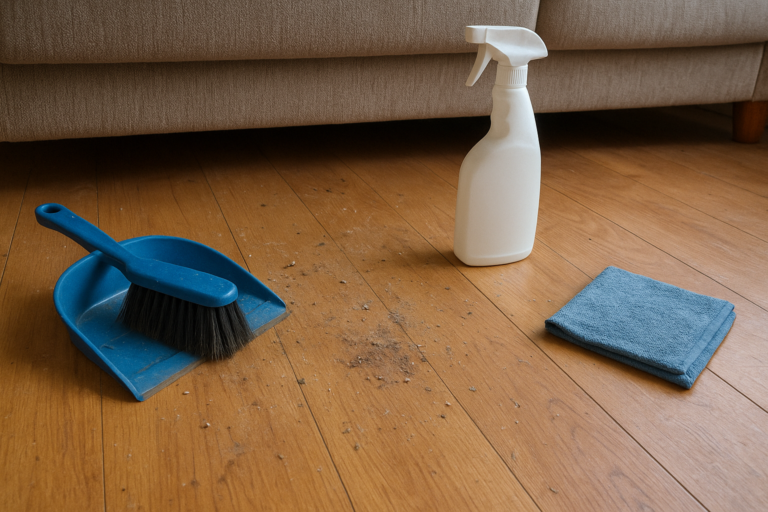
Most floor cleaning problems come from skipping preparation. Loose dirt, sand, and grit act like sandpaper under a mop or foot traffic, so removing them first protects your floor’s finish no matter what material you have.
What I Use For This Job
Using the right tools saves time and protects your belongings. Here are my exact recommendations:
*As an Amazon Associate, TidyFormula earns from qualifying purchases.
- Remove furniture or rugs from the area if practical, or work around them carefully.
- Sweep with a soft-bristle broom or use a vacuum with a hard-floor or bare-floor setting to lift dust, hair, and grit.
- Pay extra attention to corners, along baseboards, and under furniture edges where debris collects.
- Check your floor’s care label or manufacturer guide for any specific do’s and don’ts before applying a wet cleaner.
Choosing a Cleaner for Your Floor Type
Floor cleaning products are not universal, and using the wrong one can cause streaking, dullness, or long-term damage. Consider your material before reaching for a bottle. If you have pets, our pet safe floor cleaner for hardwood floors guide has practical advice on pet-friendly options and routines.
Hardwood and Engineered Wood
Excess moisture is generally the biggest concern with wood floors. Many manufacturers recommend a well-wrung, barely damp mop rather than a wet one, along with a cleaner formulated specifically for wood or engineered flooring. Avoid letting water pool in seams or along edges, and check your manufacturer’s instructions, since some finishes have specific product restrictions. For step-by-step technique tailored to wood finishes, see How to Clean Hardwood Floors without Streaks.
Laminate
Laminate has a printed layer under a protective coating, and too much water can cause the core to swell or the seams to lift over time. A lightly damp mop and a laminate-safe cleaner, used according to the label, are typically the more cautious route. Steam mops are not appropriate for all laminate products, so check your manufacturer’s guidance first. For tips that focus on avoiding dull films and residue, read How to Clean Laminate Floors without Leaving Film.
Tile and Grout
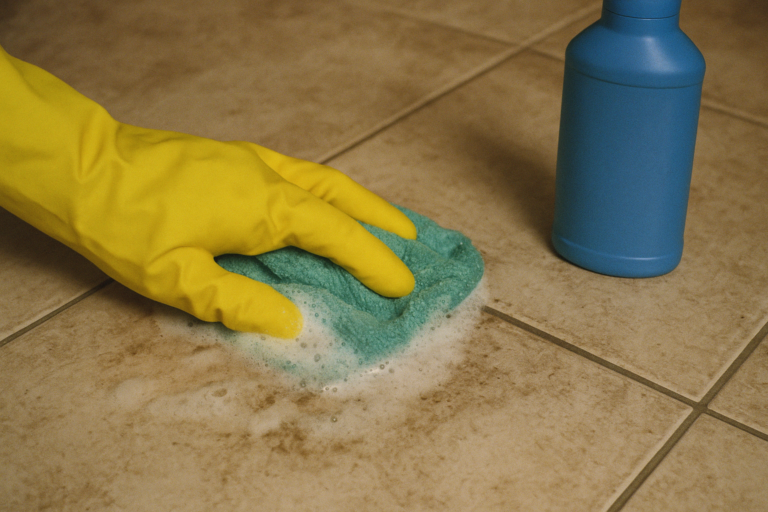
Ceramic and porcelain tile are generally more water-tolerant than wood-based floors, but grout lines can hold onto dirt and cleaning residue if not rinsed thoroughly. A mop-and-rinse approach, changing your rinse water as it gets dirty, helps avoid a hazy film. For grout and tile residue problems—especially sticky or cloudy buildup—see How to Remove Sticky Residue from Tile Floor. For grout, a soft brush can help lift dirt from the lines without scrubbing away sealant.
Natural Stone
Marble, granite, travertine, and other natural stone can be sensitive to acidic or highly alkaline cleaners, which may etch or dull the surface over time. A pH-neutral cleaner labeled safe for natural stone is generally the more cautious choice, and it’s worth checking with your stone supplier or installer if you’re unsure about sealant compatibility. If you prefer gentler options, our non toxic cleaning routine for the whole house outlines low‑risk cleaners and when to avoid acids on stone.
Vinyl and Luxury Vinyl Plank
Vinyl flooring is usually fairly water-resistant, but harsh solvents or abrasive scrubbing pads can dull the surface or damage the wear layer. A manufacturer-approved vinyl floor cleaner and a soft mop head are typically the safer combination. For guidance on removing scuffs and rubber marks from vinyl surfaces, check How to Remove Black Marks from Vinyl Flooring.
Step-by-Step Mopping Process
- Fill your mop bucket according to your cleaning product’s label instructions.
- Dip the mop, then wring it well—damp is usually better than dripping wet for most floor types.
- Work in small, manageable sections, starting from the far corner of the room and moving toward the exit.
- Rinse the mop head periodically in clean water if you’re using a rinse-and-mop method, especially on tile or stone.
- Change your water when it looks visibly dirty rather than continuing to spread soiled water around.
- Allow each section to air dry, or use a dry microfiber cloth or towel to speed drying and reduce streaking.
Troubleshooting Common Issues
Streaks or Cloudy Film
This is often caused by using too much cleaning product, not rinsing thoroughly, or mopping with dirty water. Try a follow-up pass with plain water on a clean mop head, then dry the floor promptly.
Sticky Residue
A sticky floor after cleaning can result from using more cleaner than the label recommends or not rinsing sufficiently. Diluting according to the product’s instructions and following up with a clean-water rinse can help. If residue persists on tile or grout, see How to Remove Sticky Residue from Tile Floor for targeted fixes.
Scuff Marks
Scuffs from shoes or furniture legs may lift with a soft cloth and a small amount of your regular floor cleaner. Avoid abrasive pads on finished wood, laminate, or vinyl, since they can scratch the surface.
Drying and Aftercare
Standing moisture is one of the more common causes of floor damage, particularly for wood and laminate. After mopping, open windows or run a fan to help air circulation, and avoid walking on the floor with heavy foot traffic until it’s dry to reduce the chance of slipping or tracking dirt back onto a clean surface.
Preventing Buildup Between Cleanings
- Use doormats at entry points to reduce the amount of dirt and grit tracked indoors.
- Sweep or vacuum high-traffic areas a few times a week rather than waiting for visible dirt to build up.
- Wipe up spills promptly, especially on wood or laminate, where moisture sitting too long can cause damage.
- Consider felt pads under furniture legs to reduce scratching during regular cleaning or rearranging.
When to Call a Professional
If your floor has deep scratches, warping, lifting seams, or a finish that looks worn through in high-traffic areas, routine cleaning alone likely won’t resolve the issue. A flooring professional can advise whether refinishing, resealing, or replacement is the more practical option based on the material and its condition.
Everything Mentioned Above
Before you leave, grab the tools you need to get the job done right the first time:
*As an Amazon Associate, TidyFormula earns from qualifying purchases.