how to clean toys after poop in tub
The first time I had to figure out how to clean toys after poop in tub water, I made the classic mistake of draining the bath too quickly. That left several toys sitting directly on the mess at the bottom. Not my finest cleaning moment.
The job is unpleasant, but the method is straightforward: remove the mess, wash away every visible trace, disinfect compatible toys, rinse them, and let them dry completely. Hollow toys need extra attention because dirty water can hide inside them (and nobody wants to discover that during tomorrow’s bath).
Here is how to clean toys after a baby poops in the bath without damaging every duck, cup, and plastic boat in the process.
⚡ The TidyFormula™ Quick Answer
The Fix: Remove the toys, wash them thoroughly with dish soap and water, disinfect hard nonporous toys with a properly diluted bleach solution or label-approved disinfectant, rinse well, and dry completely.
What You Will Need
- Disposable gloves
- Paper towels or a disposable scoop for removing solid waste
- A clean plastic basin or bucket
- mild dish soap
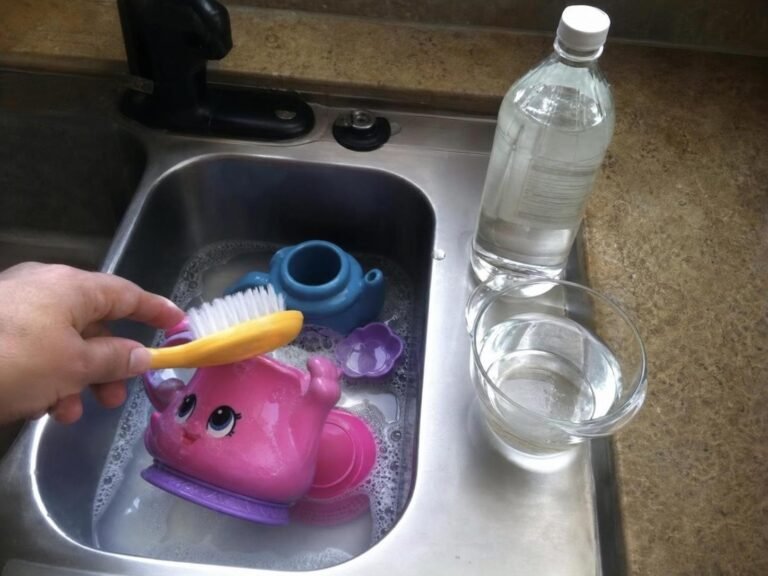
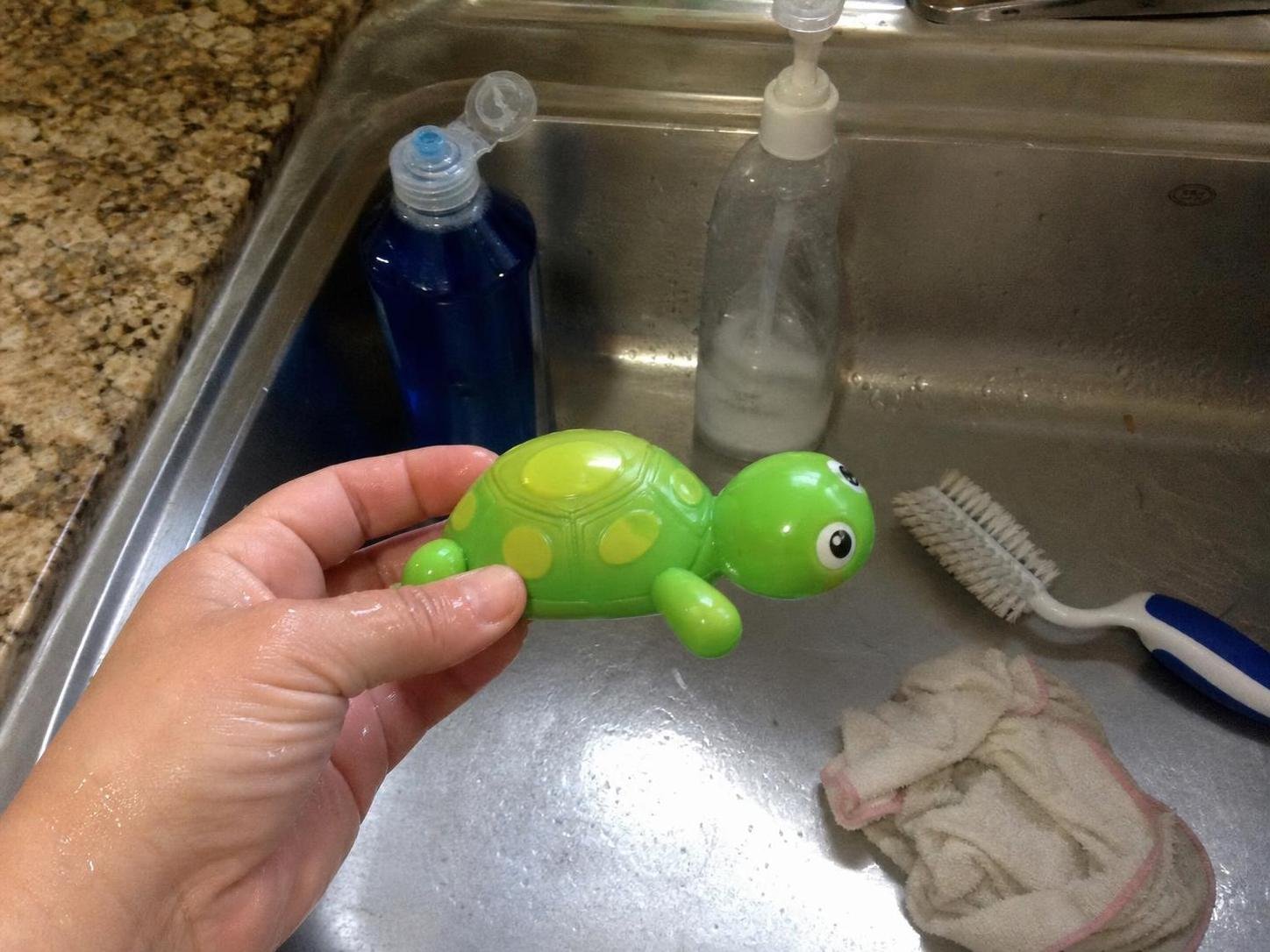
- A small cleaning brush or old toothbrush
- Regular unscented household bleach containing 5% to 9% sodium hypochlorite, or another toy-compatible disinfectant
- Measuring spoons or a measuring cup reserved for cleaning
- Clean water for rinsing
- A clean towel or drying rack
A small brush is especially useful around seams and textured areas. I keep one marked “bath cleaning” so it never gets confused with a toothbrush.
What I Use For This Job
Using the right tools saves time and protects your belongings. Here are my exact recommendations:
*As an Amazon Associate, TidyFormula earns from qualifying purchases.
Do not mix bleach with vinegar, ammonia, bathroom cleaner, or any other product. Skip boiling water unless the toy manufacturer specifically allows it; high heat can warp plastic, loosen glued parts, and damage paint. Vinegar can help with mineral deposits, but I would not rely on it as the disinfecting step after fecal contamination.
Step-by-Step Cleaning Method
1. Remove the child and collect the toys
- Take the child out of the bath and place all affected toys in a separate basin.
- Put on disposable gloves.
- Use paper towels or a disposable scoop to remove solid waste from the tub.
- Drain the water only after the bulk of the mess has been collected.
Keeping the toys contained prevents dirty water from dripping through the bathroom. It also gives you a clear group of items that still need attention.
2. Sort the toys before washing
- Separate solid plastic and silicone toys from electronic, wooden, fabric, foam, or damaged toys.
- Check hollow squeeze toys for water inside.
- Set aside anything with cracks, peeling paint, split seams, or inaccessible internal spaces.
If dirty bath water entered a hollow toy and you cannot open, scrub, rinse, and dry the interior, replacement is usually the sensible choice. Repeated squeezing does not reliably clean every internal surface. For routine maintenance after this incident, our guide to getting bath toys clean inside and out explains how to deal with trapped water and buildup.
3. Remove all visible contamination
- Rinse each washable toy under running water.
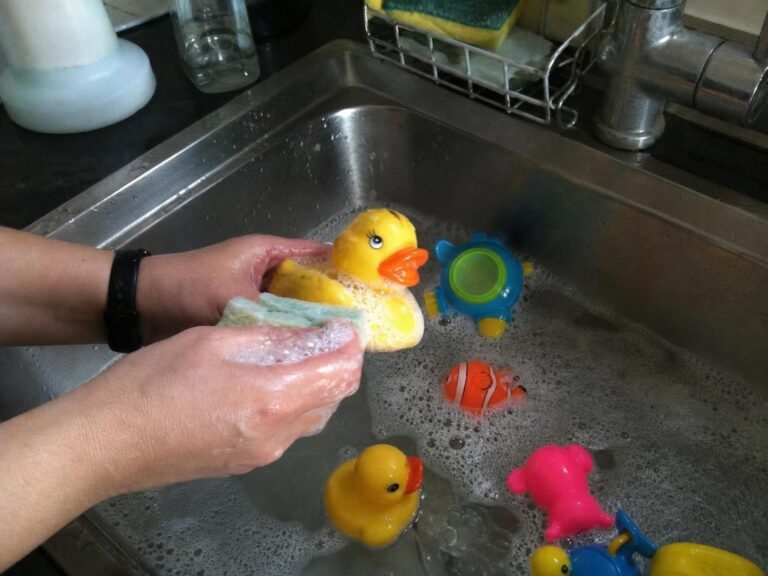
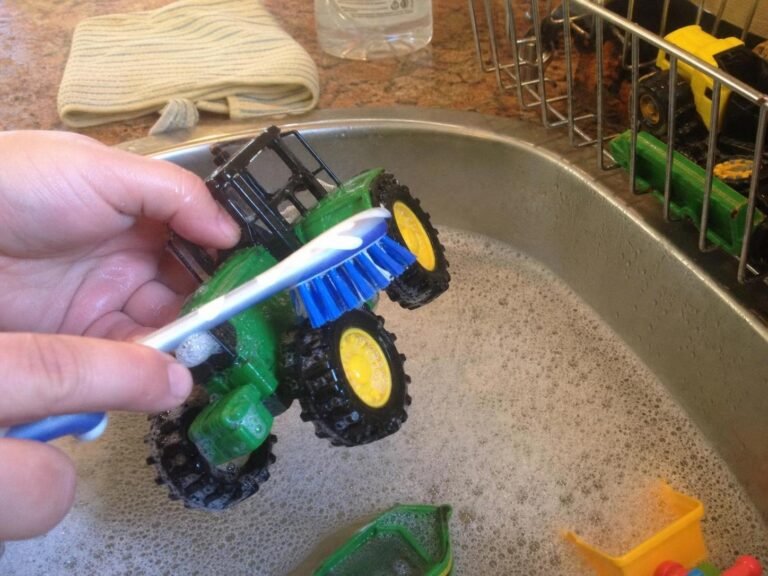
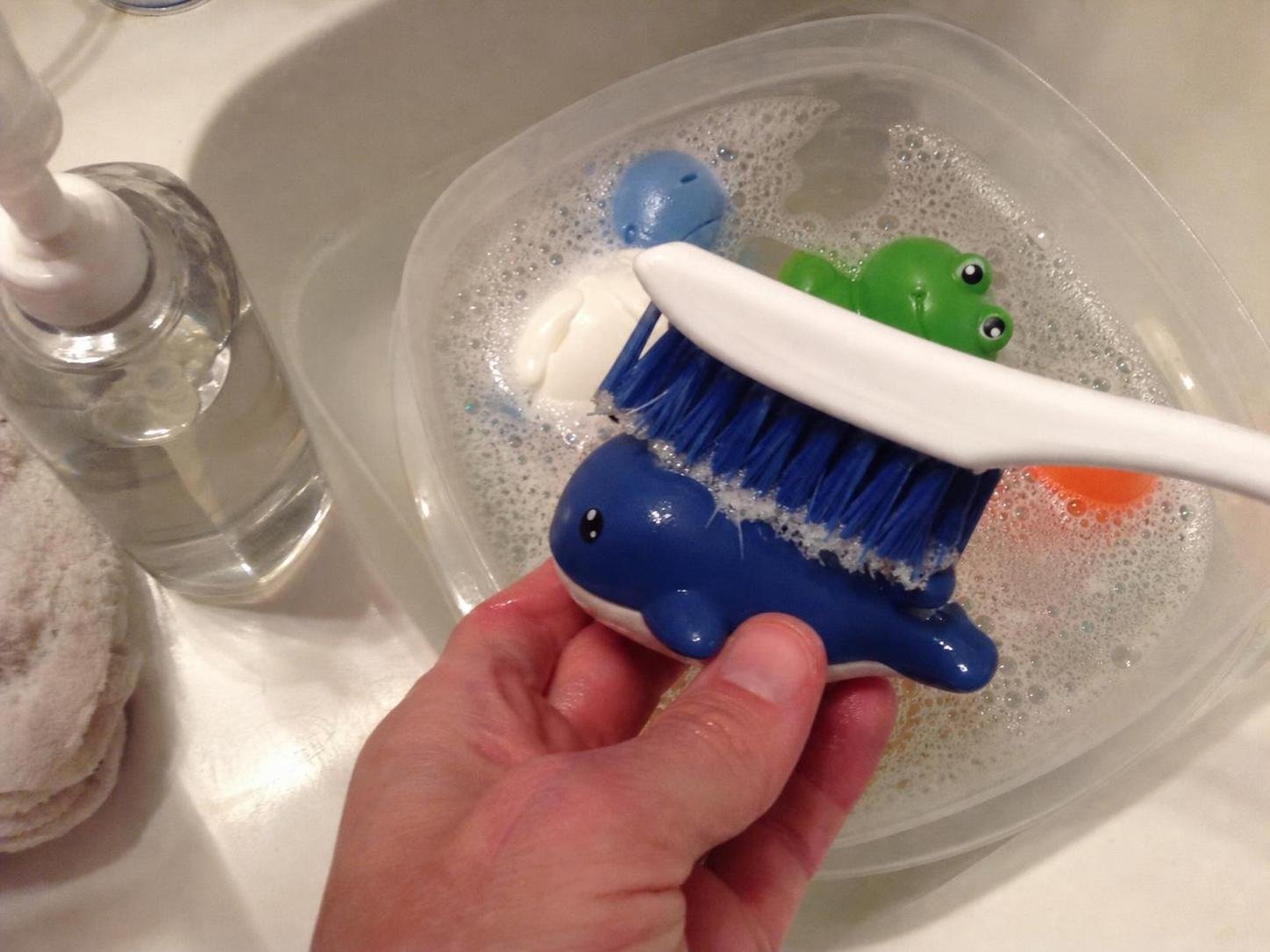
- Apply dish soap and scrub every surface, including seams, holes, handles, and textured sections.
- Squeeze soapy water through any toy opening only if the inside can be rinsed and dried afterward.
- Continue until there is no visible residue or slippery film.
Visible soil removal must happen before disinfection. A disinfectant cannot work evenly when grime is covering the surface. If you still see residue in a seam, keep washing rather than moving on.
4. Disinfect hard, nonporous toys
- Check the toy’s care instructions first. Do not submerge battery-operated toys or toys with sound boxes.
- If the manufacturer provides disinfecting directions, follow those directions.
- If using bleach without product-specific directions, prepare a fresh solution using 4 teaspoons of regular unscented household bleach per quart of room-temperature water, or 5 tablespoons per gallon.
- Apply the diluted bleach solution to the cleaned surfaces or soak fully submersible toys.
- Keep the surfaces visibly wet for at least one minute, unless the bleach label specifies a different contact time.
- Rinse toys thoroughly with clean water, especially toys that children may place in their mouths.
Make the bleach mixture fresh and work with ventilation. The CDC guidance for cleaning and disinfecting a home also recommends checking bleach concentration, using room-temperature water, and never mixing disinfectants.
5. Handle toys that cannot be soaked
- For electronic toys, wipe away contamination with a soapy cloth that is damp rather than dripping.
- Wipe again using a manufacturer-approved disinfecting product, keeping liquid away from openings.
- For washable fabric toys, follow the care label and use the warmest suitable wash setting with detergent.
- Discard badly contaminated porous toys when they cannot be washed thoroughly or disinfected without damage.
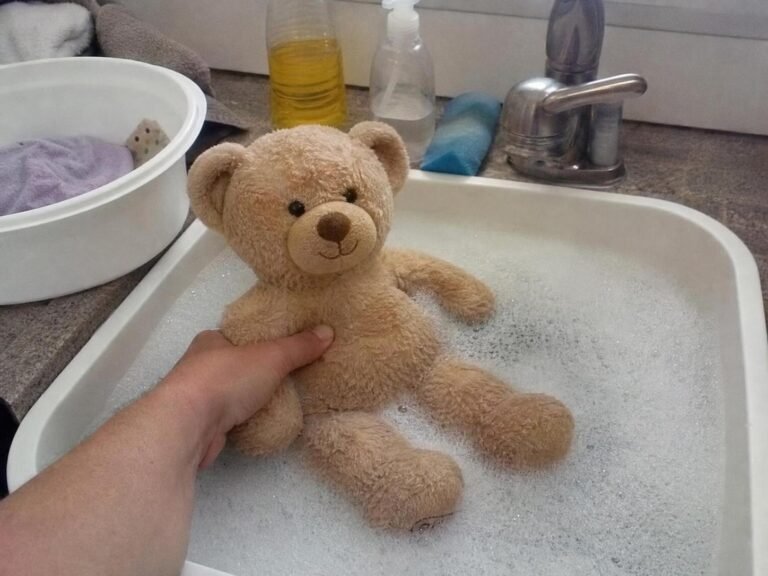
If a soft toy somehow joined the bath-time chaos, use a material-appropriate method. Our instructions for cleaning plush toys without a washing machine can help with surface cleaning, although direct fecal contamination may call for full laundering or replacement.
6. Clean the tub and washing basin
- Wash the bathtub with soap or bathroom cleaner to remove remaining residue.
- Rinse, then disinfect the tub with a compatible product according to its label.
- Clean and disinfect the basin, brush, and any reusable tools used during the job.
- Remove gloves and wash your hands thoroughly with soap and water.
Do not put cleaned toys back into a basin that has not been washed. I have done that while rushing, and it simply turns one cleaning job into two.
🧪 Why This Works
Think of cleaning and disinfecting as washing a muddy plate before sanitizing it. Soap and scrubbing lift away the material covering the surface; the disinfectant can then reach the cleaned toy evenly. Rinsing removes remaining cleaner, while thorough drying prevents water from sitting in seams and hollow spaces.
Which Method Fits Each Toy?
| Toy type | Recommended approach | What to avoid |
|---|---|---|
| Solid plastic or silicone | Wash, disinfect according to label directions, rinse, and dry | Boiling unless specifically permitted |
| Hollow squeeze toy | Clean inside only if it can be opened or fully flushed and dried | Keeping it when contaminated water remains trapped |
| Electronic bath toy | Wipe with soapy water and a compatible disinfectant | Submerging batteries, speakers, or charging ports |
| Fabric or foam toy | Launder according to the care label when possible | Surface wiping when contamination has soaked through |
| Wooden toy | Follow the manufacturer’s care directions and keep water exposure brief | Long soaking, which can cause swelling or splitting |
Common Mistakes to Avoid
Disinfecting without washing first
Spraying disinfectant directly over visible contamination is not an effective shortcut. Soap, water, and physical scrubbing need to remove the mess first.
Guessing the bleach amount
More bleach is not automatically better. An overly strong mixture can discolor toys, irritate skin through leftover residue, and create strong fumes. Measure it and follow the product label.
Mixing bleach and vinegar
Never combine these products. Mixing bleach with acids or ammonia can create dangerous fumes. Use one compatible product, rinse as directed, and keep the room ventilated.
Ignoring toy openings
A toy may look spotless outside while contaminated water remains inside. If you cannot inspect and clean the internal cavity, do not return that toy to the bath.
Using the dishwasher without checking the label
Some sturdy toys tolerate the top rack, while others warp, fade, or collect dishwasher detergent internally. Wash off visible contamination first and use the dishwasher only when the manufacturer says the toy is dishwasher-safe. For more material-specific options, see our guide to cleaning toys in the bathtub safely.
Putting toys away while damp
A closed bin traps moisture around holes and seams. Even a freshly cleaned toy can become musty if it is stored wet.
Drying and Storage After Cleaning
Shake excess water from every toy, then place the items in a single layer on a clean towel or drying rack. Position cups and boats upside down so water can drain. Stand squeeze toys with their openings facing downward.
Allow plenty of time for complete air drying. Solid toys may dry within several hours, while toys with seams or internal channels can take overnight or longer. If water still comes out when a toy is squeezed, it is not ready for storage.
Before the next bath, check for cleaner odor, slick residue, trapped water, or discoloration. Rinse again if you notice residue. Store dry toys in a ventilated basket rather than a sealed container, and keep the basket outside the splash zone when possible.
My Practical Pro Tip
After rinsing a hollow toy, press its opening against a folded white paper towel and squeeze. Any remaining colored residue or cloudy water shows up quickly against the white surface. If repeated flushing does not produce clear water, I retire the toy instead of spending another half hour fighting with it.
Frequently Asked Questions
Do I need to throw away every toy after a poop accident?
No. Solid, intact, nonporous toys can usually be washed, disinfected, rinsed, and dried. Discard toys when contaminated water is trapped inside or the material cannot be cleaned properly.
Can I clean the toys with vinegar instead of bleach?
Vinegar is useful for some soap scum and mineral deposits, but it is not my choice for disinfecting toys after fecal contamination. Use a disinfectant suitable for the toy and follow its label. Never mix vinegar with bleach.
Can bath toys go in the dishwasher after a poop accident?
Only if the manufacturer identifies them as dishwasher-safe. Remove all visible contamination first, place suitable toys securely on the top rack, and make sure hollow items do not retain detergent or dirty water.
What should I do if poop water got inside a squirt toy?
Open and scrub the toy if it was designed to come apart. If the interior cannot be inspected, fully rinsed, disinfected, and dried, replacement is the safer practical option.
How long should I wait before using the toys again?
Use them again only after they have been thoroughly rinsed and are completely dry, with no chemical smell, slippery residue, or water trapped inside.
When a bath-time accident happens, focus on the order: remove the mess, wash thoroughly, disinfect compatible surfaces, rinse, and dry. The final reminder is simple—if a toy hides contaminated water where you cannot reach it, replacing that toy is usually easier and more reliable than trying to rescue it.
Everything Mentioned Above
Before you leave, grab the tools you need to get the job done right the first time:
*As an Amazon Associate, TidyFormula earns from qualifying purchases.