How to Remove Odor from a Shoe Rack
The fastest way to remove odor from a shoe rack is to wipe every surface with a mild solution of warm water and a small amount of dish soap or baking soda, then let the rack dry completely before shoes go back on it. The material of the rack (wood, metal, plastic, or fabric-covered mesh) determines exactly how much moisture and scrubbing is safe.
If the smell keeps coming back within a day or two, the odor is likely trapped in the shoes themselves rather than the rack, which changes how you should approach the cleanup.
⚡ The TidyFormula™ Quick Decision
Best approach: Wipe down the rack with a mild soap-and-water solution or a light baking soda paste, then dry it fully before returning shoes to the shelves.
Use caution with: Unfinished or unsealed wood, particleboard, and fabric-covered racks, which can absorb moisture and hold odor instead of releasing it.
Stop and reassess if: The smell returns within a day, the rack shows soft or discolored wood, or you notice a musty smell that suggests dampness trapped inside the material rather than surface odor.
What I Use For This Job
Using the right tools saves time and protects your belongings. Here are my exact recommendations:
*As an Amazon Associate, TidyFormula earns from qualifying purchases.
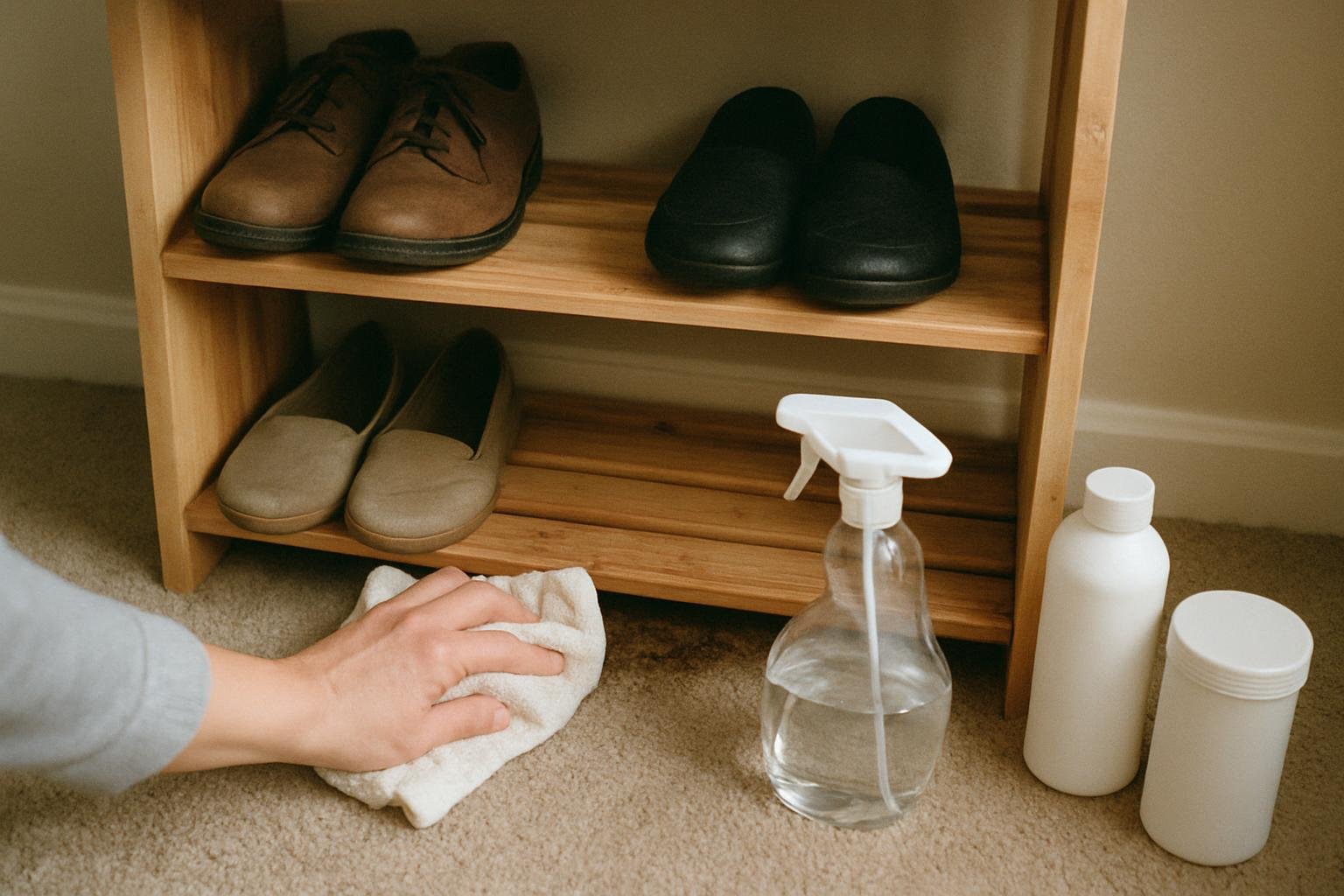
Figure Out Where the Odor Is Actually Coming From
Before you clean the rack itself, it helps to know whether the smell is coming from the shoes, the rack surface, or moisture sitting underneath the shoes. A rack that smells musty even when empty usually has odor built into its material. A rack that only smells bad when shoes are on it is often just reflecting odor from the footwear, and cleaning the rack alone won’t solve the problem long term.
Check the Material Before You Clean
Shoe racks are made from a range of materials, and each one tolerates cleaning differently.
- Sealed or painted wood can usually handle a lightly damp cloth, but standing water or heavy scrubbing can strip the finish or cause swelling at the seams.
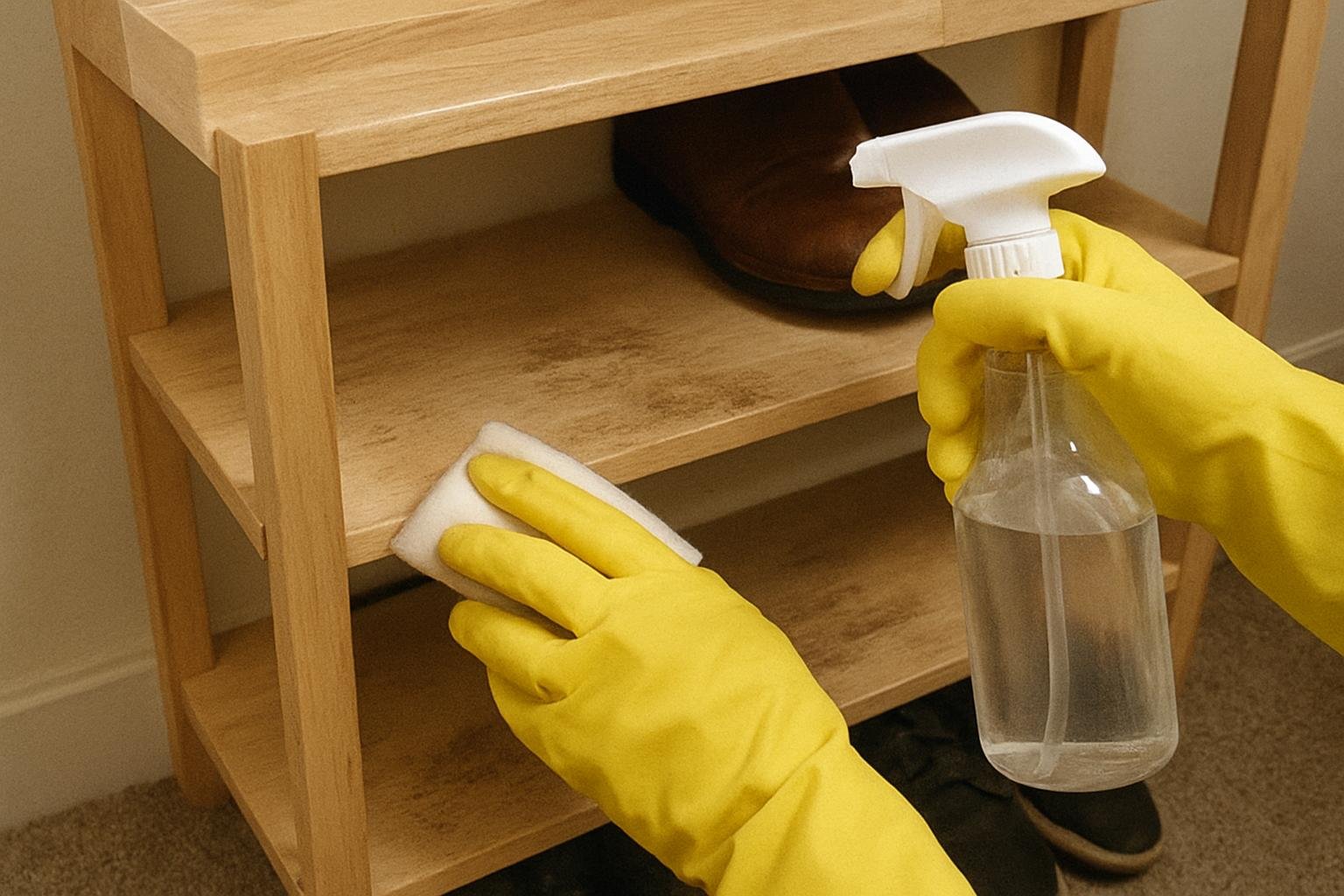
- Unfinished or particleboard wood is porous and absorbs moisture easily. Use the least amount of liquid possible, and avoid soaking any part of it.
- Metal racks tolerate soap and water well, though you should dry them fully afterward to avoid rust at joints and welds.
- Plastic or resin racks are the easiest to clean and can generally handle a damp cloth or light scrubbing without concern.
- Fabric-covered or mesh shelving may be removable on some models. If so, check whether the fabric is washable before treating it the same way you would a solid surface.
When in doubt about a specific finish or fabric, test your cleaning solution on a small hidden area first and check for discoloration or texture changes before treating the whole rack.
Step-by-Step: Cleaning the Rack Itself
- Remove all shoes and set them aside so you can access every shelf and corner.
- Vacuum or brush off loose debris, dust, and dried dirt. This keeps you from grinding grit into the surface once it’s wet.
- Mix a mild cleaning solution. Warm water with a small amount of dish soap works for most materials. For lingering odor on sealed wood, metal, or plastic, a light paste of baking soda and water can help lift odor from the surface.
- Wipe down each shelf and support bar with a damp (not soaked) cloth, working in sections so nothing sits wet for long.
- Rinse the cloth and go over the rack again with plain water to remove soap residue, which can otherwise attract dust and trap smells later.
- Dry the rack completely before putting shoes back. Open a window, use a fan, or move the rack to a well-ventilated spot. This step matters more than the cleaning itself, since trapped moisture is one of the main reasons odor returns.
When the Odor Is Coming From the Shoes, Not the Rack
If you clean the rack and the smell returns almost immediately, the shoes are likely the source. In that case, treating the rack alone won’t solve much. Removing insoles for airing, letting shoes fully dry between wears, and storing damp shoes elsewhere until they’re dry can prevent the smell from transferring back onto a freshly cleaned rack.
Cleaning Mistakes That Make Odor Worse
- Soaking unfinished wood or particleboard instead of using a light, damp wipe. Excess moisture gets absorbed and can lead to a musty smell days later.
- Skipping the drying step. Returning shoes to a still-damp rack traps moisture against the shelf and often makes odor worse than before cleaning.
- Using strong solvents or heavily scented sprays to mask odor instead of addressing the moisture or buildup causing it. This can hide the smell temporarily without solving the underlying issue.
- Ignoring the space under and behind the rack, where dust, moisture, and debris can collect and contribute to lingering smell even after the shelves themselves are clean.
Preventing Odor From Coming Back
A shoe rack tends to hold odor when moisture, dust, and worn footwear sit together in a closed space with little airflow. A few habits make a noticeable difference:
- Let damp or sweaty shoes air out for a few hours before placing them back on the rack.
- Keep the rack in a spot with some air circulation rather than a tightly closed cabinet whenever possible.
- Wipe down the rack every few weeks rather than waiting until odor becomes noticeable. Adding this to your regular routine is easier if it’s part of a broader household cleaning checklist you already follow.
- Rotate or air out shoes that get heavy daily use, since these tend to introduce the most moisture and odor to a shared rack.
If you’ve cleaned the rack, addressed shoe moisture, and improved airflow but the smell keeps returning, especially with a musty rather than sweaty character, it may point to trapped dampness inside the material itself. At that point, checking whether the rack’s location has a broader humidity issue is a more useful next step than repeating the same cleaning method.
Everything Mentioned Above
Before you leave, grab the tools you need to get the job done right the first time:
*As an Amazon Associate, TidyFormula earns from qualifying purchases.