
How to Clean a Baseball Cap the Right Way
The safest way to clean most baseball caps is by hand, using a soft brush, mild soap, and cool water, then reshaping the cap and air-drying it away from direct heat. Avoid tossing structured caps in the washing machine or dishwasher, since the heat, agitation, and moisture can warp the brim, loosen the fabric, or damage the adhesive that holds the shape. (For a conservative no-soak approach to hat care, see How to Clean a Hat Without Ruining It.)
⚡ The TidyFormula™ Quick Decision
Best approach: Hand-clean structured caps with a soft cloth or brush, mild soap, and cool water, spot-treating stains and rinsing gently to protect the brim shape and fabric.
Use caution with: Vintage, leather, wool, or heavily embellished caps, as well as any cap with a cardboard-stiffened brim, since moisture and machine washing can cause warping, color loss, or separation of layers.
Stop and reassess if: The cap has loose stitching, a peeling logo, visible cardboard exposure inside the brim, or a care tag warning against washing—these signs suggest a gentler method or professional cleaning may be a better fit than a full wash.
Check the Cap Before You Start
Before cleaning, look at the inside of the brim and the sweatband. Many caps, especially fitted styles, have a care tag or printed instructions near the adjustment strap. If a tag specifies hand-wash only, spot-clean only, or dry-clean, follow that guidance over general advice, since materials and construction vary widely between brands and models.
What I Use For This Job
Using the right tools saves time and protects your belongings. Here are my exact recommendations:
*As an Amazon Associate, TidyFormula earns from qualifying purchases.
Also check the brim itself. Some caps use a stiff cardboard insert, while others use plastic or fabric-covered plastic. Cardboard brims are more sensitive to water and can lose their shape or develop soft spots if soaked, so these caps generally call for a lighter touch. For wool or wool-blend caps, take extra precautions to avoid shrinkage—this is similar to the care needed for wool rugs; see How to Clean a Wool Rug without Shrinking for wool-safe handling tips.
Materials You’ll Likely Need
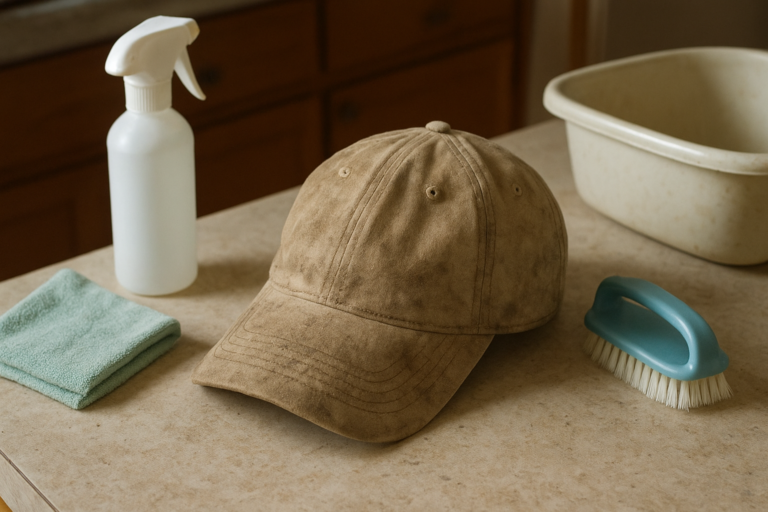
- Soft-bristle brush or a clean, soft toothbrush
- Mild soap or a gentle detergent
- Cool water
- Soft, lint-free cloths
- A bowl or basin
- A cap-shaped form or a bowl to help with drying (optional)
Skip bleach-based products on colored or logo-printed caps unless the care label specifically allows it, since bleach can fade colors or damage printed graphics. Never mix cleaning products together, and always test any cleaner on a hidden area first.
How to Hand-Clean a Baseball Cap
- Dust off loose dirt. Brush the cap gently with a dry soft brush to remove surface dust and debris before introducing any moisture.
- Mix a mild cleaning solution. Combine a small amount of gentle soap with cool water in a bowl. Avoid hot water, which can affect certain dyes and adhesives.
- Spot-test first. Dab a small hidden area, such as the inside of the brim or under the adjustment strap, to check for color transfer or fabric changes. (If you want more guidance on spot-testing and fabric codes for upholstery-like materials, see How to Clean a Fabric Office Chair.)
- Clean the exterior. Dip your brush or cloth into the solution and gently work it over the cap in small circular motions, focusing on the sweatband and any visibly soiled areas.
- Rinse carefully. Use a clean, damp cloth to wipe away soap residue. Avoid saturating the brim, especially if it contains cardboard.
- Blot excess moisture. Press a dry towel against the cap to absorb water rather than wringing or twisting the fabric.

Treating Stains and the Sweatband
The sweatband often shows the most wear from oils and sweat. A slightly stronger concentration of mild soap applied directly to this area, followed by gentle scrubbing and a thorough rinse, can help with everyday grime. For stubborn stains, repeat the spot-cleaning process rather than increasing water temperature or scrubbing aggressively, since excessive force can wear down fabric or logos.
If a stain persists after a couple of gentle attempts, it may be worth accepting some fading rather than risking further damage to the cap’s structure or print.
Can You Machine Wash a Baseball Cap?
Some unstructured or soft caps may tolerate a gentle machine cycle inside a mesh laundry bag, but this depends heavily on the manufacturer’s care instructions and the cap’s construction. Structured caps with stiffened brims are generally poor candidates for machine washing, since the agitation can cause warping or separation between layers. If you’re unsure, hand-washing remains the more conservative choice.
Avoid the dishwasher for cleaning caps. While this method has circulated online, dishwashers use high heat and strong water jets that can distort shape, damage adhesives, and affect certain fabrics or logos.
Drying and Reshaping
Air-drying is the safest option for nearly all baseball caps. Reshape the cap while damp, placing it over a clean bowl, a cap form, or a rolled towel to help it hold its curve. Keep it away from direct sunlight, heaters, or hair dryers, since concentrated heat can warp brims, shrink fabric, or fade colors unevenly.
Depending on humidity and fabric thickness, drying may take a day or more. Check periodically and adjust the shape as needed until fully dry.
Material-Specific Notes
- Cotton and cotton-blend caps: Generally tolerate gentle hand-washing well, but check for colorfastness before treating visible stains.
- Wool or wool-blend caps: May be more prone to shrinking or texture changes with water exposure; spot-cleaning is often the safer route.
- Polyester and synthetic caps: Typically hold up well to gentle washing, though embroidered logos should still be spot-tested.
- Leather- or suede-accented caps: Water can affect leather’s texture and finish, so consult the manufacturer’s care guidance before cleaning these components. For examples of leather-specific stain-removal techniques, see How to Remove Salt Stains from Leather Shoes. Suede needs a very dry-first approach; for suede-safe methods, see How to Clean Suede Shoes without Suede Cleaner.
- Vintage or collectible caps: Older materials and dyes may react unpredictably to cleaning. When a cap has sentimental or collectible value, minimal intervention or professional cleaning advice may be worth considering.
Preventing Future Buildup
Regular light dusting and prompt spot-cleaning of sweat or dirt can reduce how often a full cleaning is needed. Storing caps away from direct sunlight and excess humidity also helps preserve color and shape over time. Rotating between caps, rather than wearing one constantly in high-sweat conditions, can further slow down buildup on the sweatband.
When to Consider Professional Help or Replacement
If a cap shows signs of structural damage, such as a warped brim, peeling logo, or fraying stitching, a professional cleaner experienced with headwear may offer options beyond home care. For inexpensive or heavily worn caps, replacement may be more practical than repeated attempts at deep cleaning, especially if the material has already begun to break down.
Everything Mentioned Above
Before you leave, grab the tools you need to get the job done right the first time:
*As an Amazon Associate, TidyFormula earns from qualifying purchases.