Homemade Window Cleaner: A Simple Vinegar and Water Solution for Glass
A simple homemade window cleaner made from water, white vinegar, and a small amount of dish soap can clean most glass surfaces effectively, cutting through dust, fingerprints, and light grime without leaving the streaky residue that some commercial sprays can create. Many households have relied on such homemade cleaning solutions for basic glass cleaning long before specialty sprays became common. It works well for everyday touch-ups, though very dirty or waxed glass may need extra passes or a different approach.
⚡ The TidyFormula™ Quick Decision
Best approach: Mix water with a small amount of white vinegar in a spray bottle, add a tiny drop of dish soap if you want extra grease-cutting power, then wipe the glass with a microfiber cloth or squeegee for a clear, streak-free finish.
Use caution with: Tinted, coated, or treated window films, older single-pane glass with fragile glazing, and any window with a manufacturer sticker warning against vinegar or ammonia-based cleaners — for more on what not to clean with vinegar, see surfaces you should never clean with vinegar.
Stop and reassess if: You notice hazing, discoloration, or damage to a coating or film, or if the window manufacturer’s care instructions specifically advise against homemade or acidic cleaning solutions.
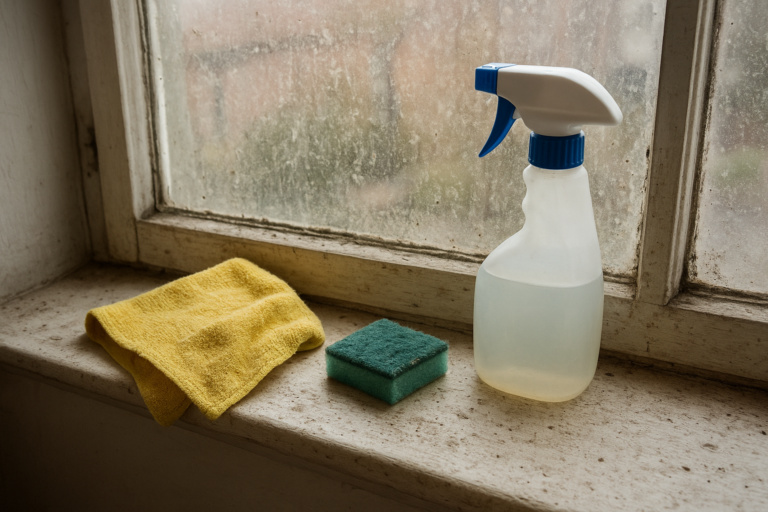
Why a Homemade Window Cleaner Works
Vinegar is mildly acidic, which helps loosen mineral deposits, dust film, and some types of grime that build up on glass over time. Dish soap adds a small amount of surfactant power, helping to break down oily residue like fingerprints or kitchen splatter. Together, these two ingredients create a solution that many households have relied on for basic glass cleaning long before specialty sprays became common. That said, results can vary depending on how dirty the glass is, the local water hardness, and the type of glass or coating involved.
What I Use For This Job
Using the right tools saves time and protects your belongings. Here are my exact recommendations:
*As an Amazon Associate, TidyFormula earns from qualifying purchases.
What You’ll Need
- A clean spray bottle
- Water (distilled water can help reduce mineral spotting if your tap water is very hard — and if you’re dealing with mineral buildup, check guidance on removing hard water stains from exterior windows.)
- White vinegar
- A small amount of dish soap (optional, for extra cutting power on greasy spots)
- Microfiber cloths or a squeegee
- A soft-bristle brush or cloth for window tracks and corners
How to Make and Use It
- Combine water and vinegar in a spray bottle. Many people use roughly equal parts, but you can adjust the ratio depending on how much grime you’re dealing with and how strong you want the vinegar scent to be.
- Add a small drop of dish soap if the glass has greasy fingerprints, cooking residue, or sticky spots. Too much soap can leave streaks, so use it sparingly.
- Shake gently before each use, since soap and water can separate slightly if the bottle sits.
- Spray a light, even coat onto the glass rather than soaking it. Excess liquid can drip into window tracks or frames.
- Wipe with a microfiber cloth in straight lines, or use a squeegee for larger panes, working from top to bottom to avoid streaking.
- Buff dry with a second clean, dry cloth if you notice any haze or streaks left behind.
Choosing the Right Tools
Microfiber cloths tend to work better than paper towels for glass because they pick up residue instead of pushing it around, and they don’t leave lint behind. If you’re cleaning large windows, a squeegee can speed up the process and give a more even finish — and if you don’t have one, learn straightforward alternatives in how to clean windows without a squeegee. For TV screens and other electronics in the room, follow manufacturer guidance and the specific steps for cleaning a TV screen without streaks.
For window tracks, sills, and corners, a soft brush or an old toothbrush can help loosen dust before you wipe the glass itself, so debris doesn’t get dragged across the surface and cause light scratching.

Special Considerations for Different Window Types
Tinted or Coated Glass
Some windows have a tint film or a low-emissivity (low-E) coating designed to block heat or UV rays. These coatings can sometimes be sensitive to acidic ingredients like vinegar. If your windows have any kind of film or special coating, check the manufacturer’s care instructions before using a homemade cleaner, and consider testing in a small, inconspicuous area first.
Older or Antique Windows
Older single-pane windows may have more delicate glazing or putty around the edges. Avoid letting cleaning solution pool along the frame, and dry the area promptly to reduce the chance of moisture seeping into aging wood or glazing compounds.
Shower Doors and Bathroom Glass
The same basic vinegar-and-water mixture is often used on shower doors to help with soap scum and water spots, though textured or etched glass may need a bit more scrubbing in the grooves. For mineral haze and stubborn deposits on shower panels, see methods for removing hard water stains from shower glass. Always check whether your shower door has a special coating, since some manufacturers advise against certain cleaning ingredients on treated glass.
Troubleshooting Streaks and Haze
If your windows come out streaky, the most common causes are using too much liquid, applying too much soap, or wiping in circles instead of straight lines. Try switching to a drier cloth for the final buffing pass, or use a squeegee instead of a cloth for large panes. Hard water spots can sometimes be stubborn and may need a second pass with a slightly more concentrated vinegar solution, though very heavy mineral buildup might require a specialized product designed for that purpose.
If you also clean nearby electronics, be careful: screens require different cleaners and methods — for step-by-step guidance, see how to clean a laptop screen without streaks.
Drying and Aftercare
Letting glass air-dry can sometimes lead to spotting, especially in humid conditions, so wiping with a dry cloth right after cleaning usually gives the clearest results. For window frames and tracks, make sure they’re fully dry before closing the window, since trapped moisture can encourage issues over time in wood or vinyl frames.
Preventing Buildup Between Cleanings
Dusting window sills and tracks regularly can reduce how often you need a deeper cleaning session. Keeping pets and curious little hands away from glass doors as much as possible will also cut down on smudges. If you live somewhere with hard water or frequent rain splashing on windows, more frequent light cleanings tend to be easier than waiting for heavy buildup to form.
When to Skip the Homemade Route
If you’re working with a specialty window, an expensive glass surface with a protective coating, or any glass that came with specific manufacturer cleaning instructions, it’s worth following those instructions over a general homemade recipe. When in doubt, a small test patch in an inconspicuous corner can help you gauge how the glass reacts before treating the whole window.
Everything Mentioned Above
Before you leave, grab the tools you need to get the job done right the first time:
*As an Amazon Associate, TidyFormula earns from qualifying purchases.