
How to Clean Windows Without a Squeegee (No Streaks, No Fancy Tools)
You can clean windows without a squeegee by wiping them with a lightly dampened, lint-free cloth and immediately buffing the glass dry with a second cloth. Use 2 cups water, 1/2 cup 70% isopropyl alcohol, and—only for greasy glass—one drop of dish soap.
Windows often look clean until the sun decides to be brutal. Every fingerprint lights up. The usual causes of visible streaks are too much cleaner, residue on the cloth, dirty water, or solution drying before it can be buffed away.
This no-squeegee method works best on ordinary, uncoated window glass with fingerprints, dust, pollen, and light grime. Heavily soiled exterior windows need a preliminary wash, while hard-water deposits require separate treatment.
⚡ The TidyFormula™ Quick Answer
The Recommendation: Use an alcohol-water spray, wipe with a lint-free cloth, then do a dry “buff pass” with a second cloth. That second pass is the squeegee replacement.
- The Mix: 2 cups water + 1/2 cup isopropyl alcohol (70%) + 1 drop dish soap (optional).
- Tools: Two lint-free cloths or coffee filters.
- Time: 10–25 minutes for a few windows.
- Effectiveness: High for everyday grime; medium for hard-water spots.
- Best conditions: Cool glass in indirect sunlight.
Check the Window Material Before You Start
The alcohol-water mixture is intended for ordinary glass. Before using it on specialty windows, check the window or film manufacturer’s care instructions and test a hidden corner.
What I Use For This Job
Using the right tools saves time and protects your belongings. Here are my exact recommendations:
*As an Amazon Associate, TidyFormula earns from qualifying purchases.
- Aftermarket window film or tint: Use only a cleaner approved by the film manufacturer. Avoid ammonia, abrasives, and unapproved solvents.
- Acrylic or polycarbonate panes: Do not assume they can be cleaned like glass. Alcohol can damage some plastics. Use water with a small amount of mild dish soap and a soft cloth unless the manufacturer says otherwise.
- Low-E or coated glass: Some coatings are protected inside the sealed unit, while others may be exposed. Follow the window manufacturer’s instructions if you are unsure.
- Stained, decorative, or leaded glass: Avoid saturating joints, came, painted details, and surrounding wood.
- Mirrors: Mist the cloth instead of the mirror so liquid does not collect around the edges and reach the backing.
Prepare the Window and Work Area
Cleaning the pane before the frame and sill can pull dirt back onto freshly cleaned glass. A few minutes of preparation prevents that.
- Close and lock the window so the pane is stable.
- Place a dry towel along the sill to catch drips.
- Dust or vacuum the frame, tracks, corners, blinds, and nearby screen.
- Remove rings or other jewelry that could contact the glass.
- Use separate cloths for the frame and glass. Dirt from a track can scratch or smear the pane.
For stuck-on debris, hold a damp cloth against the spot until it softens. Do not scrub dry grit across the glass.
The No-Squeegee Window Method
What you’ll need
- Two lint-free cloths (microfiber is fine, but clean and softener-free).
- Spray bottle.
- Isopropyl alcohol (70%).
- Water (distilled is helpful if you have hard water).
- Optional: one tiny drop dish soap for greasy film.
- Optional: old toothbrush for gunk in corners, used carefully away from the glass.
- Optional: a dry towel for the sill.
The basic technique is simple: remove loose dirt, wipe with a small amount of solution, and buff the remaining moisture away before it dries.
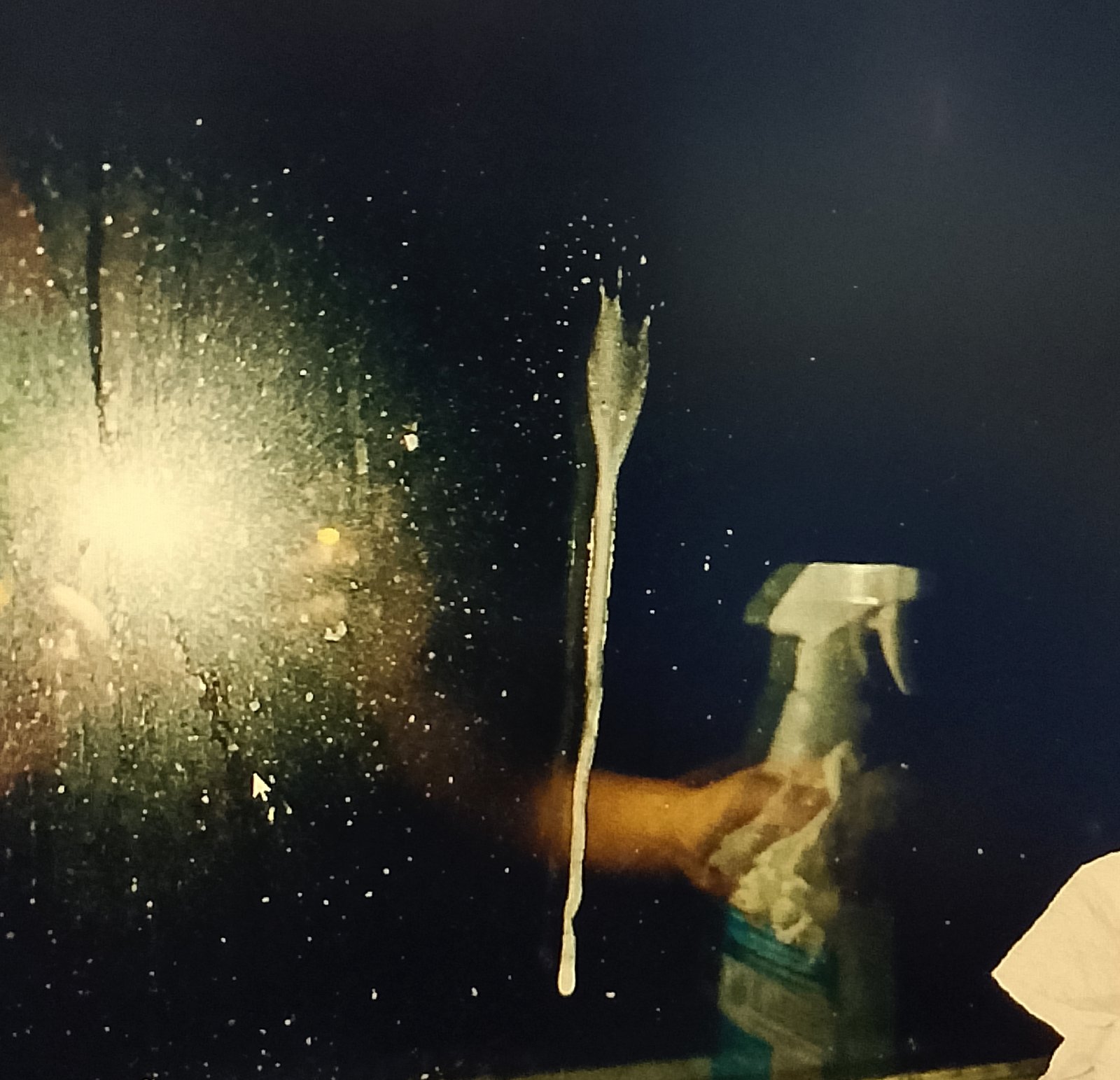
Step 1: Dust first
Dry-wipe the glass and remove dust around the edges. If the cloth encounters gritty particles, stop and lift them away rather than dragging them across the pane.
For a heavily soiled exterior window, first wipe it with clean water and a small amount of dish soap. Follow with a second cloth dampened with plain water, then proceed with the streak-resistant spray. Replace the water or cloth when it becomes visibly dirty.
Step 2: Mix the streak-resistant spray
In a clean, labeled spray bottle, combine:
- 2 cups water
- 1/2 cup isopropyl alcohol (70%)
If the windows have greasy film, such as kitchen residue or handprints, add one drop of dish soap. More soap is not better: excess surfactant can leave a film that becomes visible in angled light.
Use distilled water if tap water regularly leaves white mineral marks. Do not add this solution to a bottle that previously held another cleaner unless the bottle has been thoroughly emptied, washed, and rinsed.
Step 3: Mist the cloth, not the glass
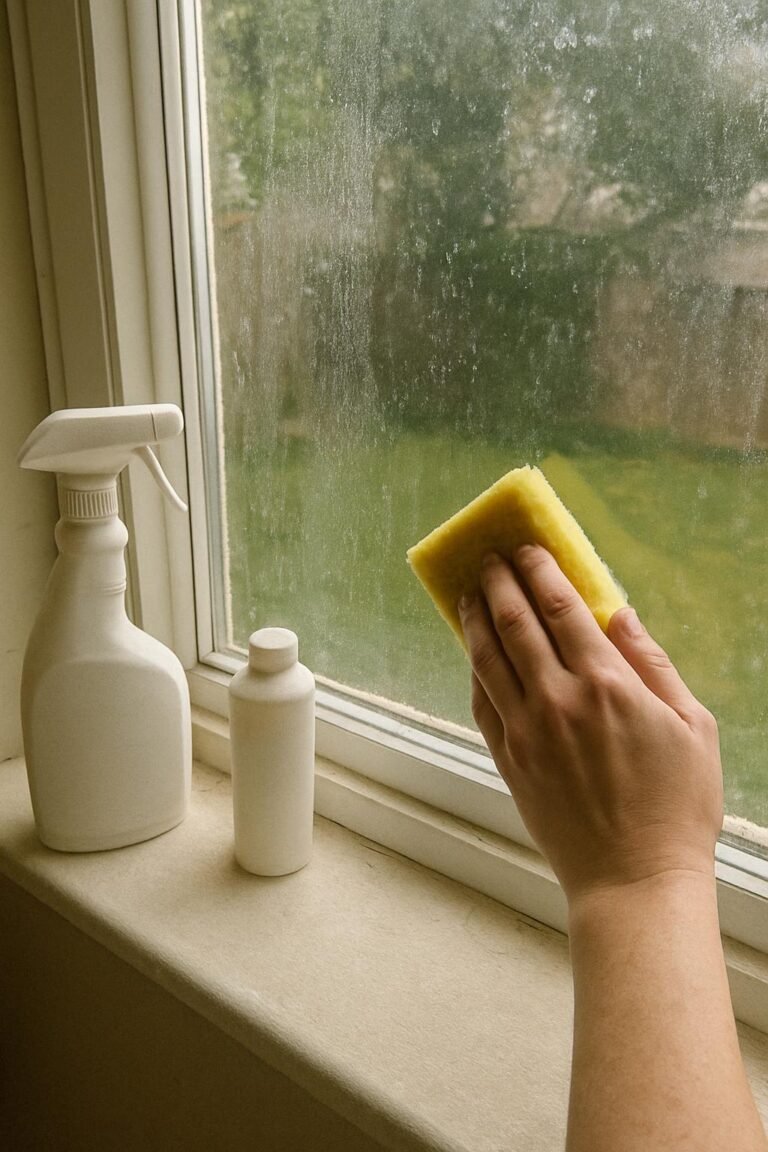
Lightly mist the first cloth until it is evenly damp but not dripping. Spraying the glass directly can create runs, soak the sill, and send cleaner into wood joints or frame edges.
Fold the cloth into quarters. This gives you several clean wiping surfaces and makes it easier to switch sides when one becomes dirty.
Step 4: Wipe from top to bottom
Start at an upper corner and wipe in overlapping horizontal strokes. Work downward so moisture does not run over areas you have already finished.
Pay attention to the perimeter, where cleaner and grime commonly collect. Use light pressure. If the cloth drags, feels gritty, or leaves gray trails, switch to a clean section or replace it.
Step 5: Buff immediately with a dry cloth
Before the remaining moisture dries, use the second cloth to buff the pane with vertical strokes. Continue until the glass feels dry and the cloth moves smoothly.
Using one direction for the damp pass and another for the dry pass makes missed areas easier to see. Replace the buffing cloth if it becomes damp; a wet “dry” cloth will redistribute residue instead of removing it.
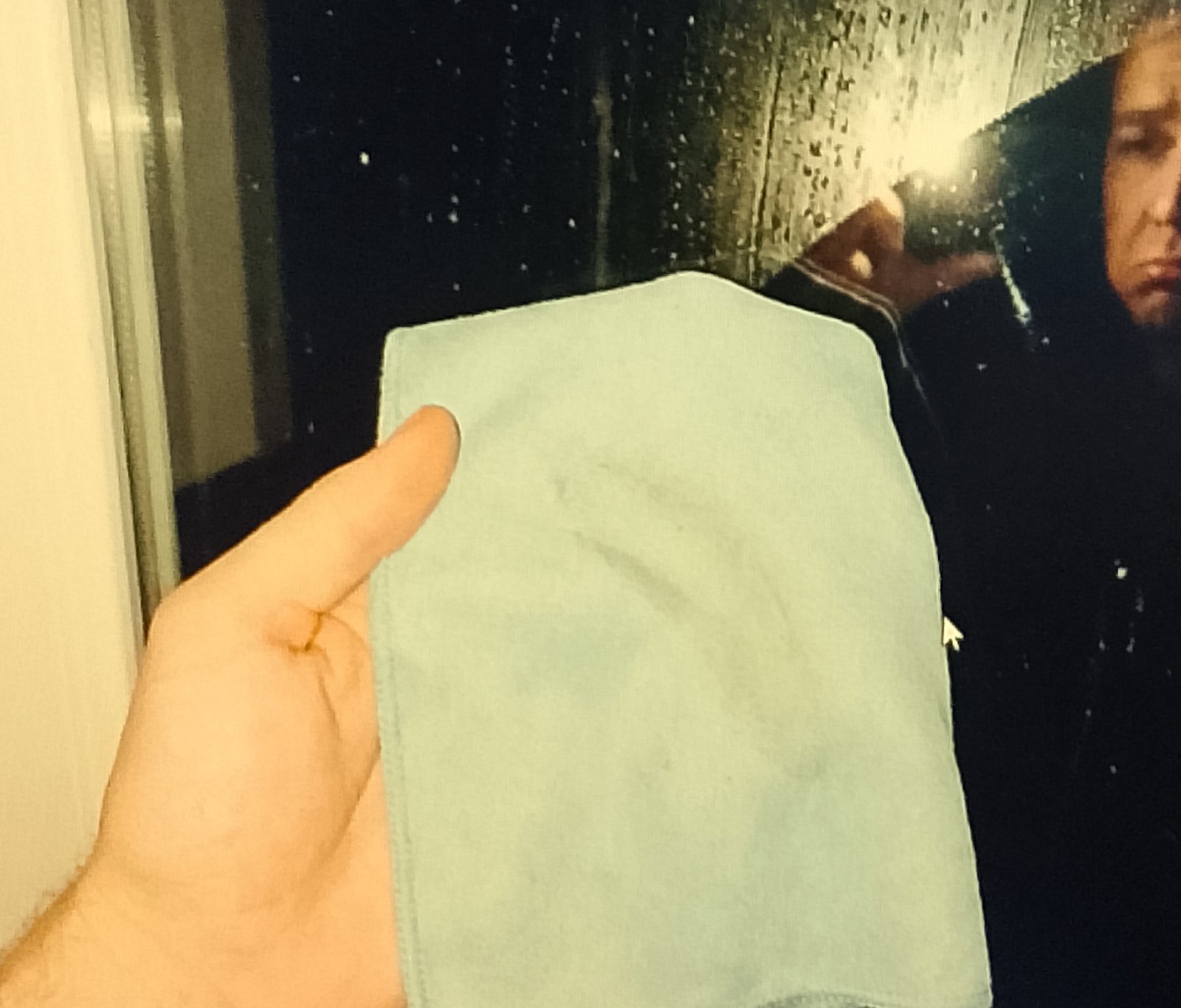
Step 6: Inspect from two angles
Stand to the side and look across the glass rather than only straight through it. If possible, inspect it from inside and outside. Touch up individual marks with a barely damp corner of the cleaning cloth, then buff that spot dry.
Finally, dry the sill, frame edges, and any solution trapped in corners.
How to Clean Exterior Windows Without a Squeegee
Exterior glass often carries abrasive dust, pollen, and road residue. Do not begin by polishing that dirt with a dry microfiber cloth.
- Brush away cobwebs and loose debris.
- Wash the pane with a soft cloth and clean, mildly soapy water.
- Wipe again with a separate cloth dampened with plain water to remove loosened dirt and soap.
- Apply the alcohol-water method with a clean cloth.
- Buff immediately with a separate dry cloth.
Work on one manageable section at a time. If an exterior pane is above comfortable ground-level reach, use a suitable extension tool or hire a window cleaner rather than leaning from a window or improvising with an unstable ladder.
How to Clean Windows Without Removing the Screen
A fixed screen limits access. You can clean the accessible interior pane and remove surface dust from the screen, but you generally cannot thoroughly clean exterior glass through mesh when there is a gap between the screen and pane.
The screen-safe approach
- Vacuum or brush the screen first. Support the mesh with your free hand and use light pressure so it does not stretch.
- Clean the accessible glass from inside. Mist the cloth rather than spraying toward the screen.
- Wipe the screen separately if needed. Use a barely damp cloth on both sides that you can safely reach, then allow the mesh to air-dry.
- Clean only glass you can physically reach. Do not force a cloth through the mesh or press hard enough to bend the frame.
Avoid spraying cleaner through the screen. Droplets collect on the mesh, pick up dirt, and can leave a dotted pattern on the glass. If the exterior pane is blocked by a fixed screen, proper cleaning may require safe screen removal or professional access.
How to Clean Glass Without Paper Towels
Paper towels can work, but some varieties shed lint or become too wet to buff effectively. Better alternatives include:
- Coffee filters: They are lint-free and slightly “grabby,” making them useful for a final spot-buff.
- Newspaper: Traditional newsprint can polish glass, but glossy inserts and some inks may smear or transfer to light-colored frames. Keep it away from wet trim.
- Clean cotton cloth: An old T-shirt can work if it does not shed fibers.
- Microfiber: Use a clean, low-pile glass cloth that has not been washed with fabric softener. Softener and oily laundry residue can cause smearing.
Wash reusable glass cloths separately from greasy towels. Skip fabric softener and dryer sheets, then store the clean cloths where they will not collect dust.
General Glass Surfaces Without Windex
The same two-cloth technique can be used on compatible glass tables, shower glass, and oven-door glass. Check the appliance or surface manufacturer’s instructions first, especially for tinted, coated, heated, or decorative glass.
For greasy glass
On kitchen glass or range hoods, add the single drop of dish soap to the mixture. For heavier grease, do a separate first pass with a damp cloth and a very small amount of dish soap. Follow with a clean, water-dampened cloth before using the alcohol-water spray and dry buff.
Never clean an oven door while it is hot. Avoid flooding vents, controls, seals, or the space between door panels.
🧪 Why the Two-Cloth Method Works
Visible streaks are usually a thin layer of cleaner, oil, minerals, or suspended dirt that dried unevenly. Using only a small amount of solution reduces what must be removed. The damp cloth loosens the film, while the second dry cloth picks up the remaining moisture and residue before it dries on the glass.
Alcohol also evaporates faster than water. That can help on cool glass, but it is not a substitute for buffing and can dry too quickly on a hot window.
Troubleshooting Streaks and Haze
The window looks cloudy immediately after buffing
The dry cloth may be damp, dirty, or coated with fabric softener. Switch to a clean cloth and buff again. If that does not work, wipe the glass once with a clean cloth dampened with plain water, then dry it.
Long lines appear in direct light
There was likely too much solution or the cleaner dried before the buffing pass. Work on a smaller area, use less spray, and buff immediately.
Small lint dots remain
Change to a low-pile microfiber cloth or coffee filter. Also check the window frame and screen; fibers and dust around the perimeter can fall back onto the pane.
White spots remain after the glass is otherwise clean
These are likely mineral deposits rather than ordinary dirt. Repeatedly polishing them with the everyday spray will not help. Use a glass-compatible hard-water remover according to its label, and protect nearby stone, metal, seals, film, and painted surfaces.
A foggy patch appears to be inside a double-pane window
If the haze cannot be touched from either side, it may be moisture or residue between the panes. Surface cleaning will not remove it. This can indicate a failed insulated-glass seal that needs assessment or repair.
Marks will not loosen with a damp cloth
Stop before reaching for a razor blade or abrasive pad. Scrapers can scratch coated, tinted, tempered, or specialty glass and may damage seals. Use only a tool and method specifically approved for that window.
When This Method Is Not Enough
The alcohol-water method removes everyday surface grime, but it will not repair scratches or remove every type of deposit. Use a targeted, surface-compatible method for:
- Hard-water scale
- Paint or construction residue
- Adhesive
- Sticky tree sap
- Etching or scratches
- Haze trapped between insulated panes
Stop and reassess if the cloth picks up colored coating, the glass develops a rainbow-like change that does not buff away, the frame finish softens, or the pane scratches under light pressure.
One Pro Tip That Makes a Big Difference
Clean windows when the glass is cool, such as in the morning, late afternoon, or on an overcast day. Hot glass dries the solution before you can complete the buffing pass.
If you must work in brighter conditions, clean smaller sections and keep the dry cloth ready in your other hand.
Frequently Asked Questions
Can I use vinegar instead of alcohol?
Diluted white vinegar can help with light mineral residue on compatible, uncoated glass, but it is not suitable for every surrounding material. Acid can affect natural stone, some metals, seals, and specialty coatings. Use it as a separate cleaner rather than adding it to the alcohol mixture, and check the surface manufacturer’s instructions first.
Why do my windows streak even with glass cleaner?
Common causes include using too much product, cleaning hot glass, wiping with a dirty or softener-coated cloth, and failing to remove greasy residue first. Use less solution and switch to a clean, dry buffing cloth as soon as the current one becomes damp.
What is the best alternative to paper towels for glass?
A clean, low-pile microfiber glass cloth is the most reusable option. Coffee filters are useful for small panes and final touch-ups because they do not usually leave lint.
Can I clean tinted windows with the alcohol mixture?
Do not assume the mixture is safe for aftermarket tint or film. Follow the film manufacturer’s care instructions and use an approved ammonia-free cleaner. If you cannot identify the film, begin with a soft cloth and mild soap-and-water solution in an inconspicuous area.
How can I tell which side of the window has a streak?
Wipe the inside glass in one direction and the outside glass in the other—for example, horizontal strokes inside and vertical strokes outside. The direction of the visible line will show which side needs another buff.
Everything Mentioned Above
Before you leave, grab the tools you need to get the job done right the first time:
*As an Amazon Associate, TidyFormula earns from qualifying purchases.