
How to Get Sour Smell out of Laundry after Washing
To get a sour smell out of laundry after washing, rewash the load promptly with the correct amount of detergent, using the warmest water permitted by the care labels and a full rinse. Don’t cover the odor with fabric softener. Check delicate items first, and never machine-wash anything the manufacturer identifies as non-washable.
If the smell returns, the likely problem is trapped moisture, detergent residue, an overloaded load, or buildup inside the washing machine—not a lack of fragrance.
⚡ The TidyFormula™ Quick Decision
Best approach: Rewash the affected laundry in a smaller load with properly measured detergent, a care-safe water temperature, and an extra rinse if residue is suspected.
Use caution with: Wool, silk, elastic, dark dyes, printed fabrics, waterproof coatings, glued parts, and stuffed items that may require cold water, gentle handling, or no machine washing.
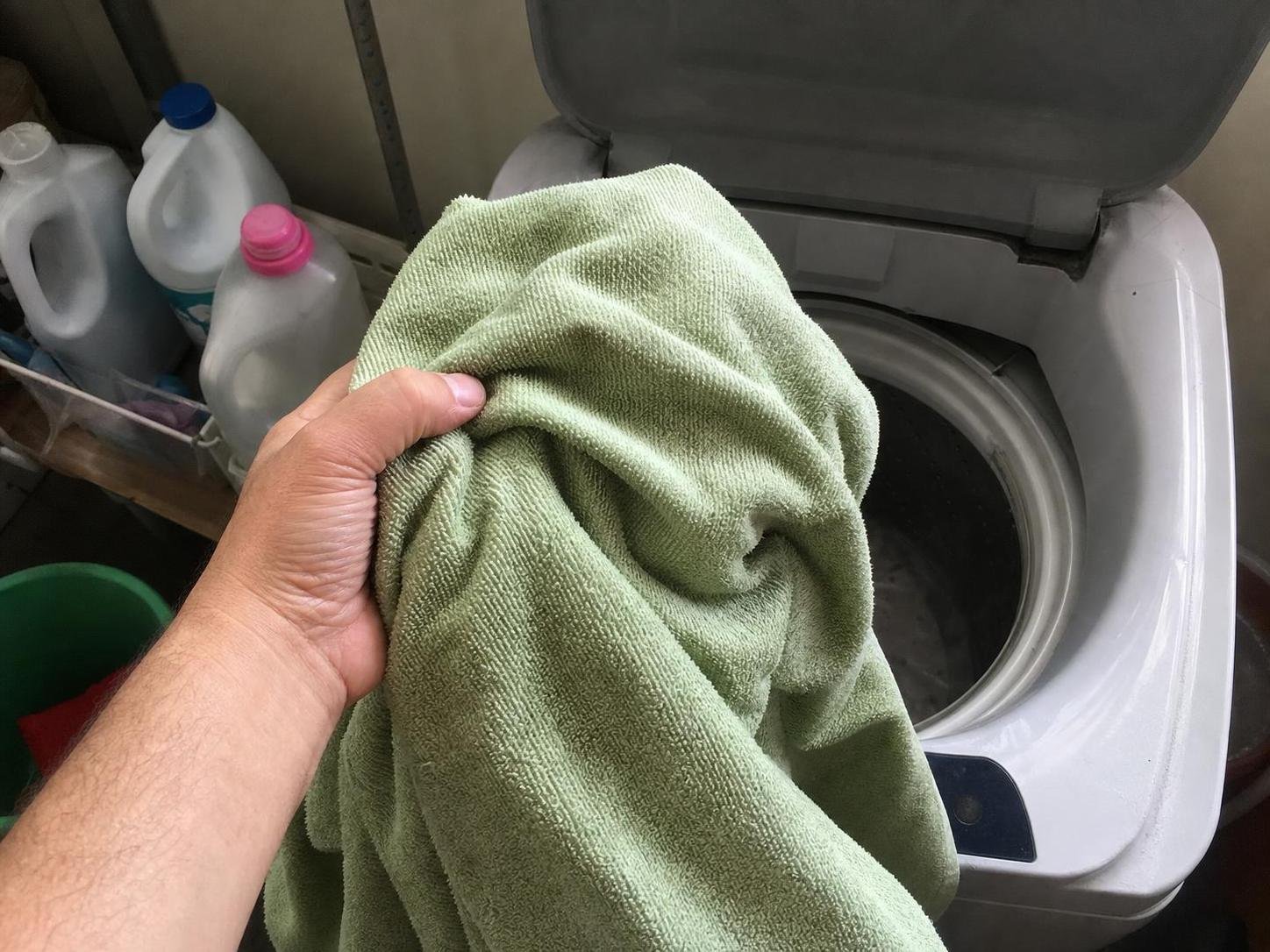
Check the Laundry Before Rewashing
Start by confirming that every item can tolerate another machine cycle. Separate the load by care requirements rather than rewashing everything together.
What I Use For This Job
Using the right tools saves time and protects your belongings. Here are my exact recommendations:
*As an Amazon Associate, TidyFormula earns from qualifying purchases.
- Read each care label. Use the lowest temperature and gentlest cycle required by the most delicate item, or remove that item and handle it separately.
- Check for trapped dampness. Waistbands, cuffs, pockets, towel hems, thick seams, and fitted-sheet corners can stay wet after lighter areas feel dry.
- Separate heavy and lightweight fabrics. Towels and sweatshirts need different drying conditions than T-shirts or thin synthetic clothing.
- Look for detergent residue. Stiffness, a waxy feel, white marks, or an unusually heavy fragrance can indicate that the previous cycle did not rinse cleanly.
- Check for non-washable construction. Foam, glued seams, structured padding, and coated fabric can be damaged by agitation or saturation.
Memory foam needs especially cautious handling because full machine washing can damage the foam and make internal drying difficult. Review the guidance on washing a memory foam pillow before treating it like ordinary bedding.
Structured accessories may also have different rules from clothing. For example, check the manufacturer’s instructions before laundering a backpack; this guide to cleaning a Herschel backpack without machine washing explains why construction details matter.
What You Need
You usually don’t need a complicated odor-removal mixture. A controlled rewash and thorough drying are the safest starting points.
- Your usual laundry detergent, measured according to its label and the load conditions
- An optional laundry odor remover or oxygen-based laundry product that is labeled for the fabric
- Access to good airflow, a clothesline, or a dryer setting permitted by the care label
- A clean cloth for checking the washer gasket and detergent dispenser
Never combine laundry additives or cleaning products unless the product labels explicitly direct you to do so. In particular, don’t combine bleach with vinegar, ammonia, acids, alcohol, or other cleaners.
Step-by-Step Odor Removal Method
The best method is a smaller, properly dosed rewash followed by immediate, complete drying. This addresses both residue and moisture without subjecting the fabric to an unnecessarily aggressive treatment.
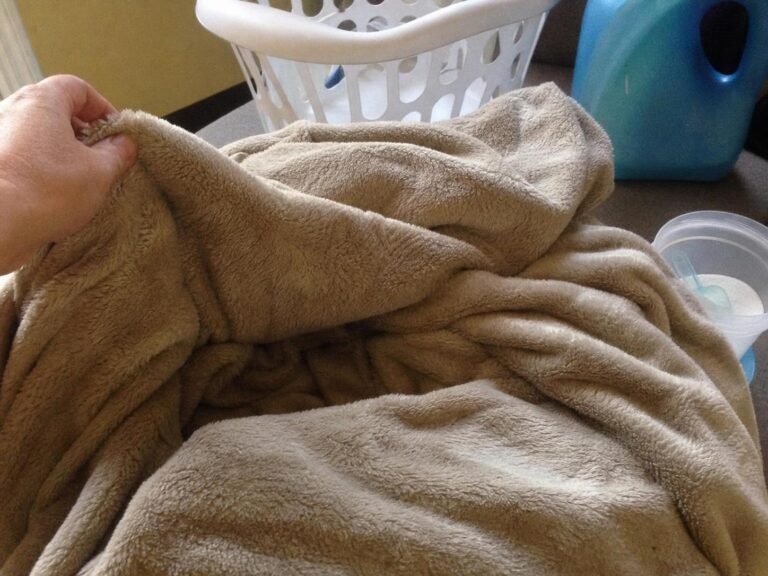
- Remove the laundry from the washer. Unfold twisted items and separate pieces that are wrapped together. If the fabric has already begun drying with the odor still present, you can usually proceed with the same rewash method.
- Reduce the load size. The drum needs enough open space for the laundry to move and rinse. Split tightly packed towels, bedding, or clothing into two loads rather than adding more detergent.
- Select the warmest care-safe water temperature. Warm or hot water can be useful for sturdy, colorfast items when their labels permit it. Use cold water for fabrics, dyes, elastic, prints, or finishes that require it.
- Add the correct amount of detergent. Follow the detergent label and your washer’s instructions, accounting for load size and water conditions. More detergent isn’t better; excess can remain in the fibers and contribute to recurring odor.
- Add only one optional laundry treatment if needed. For persistent odor, choose an oxygen-based laundry product or odor remover labeled for the fabric and washing machine. Follow its directions exactly, test colorfastness when instructed, and don’t combine it with other additives.
- Run a complete wash cycle. Choose a cycle that provides adequate movement and rinsing without exceeding the item’s care instructions. A quick cycle may not be enough for thick towels, bedding, or a load with substantial residue.
- Use an extra rinse if the fabric feels soapy or coated. An extra rinse is often more useful than another dose of detergent. Skip fabric softener during odor recovery because it can add another coating and temporarily mask the smell.
- Inspect the load immediately. The laundry should smell neutral while damp rather than heavily perfumed. If it still smells sour, don’t put it in a hot dryer yet; inspect and clean the washer before repeating the process.
- Dry everything completely. Transfer the load promptly and use a care-label-approved dryer setting or hang items with space between them. Turn over thick items and expose pockets, cuffs, and folded edges to airflow.
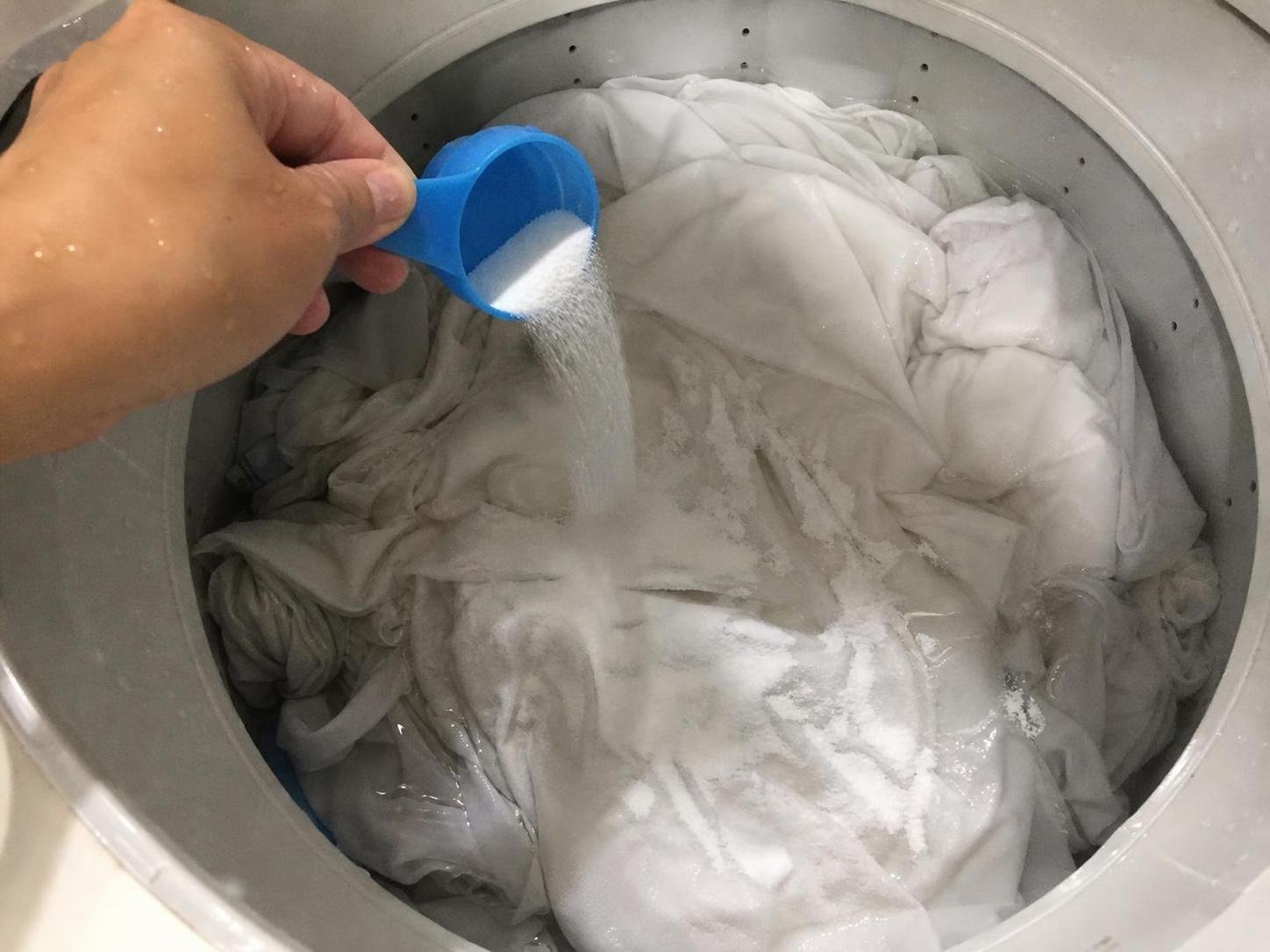
🧪 Why This Works
A smaller load allows wash water and rinse water to move through the fabric more effectively. Proper detergent dosing helps release ordinary soil without leaving a heavy coating, while prompt, complete drying prevents damp folds and thick seams from holding the same sour odor.
If the Smell Comes Back, Check the Washer
When several unrelated loads develop the same odor, the washing machine deserves attention. Cleaning the clothing repeatedly won’t solve residue or trapped moisture inside the appliance.
Inspect common problem areas
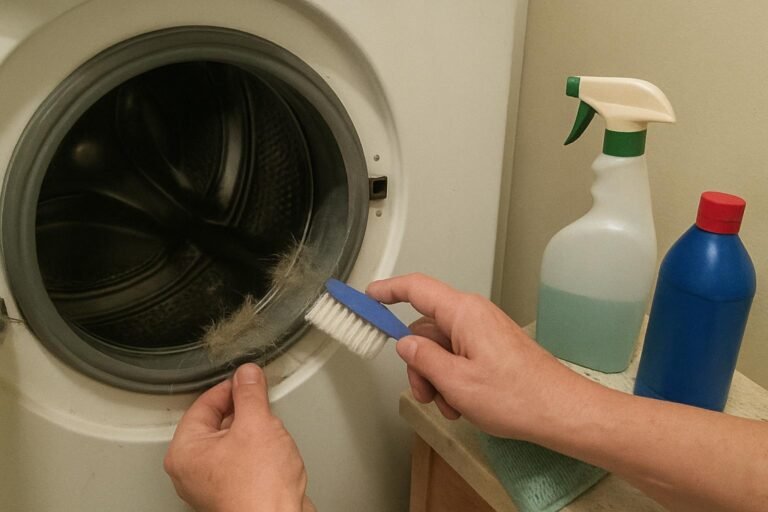
- Check the door gasket or lid area for lint, residue, and trapped small items.
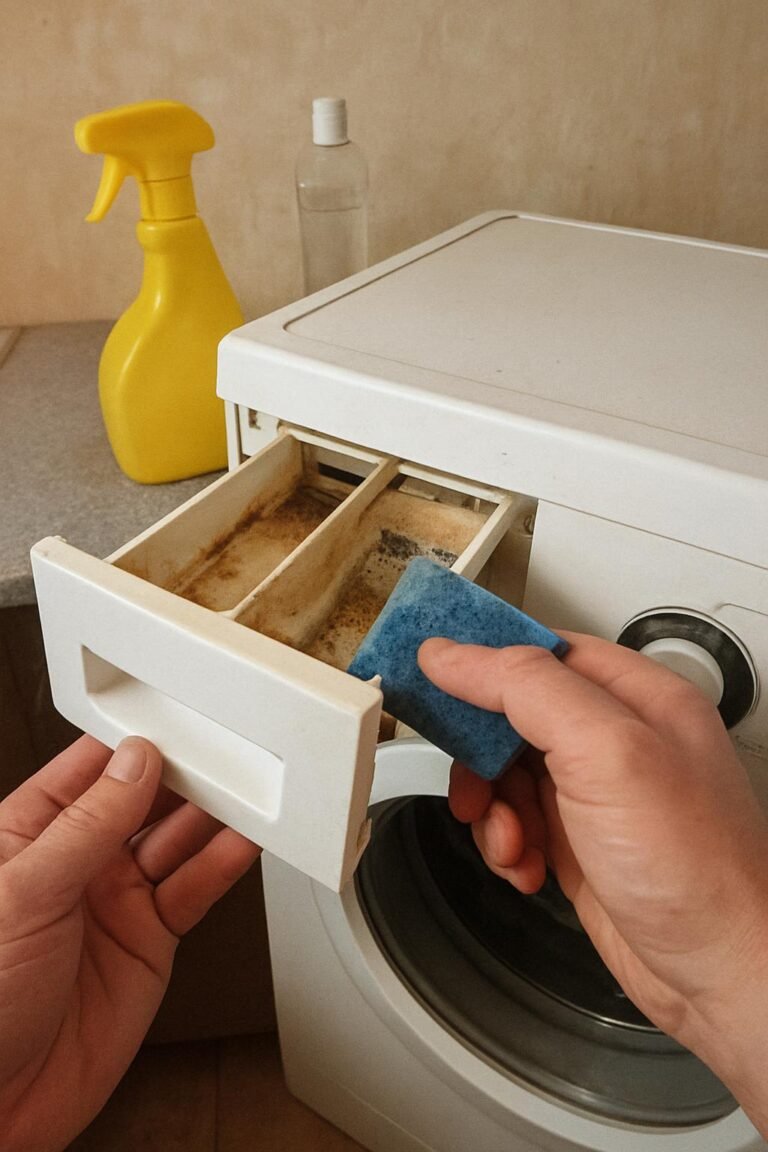
- Remove and inspect the detergent and fabric-softener dispensers if the washer manual permits it.
- Check the drain-pump filter only if your machine has a user-serviceable filter and the manual provides instructions.
- Notice whether water remains in the drum or whether the washer drains unusually slowly.
Clean accessible parts and run the washer’s designated cleaning cycle according to the appliance manufacturer’s instructions. Use only the cleaner and amount specified for that procedure. Don’t pour several household products into the machine in an attempt to intensify the cleaning.
If water remains in the washer, drainage is poor, or the odor continues after manufacturer-directed cleaning, the machine may need maintenance or service.
Why the First Rewash Sometimes Fails
The load was still too full
If large pieces emerge tightly twisted or portions still feel soapy, split the laundry into smaller loads. Bulky bedding and towels need room to open during washing and drying.
Too much detergent was used
A stronger fragrance doesn’t prove that fabric rinsed clean. If laundry feels stiff, slick, or coated, run a care-safe rinse without adding more detergent. Repeated heavy dosing can make the problem harder to correct.
The laundry stayed wet too long
Rewash laundry that sat damp in the washer or in a closed basket. Drying it without rewashing may leave the sour smell in place, particularly in thick cotton, athletic clothing, and folded bedding.
The dryer load was overloaded
A dry outer surface can hide damp seams, pockets, waistbands, or the center of a bundled sheet. Reduce the dryer load, untangle large pieces, and continue with a care-safe setting until every area is dry.
The item traps water internally
Stuffed, padded, or foam-filled items can remain damp inside after the cover feels dry. Reduce moisture, reshape the item, and provide airflow according to its care instructions. For non-machine-washable pillows, consider a lower-moisture approach such as the dry-revive pillow-cleaning method.
Mistakes That Can Damage Laundry
Avoid escalating directly to hotter water, stronger products, or repeated high-heat drying. The odor may improve while the fabric, dye, elastic, or finish suffers permanent damage.
- Don’t exceed the care-label temperature. Excess heat can shrink fabric, fade color, weaken elastic, or set certain stains.
- Don’t mix vinegar with bleach or other cleaners. Also check the washing machine manual before using vinegar because appliance compatibility varies.
- Don’t pour undiluted products directly onto fabric unless the product label specifically instructs you to do so.
- Don’t use fabric softener as an odor fix. Fragrance may cover the problem without correcting trapped residue or incomplete drying.
- Don’t repeatedly wash a damaged item. Stop if colors bleed, coatings peel, seams loosen, elastic deforms, or stuffing becomes misshapen.
Drying and Prevention
Complete drying is part of odor removal, not an optional finishing step. Drying time varies with fabric thickness, load size, airflow, humidity, and moisture trapped in seams or stuffing.
- Move washed laundry to the dryer or drying rack promptly.
- Shake out and separate each piece instead of drying it in a compact bundle.
- Open pockets and unroll cuffs before drying.
- Pause to untangle sheets, duvet covers, and other large pieces if they ball up.
- Confirm that thick seams and waistbands are dry before folding.
- Store laundry only after it has cooled and feels dry throughout.
- Leave the empty washer door or lid open when the manufacturer permits it so remaining moisture can escape.
- Clean detergent dispensers and accessible gasket surfaces as directed in the washer manual.
Frequently Asked Questions
Can you use vinegar for sour-smelling laundry?
Vinegar is commonly discussed as a laundry additive, but it isn’t the best universal first choice. Appliance manufacturers may restrict its use, and it must never be combined with bleach or other cleaners. Start with correct detergent dosing, a smaller load, and a full rinse; check the washer manual before considering vinegar.
Should you dry laundry that still smells sour?
Rewash it first. Dryer heat may make the odor harder to assess, and fragrance from dryer products can temporarily cover it. If a properly rewoven load still smells sour while damp, inspect the washing machine before drying.
Why do towels develop a sour smell faster than shirts?
Towels are thick, absorbent, and prone to staying damp in hems and folded layers. Wash them with enough drum space, avoid excessive detergent or softener, and dry them fully before folding or storing.
When is laundry not worth rewashing again?
Stop repeated washing if the fabric is deteriorating, colors continue to bleed, a coating is peeling, elastic has failed, or a stuffed item cannot dry internally. Follow the manufacturer’s care guidance and replace the item if it remains damaged or impractical to dry safely.
For most sour-smelling laundry, the dependable fix is a smaller rewash with correctly measured detergent, a care-safe temperature, a thorough rinse, and immediate drying. If the odor affects multiple loads or returns quickly, clean and inspect the washer according to its manual rather than adding stronger or mixed cleaning products.
Everything Mentioned Above
Before you leave, grab the tools you need to get the job done right the first time:
*As an Amazon Associate, TidyFormula earns from qualifying purchases.
One Comment