
washing couch covers
Washing couch covers is usually straightforward once you know what the fabric is and what the care label allows. Most removable covers made of cotton, polyester blends, or linen-look synthetics can go through a regular machine wash on a gentle or normal cycle, but slipcovers with special linings, trims, or “dry clean only” labels need a more cautious approach to avoid shrinking or distorting the fit.
⚡ The TidyFormula™ Quick Decision
Best approach: Check the care label first, then machine wash on a gentle or cold cycle with a mild detergent if the label allows it, and air dry or low-tumble dry to help the cover keep its shape and fit.
Use caution with: Loose-weave fabrics, covers with attached foam or padding, delicate trims, and any cover labeled “dry clean only” — these often do better with spot cleaning or professional cleaning instead of a full wash.
Stop and reassess if: The cover shrinks noticeably after a test wash, colors start to bleed or fade, seams pull apart, or the label instructions conflict with what you’re planning to do — in these cases, hand washing, professional cleaning, or replacement may be safer options.
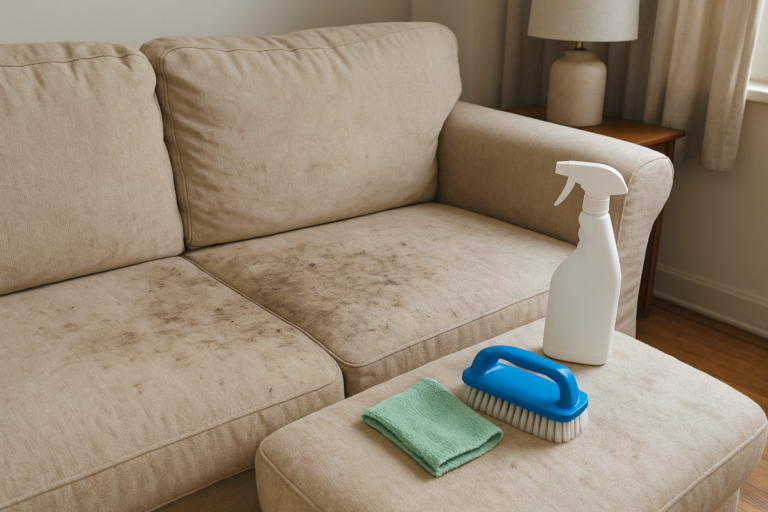
Check the Care Label Before You Do Anything Else
Every couch cover should have a care label sewn into a seam, often near the bottom edge or along a zipper. This label is the most reliable source for washing temperature, whether machine washing is safe, and whether the manufacturer recommends air drying only. If the label is missing or worn away, check the manufacturer’s website or original packaging for care instructions, since fabric blends and linings can vary widely even among covers that look similar.
What I Use For This Job
Using the right tools saves time and protects your belongings. Here are my exact recommendations:
*As an Amazon Associate, TidyFormula earns from qualifying purchases.
Preparing the Cover for Washing
- Remove the cover completely from cushions and frame, unzipping fully so seams aren’t strained during the wash cycle.
- Shake out loose crumbs, pet hair, and dust outdoors or over a trash can before washing.
- Pretreat any visible stains with a small amount of mild detergent, testing first on an inside seam or hidden area to check for colorfastness. For oil-based or greasy spots, follow a fabric-specific method such as how to remove grease stains from a fabric sofa.
- Close all zippers and turn the cover inside out if the outer fabric seems prone to pilling or fading.
Machine Washing: What Usually Works
For covers labeled machine washable, a cold or warm gentle cycle with a mild detergent is typically the safest starting point. Avoid bleach unless the label specifically allows it, and skip fabric softener if the cover has any water-resistant or stain-resistant treatment, since softener can sometimes reduce those coatings’ effectiveness. If your washer has a large-capacity or bulky-item setting, it may help the cover move freely without excessive twisting or stretching.
Loading and Cycle Tips
- Wash one cover at a time if your machine is on the smaller side, so the fabric isn’t compressed too tightly to rinse clean.
- Use a gentle or delicate cycle for covers with elastic edges, ties, or decorative trim.
- Consider a mesh laundry bag for covers with loose threads, buttons, or fringe to reduce snagging.
Microfiber and other pile fabrics can show water marks or uneven drying if handled inconsistently; when you need a specialty approach, see how to clean a microfiber couch without water marks.

When Hand Washing or Spot Cleaning Makes More Sense
Some covers, especially those with structured padding, decorative buttons, or delicate fabric like silk blends or certain linens, may not tolerate a full machine cycle well. In these cases, hand washing in a basin with cool water and a small amount of mild detergent, followed by gentle rinsing, is often a lower-risk option. The same careful, low‑moisture approach applies to upholstered pieces—see guidance for cleaning a fabric recliner for similar precautions—and outdoor cushion covers often need different drying and mildew-prevention techniques; for those, consult how to clean outdoor furniture cushions.
Spot cleaning small stains with a soft cloth and mild detergent solution can also help avoid a full wash when only a limited area needs attention.
Drying Couch Covers Without Losing the Fit
Overheated drying is one of the most common reasons couch covers shrink or lose their shape. Air drying is generally the gentlest option, and laying the cover flat or draping it over a drying rack can help it dry evenly. If the label permits tumble drying, a low-heat setting is usually preferable to high heat. Rehang or refit the cover onto the cushions while it’s still slightly damp for some fabrics, which can help it settle back into its original shape — though this depends on the material, so check whether your specific cover’s instructions mention this approach.
Troubleshooting Common Issues
Shrinkage
If a cover comes out noticeably smaller after washing, it may be difficult to reverse. Rewashing with heat isn’t a reliable fix and can risk further shrinkage or fabric damage. In this case, contacting the manufacturer or considering a replacement cover may be more practical than continued attempts to stretch it back.
Fading or Color Bleeding
Fading is more likely with prolonged sun exposure or high-heat washing and drying. Washing similar colors together and using cooler water temperatures can help reduce the risk, though results vary by dye type and fabric.
Lingering Odors
If odors persist after washing, a second gentle wash cycle or a longer air-drying period in a well-ventilated space may help. Avoid combining multiple cleaning products in an attempt to boost odor removal, since mixing household chemicals can be unsafe. For targeted approaches to persistent smells trapped in cushion covers or the cushions themselves, see How to Remove Odors from Couch Cushions.
Preventing Future Wear and Stains
- Rotate cushions periodically so wear is distributed evenly across the cover.
- Use a washable throw or blanket in high-use areas to reduce direct contact and staining.
- Address spills promptly with a blotting cloth rather than letting them set in.
- Vacuum covers regularly with an upholstery attachment to reduce dust and debris buildup between washes.
When to Consider Professional Cleaning or Replacement
If a cover is labeled “dry clean only,” made from a delicate or structured fabric, or shows signs of significant wear such as thinning fabric or failing seams, professional upholstery cleaning may be a safer route than home washing. Similarly, if a cover no longer fits well after washing or repair attempts, replacing it may be more practical than continuing to patch or reshape a cover that’s reached the end of its useful life. For substances that bond into the fabric or padding—dried slime, heavy grease, or similar embedded messes—consult a specialist or follow a targeted removal guide such as how to remove slime from a fabric couch before attempting aggressive home methods.
Everything Mentioned Above
Before you leave, grab the tools you need to get the job done right the first time:
*As an Amazon Associate, TidyFormula earns from qualifying purchases.