How to Clean a Clear Phone Case: A Simple Guide
Clean a clear phone case by washing it with warm water and a small amount of dish soap on a soft cloth or soft-bristled brush, then rinsing and air-drying it fully before putting it back on your phone. For yellowing or ground-in grime, a baking soda paste or a brief soak can help lift buildup that plain soap and water leave behind.
The TidyFormula Quick Decision
Best approach: Hand wash with warm water, a few drops of dish soap, and a soft brush or microfiber cloth, then rinse and air-dry completely before reattaching the case.
Use caution with: Cases with metallic accents, printed designs, adhesive grips, or card slots, and any silicone or TPU case that has already yellowed from age rather than surface dirt.
Stop and reassess if: The case feels sticky or tacky after cleaning, the material looks cloudy or cracked, or a printed pattern starts to fade or smear during washing.
What Causes a Clear Phone Case to Get Dirty or Yellow
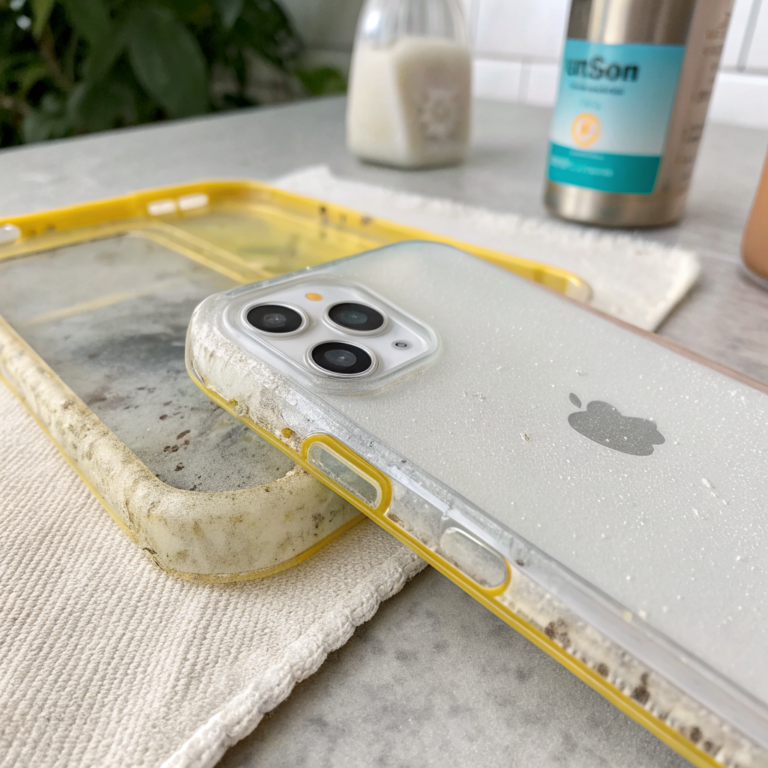
Most clear cases pick up a mix of skin oils, pocket lint, dust, and residue from hands, bags, and countertops. Over time this buildup settles into the texture of the material, especially around button cutouts and the edges that meet the phone.
What I Use For This Job
Using the right tools saves time and protects your belongings. Here are my exact recommendations:
*As an Amazon Associate, TidyFormula earns from qualifying purchases.
Yellowing is a separate issue from surface dirt. It usually comes from the material itself breaking down with age, heat, and UV exposure rather than from something that can simply be wiped off. Cleaning can improve the appearance in many cases, but it may not fully reverse yellowing that has set into the material.
How to Clean a Clear Phone Case
Start by removing the case from your phone so water and soap do not get near the ports, buttons, or screen. Working with the case off also makes it easier to clean every edge and corner. If you need to clean the phone’s connector, follow our guide to clean a charging port without compressed air. Keep chargers and nearby cables dry—see how to clean cables and power strips safely for tips on handling electronics around water.
- Rinse the case under warm running water to loosen loose dust and grit before applying any cleaner.
- Add a small amount of mild dish soap to a soft cloth, sponge, or soft-bristled brush, such as an old toothbrush reserved for cleaning.
- Gently scrub the inside and outside of the case, paying attention to corners, button cutouts, and camera cutouts where grime tends to collect.
- Rinse thoroughly under warm water until no soap residue remains, since leftover soap can leave a dull film once dry.
- Shake off excess water and lay the case on a dry towel, letting it air-dry fully before placing it back on your phone.
If the case has a fabric-backed or leather-look panel rather than being fully clear plastic or silicone, treat that section separately and avoid soaking it, since trapped moisture can affect adhesive layers. For similar advice on cleaning attached fabrics without soaking, see how to clean stroller fabric without removing it.
TidyFormula Tip
Use a cotton swab dampened with soapy water to reach into narrow button cutouts and port openings without soaking the whole case.
The same cotton-swab technique works for tight spots inside electronic accessories like a computer mouse.
Removing Yellowing From a Clear Silicone Case
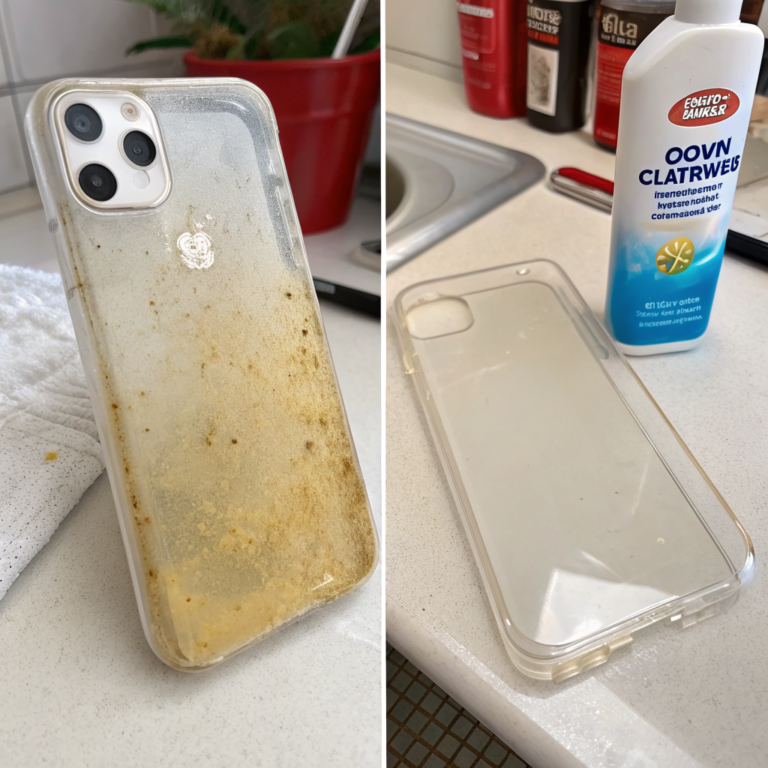
A baking soda paste applied with a soft cloth can help lift some surface discoloration on clear silicone or TPU cases. Mix baking soda with a small amount of water until it forms a thick paste, spread it over the yellowed areas, and gently rub in small circles before rinsing well.
This approach tends to work better on surface staining than on yellowing that has developed deep within the material. If the case still looks yellow after a thorough cleaning and a paste treatment, the discoloration is likely permanent, and replacing the case is usually the more practical option.
Cleaning Textured, Printed, or Card-Slot Cases
Cases with printed graphics, glitter layers, or embedded card slots need a gentler approach than a plain clear case. Test any cleaning method on a small, hidden area first to check that the print or finish does not smear, lift, or fade. This is the same precaution we recommend when cleaning a gaming controller or other printed electronics.
For card-slot cases, avoid fully submerging the case in water, since moisture can get trapped between layers and take a long time to dry out. A barely damp cloth is usually safer than a soak for this style of case.
What to Avoid When Cleaning a Clear Phone Case
Avoid rubbing alcohol, bleach, or strong solvent-based cleaners on clear cases, since these can cloud the plastic or silicone, soften certain materials, or damage printed designs. Cleaning agents that should not be combined, such as bleach and ammonia-based products, must never be mixed, and this applies even when cleaning a small item like a phone case.
Skip abrasive scrub pads, steel wool, or anything that could scratch the surface, since scratches on a clear case are permanent and often make future dirt collect faster in those grooves. Also avoid putting the case in a washing machine, dishwasher, or clothes dryer, since heat and agitation can warp the material or damage any adhesive components.
Reattaching a case before it is fully dry is another common mistake. Trapped moisture between the case and the phone can sit against the device for extended periods, so give the case time to air-dry completely first.
How to Keep a Clear Phone Case Looking Clear Longer
Wiping the case down every week or two with a soft, slightly damp cloth can keep oils and dust from building up into harder-to-remove grime. Keeping the case out of direct sunlight and away from high heat, such as a hot car dashboard, may also slow the rate at which the material yellows over time.
Washing your hands regularly and avoiding setting the phone face-down on dusty or greasy surfaces both reduce how quickly the case picks up residue between cleanings.
Frequently Asked Questions
Can I use rubbing alcohol on a clear phone case?
Rubbing alcohol is not recommended for most clear cases because it can cloud or dull silicone and certain plastics over repeated use. Mild dish soap and warm water is a gentler option that cleans effectively without the same risk to the material’s clarity. For examples of cleaners to avoid on delicate electronics, see our tips on cleaning a laptop screen without streaks.
How often should I clean my phone case?
Washing a clear case every one to two weeks usually keeps buildup manageable, though this depends on how often you handle your phone and where you set it down. Cases used in dusty, greasy, or high-touch environments may need more frequent attention.
Why does my clear case still look dull after washing?
A dull look after washing often means soap residue was left behind, or the material has started to yellow with age rather than simply being dirty. Rinsing more thoroughly can resolve residue-related dullness, but age-related yellowing typically does not reverse with additional cleaning.
Is it safe to soak a clear phone case in water?
Soaking is generally fine for a solid clear silicone or plastic case with no card slots, fabric backing, or exposed adhesive. Cases with those features are better cleaned with a barely damp cloth to avoid trapping moisture inside the layers.
What should I do if cleaning does not remove the yellowing?
If a thorough wash and a baking soda paste treatment do not improve the color, the yellowing has likely set into the material itself. At that point, replacing the case is usually the more realistic solution than continuing to clean it.
Everything Mentioned Above
Before you leave, grab the tools you need to get the job done right the first time:
*As an Amazon Associate, TidyFormula earns from qualifying purchases.