
How to Remove Soy Sauce Stains from Clothes: Quick, Safe Fixes for Fresh and Set-In Stains
Soy sauce stains come out of most washable clothing when you flush the spot with cold water, treat it with a liquid laundry detergent or enzyme-based stain remover, and let it sit briefly before washing on the coolest setting the care label allows. Because soy sauce contains both dark pigment and salt (similar to stubborn turmeric stains), dried or set-in stains often need a repeated soak-and-wash cycle rather than one pass.
The TidyFormula Quick Decision
Best approach: Rinse the stain with cold water from the back of the fabric, work in a small amount of liquid laundry detergent, let it sit, then wash on the coolest cycle the care label allows.
Use caution with: Silk, wool, dry-clean-only fabrics, and any garment with a care label that specifies dry cleaning only or cold water only, since heat and hot water can set the stain permanently.
Stop and reassess if: The fabric starts to lose color, pucker, or feel weaker where you’re working, or if the stain remains after two full wash cycles on a fabric you can’t identify or that has no care label.
What I Use For This Job
Using the right tools saves time and protects your belongings. Here are my exact recommendations:
*As an Amazon Associate, TidyFormula earns from qualifying purchases.
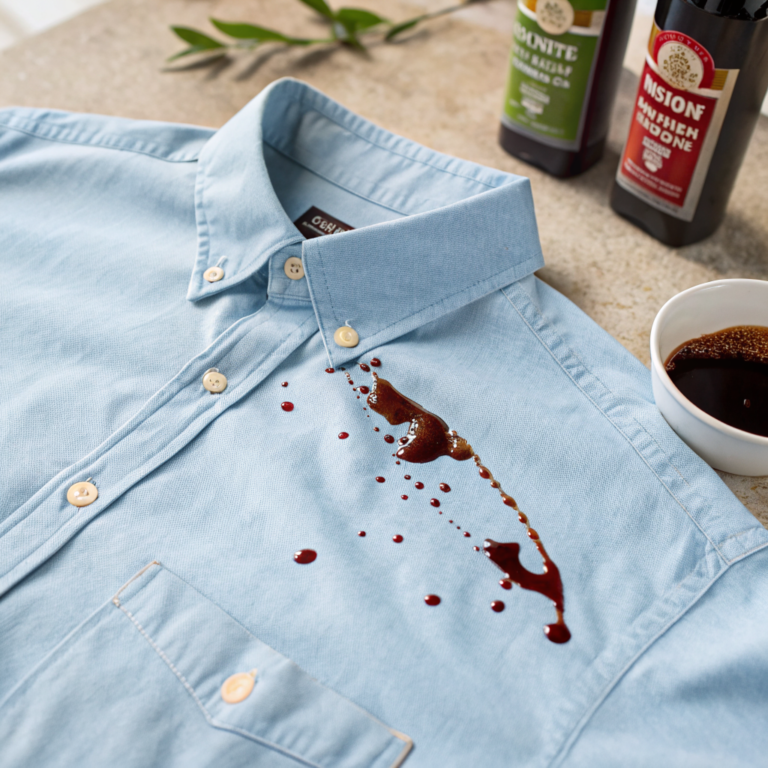
Why Soy Sauce Stains Are Hard to Remove
Soy sauce combines a dark pigment with salt and a small amount of sugar, and all three can bind to fabric fibers once the liquid dries. The pigment shows up visually first, but the salt content is part of why a stain that looked gone after rinsing can reappear as a faint ring once the garment dries.
This is also why treating the stain while it’s still fresh usually gives better results than waiting. Once soy sauce dries and sets, it behaves more like a combination stain, and you may need to repeat treatment rather than expect one detergent application to lift it completely.
How to Get Out Soy Sauce From Clothes When the Stain Is Fresh
A fresh soy sauce stain responds best to cold water and prompt treatment before it has a chance to dry into the fibers. Working quickly matters more here than using a stronger product.
- Scrape or blot up any excess soy sauce with a spoon or paper towel, working from the outside of the stain inward so you don’t spread it.
- Hold the fabric under cold running water with the stain facing down, so water pushes the pigment out rather than deeper into the fibers.
- Apply a small amount of liquid laundry detergent directly to the stain and gently work it in with your fingers.
- Let the detergent sit on the fabric for a short time before washing, following the dwell guidance on the detergent label.
- Wash the item on the coolest cycle the care label allows, and check the stain before drying.
If the stain is faint or gone before drying, you can dry the garment as usual. If any shadow remains, avoid the dryer and repeat treatment instead, since heat can make a partial stain much harder to remove afterward.
Removing a Dried or Set-In Soy Sauce Stain
A dried soy sauce stain usually needs a longer soak and possibly more than one wash cycle rather than a single treatment. Patience matters more than switching to a harsher product. For oilier spills, see how to remove grease stains from a fabric sofa.
- Pretreat the stain with liquid detergent or an enzyme-based stain remover, working it gently into the fabric.
- Soak the garment in cool water, checking periodically to see whether the stain is lightening.
- Wash on the coolest setting the care label allows, then inspect the stain again before drying.
- If any staining remains, repeat the pretreat-and-wash cycle rather than moving straight to bleach or a stronger chemical treatment.
Avoid ironing or tumble drying a garment with a stain that hasn’t fully released, since heat can bond the remaining pigment to the fibers and make it far more resistant to future treatment.
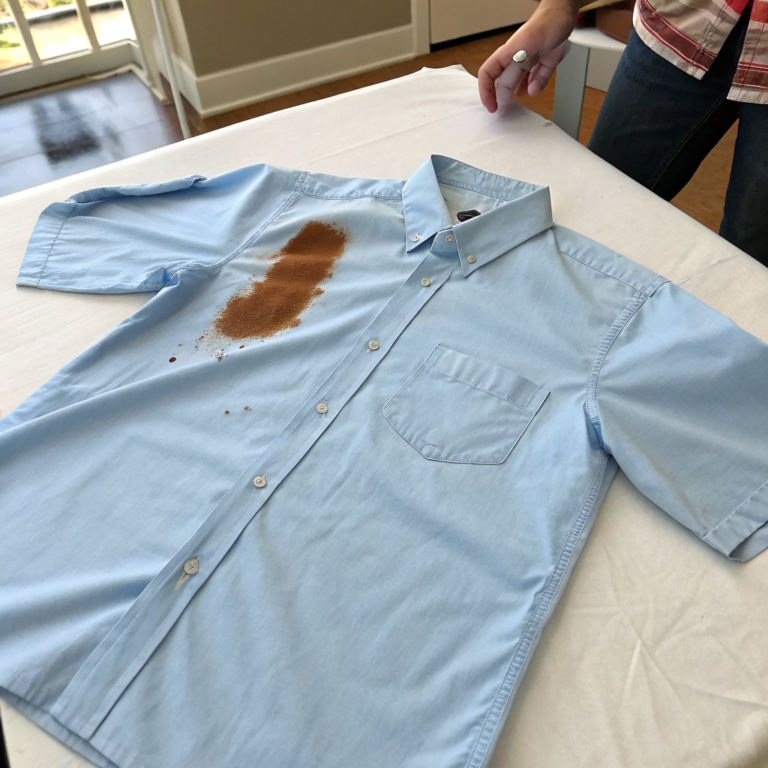
Soy Sauce Stains on Delicate or Dry-Clean-Only Fabrics
Silk, wool, and other dry-clean-only fabrics need a gentler approach than sturdy cotton or synthetic blends. Check the care label first, since water and standard detergent can sometimes cause shrinking, watermarking, or color loss on these materials.
For a delicate fabric, blot the stain gently rather than rubbing, and avoid soaking unless the care label allows it. In many cases, the safer route is to blot away excess soy sauce, keep the area from drying completely, and take the garment to a professional cleaner who can identify the fiber and treat it appropriately. Attempting a home treatment on silk or wool without checking the label first is one of the more common ways these stains turn into permanent damage instead of a solvable spot.
TidyFormula Tip
Test any detergent or stain remover on a hidden seam or inside hem first, since dark dyes and delicate fibers can react differently than expected.
What to Avoid When Treating Soy Sauce Stains
A few common habits make soy sauce stains worse instead of better, and most of them involve heat or the wrong order of steps.
- Do not use hot water on a fresh stain, since heat can set both the pigment and the salt into the fibers.
- Do not put a stained garment in the dryer before confirming the stain is fully gone, since heat can make a faint residual stain permanent.
- Do not rub the stain aggressively on delicate fabrics, since this can push the pigment deeper or damage the fibers.
- Do not combine bleach with other cleaning agents or stain removers. Cleaning agents that should not be combined must not be combined, and mixing products rarely improves results even when both are marketed as safe individually.
- Do not assume a stain is gone just because it looks lighter while wet. Check the fabric once it’s dry before deciding the treatment worked.
Preventing Soy Sauce Stains From Setting
The most reliable way to keep a soy sauce spill from becoming a permanent stain is treating it before it dries, since dried pigment and salt are harder to release from fabric than a fresh spill. Keeping a stain-removal pen or a small bottle of liquid detergent on hand when eating foods that commonly splash, such as sushi or stir-fry dishes, can make same-day treatment much easier.
If you’re traveling or eating away from home, blotting the spill immediately and rinsing it with cold water as soon as you can access a sink will usually buy enough time to treat it properly later, even if a full wash isn’t possible right away.
Frequently Asked Questions
Does vinegar work on soy sauce stains?
Plain white vinegar can sometimes help loosen soy sauce residue on sturdy, colorfast fabrics like cotton, but it isn’t a substitute for detergent on a set-in stain. Test it on a hidden area first, since vinegar can affect certain dyes and delicate fibers.
Can I use hydrogen peroxide on a soy sauce stain?
Hydrogen peroxide can lighten some stains on white or colorfast fabrics, but it can also fade dyed fabrics unpredictably. Spot test in a hidden area first, and avoid it on silk, wool, or any fabric where color loss would be noticeable.
What if the stain is still there after washing?
Repeat the pretreat-and-wash cycle rather than switching straight to a stronger product or hotter water. Most soy sauce stains that survive one wash respond to a second round of detergent and a cool soak, especially if the fabric wasn’t dried in between.
Will soy sauce stains come out of white clothing?
White fabric shows soy sauce staining more clearly, but the removal process is the same: cold water, detergent, and a cool wash before drying. If a faint shadow remains on a white, colorfast, washable fabric, check the care label to see whether a mild bleach alternative (for example, hydrogen peroxide) is safe to use.
Is soy sauce staining different from other dark sauce stains?
Soy sauce behaves similarly to other dark, salty sauces in that pigment and salt both bind to fibers, but its thinner consistency means it can spread and soak in faster than thicker sauces. Treating it promptly matters even more than with thicker condiments.
Everything Mentioned Above
Before you leave, grab the tools you need to get the job done right the first time:
*As an Amazon Associate, TidyFormula earns from qualifying purchases.