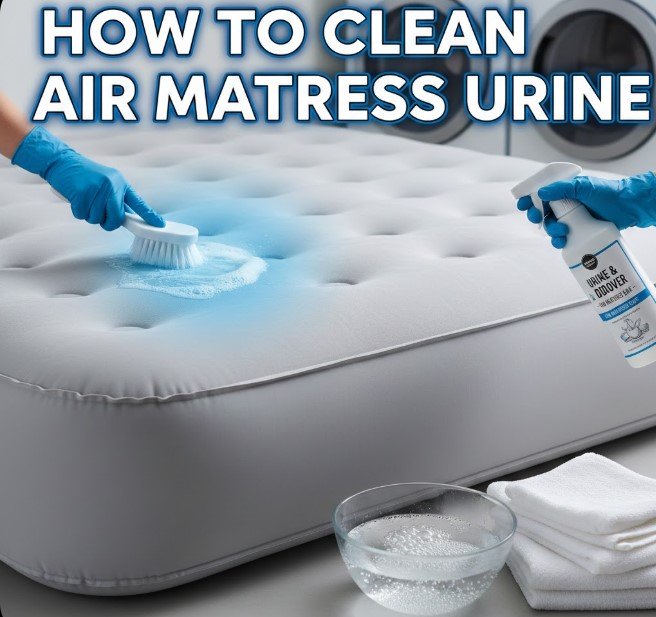
How to Clean Air Mattress Urine: The Biological Breakdown Method
Blot fresh urine immediately, treat the spot with diluted white vinegar, blot again, and then apply an enzymatic urine cleaner separately. Keep liquid away from seams, valves, and built-in pumps. Let the air mattress dry completely while inflated before deflating or storing it.
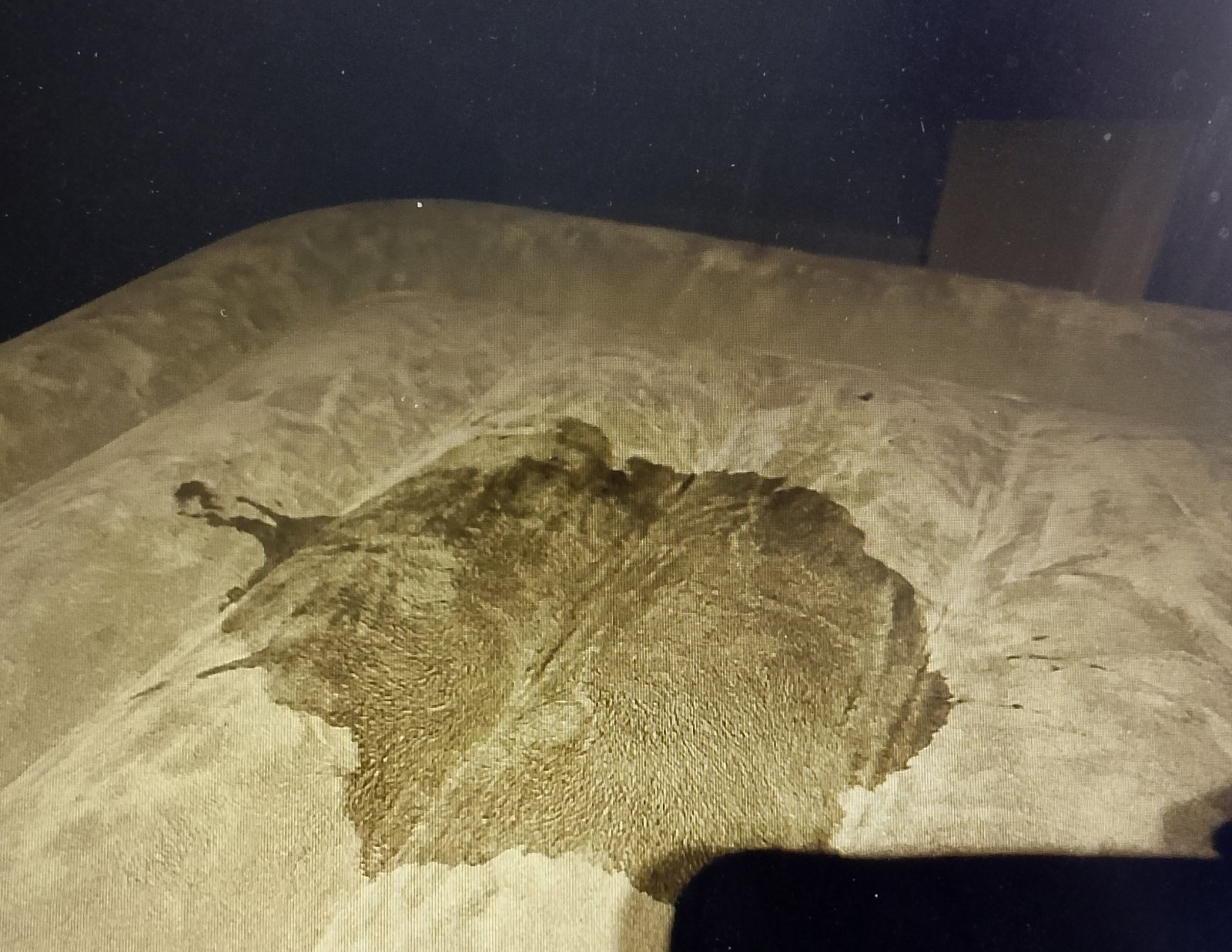
That fuzzy, velvet-like flocking can pull urine into its fibers, while seams and pump openings can allow liquid inside the mattress. Wiping the surface alone may therefore leave an odor that returns later.
Put down the bleach, skip the scrub brush, and use controlled amounts of cleaner.
⚡ The TidyFormula™ Quick Answer
The method: Blot, neutralize the odor with diluted vinegar, apply an enzyme cleaner separately, and dry thoroughly.
- The vinegar mix: Equal parts cool water and white distilled vinegar.
- The enzyme step: Use a urine-specific enzymatic cleaner according to its label. Never combine it with vinegar in the same bottle.
- Time: About 15–30 minutes of hands-on work, followed by several hours or overnight drying.
- Best for: Fresh or dried urine on flocked and smooth-vinyl air mattresses, provided the liquid has not entered the pump or mattress interior.
Before You Clean the Air Mattress
Check the mattress care label first. Some manufacturers restrict the cleaners that can be used on flocking, printed surfaces, or seam adhesives.
What I Use For This Job
Using the right tools saves time and protects your belongings. Here are my exact recommendations:
*As an Amazon Associate, TidyFormula earns from qualifying purchases.
- Unplug the mattress: If it has a built-in electric pump, disconnect it from power before cleaning.
- Close the valve: Make sure all inflation and deflation valves are capped securely.
- Keep it inflated: A firm surface is easier to blot and helps prevent cleaner from collecting in folds. Do not overinflate it.
- Protect the floor: Place the mattress over a clean tarp, shower curtain, or other moisture-resistant surface.
- Patch-test: Test the vinegar solution and enzyme cleaner separately on an inconspicuous area. Check for color transfer, adhesive softening, or changes in the flocking.
- Ventilate the room: Open a window or run a fan, but keep the fan away from any wet electrical pump housing.
Adjust the Method for the Surface
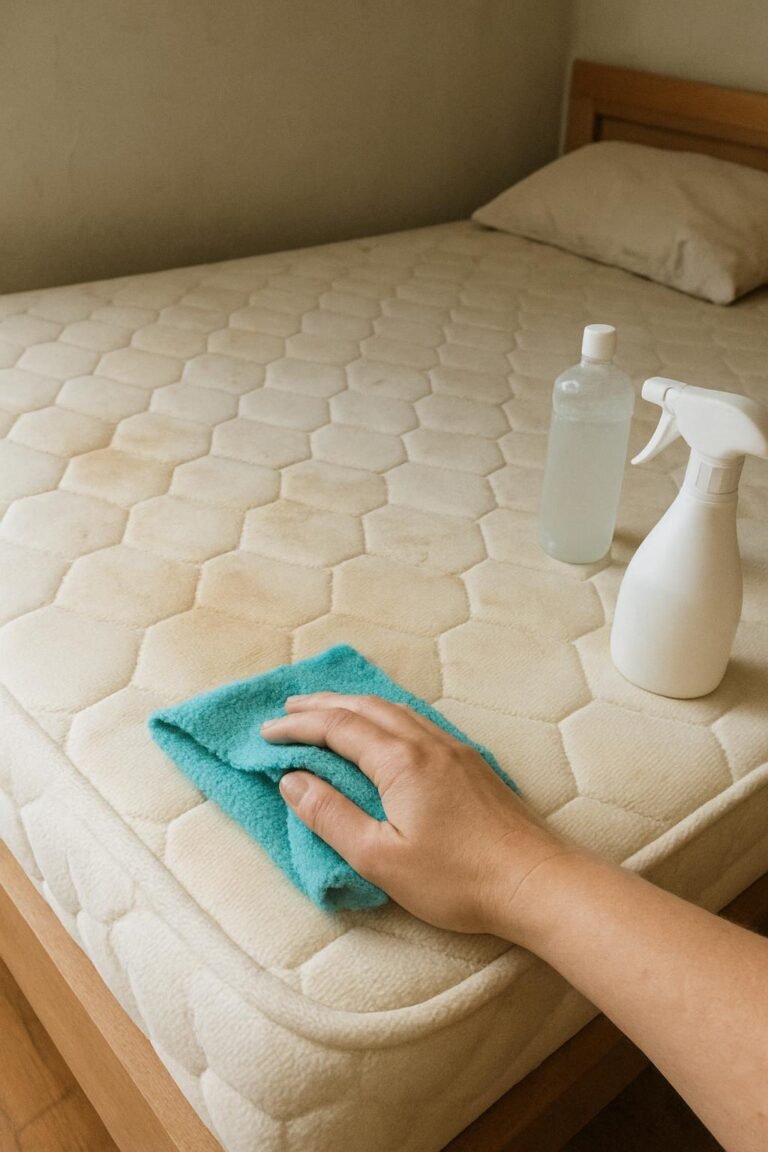
- Flocked top: Blot instead of rubbing. Use enough cleaner to dampen the affected fibers without creating runoff.
- Smooth vinyl: Use less liquid because urine usually remains closer to the surface. Wipe gently with a soft, colorfast cloth.
- Seams and edges: Work from the outside of the spot toward the center so you do not drive liquid into a seam.
- Valve or pump area: Do not spray it directly. Apply cleaner to a cloth instead, and stop if urine appears to have entered the opening.
1) Clean Urine Off a Blow-Up Mattress: Blot First
If the puddle is fresh, speed matters. If it has dried, the mattress can often still be cleaned, but the enzyme treatment may need more contact time or a second application.
What You’ll Need
- White paper towels or colorfast cloths: Avoid dyed towels that could transfer color to damp flocking.
- White distilled vinegar: Cheap is fine.
- Cool water: Hot water and steam can affect vinyl, flocking adhesive, and seams.
- Enzymatic cleaner: Choose one labeled for urine and suitable for upholstery or the mattress material.
- Spray bottle: For controlled application.
- A fan: For room-temperature airflow during drying.
Start by blotting. Place several layers of paper towel over the spot and press down firmly with your hands. Replace the towels and repeat until they come up mostly dry. Do not rub sideways, because that spreads urine through the flocking.
For a dried spot, begin with the vinegar step below. Do not flood the area simply to make it feel wet again.
🧪 Why Two Treatments Are Used
As urine residue ages, it can develop an ammonia-like odor. Diluted vinegar can reduce that odor, but it does not reliably remove all of the odor-causing residue. A urine-specific enzymatic cleaner is designed to break down components left behind after blotting. The two products should be applied separately, not mixed.
Related: If this happened on a real mattress/futon (and you’re worried about mold), use a low-moisture protocol like this one:
How to Clean a Futon Mattress of Urine (And Save It From Mold).
2) Clean Urine From an Air Mattress With Diluted Vinegar
- Mix: Add one part cool water and one part white vinegar to a clean spray bottle. Do not add soap, bleach, peroxide, or enzyme cleaner.
- Apply carefully: Spray the stained flocking until it is evenly damp, not dripping. Near seams or a pump, spray the solution onto a cloth and dab it on.
- Wait: Allow 5–10 minutes of contact time unless the mattress care instructions say otherwise.
- Blot: Press with fresh paper towels until little moisture transfers.
- Remove excess vinegar: Lightly dampen a clean cloth with plain water, blot the spot once, and then blot it dry again. This reduces vinegar residue before the enzyme step.
If the enzyme cleaner’s label says not to use it after another cleaner, skip the vinegar treatment and follow the enzyme product’s directions instead.
3) Clean Urine From an Air Mattress With an Enzymatic Cleaner
After blotting out the vinegar solution, apply the urine-specific enzyme cleaner according to its label. Enzyme formulas vary, so the listed contact time and material restrictions take priority over general instructions.
- Patch-test the product: Check a hidden area and let it sit for the label’s specified contact time.
- Apply an even layer: Use enough to reach the urine-affected flocking, but prevent puddles and runoff into seams.
- Allow the required contact time: Do not blot it away immediately. The treated area generally needs to remain damp for the period specified on the label.
- Blot excess cleaner: Press with clean paper towels or a colorfast cloth. Do not scrub.
- Let it dry fully: Judge the remaining odor only after the mattress is dry, because damp cleaner can temporarily mask or change the smell.
Air-mattress “velvet” is made from tiny fibers attached to plastic. Hard scrubbing can flatten or remove those fibers.
Blot—never scrub.
Want the deeper “enzyme method” explanation (and what to do when smell comes back on humid days)?
See: How to Clean Cat Urine On Mattress (The Enzyme Method).
4) Dry the Air Mattress Completely
After the enzyme cleaner has remained in place for the label’s required time, blot any excess. Keep the mattress inflated and dry it at room temperature.
- Do: Lean it securely in a well-ventilated room or prop it so air can reach both sides.
- Do: Direct a clean fan across the treated surface.
- Do: Rotate the mattress periodically if the underside or edge feels damp.
- Don’t: Use a hair dryer, space heater, heated blanket, or steam cleaner. Concentrated heat can warp vinyl or weaken flocking and seam adhesives.
- Don’t: Deflate, fold, cover, or store the mattress while any area remains damp.
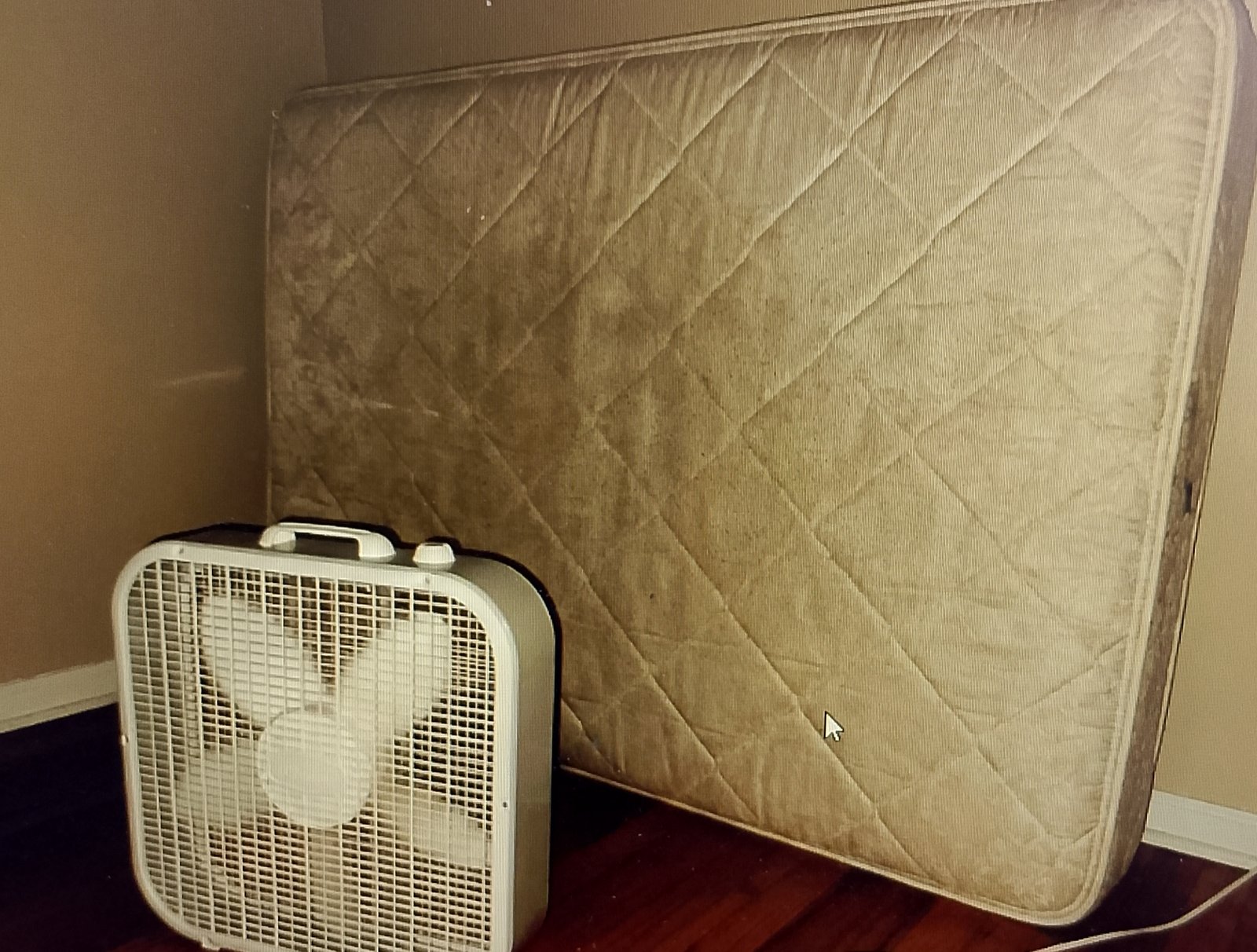
Pro tip: if your fan is dusty, you’re blowing grime right back onto the surface.
Quick fix here:
How to Clean a Fan Without Taking It Apart.
How to Tell Whether It Is Dry
Press a dry paper towel firmly against the cleaned area and check for moisture transfer. Compare the temperature and feel of the spot with an untreated section. If it still feels noticeably cool, tacky, or damp, continue drying. Deeply damp flocking may need overnight airflow.
5) Deodorize and Store the Mattress
Once the mattress is completely dry, smell the area at close range. If only a mild residual odor remains, you can use baking soda as an optional final deodorizer.
- Sprinkle a light, even layer of baking soda over the dry spot.
- Leave it overnight.
- Vacuum with an upholstery attachment on low suction, without a rotating brush or beater bar.
Keep baking soda away from built-in pump and valve openings. Remove all powder before deflating the mattress.
Before storage, inspect the seams and underside for trapped dampness. Deflate and fold the mattress according to the manufacturer’s instructions, then keep it in a clean, dry location away from heat and sharp objects.
Troubleshooting Urine Odor and Stains
The Smell Returns After Drying
The treatment may not have reached all of the urine residue, especially on thick flocking. Repeat the enzyme step once, using only enough product to dampen the affected fibers. Let the mattress dry completely again before judging the result.
If the odor is strongest at a seam, valve, or pump opening, stop adding liquid. Cleaner placed there can push contamination farther inside rather than remove it.
A Ring or Tide Line Appears
Minerals in water, cleaner residue, or uneven wetting can leave a visible edge on flocking. After patch-testing, lightly dampen the edge with plain or distilled water and blot from the outside toward the center. Avoid soaking the entire flocked panel merely to correct a cosmetic mark.
The Flocking Starts Shedding or Feels Sticky
Stop cleaning and blot away any remaining moisture. Stickiness, color transfer, or loose fibers can indicate that the material or adhesive is reacting to the cleaner. Do not apply another product over the affected area.
Reality Check: When to Throw It Out?
If urine entered a seam, valve, or internal pump mechanism, complete removal may not be practical. Inflation can move trapped odor from the interior back into the room, and an electric pump should never be opened or rinsed for cleaning.
Also consider replacement if the mattress remains wet internally, develops persistent dark spotting, has damaged seams, or continues to smell after repeated drying and one carefully repeated enzyme treatment. If you see black spots after a few days, cut your losses. Mold spores are not worth it.
Mold (Wikipedia).
Methods to Avoid
- Bleach: It can discolor the surface, affect materials, and create dangerous fumes when combined with acids or ammonia-containing residue.
- Steam or very hot water: Heat can damage vinyl, seam construction, or the adhesive holding the flocking.
- Hard brushes and abrasive pads: They can remove the flocked finish or scuff smooth vinyl.
- Heavy soaking: Excess liquid can migrate into seams, valves, or the mattress interior.
- Fragrance sprays and essential oils: They may cover the odor temporarily without removing the residue and can leave additional stains.
- Multiple cleaners applied together: Products can interfere with one another or create unsafe reactions. Use one treatment at a time and follow its label.
FAQ
Can I Just Use Soap and Water?
You can use a small amount of mild soap on smooth vinyl if the care label permits it, but soap alone may not remove urine residue from flocking. Too much soap can also leave a sticky film that is difficult to rinse without soaking the mattress.
Will Vinegar Leave a Water Stain?
It can leave a visible tide line on some flocked surfaces, especially if the water is mineral-rich or the spot is unevenly wet. Patch-test first, apply the solution evenly, and blot from the outside toward the center.
Can I Hose It Down Outside?
Spot-cleaning is safer. Hosing down the mattress can drive water into seams, valves, or a built-in pump and make thorough drying difficult.
Can I Put It in the Washing Machine?
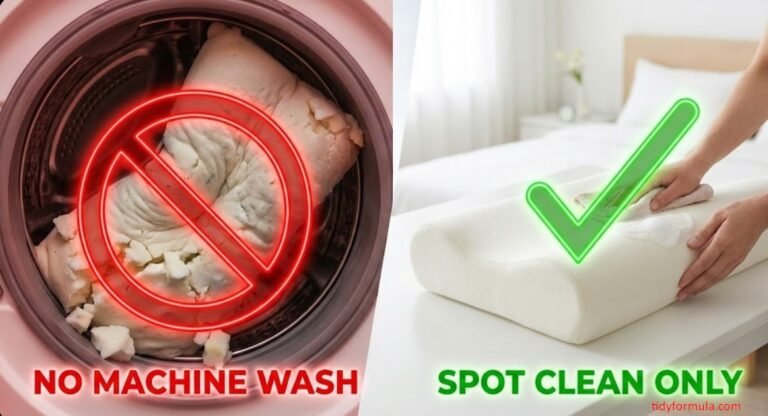
No. Agitation can damage the vinyl, seams, flocking, and internal structure. Hand-clean the affected area only.
Can I Sleep on the Mattress the Same Night?
Only if the mattress is completely dry and no cleaner remains on the surface. If the flocking feels cool or damp, continue drying it and use another sleeping surface.
What’s Next? (Internal Guides)
- If the accident hit the rug/carpet too:
How to Clean a Rug Without a Carpet Cleaner - For laundry + linen odor fixes:
Laundry & Shoe Care - For more stain tutorials:
Stain Removal - Cleaning upholstery without machines:
How to Clean a Couch Without a Machine
Everything Mentioned Above
Before you leave, grab the tools you need to get the job done right the first time:
*As an Amazon Associate, TidyFormula earns from qualifying purchases.