best chew toys for cleaning dogs teeth
The first “dental” toy I tested looked clean from across the room, but the grooves were packed with damp kibble and smelled awful. A quick rinse had only pushed the mess deeper. Not exactly something I wanted the dog chewing again.
Finding the best chew toys for cleaning dogs’ teeth is partly about choosing a useful texture and partly about keeping that texture clean. A toy covered in residue cannot do its job well, and an extremely hard toy may create more risk than benefit.
I prefer slightly flexible rubber toys with reachable ridges, an appropriate size, and clear washing instructions. They are easier to inspect, scrub, rinse, and replace when worn.
⚡ The TidyFormula™ Quick Answer
The Fix: Choose a properly sized, slightly flexible textured rubber chew toy, supervise each chewing session, then scrub the grooves with mild dish soap and let the toy dry completely before storing it.
What You Need Before You Start
You do not need a cabinet full of pet-cleaning products. A few simple supplies are enough for choosing, testing, and maintaining most rubber dental toys.
What I Use For This Job
Using the right tools saves time and protects your belongings. Here are my exact recommendations:
*As an Amazon Associate, TidyFormula earns from qualifying purchases.
- A chew toy made from flexible rubber with visible texture
- A size appropriate for your dog’s mouth and chewing style
- Warm water
- Unscented mild dish soap
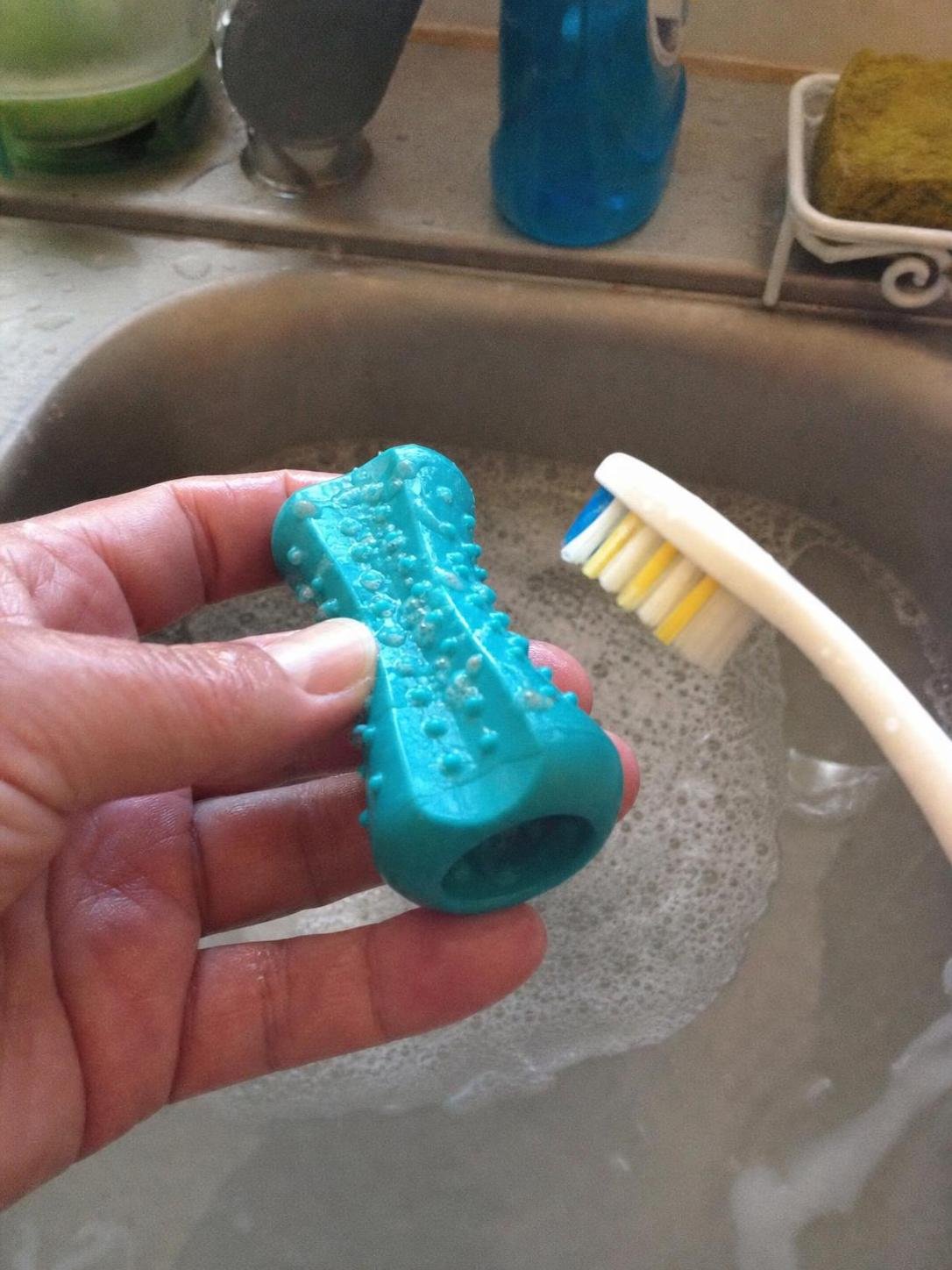
- A dedicated soft toothbrush or narrow bottle brush
- A clean towel or drying rack
- A small bowl for soaking stubborn residue
- A flashlight for checking deep openings and hollow centers
A basic soft toothbrush is usually the most useful tool here. It reaches between ridges without scratching the rubber, and it costs very little (which is helpful when the dog inevitably decides the cleaning brush is also a toy).
Avoid bleach, essential oils, heavily scented cleaners, abrasive powders, and household disinfectant sprays unless the toy manufacturer specifically approves them. Residue can remain in textured surfaces. I also avoid putting toys in the dishwasher unless their care instructions permit it; I once warped a rubber toy on a heated drying cycle, and no amount of reshaping fixed it.
If the toy is too large or messy for the kitchen sink, the same controlled washing setup used to clean toys in a bathtub can provide more room. Keep pet items separate from children’s bath items during washing and drying.
How to Choose and Use a Dental Chew Toy
1. Start with the right material
Look for a resilient rubber toy with raised ridges and grooves. Those textured areas can rub against exposed tooth surfaces while the dog chews. The toy should give slightly under pressure rather than feeling like stone.
Use the thumbnail test as an initial screen: press your thumbnail firmly against the surface. If the material has no give at all, I generally pass on it. This is not a guarantee of safety, but it quickly weeds out many extremely hard products.
Avoid antlers, very hard bones, rocks, and rigid toys that feel harder than the tooth itself. Rope toys may provide some wiping action, but they need close supervision because loose strings can be swallowed. Plush toys are comforting, but they are not effective teeth-cleaning toys.
2. Match the toy to the dog
Select a toy large enough that it cannot fit completely behind the dog’s back teeth or become lodged in the mouth. At the same time, it should not be so bulky that a small dog cannot grip the textured section.
The best teeth-cleaning toys for small dogs usually have narrow gripping areas, shallow grooves, and enough length for you to retrieve the toy easily. “Small” on a package is not always meaningful, so compare the toy with your dog’s mouth rather than relying only on the label.
For a strong chewer, choose thicker rubber and inspect it often. For a gentle chewer, a softer textured toy may create better contact because the dog can comfortably work it around the mouth.
3. Wash the toy before its first use
Check the manufacturer’s instructions. Washable does not always mean dishwasher-safe or suitable for boiling.
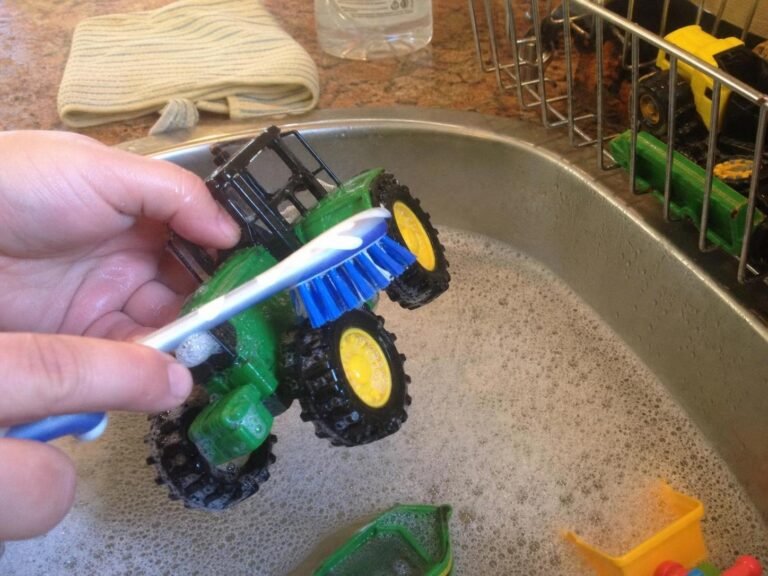
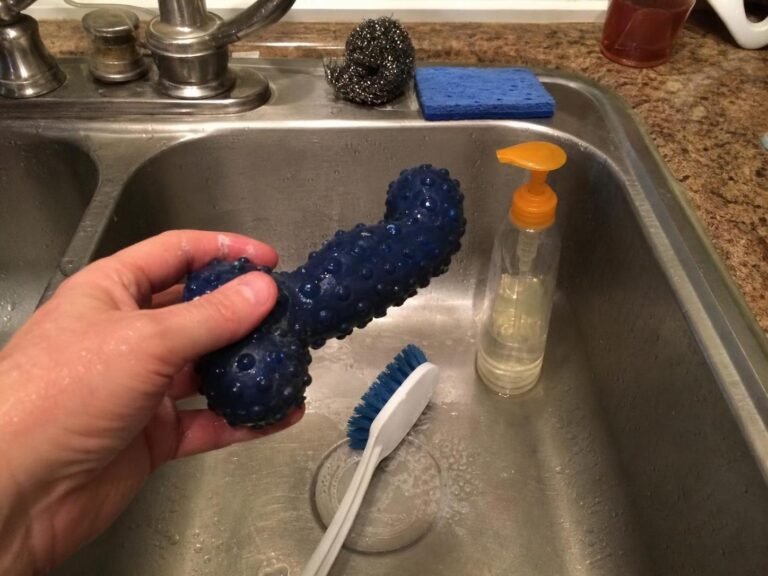
Wet the toy with warm water, apply a drop of soap to the brush, and scrub every surface. Pay special attention to seams, treat holes, and the base of each ridge.
Rinse until the water runs clear and the rubber no longer feels slippery. Smell the toy as well. A noticeable soap fragrance means it needs another rinse.
4. Use short, supervised chewing sessions
Offer the toy while you are nearby. Ten to fifteen minutes is a reasonable starting session for many dogs, although chewing style matters more than the clock.
Watch where the toy contacts the mouth. A useful design encourages the dog to reposition it instead of grinding one hard edge against the same teeth.
Remove the toy if the dog tears off chunks, makes deep punctures, exposes a core, or starts swallowing pieces. Stop and check the mouth if you notice bleeding, sudden reluctance to chew, or signs of discomfort. A veterinarian should assess dental pain, a damaged tooth, or persistent mouth odor.
5. Scrub away saliva and food after use
Rinse the toy promptly so saliva and food do not dry into the texture. Dried residue takes much longer to remove.
For routine cleaning, use warm water, one small drop of soap, and firm groove scrubbing with a dedicated brush. Rotate hollow toys while rinsing so water passes through every opening.
For stuck-on food, soak the toy in warm soapy water for five to ten minutes, then scrub again. Do not leave a treat-filled toy soaking for hours; softened crumbs can migrate farther into hollow sections.
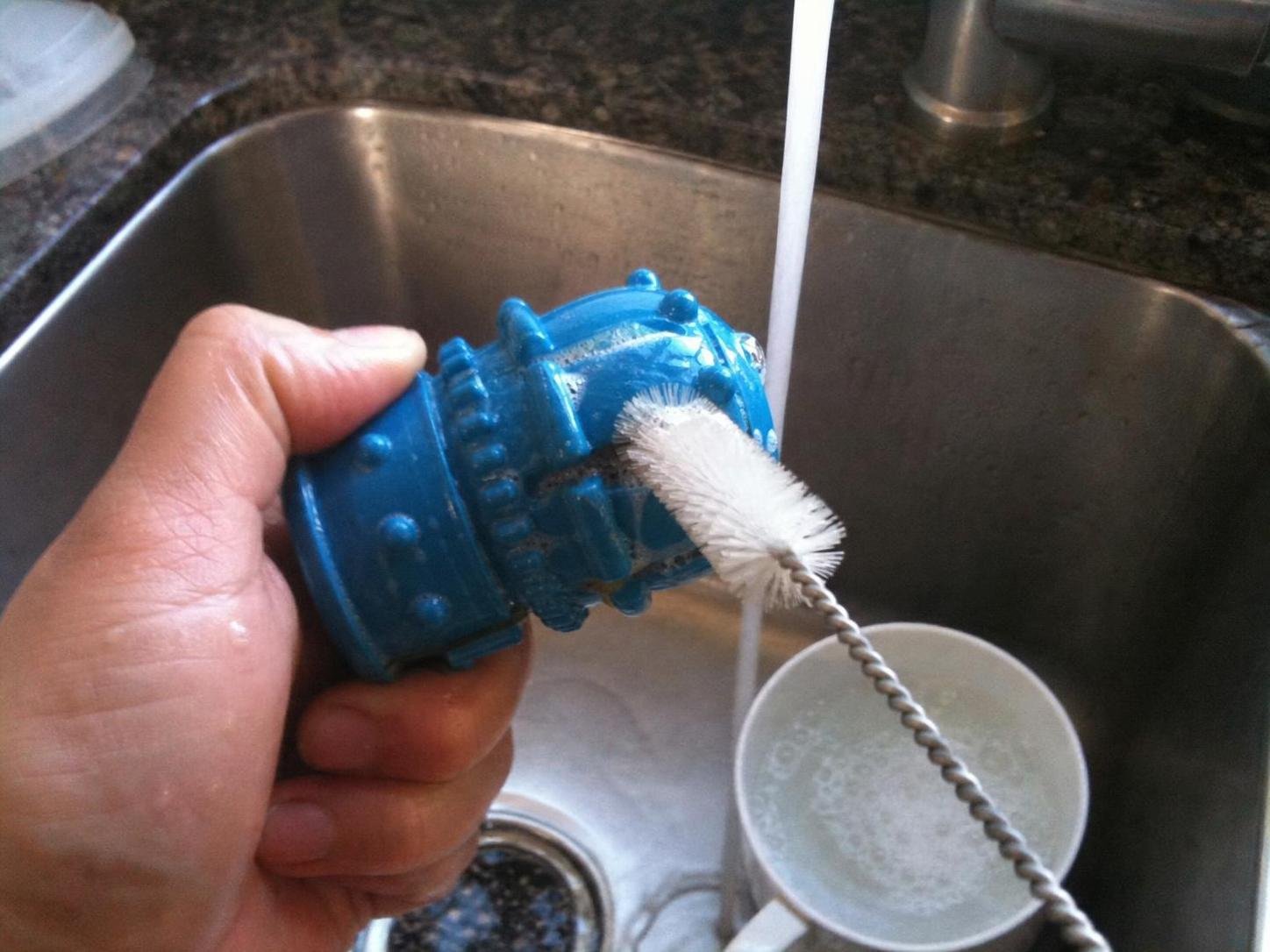
Rinse several times. Squeeze flexible toys under running water to flush interior channels, then inspect them with a flashlight.
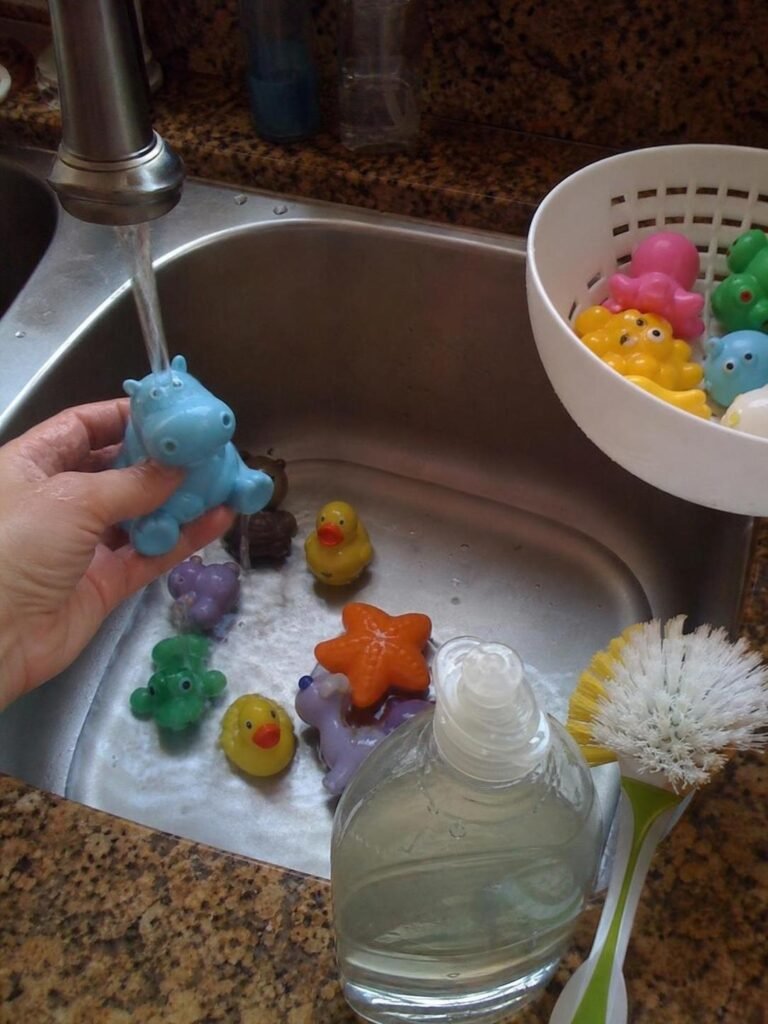
Hollow toys deserve extra attention because trapped water can create the same stale, hidden mess found inside children’s squirting toys. Our method for cleaning bath toys and checking their interiors includes useful inspection habits for any washable hollow toy.
🧪 Why This Works
Textured rubber works a little like a textured cleaning cloth moving across a counter: the raised areas create light friction that can loosen some soft debris from exposed surfaces. Washing the toy removes that collected saliva and food before it hardens in the grooves. It does not reach every tooth surface or clean below the gumline, so a chew toy should support regular dental care rather than replace brushing or veterinary checkups.
Dental Toy Types Compared
| Toy type | Possible cleaning action | How easy it is to wash | Main caution |
|---|---|---|---|
| Textured rubber | Ridges rub against exposed tooth surfaces | Usually easy with soap and a small brush | Deep holes can trap food and water |
| Rubber treat toy | Encourages chewing around textured openings | Moderate; interiors require careful flushing | Sticky fillings can remain inside |
| Dental rope | Fibers may wipe across parts of the teeth | Varies; many require machine washing | Discard when threads loosen or fray |
| Rigid nylon toy | Chewing creates surface contact | Usually easy to rinse and brush | May be too hard for some dogs; rough ends need inspection |
| Edible dental chew | Designed to be chewed and consumed | Not reusable, so no washing is needed | Choose the correct size and account for ingredients and calories |
| Plush toy | Little meaningful tooth-scrubbing action | Fabric can hold saliva and odors | Not a substitute for a dental toy |
When comparing edible dental chews with reusable toys, the Veterinary Oral Health Council’s accepted-products list is a useful place to check whether a product has met its standards. A reusable toy without that acceptance should not be assumed to provide the same dental benefit.
Common Mistakes to Avoid
Choosing the hardest available toy
Harder does not automatically mean better cleaning. A rigid surface may last longer, but durability is not the only consideration. I favor some flexibility and replace worn toys instead of expecting one object to survive indefinitely.
Buying by weight label alone
Two dogs of the same weight can have very different mouth shapes and chewing strength. Check whether the toy can be swallowed, wedged, or easily shredded before leaving the store packaging behind.
Assuming every bump cleans teeth
Decorative bumps that never reach the teeth do very little. The best toys for cleaning dogs’ teeth have usable texture where the dog naturally grips and chews.
Leaving a treat-filled toy overnight
Peanut butter, wet food, and mashed treats dry into a stubborn film. Once residue reaches a narrow inner channel, a quick rinse will not remove it. Wash filled toys soon after the chewing session.
Using too much soap
More soap creates more rinsing work. One small drop is generally enough for a single toy. If bubbles continue coming out when you squeeze or flex it, keep rinsing.
Ignoring small cracks
A shallow surface mark may be harmless, but growing splits trap grime and make pieces easier to tear away. Bend the rubber during inspection so hidden cracks open up under good light.
Treating the toy as a toothbrush replacement
People often ask, “What toys clean dogs’ teeth?” Textured chew toys may help rub some exposed surfaces, but they do not clean every area consistently. Follow your veterinarian’s recommendations for brushing, examinations, and professional care.
Drying and Storage
Shake out excess water, blot the exterior with a clean towel, and place the toy on a rack with all openings exposed to moving air. Proper complete air drying may take several hours or overnight, especially for hollow toys.
Do not put a damp toy straight into a sealed basket or plastic container. A ventilated bin is better. Rotate hollow toys halfway through drying so moisture does not sit in the lowest section.
Before giving the toy back, squeeze it over the sink. If droplets emerge, it is not dry. Also run a clean finger over the ridges to check for slippery soap residue, dried food, sharp edges, or tacky rubber.
Store dental toys separately from dirty outdoor balls and fabric toys. If a plush companion toy has picked up the same doggy odor but cannot go through a washer, use an appropriate no-machine method for cleaning plush toys rather than soaking it like rubber.
A Practical Pro Tip
Keep two washable dental toys in rotation. Use one while the other dries, and mark the underside of each with a small “A” or “B” using the manufacturer-approved method. I find this makes wear easier to notice because I compare the toys every week instead of gradually getting used to deeper tooth marks.
Frequently Asked Questions
What are the best chew toys for cleaning dogs’ teeth?
Slightly flexible rubber toys with reachable ridges, an appropriate size, and simple washing instructions are practical choices. The toy should encourage chewing without being extremely hard, brittle, or easy to swallow.
What are the best teeth-cleaning toys for small dogs?
Look for lightweight toys with narrow grip points, shallow textures, and enough overall length to prevent swallowing. Avoid oversized ridges that a small mouth cannot comfortably engage.
How often should I clean a dog’s chew toy?
Rinse and wash it after sticky treats, wet food, outdoor use, or heavy saliva. For a toy used only briefly and kept visibly clean, inspect it after every session and wash it regularly according to the manufacturer’s directions.
Can rubber chew toys go in the dishwasher?
Only if the manufacturer specifically says they are dishwasher-safe. Heat can warp some rubber, weaken adhesives, or trap detergent in hollow sections. Hand washing is the safer default when instructions are unclear.
When should I throw away a dental chew toy?
Replace it when pieces are missing, cracks are expanding, the surface becomes sharp or sticky, or residue cannot be removed from the interior. A toy that has become small enough to swallow should also be retired.
A good dental chew toy is appropriately sized, mildly flexible, textured where the dog actually chews, and easy for you to inspect. Supervise its use, wash away saliva and food promptly, and remember that no toy stays suitable forever. When damage or trapped residue cannot be cleaned confidently, replace the toy.
Everything Mentioned Above
Before you leave, grab the tools you need to get the job done right the first time:
*As an Amazon Associate, TidyFormula earns from qualifying purchases.