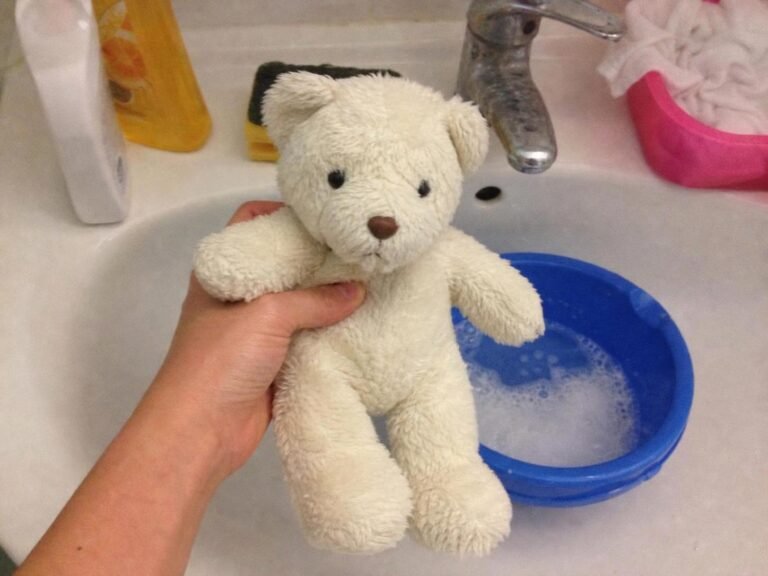
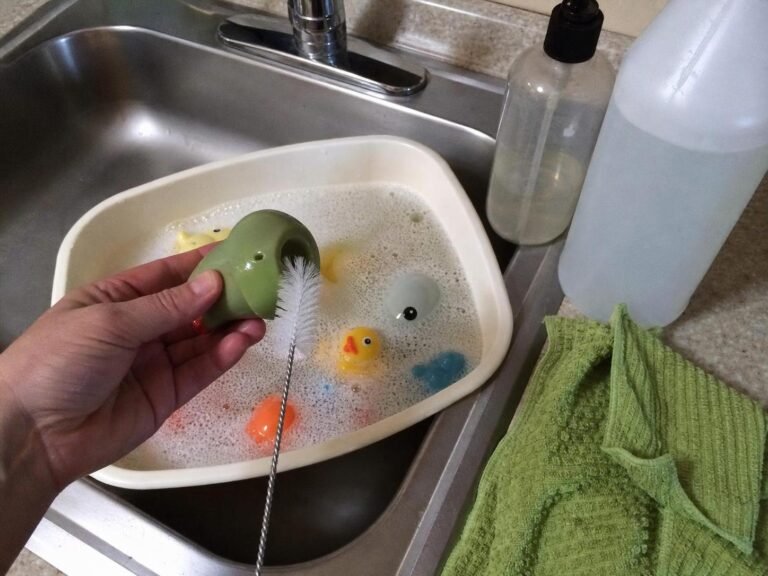
small cleaning toys
For small cleaning toys, choose a simple manual set with sturdy, easy-to-wipe pieces sized for your child and storage space. The best option has no loose hardware, sharp edges, or unnecessary electronics. Follow the set’s current age grading, and never fill a pretend cleaning bottle with real household cleaner.
Mini brooms, dustpans, brushes, mops, and carts can encourage pretend play, but oversized sets quickly become clutter. Water-holding pieces, fabric mop heads, batteries, and removable accessories also require more care than basic molded-plastic tools.
⚡ The TidyFormula™ Quick Decision
Best approach: Choose a compact, manual toy cleaning set with washable surfaces, securely attached parts, and only the tools your child will actually use.
Use caution with: Removable small parts, functional spray bottles, fabric mop heads, painted wood, batteries, and pieces that aren’t approved for water play.
Replace instead of cleaning if: A piece is cracked, splintered, sharply damaged, permanently waterlogged, or missing hardware that keeps it securely assembled.
What I Use For This Job
Using the right tools saves time and protects your belongings. Here are my exact recommendations:
*As an Amazon Associate, TidyFormula earns from qualifying purchases.
What makes a good miniature cleaning set?
The best toy cleaning set is usually the simplest one that fits your child’s current abilities. A basic broom, dustpan, hand brush, and compact storage stand often provides more useful play than a large cart filled with fragile accessories.
- Appropriate age grading: Follow the current manufacturer recommendation, especially if the set includes removable caps, fasteners, or other small pieces.
- Comfortable sizing: Handles should be manageable without being so long that they’re difficult to control indoors.
- Stable construction: Check that handles, wheels, hooks, and brush heads stay attached during ordinary play.
- Easy-care surfaces: Smooth plastic or sealed surfaces are generally easier to wipe than unfinished wood, absorbent fabric, or detailed electronic pieces.
- Realistic but nonfunctional containers: Pretend bottles should remain empty unless the manufacturer specifically allows water play.
- Practical storage: A stand or small bin should hold every piece without tipping easily or blocking a walkway.
Compare common set styles
Choose the style according to where the toys will be used and how much maintenance you want. More accessories and moving parts generally mean more inspection, cleaning, and storage work.
| Set style | Best use and limitations |
|---|---|
| Basic hand-tool set | Good for compact storage and simple pretend play. Look for a brush, dustpan, and short broom with secure handles. |
| Mop and broom set | Provides more realistic movement but needs additional floor space. Fabric mop heads may trap moisture and lint. |
| Cleaning cart | Keeps accessories together and supports role-play, but wheels, clips, and shelves need regular inspection. |
| Electronic vacuum or appliance | May include sound or movement, but it is harder to clean and requires careful battery-compartment protection. |
| Wooden set | Often visually simple and sturdy, but painted, sealed, and glued areas may not tolerate soaking. |
| Water-play set | Suitable only if the manufacturer allows water use. Every hollow piece, opening, and fabric part must be able to dry completely. |
How to choose the right set
Start with the child’s age grade, then narrow the options by size, construction, and care requirements. Don’t choose a larger set merely because it contains more pieces.
- Check the manufacturer’s age recommendation. Inspect the package information for small-part notices and assembly requirements. Choose another set if the grading or instructions are missing.
- Measure the storage area. Account for handle height and the footprint of any cart or stand. A compact set that stores securely is preferable to loose tools leaning against a wall.
- Examine attachment points. Look at brush heads, wheels, caps, clips, and handle joints. Avoid pieces that already flex excessively, have exposed fasteners, or separate with light handling.
- Consider the materials. Choose wipeable plastic for the lowest-maintenance option. Select wood or fabric only if you’re comfortable following more restrictive moisture and drying instructions.
- Limit pretend bottles. A molded bottle that doesn’t open is easier to manage than a functional sprayer. Never place household cleaning products in a child’s toy container.
- Skip unnecessary electronics. Lights and sounds add battery compartments and openings that can be damaged by moisture. Manual tools are usually easier to maintain.
- Review the complete care instructions. Confirm whether pieces may be washed, wiped only, or used with water. If the instructions are unclear, use the least-moist method or contact the manufacturer.

Set up the toys before play
Assemble the set exactly as directed, remove all packaging, and inspect every piece before handing it over. Keep the instructions because they may contain care, battery, and replacement-part information.
- Confirm that handles and wheels are fully seated.
- Check for rough molding edges, splinters, cracked plastic, loose caps, and exposed hardware.
- Install batteries only as directed, with the compartment securely closed.
- Leave pretend bottles empty unless water use is specifically permitted.
- Decide where the tools may be used so long handles and carts don’t obstruct stairs or busy walkways.
How to clean toy brooms, mops, and carts
Use a dry or slightly damp cleaning method unless the manufacturer approves washing. Separating the pieces by material prevents an all-plastic part from being treated like a fabric, wood, glued, or battery-powered component.
- Remove loose debris. Shake out broom bristles and fabric mop strands over a trash can. Use a dry cloth or soft brush to remove dust from wheels, joints, and storage slots.
- Protect electronic parts. Turn electronic pieces off and remove batteries if the instructions allow it. Never immerse a motorized toy or saturate its battery compartment.
- Wipe hard surfaces. Use a soft cloth lightly dampened with water and a small amount of mild dish soap. Test painted, printed, or coated areas in a hidden spot first.
- Remove cleaning residue. Wipe again with a separate cloth lightly dampened with plain water. Don’t pour water into seams, wheel housings, hollow handles, or sound openings.
- Handle fabric carefully. Wash a removable mop head only according to its care label. If it can’t be removed, reduce moisture and avoid saturating its attachment point or internal padding.
- Dry every piece separately. Leave openings exposed and place parts where air can circulate. Avoid direct heat, which may warp plastic, affect adhesive, or damage painted finishes.
- Inspect before reassembly. Confirm that fabric, hollow pieces, joints, and battery areas are dry. Reattach components securely and replace batteries only after the compartment is dry.
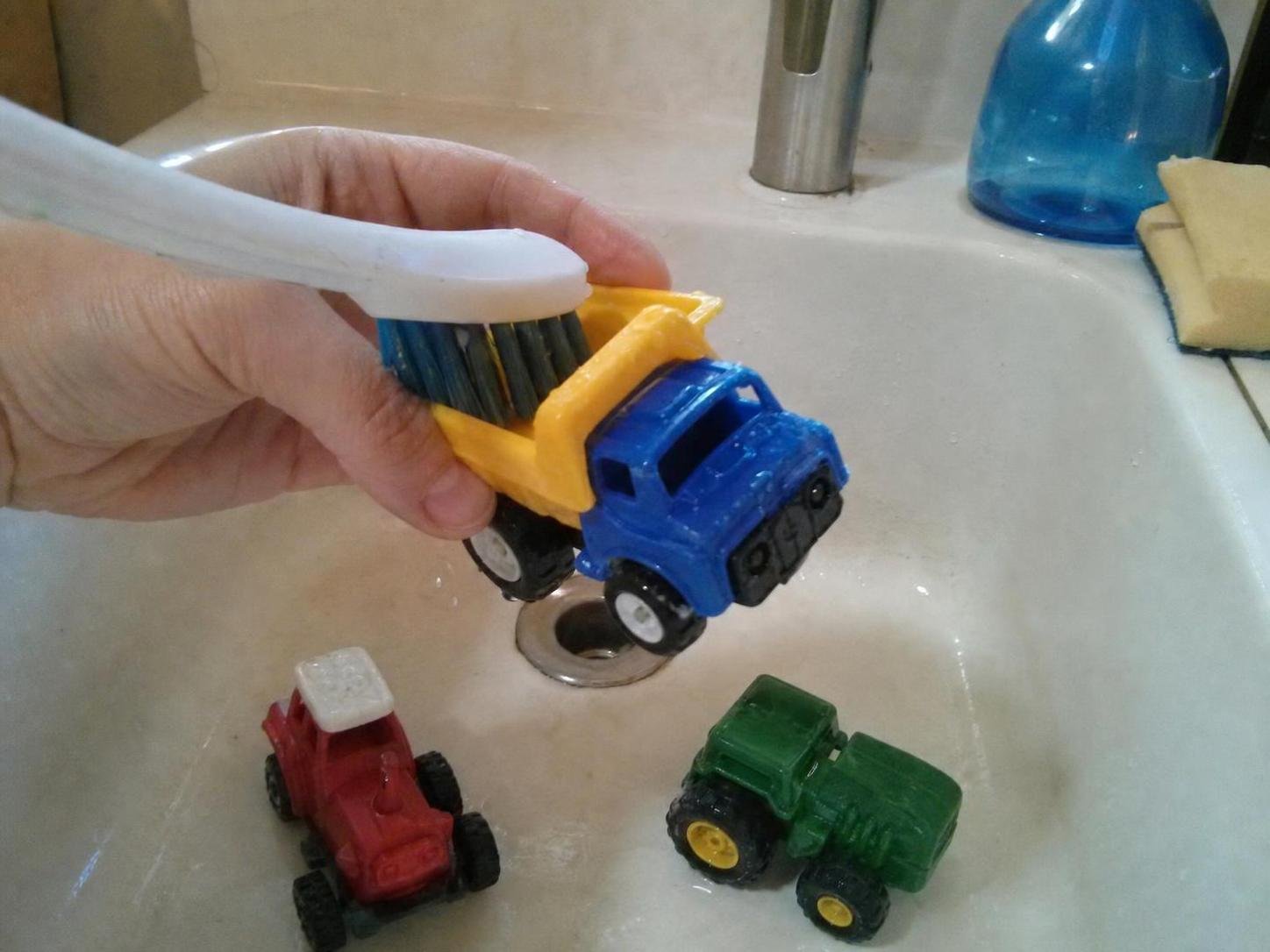
For other fully washable playthings that need a larger cleaning area, follow the material checks in this guide to cleaning toys in a bathtub. Don’t use the bathtub method for wood, electronics, glued assemblies, or toys whose instructions prohibit immersion.
Fix common care problems
The pieces feel sticky after wiping
Too much soap may leave residue. Wipe the surface with a clean cloth lightly dampened with plain water, then dry it. Stop if color or coating transfers to the cloth; continued rubbing may damage the finish.
The mop head smells musty
Trapped moisture is the likely problem. Remove the mop head if designed to detach, follow its washing instructions, and allow more drying time with good airflow. Replacement is more practical if the material remains unpleasant, can’t dry internally, or has begun separating from its mount.
Broom bristles are bent
Remove lint and gently arrange the bristles while they’re dry. Store the broom hanging from its intended hook or with the bristles free from pressure. Don’t use high heat to reshape synthetic bristles.
A cart wheel no longer turns smoothly
Look for hair, thread, or debris wrapped around the axle and remove it carefully without taking apart a sealed mechanism. Don’t add oil or another lubricant unless the manufacturer recommends it; oily residue can spread onto floors and attract dirt.
An electronic toy stops working after cleaning
Turn it off and don’t keep pressing the controls. Remove the batteries if the instructions permit, leave the compartment open in a dry, ventilated location, and consult the manufacturer’s directions. Don’t apply direct heat or reinstall batteries while moisture remains.
Store the set so it stays manageable
Store clean, dry tools on their stand or in a ventilated bin. Avoid sealing damp mop heads, brushes, or hollow water-play pieces inside a closed container because trapped moisture can lead to odor and material deterioration.
Keep long handles secured rather than leaning loosely against a wall. Periodically check wheels, handle joints, caps, bristles, and fabric attachments. Tighten only the components the manufacturer says are adjustable; replace damaged parts rather than improvising repairs with exposed wire, staples, or peeling tape.
Frequently Asked Questions
Can a toy spray bottle hold water?
Only if the manufacturer specifically permits water play. Empty it after use, drain the sprayer, and allow the bottle and nozzle to dry separately when possible. Never fill it with household cleaner.
Can toy cleaning tools be used for real chores?
Light pretend sweeping may be reasonable if the set is designed for it, but don’t assume toy tools can handle wet floors, heavy debris, or household cleaning products. Follow the manufacturer’s intended-use instructions.
Can plastic pieces go in the dishwasher?
Not unless the manufacturer identifies them as dishwasher-safe. Heat and water pressure may distort plastic, loosen labels, affect coatings, or force moisture into hollow parts.
Are wooden cleaning toys better than plastic ones?
Neither material is automatically better. Plastic is often easier to wipe, while wood may require lower moisture and closer attention to paint, sealant, and glued joints. Construction quality and suitable age grading matter more than the material alone.
A compact manual set with secure parts, wipeable surfaces, and straightforward storage is the most practical choice for most households. Keep pretend containers free of real cleaners, use minimal moisture during care, and don’t return fabric, hollow, or electronic pieces to storage until they’re fully dry.
Everything Mentioned Above
Before you leave, grab the tools you need to get the job done right the first time:
*As an Amazon Associate, TidyFormula earns from qualifying purchases.